How Often Can Members Use Their PF Savings?
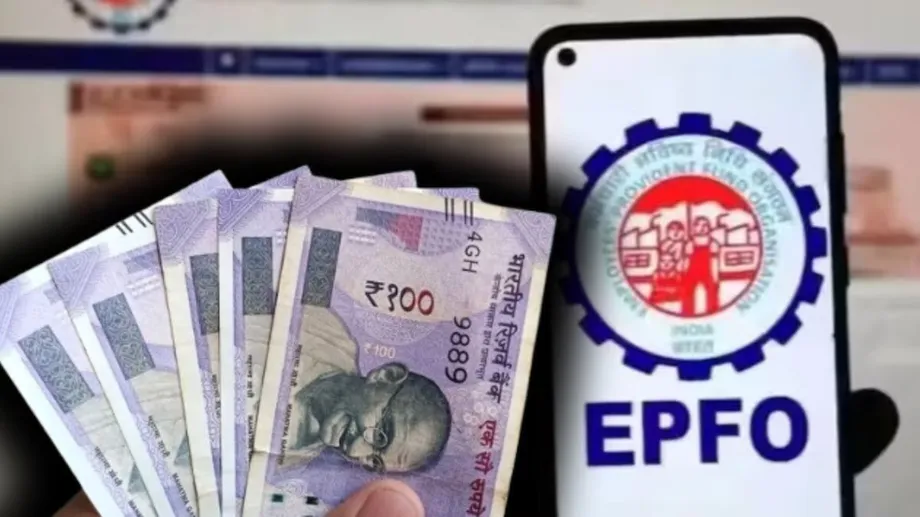
Employees covered by India's Employees' Provident Fund Organisation (EPFO) can seek advances for education up to 10 times during their membership, while marriage and housing advances each have a limit of five, according to the organisation's Smart Guide on New Rules on EPF Advances. Medical advances have no specified numerical limit, and advances for special circumstances are allowed up to twice in a financial year.
Contents
- How Often Can Members Use Their PF Savings?
- What Is Officially Documented?
- Medical Needs Have No Fixed Claim Count
- Education and Marriage Have Membership Limits
- Five Housing Advances Cover Several Uses
- Special Circumstances Follow an Annual Limit
- How the 75 Percent Rule Works
- Partial Advances and the Five Years of Service Test
- Key Points
The framework described in the guide brings these withdrawals into three categories: essential needs, housing needs and special circumstances. It also sets out a standard minimum membership period of 12 months and permits eligible members to withdraw up to 75 percent of their eligible EPF balance, subject to the conditions for their claim.
For a worker with an eligible balance of Rs 4 lakh, a 75 percent withdrawal would mean Rs 3 lakh available and Rs 1 lakh remaining. The balance used in the guide includes employee contributions, employer contributions and accumulated interest.
Members need to keep track of two separate limits: how often they can apply for a particular purpose and how much money they can receive. Education has a membership limit of 10 advances, for example, while the amount available depends on the eligible balance and applicable conditions when a claim is made.
The framework generally preserves a minimum balance of 25 percent to support retirement savings. An advance therefore gives a member access to part of the money accumulated in the account while leaving a portion invested for later life.
What Is Officially Documented?
EPFO's official circulars register lists an instruction dated April 17, 2025, titled Advance under Para 68 B (7) based on Self-Declaration. Its reference is WSU/RationalisationOfAdvances/E-48776/2025-26/18. The entry concerns a specific advance provision and the use of a member's own declaration.
The broader frequency limits are attributed to EPFO's Smart Guide shared through its official X account. Coverage published on October 14, 2026, describes that guide, while another account describes the framework as incorporated into the EPF Scheme, 2026. A commencement date and the text of the corresponding scheme notification are not identified, so members should confirm the rules applicable to their claim before applying.
The dated developments can be set out briefly:
- April 17, 2025: EPFO lists its circular on advances under Para 68 B (7) based on self-declaration.
- October 14, 2026: Coverage describes EPFO's guide setting out the withdrawal categories, frequency limits and 75 percent balance rule.
For members preparing a claim, the practical starting point is the category and eligibility information displayed by EPFO when they apply. The purpose of the expense, membership period, previous advances and eligible balance all matter.
Medical Needs Have No Fixed Claim Count
Medical expenses fall within the essential needs category, alongside education and marriage. The guide allows members to seek advances for eligible treatment expenses for themselves or their family members without a specified limit on the number of claims.
A worker facing several episodes of illness can therefore seek medical advances without reaching a fixed lifetime claim count. Education and marriage operate differently because each has a stated maximum during EPF membership.
The amount available for treatment still depends on eligibility and the applicable withdrawal conditions. Members should check both the balance available for an advance and whether the proposed medical expense meets EPFO's requirements.
Education and Marriage Have Membership Limits
Education advances are allowed up to 10 times during EPF membership and cover eligible expenses for the member and their family. Marriage advances are allowed up to five times during membership, also for eligible expenses involving the member or family.
The education allowance is twice the marriage allowance: 10 claims compared with five. Both limits run across the membership period, so the count carries forward instead of starting again each financial year.
A member who has already used three education advances would have seven remaining under the stated frequency limit, provided later applications meet the rules. A member who has used three marriage advances would have two remaining. These examples concern claim counts; the money available for each application depends on the account and claim conditions.
Families planning several expenses over time should consider that membership limit alongside the immediate bill. An advance used today reduces the account balance that can earn interest and may use one of a limited number of claims for that purpose.
Five Housing Advances Cover Several Uses
Housing advances cover buying a house, flat or plot, constructing a house, repaying an eligible home loan, and renovating, altering or improving an existing property. The guide places these purposes together within a housing category allowing up to five advances during membership.
The five advances apply across that housing category. A member planning to buy a plot, build a house and later make improvements needs to consider those expenses against the same category limit.
Property plans also require attention to the amount available. A member might have housing claims remaining but an eligible balance that covers only part of the planned purchase, repayment or building work.
The inclusion of home loan repayment gives members another possible use for their accumulated savings. Using EPF money for that purpose reduces the sum remaining in the retirement account, so the immediate reduction in debt needs to be considered alongside the loss of future interest on the withdrawn amount.
Special Circumstances Follow an Annual Limit
Special circumstances form the third category. They cover situations notified by the Central Board of Trustees of the EPF, with advances permitted up to twice in a financial year.
India's financial year runs from April 1 to March 31. Two advances in this category are therefore counted within that period, unlike the education, marriage and housing limits, which apply throughout membership.
Eligibility also depends on the situation covered by the board's notification. A member considering this category should check which notified circumstance applies to the expense and how many advances they have already taken during the financial year.
How the 75 Percent Rule Works
The guide describes a uniform minimum membership requirement of 12 months for partial withdrawals and access to up to 75 percent of the eligible EPF balance. That balance includes the employee's and employer's EPF contributions, together with accumulated interest.
For an eligible balance of Rs 4,00,000, the illustrative calculation is straightforward:
- Eligible EPF balance: Rs 4,00,000.
- Maximum advance calculated at 75 percent: Rs 3,00,000.
- Balance remaining after that withdrawal: Rs 1,00,000.
The actual payment depends on the member's eligibility, the purpose of the advance and the applicable minimum balance requirement. The framework describes retaining at least 25 percent as a minimum balance, while the amount accessible is expressed as up to 75 percent of the eligible balance.
Repeated claims draw on the money available at the time of each application. After a withdrawal, the account has a smaller balance, which can subsequently change through fresh contributions and interest. Members need to check the current eligible amount each time.
Retaining money in EPF also preserves its ability to earn interest. Compounding means that interest credited to the account can itself earn interest later. Taking an advance reduces the sum on which that process continues, even when the withdrawal meets an urgent and eligible need.
Partial Advances and the Five Years of Service Test
Partial withdrawals also raise a tax question for employees who have not completed five years of continuous service. An eligible partial PF withdrawal generally leaves that service timeline intact. The five years of service test concerns qualifying service, rather than keeping the account balance unchanged.
Changing jobs brings a separate decision: transferring the PF balance or withdrawing the corpus after leaving employment. Transferring the balance generally allows earlier service to count toward the five years required for the usual tax exemption on a qualifying withdrawal.
FinRight, a Mumbai company that handles PF issues, explained in a LinkedIn post how withdrawing the corpus between jobs can affect that calculation:
"Instead of transferring your PF after leaving Company A, you withdraw it. Then you start contributing to PF again when you join Company B. Those earlier 3 years are no longer carried forward into your new PF accumulation for the 5-year continuous-service test," FinRight explained.
A withdrawal that fails the applicable service requirement can have tax consequences. Employer contributions and the interest on them may be taxed as salary, and deductions previously claimed under Section 80C for employee contributions may be reversed. Section 80C is the income tax provision through which eligible taxpayers claim deductions for specified investments and payments.
Members should therefore consider the type of withdrawal as well as its timing. An eligible partial advance, a transfer between jobs and a withdrawal of the corpus involve different decisions. Individual tax treatment can depend on the circumstances and applicable exemptions.
Key Points
- Education advances are described as available up to 10 times during EPF membership.
- Marriage and housing advances each have a limit of five during membership.
- Medical advances have no specified numerical limit on claims.
- Special circumstances notified by the Central Board of Trustees allow up to two advances per financial year.
- The guide sets out 12 months of membership and access to up to 75 percent of the eligible balance, subject to conditions.
- A Rs 4 lakh eligible balance gives an illustrative maximum advance of Rs 3 lakh, leaving Rs 1 lakh.
- Eligible partial advances generally preserve service continuity; transferring PF when changing jobs generally carries earlier service forward.
- Members should confirm the operative EPFO rules, claim eligibility and available balance before applying.