A seven year plan reaches beyond vehicle production
Hyundai Motor Group has committed $15.5 billion to India from 2026 through 2032, combining factory expansion with approximately $700 million for research and development, investment in local suppliers and plans for businesses ranging from vehicle financing to recycling. The strategy covers Hyundai Motor India and Kia India, rather than Hyundai alone.
Contents
- A seven year plan reaches beyond vehicle production
- How much of the commitment is new?
- Where manufacturing capacity will expand
- What the $700 million research allocation covers
- Local suppliers and a new investment entity
- Why India matters as a market and export base
- Electric three wheelers and businesses beyond car sales
- Jobs, skills and the existing Indian business
- The milestones and decisions still to come
- Key Points
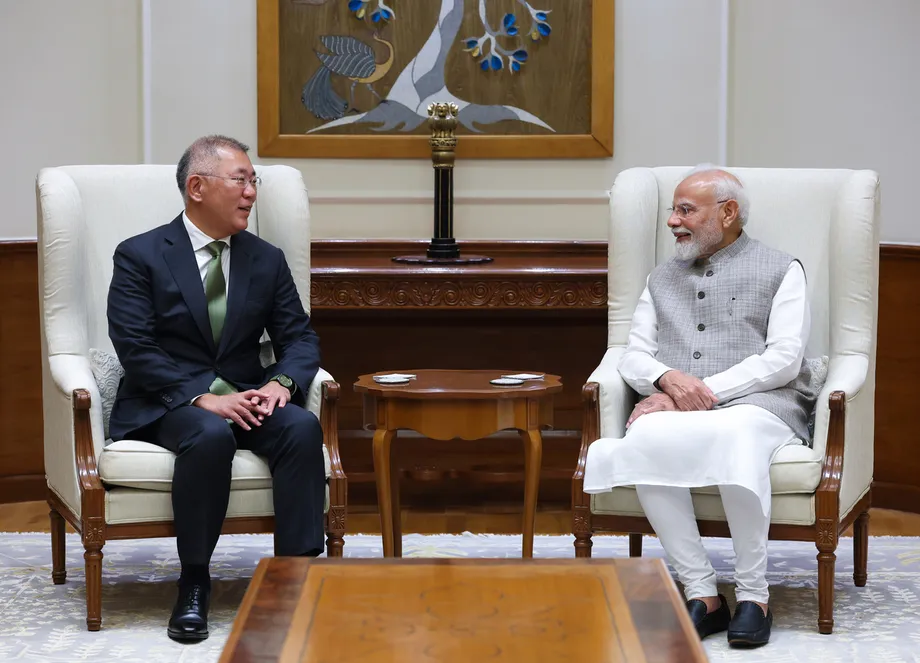
The group's official investment announcement, dated October 13, 2026, followed a meeting between Executive Chair Euisun Chung and Prime Minister Narendra Modi at the Prime Minister's Office in New Delhi. Hyundai says it will establish a dedicated Indian investment entity to coordinate projects, manage capital and identify local partners.
The commitment builds on an existing annual manufacturing capacity of 1,425,000 vehicles across Chennai, Pune and Anantapur. Hyundai also employs more than 24,000 people in India. Its announcement promises additional employment in manufacturing, research, engineering and supplier businesses, but gives neither a jobs target nor a final production capacity for 2032.
The distinction matters: this is a spending commitment and a development strategy, not a statement that the money has already been invested. Factory expansion is planned, while some proposed activities, including charging infrastructure, financing and recycling, are described as opportunities the group will explore.
Chung, Hyundai Motor Group's executive chair, presented the investment as a continuation of the company's relationship with India:
India remains one of Hyundai Motor Group's most important and strategic markets globally. The past 30 years have been defined by our commitment to India. This investment reaffirms our commitment to India for the next 30 years and beyond.
How much of the commitment is new?
The $15.5 billion headline is the group's commitment for the seven calendar years from 2026 through 2032. Dividing that total evenly would produce about $2.21 billion a year, although Hyundai has not announced an annual spending schedule. Actual expenditure could vary as factories, research facilities and partnerships progress.
The investment has also been reported as approximately 1.47 lakh crore rupees, or 1.47 trillion rupees. Reporting on the package says it incorporates a 45,000 crore rupee commitment announced by Hyundai Motor Company in October 2025 for investment through 2030. On those reported rupee figures, the earlier commitment represents about 31% of the larger package.
That means the headline amount should not automatically be treated as entirely additional to previous investment promises. Hyundai's official statement does not reconcile the earlier commitment with the new total or provide a full breakdown by subsidiary. Reporting also indicates that the allocation extends to research and development at Kia India.
Currency descriptions are not consistent across all reports. One account describes the package as more than 20 trillion won but gives approximately 2.08 trillion won elsewhere. Those figures conflict; the official $15.5 billion commitment is the clearest reference point.
Where manufacturing capacity will expand
Hyundai plans to increase production capacity across Hyundai Motor India and Kia India, serving domestic demand while making India one of its leading global export platforms. The current factory figures provide a more precise baseline than the rounded description of capacity above 1.4 million vehicles.
- Hyundai's Chennai facilities: 824,000 vehicles annually.
- Hyundai's Pune facility: 170,000 vehicles annually.
- Kia's Anantapur plant: 431,000 vehicles annually.
- Combined annual capacity: 1,425,000 vehicles.
Chennai accounts for about 58% of that combined capacity, Anantapur for about 30% and Pune for about 12%. Hyundai says Pune capacity will increase in phases, but has not disclosed the size or completion date of those increases. Nor has it announced how the manufacturing portion of the investment will be divided among the locations.
Capacity measures what factories can produce, not how many vehicles they actually manufacture or sell. The 1,425,000 figure therefore should not be read as annual sales. The plan links additional production with more local sourcing, so its execution will depend on supplier development as well as factory expansion.
What the $700 million research allocation covers
Hyundai has identified approximately $700 million for its Indian research and development centre, including a vehicle testing track. That represents roughly 4.5% of the $15.5 billion commitment. The announcement does not separately price the testing track or other research infrastructure.
The group says it wants to establish a complete research and development system in India through expanded facilities and cultivation of local talent. Its stated aim is to make the country a core innovation hub, with greater responsibility for developing future automotive technologies rather than simply producing vehicles.
A testing track gives engineers a controlled place to assess vehicles during development. Paired with local engineering teams, it can support the work needed to adapt products to Indian operating conditions and customer requirements. Hyundai has not specified which technologies or vehicle programmes will use the planned facilities.
The investment also sits alongside an earlier product commitment by Hyundai Motor Company President and CEO Jose Munoz to introduce 26 new products, including hybrids and electric vehicles. The new group announcement does not provide an updated model schedule or explain how those products map onto the research allocation.
Local suppliers and a new investment entity
The proposed investment entity will coordinate funding across research infrastructure, future technologies and the wider automotive business. Hyundai says it will also identify local partners and support strategic collaboration with suppliers. No establishment date, legal structure or separate capital allocation has been announced.
Supplier development is a central part of the plan. Hyundai intends to invest in regional partners, increase the proportion of components sourced in India and build a more stable supply network. Localisation means producing or purchasing more vehicle parts domestically instead of relying on imports.
Its Indian business already extends beyond Hyundai and Kia assembly plants. The official statement names Hyundai Mobis, Hyundai Transys, Hyundai Capital, Hyundai Wia and Hyundai Glovis as affiliates with component and service operations in the country. The investment entity would operate within that broader group presence.
The announcement does not identify suppliers selected for investment or set a numerical target for domestic component sourcing. Those details will be needed to judge how much of the spending reaches businesses outside the group's own facilities and how quickly local production changes.
Why India matters as a market and export base
India is described as the world's third largest car market, after China and the United States. For Hyundai, the strategy combines access to Indian buyers with the possibility of serving other markets from an expanded production base.
A reported forecast puts India's passenger vehicle market at 4.57 million units in 2025 and 5.25 million in 2026. The difference is 680,000 vehicles, equivalent to growth of about 14.9%. These are projected figures, not confirmed sales results, and Hyundai's announcement does not publish a separate market forecast.
Reports also put Indian automotive tariffs at 70% to 110%. Producing vehicles locally can reduce exposure to import duties, although the tariff figures do not establish an identical rate for every vehicle category. More Indian component sourcing would extend that domestic production strategy beyond final assembly.
Chung has described India as a gateway to markets such as the Middle East and Africa, citing production costs and geographical proximity. The official announcement likewise calls India a platform for expansion into emerging markets and a global export hub. It does not set an export volume target or specify how future output will be split between Indian and overseas customers.
Electric three wheelers and businesses beyond car sales
The group plans to support promising startups and develop mobility services connected to its vehicle business. It will explore specialised automotive financing, electric vehicle charging infrastructure and recycling of vehicles at the end of their useful life.
These activities address different parts of vehicle ownership: financing supports purchases, charging supports electric vehicle use, and recycling deals with vehicles after they leave service. Hyundai has not announced budgets, network sizes or operating schedules for these proposed businesses.
A more specific project involves TVS Motor Company. Hyundai and TVS have developed an electric three wheeler prototype, with a commercial launch targeted for late 2027. That provides a concrete product milestone beyond passenger cars, although the target is not a confirmed launch date.
The three wheeler project is not detailed in Hyundai's official $15.5 billion announcement. Its cost, expected production volume and share of the investment package have not been disclosed. It nevertheless illustrates the broader direction described in the strategy: partnerships with Indian companies and mobility products beyond conventional car manufacturing.
Jobs, skills and the existing Indian business
Hyundai Motor Group says it employs more than 24,000 people across India and expects the investment to create employment in manufacturing, research, engineering and supply chains. It also anticipates jobs through supplier partnerships, technology development and new mobility ventures.
Chung connected the spending commitment to employment and industrial development:
Through this investment, we will create more employment opportunities and work together with our partners and stakeholders to support India's continued industrial development.
No number has been specified for additional jobs. The current workforce figure is therefore a baseline, not a hiring target. Hyundai also has not provided a recruitment timetable or divided expected employment between its facilities and partner businesses.
The group plans a Hyundai Academy for Technical Skills, known as HATS, in Chennai. The vocational training institute complements its stated intention to build local technical talent, but the announcement does not give an opening date, training capacity or budget.
Hyundai also cites its Samarth campaign for disability inclusion and approximately $110 million in contributions by major affiliates to social welfare, education, skills and community programmes since 2016. One report places those contributions specifically in 2016 through 2025, while the official statement uses the broader wording "since 2016". The historical contributions are separate from the newly announced investment commitment.
The milestones and decisions still to come
Hyundai entered India in 1996 and began producing and selling the Santro at its Chennai plant in 1998. By the third quarter of 2026, reported cumulative Hyundai sales in India had reached 9,884,960 vehicles, leaving 115,040 to reach 10 million. Sales were expected to pass that mark during the year, but that remained a projection.
Hyundai and Kia together were reported to rank second behind Maruti Suzuki in India in 2025, with market share in the 19% range. That group figure should not be confused with Hyundai's individual sales total. The October 13 meeting was also reported to be the eighth between Chung and Modi.
- 1996: Hyundai entered the Indian market.
- 1998: Hyundai began Santro production and sales from Chennai.
- October 2025: Hyundai Motor Company announced the reported 45,000 crore rupee commitment through 2030.
- October 13, 2026: Chung met Modi in New Delhi and the group announced its $15.5 billion strategy.
- Late 2027: Targeted commercial launch for the electric three wheeler developed with TVS.
- 2032: Final year of the seven year investment period.
The next measures of progress will be the establishment of the investment entity, announced supplier partnerships, research construction and details of Pune's capacity increases. Hyundai has not given dates for those steps. It also has not disclosed a final factory capacity, a new jobs total or a complete allocation of the $15.5 billion.
Key Points
- Hyundai Motor Group has committed $15.5 billion to India from 2026 through 2032.
- Approximately $700 million is planned for Indian research facilities, including a vehicle testing track.
- Current annual capacity totals 1,425,000 vehicles across Chennai, Pune and Anantapur.
- Pune capacity will expand in phases, but no final target or completion date has been announced.
- Reporting says the package includes an earlier 45,000 crore rupee commitment through 2030.
- The group employs more than 24,000 people in India but has not specified additional job numbers.
- An electric three wheeler developed with TVS has a commercial launch target of late 2027.
- Financing, charging, recycling and startup investment form part of the broader strategy.