Late buying sends Sensex above 73,000
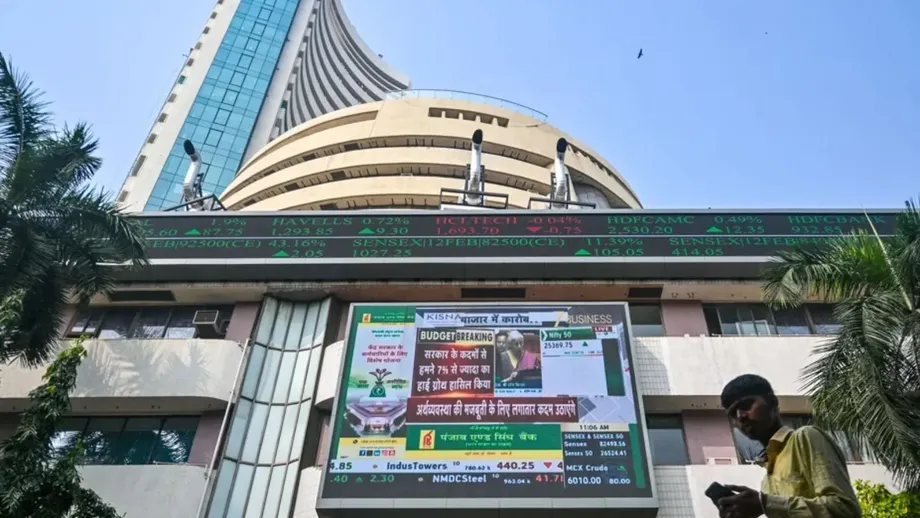
Indian stocks rallied on Tuesday, October 13, 2026, with the Sensex closing at 73,033.78, up 1,109.10 points or 1.54%, and the Nifty 50 gaining 358.60 points or 1.60% to finish at 22,721.95. Technology shares led the recovery, while Finance Minister Nirmala Sitharaman's willingness to hear investor concerns about taxation gave the market another push in the final hour.
Contents
- Late buying sends Sensex above 73,000
- How the recovery gathered speed
- Tax discussion lifts hopes, without a promise
- Technology earnings drive the biggest gains
- What the investor wealth figures really mean
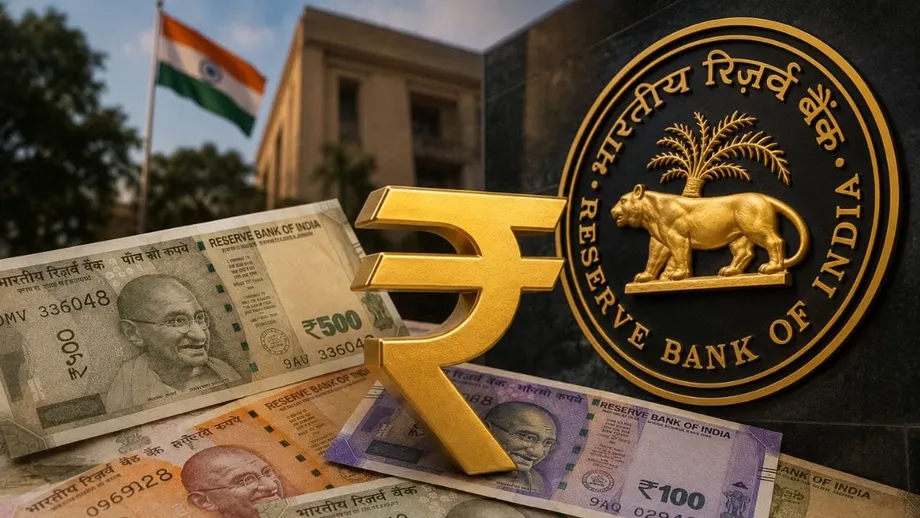
- The rupee recovers after RBI measures
- Oil, inflation and foreign selling remain pressures
- Broader stocks give a mixed verdict
- Lower volatility, but no confirmed lasting reversal
- Key Points
The rebound added more than Rs 4 trillion to the value of listed shares, although reports differ on the exact increase. Most put the combined market capitalisation of BSE listed companies at about Rs 470 lakh crore at the close. The advance followed Monday's roughly 0.7% decline and came alongside a stronger rupee, easing oil prices and better sentiment around technology earnings.
The distinction between hopes and decisions matters: Sitharaman did not announce a reduction or removal of capital gains taxes or securities transaction tax. Investors responded to the possibility of a review, rather than an agreed policy change.
The final benchmark figures were higher than the closing auction readings of 72,988.54 for the Sensex and 22,702 for the Nifty, which showed gains of 1,063.86 and 338.70 points respectively. Most closing reports converged on 73,033.78 and 22,721.95, making those the clearest reference points for the session.
The rally was powerful but uneven. Several measures of smaller companies remained weak, foreign investors had continued selling in the preceding session, and Brent crude was still above $100 a barrel despite its daily decline. The session therefore brought relief without resolving the pressures behind the recent slump.
How the recovery gathered speed
Trading began close to unchanged, although reports differ on the opening direction. One account described both benchmarks as about 30 points lower. Another put the Sensex opening at 71,951, slightly above its previous close near 71,924, and the Nifty at 22,364 against a previous close near 22,363.
The direction became more decisive as buying in technology shares strengthened. Around 1:30 pm, the Sensex was up 531.87 points at 72,456.55, while the Nifty had gained 174.45 points to 22,537.80. By about 2:30 pm, the Sensex was trading near 72,600 before accelerating toward the close.
- Saturday: The Reserve Bank of India announced measures to manage dollar demand and support the rupee.
- Monday: Further currency restrictions followed, while equities declined and foreign investors remained net sellers.
- Tuesday morning: Technology stocks advanced and the rupee strengthened as the benchmarks began near unchanged.
- Tuesday afternoon: Gains widened after Sitharaman discussed investor concerns about capital gains and transaction taxes.
- Tuesday close: The Sensex finished above 73,000 and the Nifty above 22,700.
Reports also differ on Monday's Nifty finish. One account describes a recovery above 22,500, while the final Tuesday figures and the reported 358.60 point gain imply a previous close of 22,363.35. Those descriptions cannot both represent the same closing reading.
Tax discussion lifts hopes, without a promise
Speaking at the Bloomberg New Economy Forum in New Delhi, Sitharaman acknowledged that Indian and foreign investors had raised concerns about long term capital gains tax, or LTCG. She also discussed securities transaction tax, or STT, and the debate about whether different asset classes should receive similar tax treatment.
LTCG applies to profits from investments held beyond the relevant qualifying period. Short term capital gains tax, or STCG, applies to gains on investments sold sooner. STT is different: it is charged on specified securities transactions rather than on the profit an investor makes. A change to one levy would not automatically change the others.
Sitharaman, the Union finance minister, explained why she would not indicate which proposals might be accepted during budget preparations:
We are very close to the budget and the preparation for the budget has started, and it may not be the best time for me to say what I will or what I will not consider.
Her remarks followed calls for a review of equity taxation after the 2024 Budget raised the LTCG rate on equities to 12.5%. SBI Research's Ecowrap report also called for abolishing LTCG tax on equities and extending the holding period to two or three years. That was a research recommendation, not a government decision.
The next Union Budget, expected in February, is the policy event identified in the reports. No firm date for a tax decision, consultation deadline or specific proposal was announced.
Technology earnings drive the biggest gains
The Nifty IT index rose more than 5%, extending an advance of over 3% in morning trading, when all ten constituents were initially higher. Reports put the later gain at 5.22% or 5.5%, without resolving the difference. One account described the session as the index's biggest daily rise since May 2025.
HCLTech led the move after its quarterly results, with stronger profitability, order bookings and revenue from advanced artificial intelligence services cited as reasons for renewed buying. TCS also climbed after its recent results, while Infosys and Tech Mahindra joined the advance.
Exact stock gains vary across reports. One set of closing figures puts HCLTech up 8.42%, TCS up 6.79%, Tech Mahindra up 4.93% and Infosys up 4.13%. Another gives gains of 8.28%, 6.59%, 4.90% and 4.44% respectively. Both show the same pattern: a broad recovery among the largest software services companies.
Dharmesh Kant, head of equity research at Cholamandalam Securities, said the latest earnings offered grounds for a more positive view of the sector:
The quarterly numbers reported by Accenture, TCS, and HCLTech indicate that the worst of earnings growth concerns for IT companies might be behind us.
Smaller technology names also rose. Mphasis gained 5.18%, Coforge 4.46% and Persistent 3.86%, while Tata Elxsi advanced more than 5% ahead of its results. Even after Tuesday's jump, however, reports put the Nifty IT index's decline since the start of the year at either 21.2% or 23%. The rebound recovered only part of a much larger loss.
What the investor wealth figures really mean
The widely cited gain of more than Rs 4 trillion refers to increased market capitalisation, not cash received by investors. Market capitalisation is the value of outstanding shares at prevailing prices. A rise increases the quoted value of holdings, but investors realise a profit only when they sell above their purchase cost.
The most detailed calculation puts the combined value of BSE listed companies at Rs 4,70,07,567.40 crore, compared with Rs 4,65,91,974.21 crore on Monday. Subtracting those figures gives Rs 4,15,593.19 crore, or about Rs 4.16 lakh crore. One lakh crore rupees equals Rs 1 trillion.
Other reports give an increase of Rs 4.12 lakh crore or Rs 4.62 lakh crore, while another rounds the gain to about Rs 5 lakh crore. The Rs 4.62 lakh crore estimate uses a Monday base of Rs 465.45 lakh crore and a Tuesday total of Rs 470.07 lakh crore.
A separate Monday figure of Rs 4,65,16,690 crore was described as the market value of Sensex companies. That description does not match the broader BSE listed company measure used elsewhere, so it should not be treated as a directly comparable total. The differing starting values prevent a single precise wealth gain from being established.
The rupee recovers after RBI measures
The rupee strengthened as investors assessed Reserve Bank of India measures aimed at reducing pressure from dollar demand. It opened 62 paise stronger at 95.16 per dollar against the previous close of 95.78. Another early trading account recorded a gain of 82 paise to 94.96.
Closing accounts are less consistent. One reports a provisional finish at 95.30, up 48 paise; another gives 95.38, up 40 paise. A further account places the currency at 95.28 without identifying that reading as the final close. Reports also differ on whether Tuesday marked the second or third consecutive session of gains.
The RBI measures included a dedicated dollar supply window for three state run oil companies, restrictions on foreign exchange derivatives and a 20% cash reserve requirement for certain currency contracts. Providing oil companies with a separate dollar window can reduce their need to buy dollars in the regular market.
Further restrictions announced on Monday limited overseas clients' use of rupee non deliverable derivative contracts to hedging. Such contracts allow exposure to currency movements without delivery of the rupees themselves. Hedging means using a financial contract to offset an existing risk, rather than simply betting on a price move.
Jateen Trivedi, a research analyst at LKP Securities, said lasting currency recovery would depend on foreign institutional investment flows, crude prices and broader dollar movements. Dilip Parmar, senior research analyst at HDFC Securities, also cited the unwinding of positions, dollar weakness, cheaper crude and the equity rebound as supporting factors.
Oil, inflation and foreign selling remain pressures
Brent crude eased during Tuesday's trading, but reported prices ranged from $104.55 to $105.87 a barrel. One account recorded a decline of about 1.2% to $105.40; another described a fall of more than 2%. These readings show relief from recent highs, not a return to inexpensive energy.
US crude was reported at $92.34 a barrel, down 1.5%, while other accounts placed it below $93. Expectations of additional Russian energy supplies helped sentiment. Reports also described renewed security risks affecting regional energy supply routes, limiting confidence that the decline would last.
For India, expensive imported oil can increase the demand for dollars and add pressure to prices. September retail inflation was reported at 5.54%, keeping attention on the RBI's interest rate decisions. Easing US bond yields offered some relief: the ten year Treasury yield slipped below 5.2%, while the two year yield moved below 4.8%.
Foreign selling remained another constraint. Overseas investors sold Rs 1,708 crore of Indian equities on Monday, their thirteenth consecutive session as net sellers. October withdrawals were reported at Rs 45,416 crore, compared with Rs 35,861 crore in September, based on figures attributed to National Securities Depository Limited.
That makes October's reported outflow Rs 9,555 crore, or about 26.6%, larger than September's total. The comparison is especially striking because the October figure covered only the latest reported period, not the full month. Tuesday's rally alone does not establish that foreign selling has reversed.
Broader stocks give a mixed verdict
The advance spread beyond technology. Reported sector gains included 2.48% for Nifty Realty, 1.46% for Financial Services and PSU Bank, 1.40% for FMCG, 1.23% for Auto, 1.17% for Metal and 1.03% for Bank. HUL rose 2.94% and Trent gained 2.61%.
Market breadth changed during the session and differed by index. An afternoon account showed fourteen of sixteen major sector indices higher, while a closing account said only Nifty Pharma finished lower, down 0.05%. Earlier readings had smaller company indices falling, but another closing report showed Nifty Smallcap 100 with marginal gains and Nifty Midcap 100 up more than 1%.
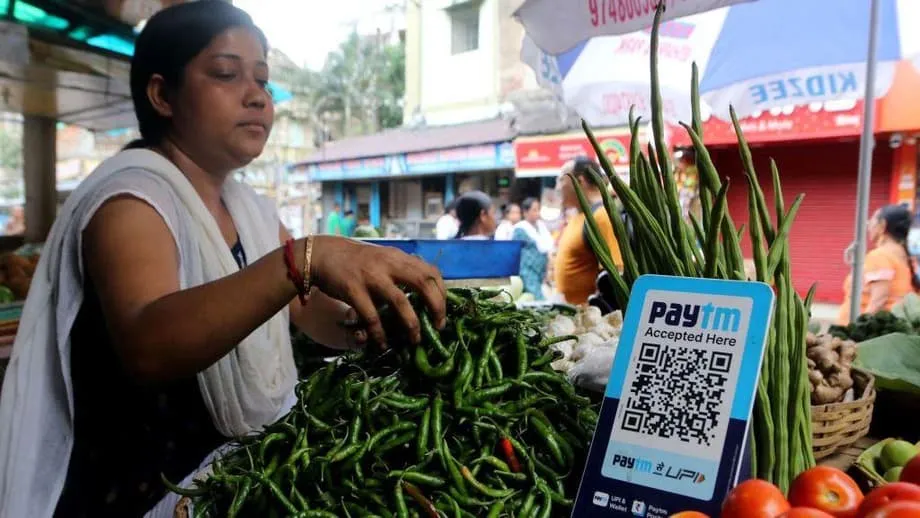
Those figures concern different baskets and trading times, so they do not support a simple claim that every part of the market recovered equally. Shriram Finance rose 6.31% amid reports that Mitsubishi UFJ Financial Group might increase its stake. Paytm and MobiKwik finished higher after sharp swings as a reported NPCI decision deferred a UPI merchant discount rate until Diwali. The merchant discount rate is a charge associated with accepting payments.
Losses remained visible. RBL Bank fell more than 7% amid concerns about lending margins, while ICICI Prudential Life declined more than 3% after business profitability measures missed estimates. Kotak Mahindra Bank, Eternal, Maruti Suzuki and Max Healthcare also fell in one closing account.
Lower volatility, but no confirmed lasting reversal
India VIX, which measures expected stock market volatility, declined as the rally developed. It was reported near 14.82 around midday, down almost 4%, and at 14.04 later, down 7.94%. Another account put the daily decline at 7.41%. Lower VIX readings indicate reduced expected price swings, not a guarantee against losses.
India's gains contrasted with declines of 5.78% in South Korea's KOSPI, 1.93% in Japan's Nikkei 225 and 1.99% in Taiwan's weighted index. Singapore and Hong Kong posted small advances. Concerns about chip stocks and the durability of the global AI investment boom were cited alongside the regional selloff.
Growth expectations supplied another positive element. The IMF was reported to have raised India's forecast for the 2026 to 2027 financial year to 7%, from 6.4% in July. A separate description of its October World Economic Outlook gives 7% growth in both 2026 and 2027. Those time labels differ and should not be treated as identical forecasts.
Technical analysts identified several possible tests for the Nifty. Nagaraj Shetti of HDFC Securities pointed to 22,800, while Ajit Mishra of Religare Broking highlighted 22,900, followed by 23,000 to 23,200. Nandish Shah of HDFC Securities identified resistance at 23,100 to 23,150. These are chart assessments, not scheduled market outcomes.
Jai Bala of Cashthechaos.com wanted to see a weekly close above 22,900 and sustained buying through Friday. With the Nifty ending Tuesday at 22,721.95, that test had not been met. Upcoming earnings, currency movements and oil prices remain concrete checks on whether the recovery continues.
Key Points
- The Sensex closed at 73,033.78, up 1,109.10 points; the Nifty finished at 22,721.95, up 358.60 points.
- Technology earnings drove gains of more than 5% in the Nifty IT index.
- Sitharaman welcomed tax discussions but announced no change to LTCG, STCG or STT.
- Reported increases in investor wealth ranged from Rs 4.12 lakh crore to about Rs 5 lakh crore.
- The rupee strengthened after RBI measures, although closing rates differ across reports.
- Oil above $100, September inflation of 5.54% and continued foreign selling remained pressures.
- Smaller company performance was mixed, and a sustained market reversal was not yet established.