A major concert on the eve of a new national holiday
Hanoi has been assigned to organize a special arts program and a concert expected to attract about 60,000 people as Vietnam prepares to celebrate its first Vietnam Cultural Day on November 24, 2026. The performance is provisionally scheduled for the evening of November 23, making it a celebration on the eve of the holiday rather than necessarily an event on the day itself.
Contents
- A major concert on the eve of a new national holiday
- The official plan reaches beyond the stage
- What the new holiday means for the public
- A calendar of decisions and approaching deadlines
- A digital map with all 34 localities enrolled
- Films, exhibitions and a national cultural conference
- Why a concert has become the main public attraction
- Local participation is the test beyond Hanoi
- Safety, spending and decisions still to come
- Key Points
Deputy Prime Minister Pham Thi Thanh Tra gave the assignment at a national online conference on October 12. Hanoi and the Ministry of Culture, Sports and Tourism are developing the program, with instructions to make it attractive to audiences while ensuring security and safety.
My Dinh National Stadium has been reported as the expected venue. That location remains provisional: the broader announcements assigning Hanoi the concert do not consistently specify a stadium, and a final event plan, performer lineup and admission arrangements have not been announced.
The concert is one part of a nationwide Culture and Great National Unity Week running from November 18 to 24. Preparations also include Vietnam Film Week, an arts exhibition, a national cultural conference and a digital cultural map scheduled for nationwide announcement on November 1.
The official plan reaches beyond the stage
The Government Office's September implementation notice provides the framework behind the celebrations. Document No. 9636/VPCP-KGVX, dated September 22, 2026, conveys Tra's instructions for carrying out a plan approved through Decision No. 1111/QD-TTg on June 19, covering the period from 2026 to 2030.
The notice calls for one central event accompanied by activities across the country. It does not specify a Hanoi concert for 60,000 people, which emerged in the later October preparations. Its central instruction is to move cultural celebrations away from ceremonies and meetings inside halls and into public places where people can participate.
Those places include squares, pedestrian streets, historic sites, museums, parks and village cultural houses. The notice identifies residents, artists, intellectuals, businesses and young people as participants and creators, as well as audiences. Success is to be measured by people's access to culture and the reach of the activities, rather than by the scale of ceremonies alone.
The 2026 celebrations are also described as the first year of implementing the Politburo's Resolution No. 80 on cultural development. Directive No. 35/CT-TTg, dated September 30, connects Vietnam Cultural Day with the Great National Unity Festival, giving the November program a community focus alongside its national events.
What the new holiday means for the public
November 24 is described as an annual public holiday on which workers receive a day off with full pay. The Politburo agreed to the policy in January, and the National Assembly legislated it in September 2026. The celebrations are therefore being prepared alongside a change intended to give people time to take part.
The announcements do not identify the specific amending law or set out detailed employment arrangements. They also do not announce a general entitlement to free admission at cultural venues. Paid leave and discounted access are separate matters: the former is described as part of the holiday policy, while the latter depends on arrangements made by institutions.
Tra has encouraged museums, libraries, theaters, cinemas, historic sites and other cultural facilities to open more widely, extend their hours and waive or reduce fees where appropriate, particularly on November 24. The same approach applies to tourist attractions and spaces associated with recreation, food, belief and religion.
For visitors, the practical details still to come are opening schedules, participating venues and any admission reductions. The ministry has been instructed to have institutions under its authority maximize access during the week, but there is no announced nationwide schedule showing which facilities will be free or open later.
A calendar of decisions and approaching deadlines
The preparations span several months, with separate deadlines for national planning, local plans, digital infrastructure and the celebrations themselves. The September notice required the ministry to report its overall 2026 plan before October 5; the October conference then set a deadline for more detailed activity guidance.
- June 19, 2026: Decision No. 1111/QD-TTg approved the Vietnam Cultural Day plan for 2026 to 2030.
- September 22: Government Office document No. 9636/VPCP-KGVX transmitted implementation instructions.
- September 30: Directive No. 35/CT-TTg addressed organizing Cultural Day alongside the Great National Unity Festival.
- October 9: All 34 provinces and cities had received accounts and instructions for the digital cultural map.
- October 12: Tra chaired the national online conference and assigned Hanoi the major arts program and concert.
- Before October 15: The ministry must complete guidance for the week's activity framework.
- Before October 20: Provincial and city plans must be issued under the September instructions.
- November 1: The Vietnam Cultural Digital Map is expected to be announced nationwide.
- November 18 to 24: Culture and Great National Unity Week is scheduled across the country.
- November 23 evening: Hanoi's concert is provisionally planned.
- November 24: The first Vietnam Cultural Day will be observed.
One report prints 2020 as the year of the November activity week, despite describing the October 2026 preparations. Other accounts consistently give November 18 to 24, 2026, making the isolated date appear to be a typographical error. The national cultural conference is expected in November, but no exact date has been announced.
A digital map with all 34 localities enrolled
The Vietnam Cultural Digital Map is already undergoing trial operation. By October 9, all 34 provinces and cities had been given accounts, instructions for updating data and designated contacts responsible for managing information. That represents complete administrative enrollment, although it does not establish how much information each locality has uploaded.
The distinction matters for the planned November 1 announcement. Giving every locality access to the platform is a preparation milestone; a useful public service also requires the information entered by those localities to be ready and maintained. No figures have been announced for the number of cultural locations recorded or the amount of data checked.
The map sits within a wider digital program. Vietnam Sounds 2026 is being prepared with both digital and in person activities, while the Vietnam Cultural Experience Journey 2026 communications campaign will promote participation. The September instructions also call for greater use of technology, digital tools and artificial intelligence in cultural activities.
The government has asked for a shared national identity for the holiday, including a logo, slogans, publications and communications messages used across physical venues and digital platforms. That creates a common national presentation while local authorities remain responsible for choosing activities rooted in their own cultures.
Films, exhibitions and a national cultural conference
The Ministry of Culture, Sports and Tourism is preparing a national cultural conference expected to take place in November. Alongside it, an arts exhibition will examine the development of Vietnamese culture during international integration from 2021 to 2025. That gives the program a retrospective element as well as live celebrations.
Vietnam Film Week and other cinema activities will form part of the November 18 to 24 program. The ministry will also organize cultural, artistic, exhibition and heritage activities. Screening schedules, film selections and the detailed exhibition program have not yet been announced.
The September instructions extend participation into education. The Ministry of Education and Training is asked to organize extracurricular activities, museum visits and learning about history through heritage, as well as bring folk games and cultural practices into schools during the annual celebration week.
There is also an international component. The culture ministry and the Ministry of Foreign Affairs are asked to consider suitable activities abroad. Vietnamese diplomatic missions and cultural centers overseas are directed to promote the country's heritage and people to international audiences and Vietnamese communities during November each year.
Why a concert has become the main public attraction
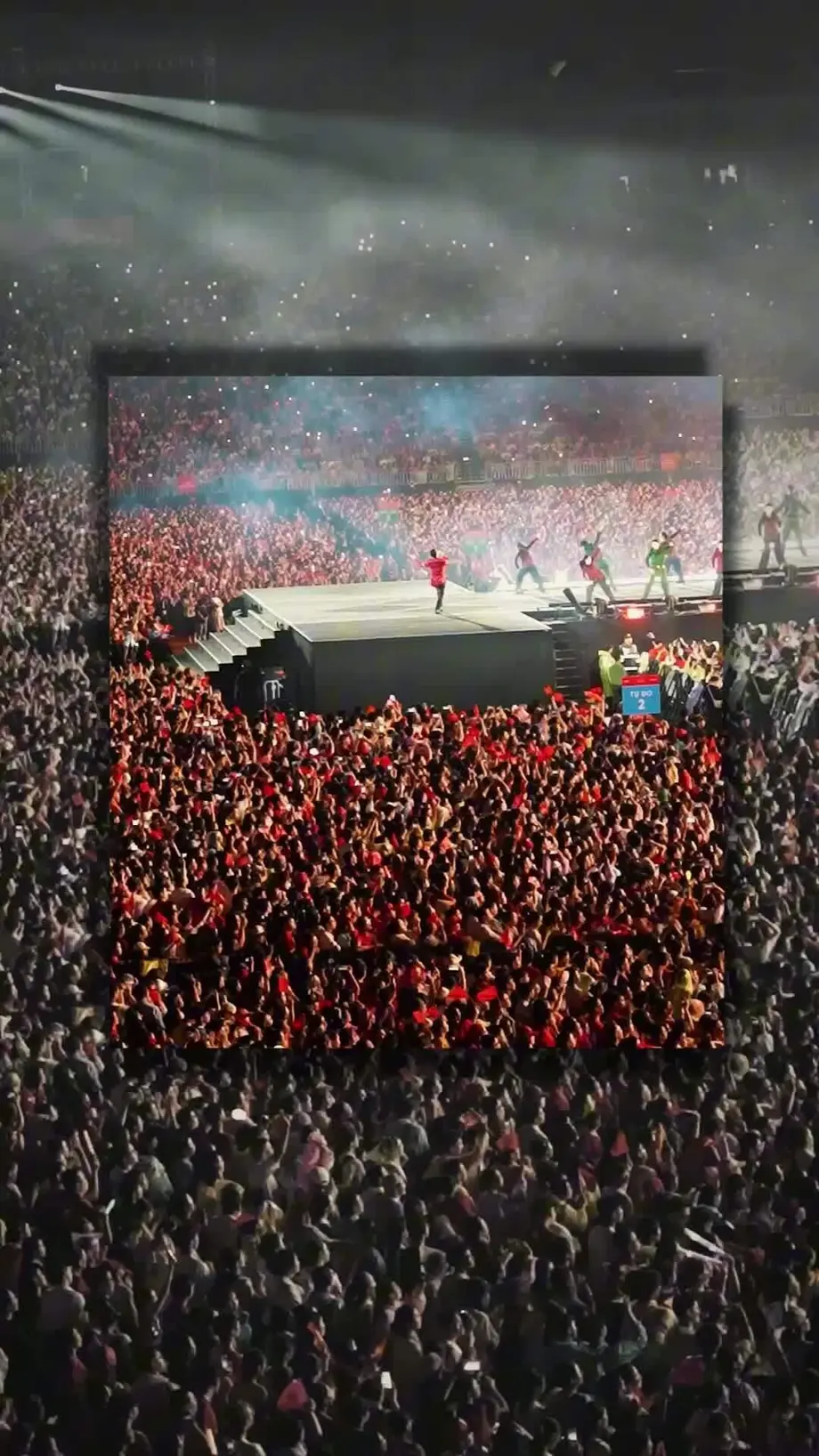
The Hanoi proposal follows a rapid expansion of major concerts since 2025, especially around the 50th anniversary of national reunification and the 80th anniversary of National Day. Nearly 20 programs in Hanoi and Ho Chi Minh City drew hundreds of thousands of spectators, providing a recent audience base for another large public performance.
The Fatherland in Our Hearts concerts at My Dinh in 2025 and in Ho Chi Minh City in 2026 attracted more than 100,000 people across the two events. They were organized jointly by Nhan Dan, the Communist Party's newspaper, and the governments of the two cities.
The proposed Cultural Day concert's audience of about 60,000 is more than half that earlier combined attendance threshold. It is not evidence that one new concert will exceed either previous event individually, because separate attendance figures for the two earlier performances are not given.
Programs including Vietnam in Me, Under the Glorious Flag and 80 Years: A Journey of Independence, Freedom and Happiness have paired revolutionary songs with new arrangements, stage technology and large performances. Music researcher Nguyen Quang Long has assessed the concert series as helping bring artistic programs with political themes closer to the public.
Audiences wearing red shirts bearing the yellow star of Vietnam's flag and singing familiar songs together have become a visible feature of these events. The new concert builds on that pattern, although its own repertoire and artists remain unannounced.
Local participation is the test beyond Hanoi
Tra warned at the October conference that preparations in some ministries, central agencies and localities were insufficiently thorough and did not closely match the goals for content and organization. She instructed authorities to review their plans and move toward concrete activities that residents could join.
Speaking about the intended annual experience, Deputy Prime Minister Pham Thi Thanh Tra said, in translation from Vietnamese:
The goal is that every year on November 24, people expect, actively participate and truly see themselves as part of Culture Day.
Activities are to reach communes, wards, villages and residential groups, with residents able to create and participate rather than simply watch. Linking Cultural Day with the Great National Unity Festival is intended to connect families, generations, ethnic groups and religious communities through a continuous week of events.
Cao Xuan Thao, vice president of the Vietnam Fatherland Front Central Committee, called for varied activities suited to regional identities and warned against empty ceremony, ostentation and waste. The ministry will coordinate with the Fatherland Front on invitations for Party and state leaders and National Assembly delegates to attend community activities.
The September notice gives local authorities a concrete requirement: every province and city should select at least one distinctive cultural activity, product or space to introduce. Examples include pedestrian streets, traditional festivals and spaces combining food and craft traditions. That requirement gives the national program a local dimension that a single concert cannot provide.
Safety, spending and decisions still to come
The government instructions call for celebrations that are enjoyable, safe and economical. They allow a combination of state funding and lawful contributions from other sources, while requiring public money to be managed properly and avoiding extravagant displays or waste. No budget for the Hanoi concert has been announced.
Local leaders are responsible for security, public order, fire safety and environmental cleanliness. The September notice also calls for action against distorted festival practices, superstition and excessive commercialization of heritage. Hanoi's expected audience of 60,000 makes the safety requirement a central part of the concert assignment, not a secondary consideration.
For concertgoers, the unresolved details include the final venue, admission method, performers, start time and access arrangements. November 23 is the reported planned evening, but the event remains under preparation. The ministry has also been assigned to hold a press conference, without an announced date.
The next concrete milestones are the October guidance and local planning deadlines, followed by the expected November 1 map announcement. Together, they should turn the national framework into schedules and activities that people can actually use. The first year's success will depend on both the major performance in Hanoi and the opportunities available closer to people's homes.
Key Points
- Hanoi is preparing an arts program and concert for about 60,000 people, provisionally on November 23, 2026.
- My Dinh National Stadium is a reported possible venue; final arrangements and admission details have not been announced.
- The first Vietnam Cultural Day falls on November 24, described as a public holiday with full pay for workers.
- Culture and Great National Unity Week is scheduled nationwide from November 18 to 24.
- All 34 provinces and cities have received access to the digital cultural map, expected to be announced on November 1.
- Film, exhibition, school, heritage and community activities will accompany the concert.
- Cultural venues are encouraged to extend hours and offer suitable fee reductions, especially on November 24.