A milestone opening strike and a difficult chase
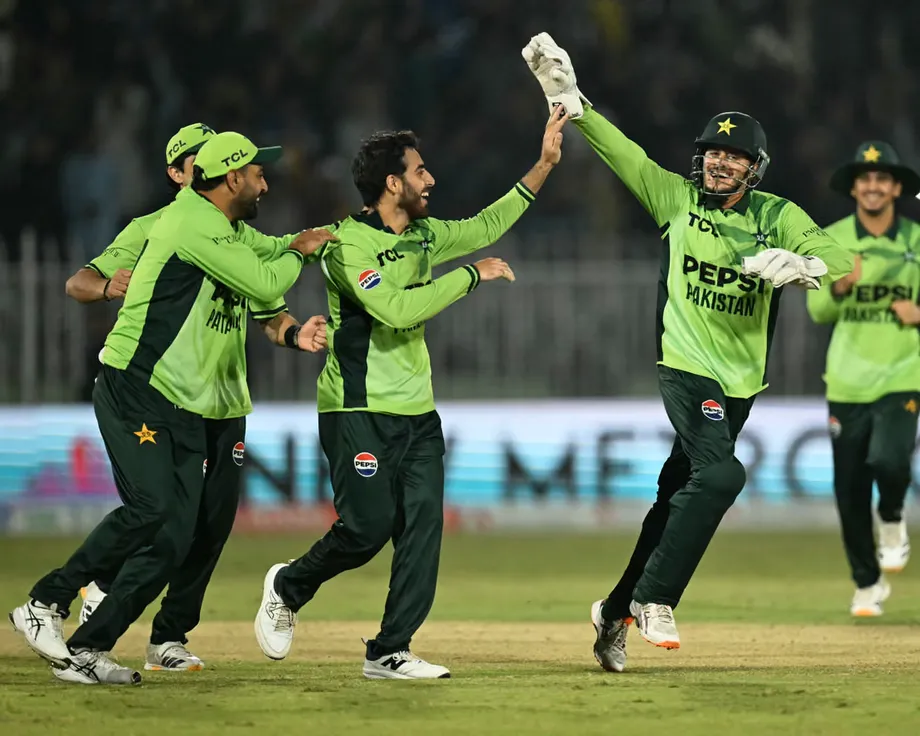
Shaheen Shah Afridi reached 150 wickets in one day internationals and finished with four for 46 as Pakistan bowled England out for 241 in 46.4 overs at Gaddafi Stadium in Lahore on October 25, 2026. Ben Duckett's 105 held England together after three wickets fell for 19 runs inside the first five overs.
Contents
- A milestone opening strike and a difficult chase
- England's top order falls inside five overs
- Duckett and Curran give England room to recover
- Pakistan's supporting bowlers make their mark
- Injury brings a debut, while England retain their selection approach
- England's tournament swings from 429 to 241
- Pakistan's early losses give England an opening
- The remaining dates in the race for the final
- Key Points
The fourth match of the tri-series carried immediate consequences for both teams. England, beaten in their opening two games, needed victory to keep their hopes of reaching the final alive. Pakistan had won both their previous matches and could secure a place in the final with another win.
England set Pakistan a target of 242, but the hosts also encountered early trouble. Pakistan lost their first three wickets with 31 on the board and their fourth at 74, giving England an opening after a difficult afternoon with the bat. The match result was not yet available.
Shaheen's first wicket brought the personal landmark: Tom Banton departed for four in the opening over of the Pakistan captain's 80th ODI. Shaheen became the fastest Pakistan fast bowler to reach 150 wickets, taking 11 fewer matches than Waqar Younis and Shoaib Akhtar, who each reached the mark in 91 appearances.
Duckett supplied England's main resistance with his fifth ODI century, while Sam Curran contributed 42 and Gus Atkinson added an unbeaten 36. Debutant Razaullah supported Shaheen with two for 38, and spinner Arafat Minhas took two for 26, including the wicket of Duckett.
England's top order falls inside five overs
Pakistan chose to field after winning the toss on a pitch described as favourable for batting. England captain Harry Brook indicated that he would have chosen to bat, so both captains initially got the innings order they preferred.
Shaheen quickly changed the mood. Banton's dismissal left England four for one, and Joe Root followed for five with the total at 11. Root slashed a catch to Saim Ayub, giving Shaheen his second wicket before England could build a platform.
Brook was then run out for one, well short of his crease, as England slipped to 19 for three. Three leading batters had gone by the fifth over, placing much of the responsibility on Duckett to keep the innings moving while avoiding another quick wicket.
Jordan Cox made six before becoming England's fourth wicket at 52. In a standard ODI, each team can face 50 overs, with six legal deliveries in each over. Losing four wickets so early forced England to balance two competing needs: scoring enough runs to challenge Pakistan and keeping enough batters available to use the remaining overs.
Duckett and Curran give England room to recover
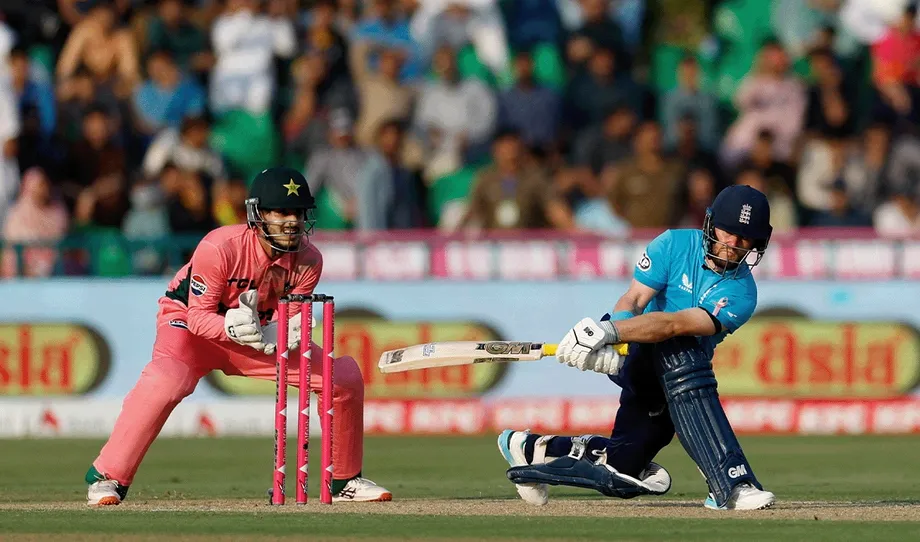
Duckett scored 105 from 111 balls, striking 10 fours and two sixes. Those boundaries supplied 52 runs, almost half his total, while the rest came through running between the wickets. His innings gave England a route away from the early collapse.
Curran provided the most substantial support among England's middle order, making 42 from 52 deliveries. The main innings account put his fifth wicket partnership with Duckett at 93 runs, although a live match update recorded the stand as 69.
Duckett reached his century from 104 balls before adding five more runs from his final seven deliveries. Shaheen removed Curran, while Minhas dismissed Duckett to leave England's remaining batters facing the task of extending the innings without its main scorer.
Duckett contributed about 44% of England's 241 runs. Together, he and Curran scored 147, roughly 61% of the total. Those figures show how heavily England relied on two batters after Banton, Root, Brook and Cox managed only 16 between them.
Pakistan's supporting bowlers make their mark
Razaullah finished his ODI debut with two wickets for 38 runs after being brought into the side following Naseem Shah's injury during the warm-up. His contribution gave Pakistan wickets beyond Shaheen's opening spell and helped prevent England from rebuilding around Duckett alone.
Minhas returned two for 26 from eight overs, conceding an average of 3.25 runs per over. His wickets included Duckett and Jamie Overton, who was caught at long off, a fielding position near the boundary in front of the batter on the off side.
Haris Rauf took one for 55. Pakistan's bowlers therefore accounted for nine dismissals, with Brook's run out completing England's 10 wickets. Shaheen returned later in the innings to finish with four wickets, combining his early damage with the work of closing out the batting.
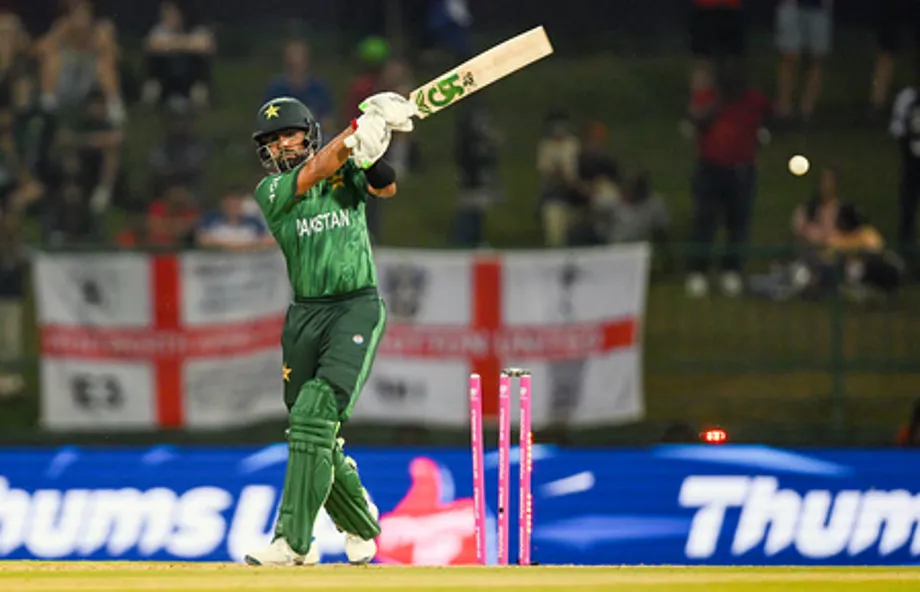
Atkinson's unbeaten contribution helped England push towards 250. The last wicket pair added 39 before Henry Crocombe was caught by Babar Azam off Shaheen. England were dismissed with 20 legal deliveries unused, reducing the opportunity to add more runs at the end.
The main innings figures gave England 241 and Atkinson 36 not out; a live score listing instead recorded 240 and Atkinson 35. The target reported for Pakistan was 242.
Injury brings a debut, while England retain their selection approach
Naseem dislocated a finger during Pakistan's warm-up, creating an immediate opening for Razaullah. Pakistan also brought back Shadab Khan in place of Faheem Ashraf, making two changes and adding another spin option for the Lahore match.
Shaheen's selection gave Pakistan several ways to attack. Razaullah joined the fast bowling group, while Shadab offered additional spin alongside Minhas. Spin bowlers generally rely on turning the ball after it lands, whereas fast bowlers place greater weight on speed, bounce and movement through the air or off the pitch.
England made one change, handing 25-year-old fast bowler Henry Crocombe his international debut in place of Josh Tongue. Adil Rashid remained outside the side despite attention on England's decision to leave out the experienced spinner.
Pakistan also wore pink uniforms as part of a breast cancer awareness initiative. The match was the first of the tournament's Lahore leg after the opening three fixtures in Rawalpindi.
England's tournament swings from 429 to 241
England arrived in Lahore after two very different defeats. Pakistan had beaten them by 87 runs, before Sri Lanka successfully chased a target of 430 in Rawalpindi on October 22.
Brook made a double century from 114 balls against Sri Lanka, yet England's 429 was still insufficient. Three days later, England's batting faced the opposite problem: early wickets left Duckett trying to build a defendable score rather than the team setting another huge target.
England's 241 in Lahore was 188 fewer than their 429 against Sri Lanka. The comparison captures the sharp change in their batting returns, while the early wickets explain much of the pressure in the latest innings. Duckett's century and the late runs from Atkinson gave England's bowlers a target to work with.
Pakistan had entered the match with wins over both opponents. They beat Sri Lanka by 37 runs in the opening fixture and England by 87 runs in their second game. England were bottom of the table behind Pakistan and Sri Lanka before play began in Lahore.
After two matches each, Pakistan led the standings with two wins, no losses and four points, with a net run rate of +1.240. Sri Lanka were second with one win, one loss and two points, with a net run rate of -0.348. England had no wins, two losses and no points, with a net run rate of -0.892.
Pakistan's early losses give England an opening
Pakistan's target required 242 runs from a maximum of 50 overs, an initial scoring rate of 4.84 runs per over. England's early breakthroughs made the chase more demanding by removing three batters with only 31 runs scored.
The fourth wicket fell at 74, leaving Pakistan needing another 168 runs with six wickets available. That position shifted attention from Shaheen's bowling achievement to whether the remaining Pakistan batters could complete the chase.
England's own innings showed the value of a substantial recovery partnership. Duckett and Curran had kept their team competitive after four early dismissals; Pakistan now needed a similar period of stability to turn a manageable target into a successful result.
For England, defending 241 offered a chance to recover from the disappointment of failing to defend 429. Their early wickets kept that chance alive, while Pakistan's route to the final depended on finishing the job their bowlers had started.
The remaining dates in the race for the final
The tournament moves through its remaining league matches in Lahore before the final on October 31. England's next scheduled fixture is against Sri Lanka on October 29, while Pakistan face Sri Lanka two days earlier.
The results and remaining fixtures trace how the teams reached this point:
- October 18: Pakistan beat Sri Lanka by 37 runs in Rawalpindi.
- October 20: Pakistan beat England by 87 runs in Rawalpindi.
- October 22: Sri Lanka chased 430 to beat England by two wickets in Rawalpindi.
- October 25: England made 241 against Pakistan in the fourth match, in Lahore.
- October 27: Pakistan are scheduled to play Sri Lanka in Lahore.
- October 29: England are scheduled to play Sri Lanka in Lahore.
- October 31: Lahore is scheduled to host the final.
Key Points
- Shaheen Shah Afridi took four for 46 as England were bowled out for 241 in 46.4 overs.
- Shaheen reached 150 ODI wickets in his 80th match, faster than any other Pakistan fast bowler.
- Ben Duckett scored 105 from 111 balls after England fell to 19 for three.
- Razaullah took two for 38 on debut, while Arafat Minhas finished with two for 26.
- Pakistan's chase of 242 encountered trouble at 31 for three and then 74 for four.
- England needed a win to stay in contention for the final; a Pakistan victory would secure their place.