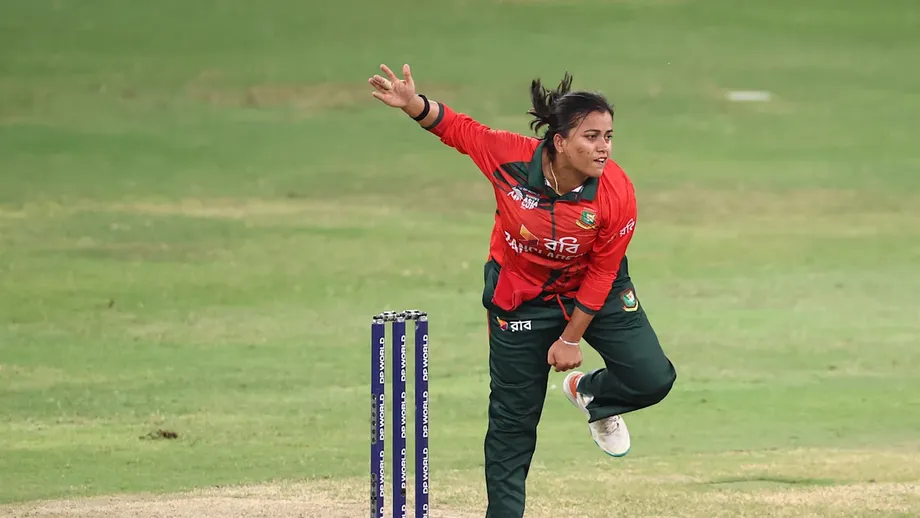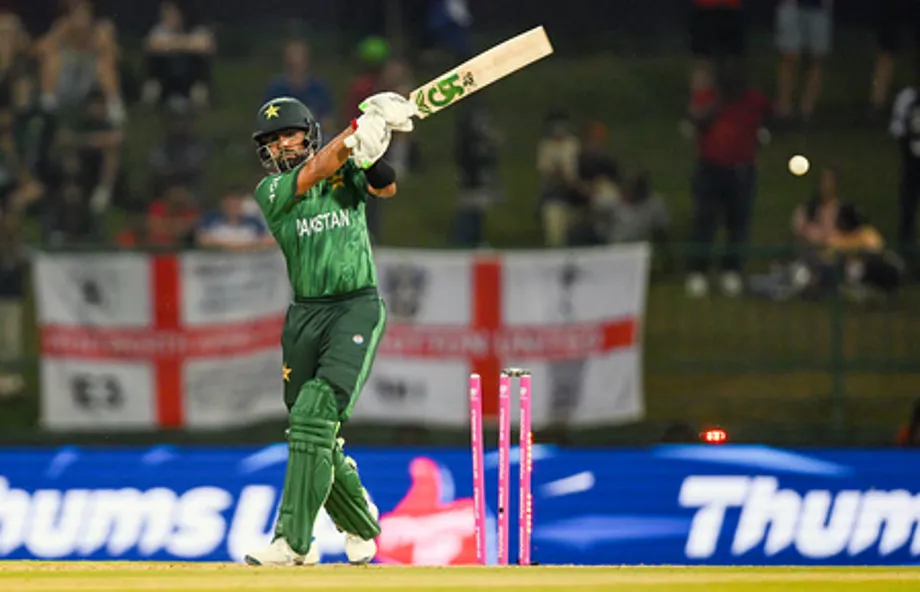
Minhas takes charge in Rawalpindi
Arafat Minhas scored 59, took six wickets for 40 runs and completed the final run out as Pakistan defeated England by 87 runs at Rawalpindi Cricket Stadium on October 20, 2026. Playing only his fifth one day international, the 21-year-old helped rescue Pakistan from 133 for five before dismantling an England chase that had begun with a partnership of 91.
Contents
- Minhas takes charge in Rawalpindi
- Pakistan recover after losing five wickets
- Nawaz attacks and Minhas bats deep
- Missed catches give Pakistan room to escape
- England's opening stand gives way to spin
- Six wickets and a final direct hit
- Brook says England became too careful
- A rare performance in only five appearances
- Pakistan lead as England turn to Sri Lanka
- Key Points
Pakistan finished on 302 for nine from their 50 overs, then dismissed England for 215 in 38.4 overs. Minhas was named Player of the Match as the hosts secured their second victory in two matches in the triangular series involving Sri Lanka.
Hasan Nawaz supplied Pakistan's highest score, making 79 from 74 balls, while Minhas combined his maiden ODI half-century with the best bowling figures of his international career. He then struck the stumps with a direct throw to run out Gus Atkinson and complete England's defeat.
The result was Pakistan's largest ODI victory over England by runs since 2005. It also spoiled England's first appearance in an ODI in Pakistan since that year, leaving captain Harry Brook to explain how a promising start had turned into a collapse with 68 deliveries still unused.
Pakistan recover after losing five wickets
England won the toss and chose to bowl, with Brook expecting evening dew to help his batters later. Atkinson immediately rewarded that decision: Fakhar Zaman clipped the first delivery of the match to Joe Root at midwicket and departed without scoring.
Sonny Baker dismissed Saim Ayub for eight, leaving Pakistan 31 for two. Babar Azam made 34 before Will Jacks bowled him, while Salman Ali Agha, who had scored a century against Sri Lanka in Pakistan's opening match, fell for 16 after sweeping an Adil Rashid full toss to Atkinson.
Pakistan slipped to 81 for four, then 133 for five after 27.3 overs when Saad Baig was dismissed for 35. Those figures mark successive stages of the same troubled innings: Nawaz first helped stabilise the batting with Baig, before Minhas joined him to begin the decisive recovery.
Nawaz and Baig added 52 for the fifth wicket. Nawaz then shared a stand of 78 with Minhas for the sixth, carrying Pakistan to 211 before Jamie Overton bowled him with a fast yorker, a delivery aimed at the base of the stumps.
Nawaz attacks and Minhas bats deep
Nawaz changed Pakistan's tempo by hitting the first ball he faced from Rashid for six. His innings contained five fours and four sixes, including three sixes against the experienced leg spinner. That willingness to attack prevented England from settling into a long period of control after their early wickets.
Minhas took a different route to his 59 from 58 deliveries. He struck nine fours, kept the innings moving alongside Nawaz and stayed to support the final acceleration after his partner departed.
Minhas explained that he and Nawaz had agreed to preserve wickets while extending their partnership:
Hasan and I discussed that we need to bat deep. I took charge after Hasan got out and I tried to bat until the end of the innings, which helped in taking the score beyond 300.
Faheem Ashraf then joined Minhas in a partnership of 72 from 49 balls for the seventh wicket. Ashraf scored 39 from 26 deliveries, including five fours and a six. Pakistan collected 91 runs from their final 10 overs, moving from 211 after 40 overs to 302.
That closing burst supplied just over 30 percent of Pakistan's total. It turned an innings threatened by an early collapse into a target of 303, with Haris Rauf hitting the final delivery for four to take the hosts beyond 300.
Missed catches give Pakistan room to escape
England's fielding helped both principal scorers survive. Atkinson dropped Nawaz on 28, allowing him to add another 51 runs. Wicketkeeper Jordan Cox also missed Minhas on 12 when Pakistan were 190 for five in the 37th over.
Minhas received further chances late in his innings. Cox could not complete a catch when he was on 42, and a boundary relay involving Tom Banton and Ben Duckett broke down with Minhas on 44. Those escapes kept an established batter at the crease during Pakistan's most productive stretch.
England's missed opportunities were especially costly because their bowlers had created a strong position. Atkinson finished with two wickets for 35 runs, while Baker claimed three wickets, including late dismissals that limited further damage.
The official PCB scorecard confirms that Baker conceded 65 runs in nine overs and Ashraf scored 39 from 26 balls. It records Pakistan's total as 302 for nine in 50 overs and England's as 215 all out in 38.4 overs, confirming the 87-run margin.
England's opening stand gives way to spin
Banton and Duckett initially made the chase look manageable. Their opening partnership of 91 gave England a substantial platform, and Banton attacked Naseem Shah for 18 runs in one over, including two sixes.
Duckett made 45 from 46 deliveries before mistiming a pull against Rauf. Banton continued to 57 from 53 balls, with five fours and two sixes, but then hit a short delivery from Minhas to Shaheen Shah Afridi at midwicket.
England had reached 120 for one before Banton's dismissal. From there, their final nine wickets brought only 95 runs. Root and Sam Curran briefly kept the chase alive, but no partnership after the opening stand exceeded 37.
Minhas's dismissal of Brook was the outstanding delivery of the spell. The ball pitched around middle stump, turned past the England captain's defensive bat and struck off stump, sending him back for five.
Minhas and fellow spinner Ayub then restricted scoring together. England went 48 deliveries without a boundary before Curran hit Ayub for six at the end of the 26th over. The target remained within reach, but the loss of wickets steadily reduced England's options.
Six wickets and a final direct hit
Root made 33 from 35 balls before Naseem bowled him with a delivery that stayed low. Rauf removed Curran for 27, leaving England 177 for five and requiring their remaining batters to rebuild while maintaining the scoring rate.
Minhas took over from there. He trapped Cox leg before wicket for 18, dismissed Overton for one with a catch at long on, and had Jacks caught at midwicket for 19. Rashid was then out leg before wicket without scoring.
A leg before wicket dismissal occurs when the umpire judges that a batter's leg has illegally stopped a ball that would have hit the stumps. Minhas used changes in turn and flight to challenge both the bat and the pads, rather than relying on one delivery throughout his spell.
Minhas, whose six wickets cost 40 runs across 8.4 overs, described the value of changing his bowling:
I think variations are very important for a spinner as they help in deceiving the opposite batters.
England were 165 for three before losing their final seven wickets for 50 runs. Minhas completed the match by running out Atkinson after a mix up with Baker, giving him a direct role in seven of England's 10 dismissals.
Brook says England became too careful
Brook believed Pakistan's total was slightly below what the pitch offered. His decision to bowl had also been based on the expectation that dew would make batting easier later, and he said England remained satisfied with their position at the interval.
The England captain identified repeated losses of wickets, rather than the size of the target alone, as the central problem:
The story of the innings was not enough partnerships and losing wickets in clumps. We didn't manage to put their bowlers under enough pressure to make them miss and that's something we'll talk about.
England had recently worked with specialist mentor Kevin Pietersen on rotating the strike against spin. That means taking singles and changing which batter faces the next delivery, instead of allowing a bowler to deliver repeatedly at one player.
Brook said England also needed to keep looking for boundaries:
We've been speaking a lot about rotation of strike against spin through the middle overs but we could still be putting bowlers under pressure and hit boundaries as well.
England were missing Jos Buttler, Jofra Archer and the injured Jacob Bethell. Banton and Cox therefore had opportunities to strengthen their selection claims, but neither converted a promising situation into the innings England needed.
A rare performance in only five appearances
Minhas became the third Pakistan player, after Abdul Razzaq and Shahid Afridi, to score a half-century and take at least five wickets in the same ODI. Afridi produced a larger statistical double against West Indies in 2013, scoring 76 and taking seven wickets for 12 runs.
Minhas had already taken five for 32 against Australia on his ODI debut in May, becoming the first Pakistan men's player to claim five wickets on debut in the format. His Rawalpindi performance therefore gave him two innings with at least five wickets in his first five ODIs.
His six for 40 was the best ODI bowling performance by a Pakistan spinner against England. Among Pakistan bowlers playing ODIs at home, it ranked second to Shoaib Akhtar's six for 16 against New Zealand in Karachi in 2002.
Pakistan captain Shaheen Shah Afridi linked the result to preparations for the following year's World Cup:
As a team we have shown progress as we are looking to build towards next year's World Cup. The form of Arafat and the fast bowlers are good signs for us.
Pakistan lead as England turn to Sri Lanka
Pakistan's win followed their 37-run victory over Sri Lanka in the tournament opener. They led the standings with four points from two matches and a net run rate of plus 1.240. Net run rate compares a team's scoring speed with that of its opponents and can separate teams level on points.
England and Sri Lanka each had no points after one defeat, with net run rates of minus 1.740 and minus 0.740 respectively. England entered the tournament having won their three previous ODI series of the year, making Rawalpindi a sharp setback at the start of a schedule described as potentially including 21 ODIs before the next World Cup in southern Africa.
The immediate tournament schedule gives England a quick chance to respond:
- October 18: Pakistan beat Sri Lanka in the opening match, with Salman scoring a century.
- October 20: Pakistan beat England by 87 runs in Rawalpindi, taking their second victory.
- October 22: England are scheduled to face Sri Lanka in Rawalpindi.
- October 25: Pakistan and England are scheduled to meet again in Lahore.
Pakistan moved close to a place in the final, while England's next task is to turn starts into sustained partnerships. In Rawalpindi, the hosts recovered through two substantial stands involving Minhas; England's partnerships became shorter as the chase progressed.
Key Points
- Pakistan beat England by 87 runs after making 302 for nine and dismissing the visitors for 215.
- Arafat Minhas scored 59, took six for 40 and completed the final run out in his fifth ODI.
- Hasan Nawaz led Pakistan's batting with 79 from 74 balls.
- England lost their final nine wickets for 95 runs after reaching 120 for one.
- Pakistan lead the series standings with two wins and four points.
- England next face Sri Lanka on October 22 before meeting Pakistan again on October 25.