A 201 Billion Won Listing Meets a Sharp Reversal
Elice Group closed its first day on South Korea's Kosdaq market at 61,500 won on Tuesday, October 20, 2026, down 32.04% from its initial public offering price of 90,500 won. The AI cloud company's 201 billion won fundraising, worth about $151 million, was the market's biggest listing of the year.
Contents
- A 201 Billion Won Listing Meets a Sharp Reversal
- How the Debut Unfolded
- What Elice Actually Sells
- Where the IPO Money Is Intended to Go
- Why Heavy Subscription Demand Did Not Hold the Price Up
- Why Investors Are Comparing Elice With CoreWeave
- Gartner Sees a Risk of Too Much Capacity
- The Selling Crossed Borders, Then Shares Recovered
- A Difficult Moment for New AI Listings
- Key Points
The fall followed intense demand before trading began. The offering was priced at the top of its marketed range, while the portion reserved for individual investors attracted orders for roughly 400 times the shares available. Those investors put down about 10.3 trillion won in subscription deposits while seeking an allocation.
Elice's reversal quickly became part of a wider debate over whether companies building and renting computing capacity for artificial intelligence can earn enough to justify their prices and expansion plans. South Korea's KOSPI benchmark fell 4%, with Samsung and SK hynix also declining. American AI infrastructure shares came under pressure before several recovered during the US session.
The company entered the market with business growth behind it. Revenue in the first half of 2026 was reported to have tripled from the same period a year earlier, and profitability improved. Investors nevertheless marked its shares down sharply as concerns about financing costs and future demand weighed on the sector.
For an investor allocated shares at the offer price, the closing price represented a loss of 29,000 won per share. A purchase of 100 shares would have cost 9.05 million won and been worth 6.15 million won at the close, a decline of 2.9 million won before fees.
How the Debut Unfolded
Elice opened at 75,700 won, already below its offer price, and selling continued during the first minutes of trading. By 9:10 a.m., its shares were changing hands at 62,200 won, a decline of 31.27% from the IPO price. The stock touched 61,000 won during the session.
The important steps in the company's development and market debut were:
- 2015: Elice Group was founded, developing software and services that later included AI education and cloud computing.
- 2025: Elice secured $14.9 million in Series C funding and partnered with SK Telecom on AI data center infrastructure and AI solutions.
- Before the October 2026 listing: The company raised 201 billion won at 90,500 won per share, with the retail portion roughly 400 times subscribed.
- October 20, 2026: Shares opened at 75,700 won and finished at 61,500 won, down 32.04% from the offer price.
An IPO, or initial public offering, is the sale of shares as a company enters the public stock market. Investors who receive an allocation pay the offer price. Once exchange trading begins, buyers and sellers set the price through their orders, which can produce a very different valuation within minutes.
What Elice Actually Sells
Elice combines education, software and computing infrastructure. Its services include environments where people can learn and practise AI, systems for managing educational materials, and access to the powerful chips needed to develop and operate AI applications.
The company describes its origins as a small research lab at KAIST, a South Korean science and technology university. In a statement marking the listing, Elice Group said:
Today, Elice Group takes a big step forward with our listing on the Kosdaq market.
Elice supplies access to Nvidia graphics processing units, or GPUs, and neural processing units, or NPUs, from South Korea's FuriosaAI. GPUs can perform many calculations at once, making them useful for AI workloads. NPUs are processors designed specifically for neural networks, the computing systems behind many AI applications. Hardware from another South Korean supplier, Rebellions, is on Elice's roadmap.
Customers can rent computing capacity instead of buying and maintaining the equipment themselves. Elice also provides tools that help businesses connect applications to its services and adopt AI in their operations. Its main product areas include AI cloud services and AI transformation, sometimes shortened to AX.
Where the IPO Money Is Intended to Go
Elice plans to use the proceeds to expand its AI data center operations in South Korea and grow internationally. Its investors include venture capital firms Vertex Ventures and Altos Ventures.
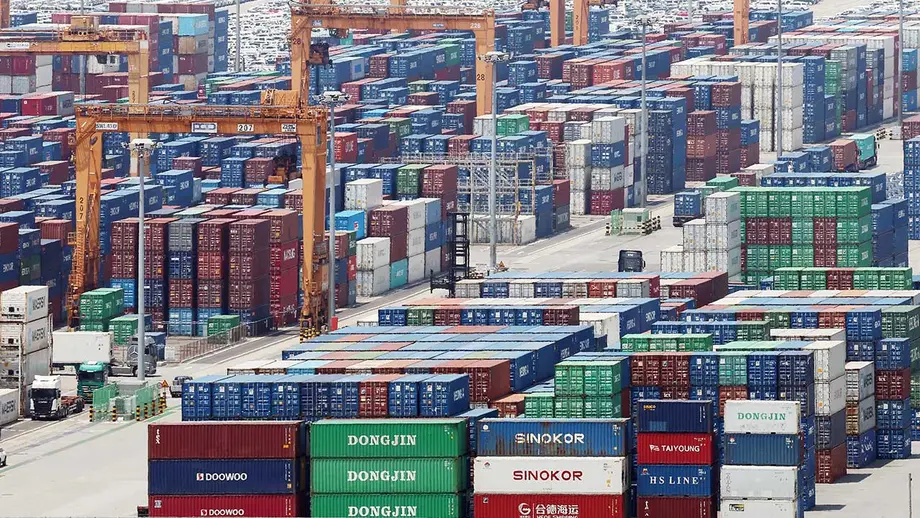
Busan is part of that expansion plan. Elice is planning an AI data center there using its Portable Modular Data Center system, known as PMDC. The system places computing infrastructure in container modules, allowing a facility to be assembled from separate units rather than relying entirely on a conventional building.
SK Telecom is another part of the company's infrastructure strategy. The two companies partnered in 2025 to build AI data center infrastructure and develop AI solutions. That relationship adds an established telecommunications operator to Elice's expansion efforts.
The 201 billion won raised in the IPO is company funding; the subsequent share price decline changes the market value of its shares. Elice's proposed Busan facility has no opening date specified in the accounts of its listing. Detailed figures for its debt, capacity utilisation and returns from the planned expansion were also not disclosed there.
Why Heavy Subscription Demand Did Not Hold the Price Up
South Korean individual investors committed about 10.3 trillion won in deposits while applying for Elice shares. Those deposits were roughly 51 times the entire 201 billion won offering, illustrating the scale of interest before the debut.
Subscription deposits are money put down during the application process. Final allocations depend on the shares available and the offering's allocation rules, with excess funds returned. The roughly 400 times subscription figure concerned the retail portion, which was smaller than the full offering.
Elice therefore moved between two different tests of demand. Before listing, investors competed for a limited allocation at a fixed price. On Tuesday, the wider market continuously reassessed what those shares were worth as trading orders arrived.
The result was especially painful for South Korea's active retail investment community, often called ants. Strong interest in securing an IPO allocation gave way to an immediate loss for investors who bought at the offer price and held through the close.
Elice's reported revenue growth also shows why investors were looking beyond current sales momentum. A business can increase revenue quickly while still needing substantial capital to buy chips, build facilities and meet operating costs. Shareholders must weigh that growth against the price they pay and the spending needed to sustain it.
Why Investors Are Comparing Elice With CoreWeave
Elice's debut drew attention to neoclouds, companies that specialise in providing computing infrastructure for AI. Customers rent access to powerful processors rather than construct their own facilities. CoreWeave, a US provider backed by Nvidia, has become a central example of both the opportunity and the financial pressure in this business.
CoreWeave shares had fallen 25% in the preceding week as investors focused on its borrowing and rising bond yields. A bond yield reflects the return investors demand to hold a company's debt. Higher yields can signal greater concern about repayment and can make new borrowing more expensive.
HSBC analyst Abhishek Shukla assigned CoreWeave a Reduce rating and a $39 price target, putting his valuation well below its trading price. In a note issued on Monday, he wrote:
Debt market woes and moderating LLM revenues are exacerbating structural concerns for neoclouds.
LLMs, or large language models, are AI systems that generate and process language. Companies developing them are customers for computing infrastructure. If their revenue grows more slowly, investors worry they may reduce future capacity orders or press suppliers for lower prices.
Nvidia chief executive Jensen Huang offered a more positive view of CoreWeave's finances the previous Thursday. He said he was "optimistic" and that its "cost of capital is actually decreasing." The disagreement centres on whether expanding demand and access to funding can support the cost of building more infrastructure.
Gartner Sees a Risk of Too Much Capacity
Gartner forecast that 80% of neocloud providers could cease operating independently by 2030. That outcome could include acquisitions or mergers as well as business closures, leaving fewer independent suppliers serving the market.
Will Sommer, a senior director analyst at Gartner, described a gap between planned investment and the money AI services could generate. He said:
"Our research indicates that enterprise and consumer AI revenue will be insufficient to support profitable returns on all planned AI capital expenditures" between 2027 and 2030.
Capital expenditure means spending on assets such as servers, chips, cooling equipment and data center buildings. Providers commit money to those assets in anticipation of future customer payments. Their returns depend partly on how much of the equipment customers use and how much they pay for it.
Gartner chief forecaster John Lovelock said computing capacity currently exceeded demand, while many AI services offered processing through free or partly free products. He expected many AI markets to consolidate into a duopoly, meaning a market dominated by two companies.
Recent revenue figures from major AI developers added to those concerns. Anthropic's quarterly revenue growth slowed from 140% in the second quarter to 45% in the third, according to figures cited in the market discussion. Wolfe analyst Stephanie Roth also cited OpenAI revenue that was $20 billion below analyst expectations. Both developments sharpened investors' focus on how quickly AI usage becomes paying business.
The Selling Crossed Borders, Then Shares Recovered
South Korea's technology sector faced broad selling on Tuesday. The KOSPI closed down 4%, and major chipmakers Samsung and SK hynix declined alongside the weak Elice debut. Those companies serve different parts of the technology supply chain, linking investor expectations for chips, computing capacity and AI spending.
US trading was more mixed. CoreWeave fell as much as 6% before recovering and later trading higher. Nebius, DigitalOcean and Iren also experienced pressure or uneven trading during the session.
By around noon Eastern Time, the S&P 500 was up 0.43%, the Dow Jones Industrial Average had gained 0.97%, or about 503 points, and the Nasdaq 100 was up 0.22%. The recovery showed that weakness in AI infrastructure stocks was taking place within a market responding to several competing forces.
Oil prices were one of those forces. Brent crude reached $111 a barrel amid concerns about attacks on shipping and production facilities in Saudi Arabia, then retreated to about $108. US crude fell to $102.70. The pullback in oil helped shares recover some earlier losses.
A Difficult Moment for New AI Listings
Elice's debut followed the cancellation or postponement of three other planned stock market listings in the data center sector. Among them, Australian data center group Firmus, which has Nvidia backing, scrapped plans for a $5 billion IPO.
For companies seeking public funding, Elice's experience presents a concrete financing challenge. Private fundraising and enthusiastic IPO applications can support expansion, yet a weak debut may make investors more demanding about the price of future offerings and the financial evidence behind growth plans.
David Morrison, senior market analyst at TradeNation, warned that the selling in US chip and AI related shares might continue. Referring to their trading charts, he said:
A look at the charts of individual stocks within the US chip sector this morning, and indeed AI-adjacent stocks as well, shows that the selloff since the beginning of this month, or indeed from late September in some cases, may not have completed yet.
Elice now enters public ownership with fresh capital and a sharply lower share price. Its stated priorities remain expansion in South Korea and abroad. Investors will be watching whether that spending produces enough paying demand to turn rapid revenue growth into durable returns.
Key Points
- Elice closed its October 20 Kosdaq debut at 61,500 won, down 32.04% from its 90,500 won offer price.
- The company raised 201 billion won, about $151 million, in the market's biggest listing of 2026.
- The retail portion was roughly 400 times subscribed, attracting about 10.3 trillion won in deposits.
- Elice plans to expand AI infrastructure in South Korea and internationally, including a modular data center in Busan.
- Concerns about borrowing costs, computing capacity and customer revenue weighed on the wider AI infrastructure sector.
- South Korea's KOSPI fell 4%, while several US technology shares recovered after early losses.