Danantara business risks drive proposed legal change
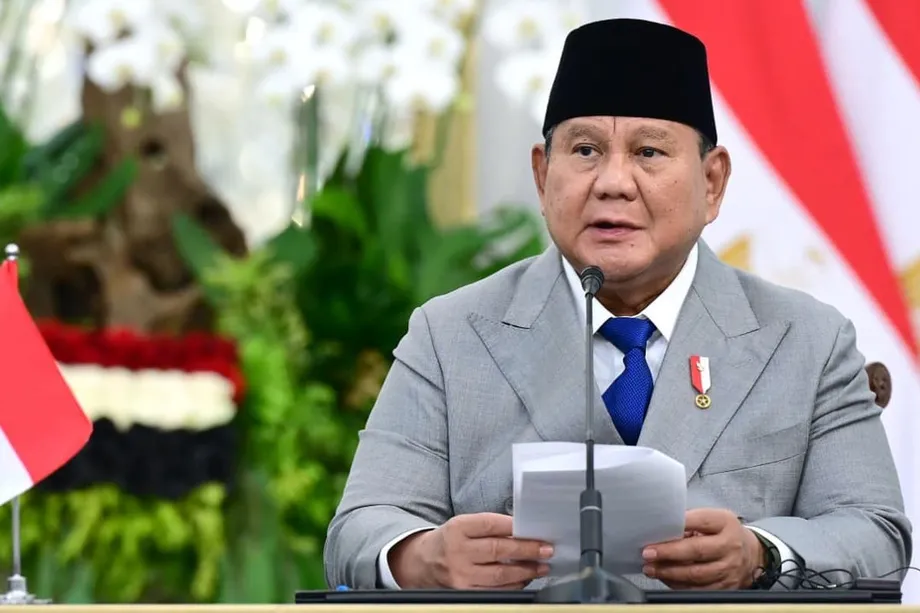
President Prabowo Subianto has backed a National Economic Council study proposing a change to Indonesia's approach to corruption, council chairman Luhut Binsar Pandjaitan said after a meeting at Merdeka Palace in Jakarta on October 20, 2026. The proposal would move the focus away from losses to state finances and toward bribery, with Luhut identifying business decisions at the investment management body Danantara as a central concern.
Contents
- Danantara business risks drive proposed legal change
- What has the president agreed to?
- Why Danantara is central to the argument
- Indonesia already has multiple corruption offenses
- UNCAC reaches beyond bribery
- A convention adopted more than two decades ago
- The policy choice concerns conduct and accountability
- Social assistance and weather risks also discussed
- Key Points
Luhut argued that the risk of a corruption case linked to state losses can burden companies owned by the state and make investment decisions harder. He said the council, known by its Indonesian initials DEN, based its study on the United Nations Convention Against Corruption (UNCAC), which Indonesia ratified on April 18, 2006, through Law No. 7 of 2006.
The debate brings together two practical concerns: giving managers room to take ordinary business risks and protecting public money from misuse. Its legal reach could extend beyond Danantara because Indonesia's corruption legislation covers many kinds of conduct, while the state financial loss provisions sit specifically in Articles 2 and 3.
UNCAC also covers a much wider range of misconduct than bribery, including embezzlement, abuse of official functions and laundering criminal proceeds. Any attempt to align Indonesian law with the convention therefore involves choices about several offenses, rather than a simple replacement of one definition with another.
Luhut, speaking as DEN chairman after the meeting chaired by Prabowo, described the president's support for the study:
"The president has also agreed with the study conducted by the National Economic Council team on the definition of corruption, because it is important for Indonesia's efforts to tackle corruption to meet international standards," Luhut said.
What has the president agreed to?
Luhut described presidential approval for the council's study and its proposed direction. His public explanation centered on revising the treatment of state financial losses under Indonesia's corruption law and making enforcement consistent with international standards.
The precise legal wording, the provisions to be amended and a timetable for changing the law were not announced. Those details matter for businesses, investigators and the public because they will determine how the proposed approach operates in actual cases.
A study sets out a policy argument. An amendment sets out the rules that prosecutors and courts must apply. The next substantive issue is how the council's argument would be translated into legal language, including the treatment of decisions involving public assets.
Luhut's explanation was broad: state losses should cease to be the focus of corruption cases, while bribery should take a central role. The eventual wording would have to specify which conduct remains punishable and how that conduct would be established.
Why Danantara is central to the argument
Danantara manages investments and oversees enterprises owned by the Indonesian state. Decisions involving those businesses can put public assets at risk, while also requiring managers to make judgments about uncertain commercial outcomes.
Luhut said the use of state financial losses in corruption cases burdens such decisions. His argument was that a business can lose money because it took a commercial risk, making the outcome of an investment a difficult basis around which to organize criminal liability.
The DEN chairman expressed that concern in a brief statement:
"Any business involves risks," he said.
A commercial loss describes what happened to the money. Bribery describes conduct: giving or receiving an improper benefit to influence a decision. A shift toward bribery would place greater attention on the behavior behind a transaction. For Danantara and the companies it oversees, the practical question is how the law will separate ordinary commercial judgment from punishable misuse of authority or assets.
Indonesia already has multiple corruption offenses
Indonesia's legal framework rests on Law No. 31 of 1999 on the Eradication of Criminal Acts of Corruption, as amended by Law No. 20 of 2001. It identifies at least 30 acts classified as corruption, with state financial losses addressed in Articles 2 and 3.
That structure gives the proposal a more specific legal setting than the phrase "changing the definition of corruption" might suggest. The discussion concerns a framework containing numerous offenses, rather than a single rule covering every corruption case.
Articles 2 and 3 are central to Luhut's argument because they contain the state financial loss element he wants reconsidered. The wider framework means that lawmakers would also need to account for how any changes fit alongside other corruption offenses.
For readers following the debate, the key terms describe different things. A state financial loss concerns damage to public finances. An offense sets out prohibited behavior and the conditions for criminal punishment. The proposed reform would change the relationship between those concepts in the cases it covers.
UNCAC reaches beyond bribery
The United Nations convention includes bribery of domestic public officials, foreign public officials and officials of public international organizations. It also addresses bribery within the private sector.
Its other provisions cover embezzlement or diversion of property, trading in influence, abuse of official functions, illicit enrichment, laundering criminal proceeds, concealment and obstruction of justice. Some provisions require countries to criminalize conduct, while others ask countries to consider doing so within their legal systems.
Those terms describe different ways corruption can operate. Embezzlement involves taking or diverting property entrusted to someone. Trading in influence involves an improper benefit connected to someone's influence over a decision. Obstruction of justice concerns interference with the process used to investigate or prosecute wrongdoing.
UNCAC does not require every corruption offense to involve a demonstrable loss to state finances. Its scope allows attention to focus on prohibited conduct even where calculating a public financial loss is unnecessary for the particular offense.
Luhut described bribery as the core of the international approach and said Indonesia was the only country applying the state loss concept in this way. That was his comparison. The concrete issue for Indonesia is how to retain coverage of the convention's broader forms of misconduct while addressing the business concerns he raised.
A convention adopted more than two decades ago
The UN General Assembly adopted UNCAC on October 31, 2003. The convention was signed by 140 countries, including Indonesia, and entered into force on December 14, 2005, after reaching the required 30 ratifications.
Indonesia's ratification followed in April 2006, approximately 20 years before the palace meeting at which Luhut presented the DEN study. The main dates are:
- October 31, 2003: The UN General Assembly adopts UNCAC.
- December 14, 2005: The convention enters into force following 30 ratifications.
- April 18, 2006: Indonesia ratifies UNCAC through Law No. 7 of 2006.
- October 20, 2026: Luhut announces Prabowo's support for the DEN study after the Merdeka Palace meeting.
Indonesia's ratification included a reservation concerning Article 66(2), which deals with dispute settlement. A reservation is a formal qualification a country makes when accepting a treaty. In this case, it concerns the process for settling disputes about the convention.
Luhut also used the expression "UN Charter" while explaining the study. The instrument Indonesia ratified through Law No. 7 of 2006 is the United Nations Convention Against Corruption. Naming that instrument precisely matters because its provisions are the stated reference point for the proposed changes.
The policy choice concerns conduct and accountability
DEN's business argument and UNCAC's range of offenses point to two connected tasks. The government wants to address concern over commercial losses at public enterprises. The convention provides a framework for punishing several forms of corrupt behavior, including conduct outside bribery.
A reform focused on business decision making would need language explaining the treatment of ordinary investment risk. A reform aligned with UNCAC would also need to account for embezzlement, abuse of functions and the other conduct addressed by the convention.
For managers, that language would shape the legal conditions under which they approve investments or corporate transactions. For the public, it would shape the safeguards surrounding assets held by Danantara and state enterprises. For investigators, it would determine which elements of an offense they must establish.
The useful comparison is therefore between the existing provisions and the proposed replacements, offense by offense. Luhut has set out the policy preference. The detailed legislative choices will determine its reach.
Social assistance and weather risks also discussed
The October 20 meeting also covered digital data for social protection. Luhut said a program was planned for launch by Prabowo on November 10, 2026, with cash transfers intended to improve the targeting of assistance to eligible recipients.
Luhut described an intended move away from subsidies attached to products and toward assistance delivered through cash transfers. He said the completeness of government data was part of the discussion with the president and economic ministers.
Food supplies and flooding were also on the agenda. Luhut said officials discussed potential effects of El Nino and La Nina and contingency measures based on monitoring by the Meteorology, Climatology and Geophysics Agency (BMKG), including preparation of planting schedules.
Those announcements place the corruption study within a broader economic meeting involving investment decisions, household assistance and weather risks. The November 10 date concerns the social protection program, while the corruption proposal still requires the detailed legal steps outlined above.
Key Points
- Luhut said Prabowo backed DEN's corruption study after an October 20, 2026, meeting at Merdeka Palace.
- The proposal seeks to shift attention from state financial losses toward bribery, citing business risks at Danantara and state enterprises.
- Indonesia's corruption framework covers at least 30 acts, with state financial loss provisions in Articles 2 and 3.
- UNCAC addresses bribery and several other forms of misconduct, including embezzlement and abuse of official functions.
- Indonesia ratified UNCAC on April 18, 2006, through Law No. 7 of 2006.
- The proposed amendments and their legislative timetable have yet to be announced.