November Launch Planned, With Payment Tests in 2027
Indonesia plans to move government assistance away from subsidised products and goods toward direct cash transfers, using a digital social protection system that had registered 11.5 million families by October 20, 2026. President Prabowo Subianto is scheduled to launch the digital programme on November 10, while tests of the new payment arrangements are planned for the first quarter of 2027.
Contents
- November Launch Planned, With Payment Tests in 2027
- What Moving From Products to People Means
- Registration Is Expanding Across Indonesia
- Who Is Being Considered for Assistance?
- What the Bali Results Say About Missed Families
- Earlier Recipient Removals Show the Stakes
- Cash Through Accounts Has a Long History
- Readiness Includes More Than a Working Portal
- The Dates That Matter Next
- At a Glance
Luhut Binsar Pandjaitan, chairman of the National Economic Council, known as DEN, outlined the plan after meeting Prabowo and government economic officials at Merdeka Palace in Jakarta on October 20. The government wants assistance to reach people who qualify for support, rather than directing subsidies toward products that can also be bought by wealthier households.
DEN member Mochamad Firman Hidayat said trials of the digital system had reached all 514 regencies and cities. More than 600,000 registrations were entering the portal each day, supported by 775,000 agents helping residents enrol.
A study of a trial in Bali supplied the main evidence behind the announcement. Firman said the digital approach reduced errors that leave eligible people without assistance by 24.1%, while errors that give assistance to people who do not qualify fell by 4.1%.
For families, the proposed change involves two connected decisions: who appears on the recipient list and how their assistance reaches them. The November launch is one step in that process. Officials aim to finish integrating and updating recipient information by the end of 2026 before testing cash distribution early the following year.
What Moving From Products to People Means
Luhut described a change in the destination of public spending. Under a product subsidy, the government helps lower the price of an item. Under a targeted cash transfer, the government sends money to a person identified as eligible for assistance.
Luhut explained the intended direction at the palace briefing. Speaking in Indonesian, he said:
Jadi pemerintah pada ujungnya tidak memberikan subsidi kepada produk lagi.
His statement means that, ultimately, the government would stop subsidising products. The announcement places recipient identification at the centre of that transition: a household would receive support because it meets the programme criteria.
Luhut previously put the average value of assistance gathered from different programmes for the proposed cash scheme at Rp5.4 million per person. He did not specify the period covered by that amount. Final recipient numbers, programme coverage and payment arrangements depend on the updated data and the readiness of the system.
The policy direction has an earlier precedent. Hilman Palaon's July 24, 2024 Lowy Institute analysis describes a 2020 proposal to reform cooking gas subsidies by replacing support for goods with funds directed to eligible beneficiaries. The new announcement extends that same basic approach to the wider discussion of social assistance.
Registration Is Expanding Across Indonesia
Firman's October 20 figures describe a registration operation covering the entire country. The 11.5 million entries were reported as family cards or heads of households, rather than a count of individual people. A family card is an administrative record identifying members of a household.
The government's planning target is expressed differently: around 50 million individual beneficiaries. Luhut has said the eventual number could exceed 50 million after data corrections. Household registrations and individual beneficiary targets therefore measure different parts of the operation.
Earlier preparations included testing in 215 regencies and cities. By October 20, Firman said the wider digital trial covered all 514. Registration agents are intended to help residents enter the system, giving people an assisted route alongside public registration through the portal.
The registration drive also creates a large checking task. Information entered by residents must be connected with government records, assessed against programme rules and kept current as household circumstances change.
Who Is Being Considered for Assistance?
The recipient database is the National Single Social and Economic Data system, known by its Indonesian abbreviation DTSEN. Officials intend to use households in deciles one through five as the pool for digital social protection.
A decile is one of ten equally sized groups in a ranking. In this case, households are ranked by their social and economic circumstances. Deciles one through five cover the lower half of that ranking, ranging from very poor households to families with modest resources.
DEN member Arief Anshory Yusuf and Statistics Indonesia head Amalia Adininggar Widyasanti are involved in improving DTSEN accuracy. Luhut said the work uses artificial intelligence developed in Indonesia.
Officials plan to combine population records held by the Directorate General of Population and Civil Registration, known as Dukcapil, with information from ministries and other agencies. Public registration provides another way to identify residents who need assessment for assistance.
Artificial intelligence can help process and compare large amounts of information. The household decisions still depend on the information collected and the rules used to decide eligibility. For a family whose circumstances have recently worsened, updating those records can determine whether the system recognises its need.
What the Bali Results Say About Missed Families
Firman identified two types of mistake in the Bali trial. An exclusion error occurs when an eligible person is left out of assistance. An inclusion error occurs when someone who fails to meet the criteria receives support.
These mistakes affect households differently. Exclusion can leave a family without money intended to help meet essential needs. Inclusion directs part of the assistance budget to someone outside the intended group.
Firman said exclusion errors fell by 24.1% and inclusion errors by 4.1% under the digital approach. The briefing did not give the starting error rates, the study size or whether the changes were relative reductions or percentage point changes, details needed to calculate how many families were affected.
The larger reported improvement concerned eligible people being left out. That gives the registration and data correction work particular importance: the programme aims both to reach overlooked households and to remove entries that do not qualify.
The Bali study concerns one province. The national rollout will bring the same registration and checking process to a much broader range of communities, making the handling of local information and complaints a practical part of implementation.
Earlier Recipient Removals Show the Stakes
Indonesia's recent experience shows why changes to recipient lists can quickly become contentious. Estimates circulating in September 2025 suggested that 45% of social assistance recipients might have been incorrectly targeted. Officials began checking 12 million recipients, and the removal of 1.9 million recipients prompted protests and complaints from people who believed they had been wrongly excluded.
Research on rural cash transfer programmes describes a persistent gap between official poverty rankings and village assessments of need. In two case studies, programme coverage reached 44% and 23% of households considered poor through local ranking exercises.
Researchers also described practical problems in collecting and applying household information. Survey workers sometimes took shortcuts under time pressure. Village leaders faced lists that omitted families they considered deserving, while some residents concealed assets to improve their chances of qualifying.
A statistical model may rank a household using observable features, such as its assets. Neighbours may give greater weight to food shortages or a family's changing circumstances. Choosing which information determines eligibility affects who receives money and who must seek a correction.
The digital system includes a mechanism for residents to challenge errors in DTSEN, according to Communications and Digital Affairs Minister Meutya Hafid. For households left off the list, that process provides a route to ask for their circumstances to be reviewed.
Cash Through Accounts Has a Long History
Indonesia has already spent years changing how assistance reaches households. Palaon's 2024 analysis explains that the Family Hope Programme, or PKH, began moving from physical cash payments through post offices to direct transfers into savings accounts in 2017.
PKH provides assistance tied to requirements such as school attendance and health checks. It serves about 10 million beneficiary families, estimated to include 40 million people. Its payment arrangements allow recipients to withdraw funds through bank branches, cash machines or bank agents, while retaining the option to save money.
The 2017 Presidential Regulation on the Disbursement of Non-Cash Social Assistance required assistance to be distributed through bank accounts. In this terminology, non-cash describes the method of delivery: money enters an account electronically instead of being handed over in banknotes.
Food assistance followed another route. Indonesia replaced physical rice distribution with electronic vouchers under the Non-Cash Food Assistance Programme in 2017. Palaon's analysis says recipients received 45% more assistance on average than under the preceding rice programme, alongside better targeting and lower distribution costs.
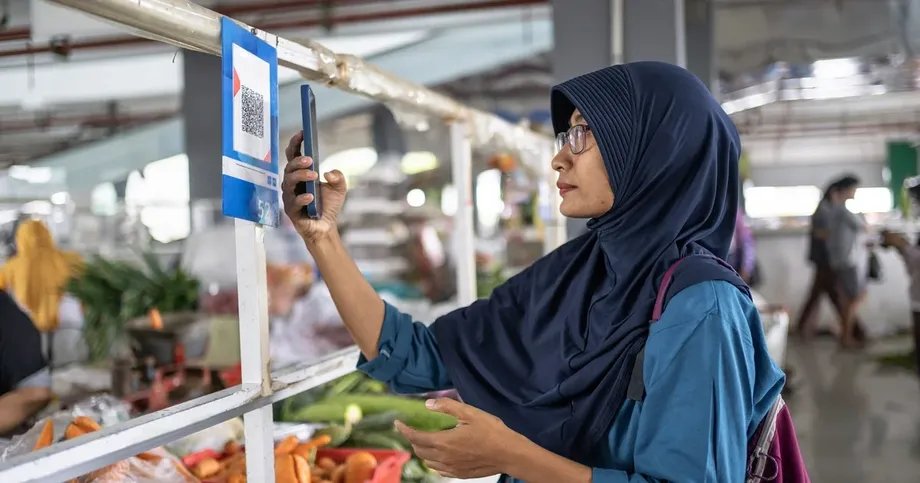
Electronic vouchers restrict purchases to approved goods or outlets. Cash transfers give recipients money through an account. Indonesia's Government to Person Payment 4.0 roadmap seeks to let beneficiaries choose bank accounts or electronic money accounts as their payment channel.
Readiness Includes More Than a Working Portal
A 2024 study published in Indonesian Treasury Review examined the obstacles to digital assistance using March 2021 SUSENAS household survey data, OMSPAN government payment data and responses from 340 people in five cities.
The Treasury Review study, published in Volume 9, Issue 1, pages 71 to 86, identified challenges involving institutions, data, fragmented programmes, distribution and the use of assistance. It found that digitalisation could address these problems, while readiness remained constrained by missing conditions for a successful transition.
The findings connect directly to the current plan. Combining records across agencies addresses fragmented information. Registration agents help residents enter the system. A complaint mechanism gives families a way to seek corrections. Each function handles a different part of the journey from applying for assistance to receiving it.
Meutya said the system was being designed for 50 million users, with the aim of supporting simultaneous access. Her ministry has been working with the National Cyber and Crypto Agency, known as BSSN, on resilience and load testing, which checks how the platform behaves under pressure and heavy traffic.
Palaon's analysis also identifies cybersecurity, personal data protection and regular reassessment of eligibility as priorities. A national database must protect household information while keeping pace with people entering or leaving financial hardship.
The Dates That Matter Next
The government has outlined a sequence that separates the public launch from completing the database and testing payments:
- September 2025: Recipient checks and removals brought complaints about eligibility decisions into public focus.
- October 20, 2026: DEN reported 11.5 million registered families and trials covering 514 regencies and cities after meeting Prabowo.
- November 10, 2026: Prabowo is scheduled to launch the digital social protection programme.
- End of 2026: Officials aim to complete recipient data integration and updating.
- First quarter of 2027: Testing of assistance distribution through the new cash transfer arrangements is planned.
For households seeking support, the immediate work centres on registration, accurate records and access to corrections. The next stage will test whether that information can support reliable payments to the intended recipients.
Indonesia's earlier account transfers and food vouchers provide experience in delivering assistance electronically. The present plan brings a wider task: connecting household identification, eligibility decisions, complaints and payments across a national system.
At a Glance
- Indonesia plans to shift assistance from subsidised products and goods toward direct cash transfers.
- The digital system had registered 11.5 million families by October 20, 2026.
- DEN reported trials in all 514 regencies and cities, supported by 775,000 registration agents.
- Firman Hidayat said the Bali trial reduced exclusion errors by 24.1% and inclusion errors by 4.1%.
- The system is being prepared for around 50 million beneficiaries and includes a mechanism to challenge data errors.
- The launch is scheduled for November 10, followed by data completion at the end of 2026 and payment tests in early 2027.