October payday brings another wait for August wages
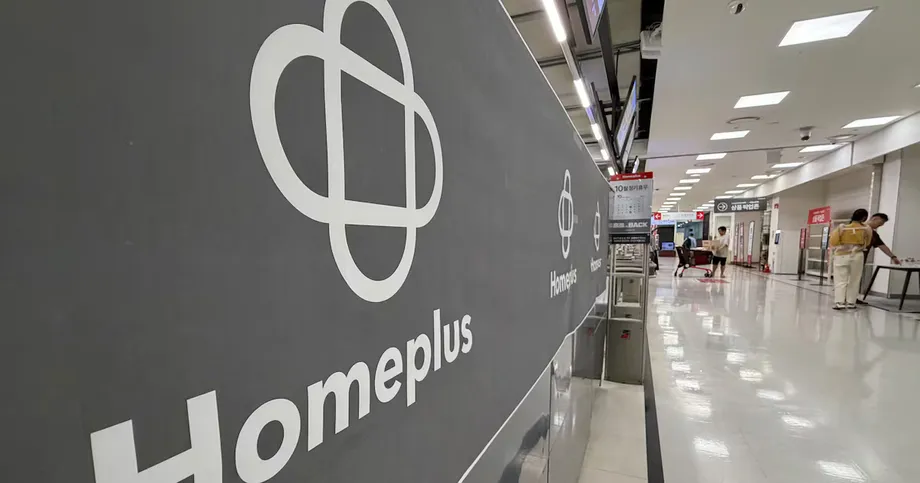
Homeplus plans to pay employees just 25% of their August wages on October 23, two days after the scheduled payday, as a cash shortage puts fresh pressure on the South Korean retailer's recovery. The remaining 75% is scheduled for the end of October, although the company has indicated that worsening cash conditions could push payment back again.
Contents
- October payday brings another wait for August wages
- What employees are waiting to receive
- Sales weakened after the August reopening
- Supplier demands make shelves harder to fill
- A smaller store network still carries substantial costs
- Hundreds apply to leave without an extra incentive
- The dates shaping the recovery effort
- A buyer is central to the next stage
- Key Points
The decision follows another split payment: employees received their overdue July wages in equal installments on September 23 and September 30. The first installment of their Chuseok holiday bonus also remains unpaid, with no payment date set.
Homeplus is undergoing corporate rehabilitation, a court supervised process intended to help a financially troubled company reorganize and keep operating. A court approved its rehabilitation plan on September 2, allowing it to avoid bankruptcy at that stage. The retailer now faces an immediate problem: bringing in enough cash to pay staff, obtain goods and keep its remaining stores operating.
The Seoul Rehabilitation Court's Fourth Division immediately approved the fourth amended rehabilitation plan after a vote at a meeting of interested parties on September 2. The ruling took effect upon pronouncement. Secured rehabilitation creditors voted 100% in favor, rehabilitation creditors 75.90% and shareholders 100%, exceeding the respective legal approval thresholds of 75%, 66.7% and 50%.
In assessing whether the plan could be carried out, the court also considered the substantial level of agreement from priority creditors to repayment in installments. Those creditors did not vote at the meeting, but their agreement was relevant to the plan's feasibility. The plan includes selling 19 closed company-owned stores and pursuing an acquisition of the headquarters and 67 remaining stores. Approval allows repayment under the plan to proceed; it does not mean operating recovery or financial restructuring is complete. Implementation, funding and the restoration of goods supplies remain essential to recovery.
Sales reached only about 30% of the company's target in early October. Its operating network has fallen from 126 stores before rehabilitation to 67, and about half of employees are on paid leave.
Against that backdrop, hundreds of workers applied to leave through a voluntary retirement program offering no extra financial incentive. Those departing have been promised a November 14 settlement of overdue wages, holiday bonuses and statutory severance, while employees staying with the business face a wage schedule that remains conditional on available cash.
What employees are waiting to receive
Homeplus had intended to pay August wages on October 21, its regular payday that month. Under the revised plan, an employee will initially receive only one quarter of the amount owed, leaving three quarters outstanding until at least the end of October.
July wages were also paid late, but the company divided them into two equal payments. For August wages, the first payment is smaller: 25%, compared with 50% in the first July installment. Employees therefore face a larger unpaid balance after the initial payment.
The Chuseok bonus adds another layer of uncertainty. Homeplus had planned to divide that bonus into six installments, with the first one sixth due on the September payday. That first payment was postponed, and by October no replacement date had been announced.
For workers, the practical difficulty is the gap between money earned and money available for household expenses. Rent, food and other bills continue to fall due even when wages arrive late or in smaller portions. Employees remaining at Homeplus have a proposed payment timetable, but the company's warning about further delays makes planning difficult.
Sales weakened after the August reopening
Homeplus reopened on August 13 and recorded sales of 10.628 billion won that day. Early shopping support helped the restart, but subsequent sales figures show that momentum fading.
By the middle of September, sales were reaching about 40% of the company's target. In early October, that figure had slipped to about 30%. This represents a decline of 10 percentage points in target achievement, leaving the retailer roughly 70% short of the sales level it had planned for.
Daily sales during the October 3 to 5 holiday period were around 3 billion won. That was roughly 28% of the reopening day's 10.628 billion won, or about 72% lower. The comparison captures how much receipts had fallen from the opening surge, although the figures cover different trading dates.
Lower sales mean less cash arrives at the same time that Homeplus must meet wage bills, rent and payments for goods. The retailer's problems are therefore connected: weak trading makes it harder to fund the stock and staffing needed to bring customers back.
Supplier demands make shelves harder to fill
Suppliers have responded to delayed payments by insisting on cash transactions. Homeplus consequently needs money available when buying goods, rather than receiving stock and paying later.
For a retailer already short of cash, that requirement limits how much merchandise it can obtain. A reduced product range gives shoppers fewer reasons to visit or complete their purchases, putting further pressure on sales. Supplier confidence and customer spending have become closely linked parts of the same recovery effort.
Olive Young and Daiso outlets previously housed inside Homeplus locations have also been withdrawing. Their departure removes shopping options that could draw customers into the larger stores and encourage visits serving several needs at once.
Homeplus therefore needs more than a stronger sales day. It needs sufficient working cash, meaning money for everyday operations, to restore stock availability and maintain trading while it seeks a buyer.
A smaller store network still carries substantial costs
Homeplus now operates 67 stores, compared with 126 before rehabilitation. The reduction of 59 stores amounts to about 47% of the former network, leaving slightly more than half of its previous locations in operation.
Closures of less profitable outlets have reduced the company's footprint, but they have also reduced the places where it can earn revenue. About 50% of employees have been placed on paid leave as the business manages a much smaller operating network.
National Pension Service subscriber figures put Homeplus employment at 9,121 in September. That figure gives a sense of the number of livelihoods connected to the retailer, beyond the immediate question of how many stores remain open.
Rent and labor expenses continue while sales are weak. Paid leave also means the employment relationship continues during an absence from work. Homeplus must manage those commitments while trying to rebuild revenue, making the availability of outside funding central to its plans.
Hundreds apply to leave without an extra incentive
Homeplus opened voluntary retirement applications on October 7 and had planned to accept them through October 22. It instead closed the window on October 14, eight days ahead of the original deadline, after receiving a large number of applications.
About 400 employees were described as applying, while the labor union estimated the number at 400 to 500. Homeplus has not released an official count. The company announced the early closure on October 15.
In its original announcement, Homeplus said the reduction in operating stores and paid leave affecting about half its staff had left fixed costs too high relative to sales, making voluntary retirement unavoidable to improve business viability and normalize operations. It set no target number of departures and said the program would operate within available operating funds, with applications potentially closing early or the program being canceled depending on financial conditions.
Departures are scheduled for October 31. Homeplus plans to pay departing employees their overdue wages, Chuseok bonuses and statutory severance together on November 14. Statutory severance is the payment due under employment rules when an eligible worker leaves; the program offered no separate incentive on top of those amounts.
The speed of the program marks a change from discussions a month earlier. At a September 15 meeting with the labor union, Homeplus discussed workforce measures after approval of its rehabilitation plan. Voluntary retirement was raised, but the company said then that it had no substantive implementation plan.
The payment terms also create a difficult choice for employees. Those leaving have been given a specific settlement date, while those staying face the possibility of further wage delays. Some people in the retail industry have questioned whether that difference could encourage more departures. The company's stated reason for the shortened application period was the large number of employees applying.
The dates shaping the recovery effort
Homeplus moved from reopening to another round of wage delays within roughly two months. The main events show how trading problems, workforce decisions and the search for a buyer have developed together:
- August 13: Homeplus reopened, recording sales of 10.628 billion won that day.
- September 2: A court approved the company's rehabilitation plan.
- September 15: Homeplus and the labor union discussed workforce measures.
- September 23 and 30: The company paid overdue July wages in two equal installments.
- October 7: Voluntary retirement applications opened.
- October 14: Applications closed early.
- October 23: Homeplus plans to pay 25% of August wages.
- End of October: The remaining August wages are scheduled for payment, and the company aims to attract a prospective buyer's letter of intent.
- October 31: Departures under the retirement program are scheduled.
- November 14: Departing workers are scheduled to receive wages, bonuses and severance together.
The late October dates put several financial demands close together. Homeplus is trying to pay remaining staff, prepare employee departures and advance a sale while sales remain far below target.
A buyer is central to the next stage
Homeplus is seeking a merger and acquisition transaction, with Samil PwC serving as the lead manager. The proposed business transfer covers its headquarters and supermarket operations, including the 67 hypermarket stores described as owned by the company.
Investment summaries have been sent to potential buyers, and Homeplus aims to secure a letter of intent by the end of October. Such a letter records a prospective buyer's interest and can begin more detailed negotiations. A completed acquisition would require further steps. No clear buyer had emerged by the latest October updates.
A Homeplus official described a successful acquisition as essential to both management and employees:
Both the company and the union are aware that they can only survive by successfully concluding the M&A,
If a sale of the business as a package fails, individual stores with viable operations could be sold to other retailers. Properties with valuable land or buildings could also be sold separately for development or leasing. Those are possible alternatives rather than an announced disposal schedule.
Selling smaller parts could attract buyers unable or unwilling to purchase the entire operation. For employees, however, it would make the future depend more heavily on which stores change hands and what the purchasers intend to do with them.
The Homeplus branch of the Mart Workers' Union has pledged cooperation with the acquisition effort and called for government involvement in finding a purchaser. In its statement, the union said:
The government must step forward directly to find a buyer.
In an October 8 statement, the union said the retirement notice had come just 35 days after court approval of the rehabilitation plan, showing that recovery could no longer be left to MBK and the company alone. It criticized the offer as recruitment for retirement using unpaid wages, rather than a genuine voluntary retirement package: overdue wages and bonuses were owed regardless of whether workers left, while severance was already required by law.
The union also objected that workers could not withdraw their applications while the company could close or cancel the program depending on its finances. It said a company unable to guarantee even the money owed to departing staff could not be described as recovering, and called the program a sign that the rehabilitation plan was faltering. Citing National Pension Service subscriber figures, it said employment had already fallen from 19,399 in March 2025 to 9,121 in September 2026. It demanded that MBK take responsibility for the operating funds needed to implement the rehabilitation plan until an acquisition was completed, including the cost of any workforce adjustment it had planned.
The union set out five demands for government action:
- Elevate the interagency task force to be chaired by the deputy prime minister for economic affairs or the minister heading the Office for Government Policy Coordination, include the union and continuously monitor implementation of the rehabilitation plan.
- Arrange for a public-sector figure to be recommended to the court for appointment as a joint administrator.
- Have policy financial institutions proactively put forward price and employment conditions to find a buyer.
- Provide livelihood support for workers owed wages, including more realistic eligibility requirements for simplified government advances of unpaid wages for current employees. The union said the expanded scope of ordinary wages was leaving even some workers earning around the minimum wage ineligible.
- Have the Serious Crimes Investigation Agency and the prosecution service complete the investigation of Chairman Kim Byung-ju and bring charges, and have the Financial Services Commission promptly finalize sanctions against MBK.
The union said finding a buyer capable of sustaining the core retail business was the only path to recovery. It said it was doing everything it could and would honor the pledge made at the National Assembly the previous day to cooperate in completing an acquisition, adding that it was now the government's turn to respond.
For Homeplus workers, the immediate tests are concrete: whether the October wage payments arrive, whether November 14 settlements are made and whether a prospective buyer comes forward. Each depends on a business whose daily cash needs remain pressing.
Key Points
- Homeplus plans to pay 25% of August wages on October 23 and the remainder by the end of October, subject to its cash position.
- July wages were paid in two September installments. The first Chuseok bonus installment still has no payment date.
- Sales reached about 30% of target in early October, down from 40% in the middle of September.
- The operating network has fallen from 126 stores to 67, with about half of employees on paid leave.
- The union estimates 400 to 500 workers applied for voluntary retirement. Homeplus has not confirmed the total.
- Departing employees are scheduled to receive outstanding wages, bonuses and statutory severance on November 14.
- The rehabilitation plan approved on September 2 includes selling 19 closed company-owned stores and pursuing an acquisition of the headquarters and 67 remaining stores; funding and implementation remain necessary.
- Homeplus seeks buyer interest by the end of October, with individual asset sales a possible alternative if a package deal fails.
- The union called for government-led buyer searches, stronger oversight with union participation, a public-sector joint administrator, support for unpaid workers and action against MBK and its chairman.