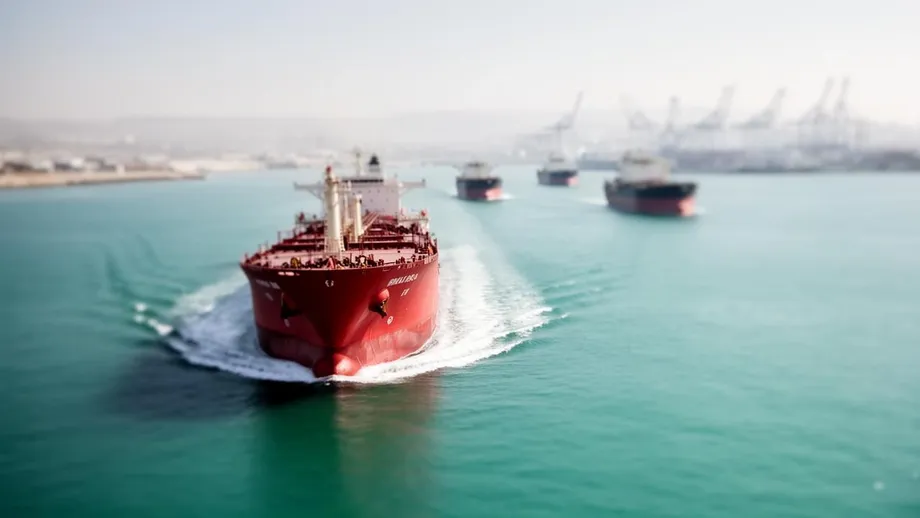
November 1 warning targets a major oil carrier
Iran has threatened legal action from November 1, 2026, against vessels linked to South Korea's Sinokor, also known as Janggeum Merchant Marine, targeting a shipping group whose associated tankers carried 105.6 million barrels of crude through the Strait of Hormuz in September. That represented 37% of the month's crude shipments through the waterway.
Contents
- November 1 warning targets a major oil carrier
- Why this fleet matters to oil flows
- Short shuttle voyages keep exports moving
- Seven damaged ships and a dispute over control
- How the confrontation developed
- A growing list reaches cargo owners and insurers
- Fleet purchases created unusual exposure
- Legal rights and the danger of detention
- Competing controls put Asian deliveries at risk
- Key Points
The Persian Gulf Strait Authority, or PGSA, issued the warning on October 27, accusing Sinokor vessels of committing the highest number of transit regulation violations over the preceding three months. The authority, established by Tehran to manage passage through the strait, extended its warning to cargo owners, other stakeholders and insurance providers.
In its statement, the PGSA described the action it intended to take against the company:
From the 1st of next month, legal action will be taken against all vessels belonging to this company.
The authority said it had already taken action against at least seven associated vessels. It did not explain what those measures involved or specify how the November 1 threat would be implemented. Iran has previously threatened fines, detention and confiscation for ships it accuses of breaking its passage rules.
Sinokor disputes responsibility for the seven vessels identified in September. It says overseas shipowners own those ships and that an affiliate chartered them temporarily before subleasing them to foreign oil companies. The dispute therefore reaches beyond passage rules to a practical question: which company actually directs each ship?
Why this fleet matters to oil flows
September tracking figures put Sinokor at the center of crude movements through Hormuz. Tankers classified as belonging to the group transported 105.6 million barrels out of a total of 286.3 million barrels, according to an analysis using information from Vortexa, Equasis and Signal Ocean.
Saudi Arabia's Bahri, Kuwait Oil Tanker Company and the shipping arm of Abu Dhabi National Oil Company carried a combined 97.3 million barrels. Sinokor's associated fleet therefore moved 8.3 million barrels more than those three operators together, about 8.5% above their combined volume.
Its share was even larger when measured by passages of very large crude carriers, known as VLCCs. These are tankers designed to carry enormous crude cargoes, commonly around 2 million barrels. Sinokor vessels accounted for 47% of VLCC transits in September and more than half between October 1 and October 10.
The cargo share and transit share measure different things. The first counts barrels of crude; the second counts passages by a particular class of tanker. Together, they show how heavily Gulf exports had come to depend on vessels associated with one shipping group.
Other operators reduced activity as danger increased. Sinokor's expanded fleet continued moving oil, making its vessels important to producers trying to maintain exports and to buyers, especially in Asia, waiting for those cargoes.
Short shuttle voyages keep exports moving
At least 70 tankers linked to Sinokor have been serving short routes from the Persian Gulf through Hormuz to the Gulf of Oman. Much of this work involves carrying crude out of the Gulf and transferring it to other tankers waiting beyond the strait.
A transfer between ships divides the journey into two parts. One vessel repeatedly handles the dangerous passage from the loading area, while another carries the oil onward to a distant customer. The receiving tanker can then continue its voyage without entering the Persian Gulf itself.
Sinokor's associated vessels have carried crude from Saudi Arabia and the United Arab Emirates, as well as Iraq and Qatar. Their role therefore stretches across several exporting countries rather than serving a single producer.
This concentration gives Iran's warning a reach beyond the Korean shipping business. If a shuttle tanker is delayed or detained, the receiving ship may have to wait for its cargo. A disruption at the strait can spread into loading schedules, transfers and delivery dates farther along the route.
Seven damaged ships and a dispute over control
Seven tankers linked to Sinokor have been damaged in missile or drone attacks since the war began. Those vessels were also identified as the seven ships against which Iran said it had taken enforcement measures. They had been making passages through the southern Hormuz channel.
The PGSA's published names included Mombasa B and Senegal Prosperity. Its description of enforcement has heightened concern because its administrative warnings have accompanied physical attacks on commercial shipping.
Sinokor says the seven vessels named in September belong to overseas owners. According to the company, its affiliate Janggeum Maritime chartered them for a short period and then subleased them to overseas oil companies. Sinokor says it neither controls their operations nor knows their destinations.
Ship ownership, chartering and operation can involve different businesses. An owner holds the vessel as an asset. A charterer hires it under a contract, while another party may arrange its employment for particular cargoes. The contract determines who makes which decisions.
That division matters here because Iran has threatened all vessels associated with Sinokor, while the company describes a narrower commercial relationship with the seven named ships. Sinokor had not immediately responded to the October 27 statement; its explanation addresses the vessels identified earlier.
How the confrontation developed
Iran's warning follows months of attacks, competing restrictions and expanding vessel lists. Tehran has sought greater control over Hormuz since US and Israeli airstrikes on Iran on February 28, disrupting exports from Arab Gulf producers as it increases pressure on Washington.
The main dates show how the dispute moved from individual vessels toward a shipping group:
- February 28, 2026: US and Israeli airstrikes on Iran preceded the campaign of attacks and restrictions affecting shipping through Hormuz.
- May: Iran announced the PGSA's establishment. The United States imposed sanctions on the authority that month.
- August 24: Iran published an initial list of 45 tankers accused of violating its passage rules, including vessels linked to Sinokor.
- September: The list expanded to 77 vessels, while Sinokor associated tankers carried 105.6 million barrels through the strait.
- October: The published list reached 122 vessels. Sinokor's share of VLCC transits exceeded 50% during the month's first 10 days.
- October 27: The PGSA announced its warning against the company's fleet.
- November 1: The threatened legal action is scheduled to begin.
Iran's use of transit charges was already affecting financial markets in April, when yuan payments for passage helped lift Chinese payment and financial services shares. The latest warning adds the threat of action against a whole company's associated fleet to Tehran's broader effort to regulate passage.
A growing list reaches cargo owners and insurers
Iran's list expanded from 45 vessels in August to 122 in October, an increase of 77 ships. That made the October total about 2.7 times the initial figure. Sinokor associated vessels appeared on the list from its first publication.
The PGSA has also claimed enforcement action against 40 vessels across its wider campaign. It said two vessels had fulfilled requirements for removal from the list, negotiations were under way involving 19 others, and 30 vessels had not responded to notices and could be added.
Cargo owners and insurers are now explicit recipients of the warning. A cargo owner has a financial interest in the oil arriving, while an insurer may cover agreed risks involving the vessel or shipment. Pressure on either can affect whether a voyage proceeds, even when the shipowner wants to continue.
The United States has warned that companies complying with PGSA demands could themselves face US sanctions. Businesses therefore face competing pressures: Iranian threats against passage without permission and American penalties associated with dealings with the sanctioned authority.
Fleet purchases created unusual exposure
Sinokor's position in Hormuz followed a rapid expansion of its tanker fleet. One estimate put its purchases at 73 used VLCCs costing about $6 billion, with delivery during 2026. Veson Nautical also recorded acquisitions of more than 70 crude tankers during the year.
Fleet estimates vary in scale. An August figure put Sinokor's owned VLCC fleet at 93 and its broader operation at about 150 ships including chartered vessels; another account described more than 160 tankers in operation and roughly $7 billion invested before the war. Those figures cover different descriptions of the group's fleet and spending.
The central commercial development is consistent: Sinokor assembled a large pool of tankers before and during a period when other owners became more reluctant to enter the Gulf. It then used many of those vessels for shuttle operations through Hormuz.
MSC Mediterranean Shipping Company has also been identified as a reported source of financing for Sinokor's expansion. Iran has directed criticism at both companies over shipping activity that challenges its effort to control the waterway.
A large fleet gives producers more ships to move their oil. It also concentrates exposure when an authority threatens vessels through their association with the same commercial group. The September figures put that exposure at more than one third of crude carried through the strait.
Legal rights and the danger of detention
The International Maritime Organization's position is that coastal states cannot unilaterally restrict transit or impose tolls in international straits such as Hormuz. These waterways connect bodies of water used for international navigation, and passage rights limit the control that bordering states can exercise over ships moving through them.
Fines, detention or confiscation based on Iran's own passage requirements would therefore face serious challenges under international maritime law. A seizure could produce demands for the ship's release and compensation, alongside further sanctions.
The United States designated the PGSA as a sanctions target in May. The European Union imposed sanctions in June on the Revolutionary Guard's naval command and others over efforts to obstruct passage through Hormuz.
Legal objections offer limited immediate comfort to crews and companies facing armed forces at sea. Iran has previously detained foreign vessels despite international criticism. Ship operators must weigh the chance of detention or attack while lawyers and governments contest the claimed authority behind those actions.
The November 1 deadline is consequently important for practical reasons. The shipping industry will be watching whether Iran attempts to stop vessels, demand payments, detain ships or widen attacks, and which commercial connections it uses to identify its targets.
Competing controls put Asian deliveries at risk
The United States has imposed a naval blockade against ships linked to Iran in response to Iranian attacks. Gulf producers have meanwhile used passages with tracking systems switched off, often called dark transits, to make vessels harder to detect while keeping exports moving.
US Central Command said that, as of October 17, American forces had redirected 138 commercial vessels to enforce the blockade. It also said more than 3,000 commercial ships had passed through the strait since summer, supporting exports of more than 1.5 billion barrels of crude.
Those figures describe a busy waterway under military pressure. Ships continue to move substantial volumes, while both Iran and the United States seek to determine which vessels can pass and under what conditions.
For Asian oil buyers, disruption could mean delayed cargoes, more expensive replacement transport and higher marine insurance premiums. Producers could face waiting tankers and interrupted transfer schedules. The extent of any cost increase will depend on what Iran does after November 1 and how owners, charterers and insurers respond.
Sinokor's 37% share explains why this warning matters beyond a dispute involving one company. A threat concentrated on its associated fleet reaches a large part of the system carrying Gulf crude to international customers.
Key Points
- Iran's PGSA says legal action against vessels linked to Sinokor will begin on November 1, 2026.
- Associated tankers carried 105.6 million barrels through Hormuz in September, 37% of the month's crude volume.
- Seven linked tankers have suffered missile or drone damage and were also named in Iranian enforcement claims.
- Sinokor says the seven vessels identified in September belong to overseas owners and operate outside its control.
- Iran's warning extends to cargo owners and insurers, while US sanctions create competing pressure on companies.
- Detention or disruption could affect oil delivery schedules, freight costs and insurance premiums, particularly for trade with Asia.