A disputed line puts soldiers at risk
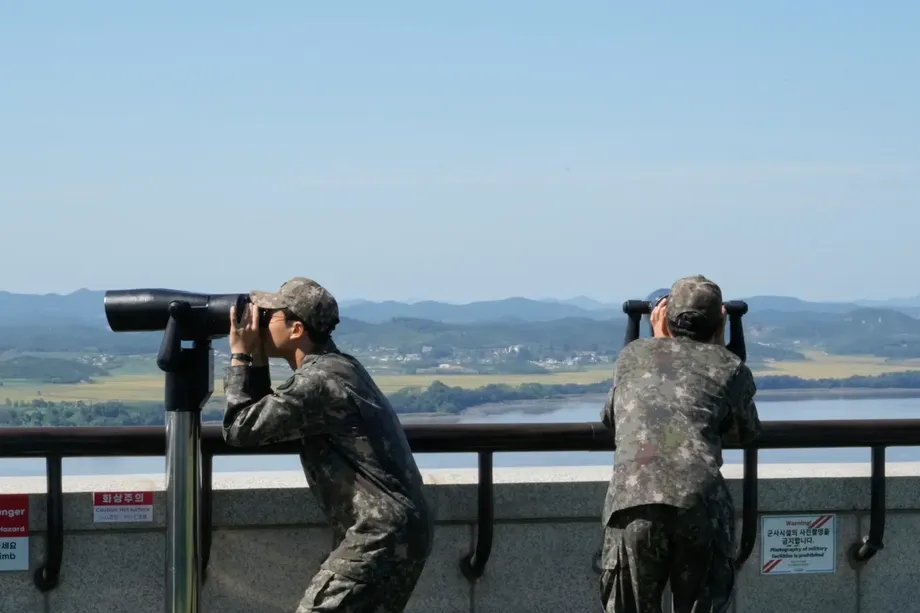
South Korea proposed military talks with North Korea on October 23, 2026, seeking agreement on the location of their land boundary after a September 21 mine explosion injured South Korean soldiers inside the Demilitarized Zone. Seoul says the explosion site was 10 meters south of the Military Demarcation Line. Pyongyang maintains its troops were working within North Korean territory.
Contents
- A disputed line puts soldiers at risk
- What Seoul wants the talks to achieve
- How the border became difficult to identify
- What happened in the September mine explosion
- How the confrontation developed
- The scale of the mine campaign
- North Korea threatens broadcasts and military action
- Seoul pairs diplomacy with a guarded response
- Why the surviving hotline matters
- Key Points
The disagreement reaches beyond that small stretch of ground. Of the 1,292 posts installed to mark the boundary after the 1953 Korean War armistice, only about 200 remain identifiable. South Korea, North Korea and the United Nations Command now use different references to locate parts of the same line.
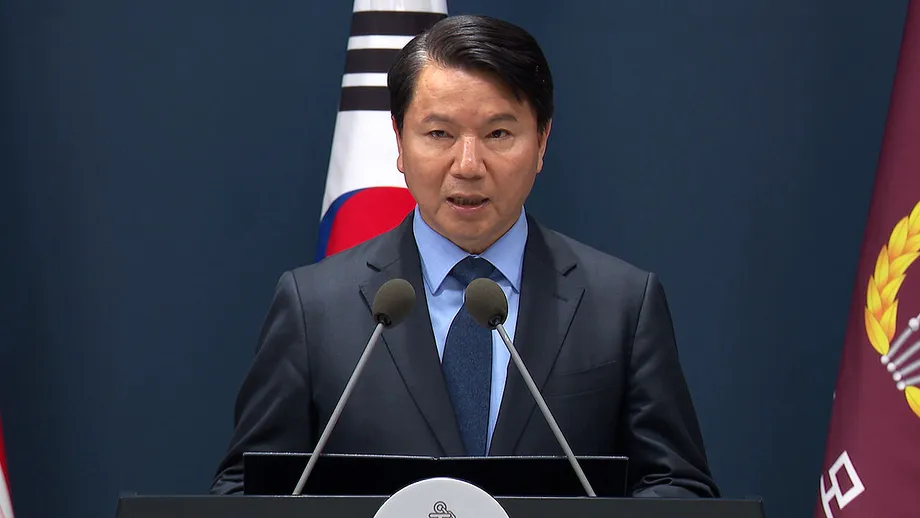
Kim Hong-cheol, South Korea's deputy defense minister for national defense policy, proposed jointly verifying the land boundary, restoring military communication lines and discussing ways to prevent accidental clashes. The United Nations Command, which oversees the armistice, could join the talks.
Kim explained why Seoul considers an agreement urgent:
Because perceptions of the location of the Military Demarcation Line differ, there is a high possibility of accidental clashes unless special measures are taken.
The proposal follows months of North Korean construction near the boundary, South Korean warning shots and increasingly sharp threats from Pyongyang. South Korean lawmakers say the military estimates that North Korea has planted 960,000 mines along the border since 2024.
What Seoul wants the talks to achieve
South Korea's proposed agenda connects three practical problems: soldiers disagree about where the line lies, direct military telephone connections have been severed, and construction work keeps bringing troops close to each other.
Kim said the schedule and venue could be discussed through Panmunjom, the truce village associated with previous military negotiations. He also left open a meeting involving both Koreas and the United Nations Command.
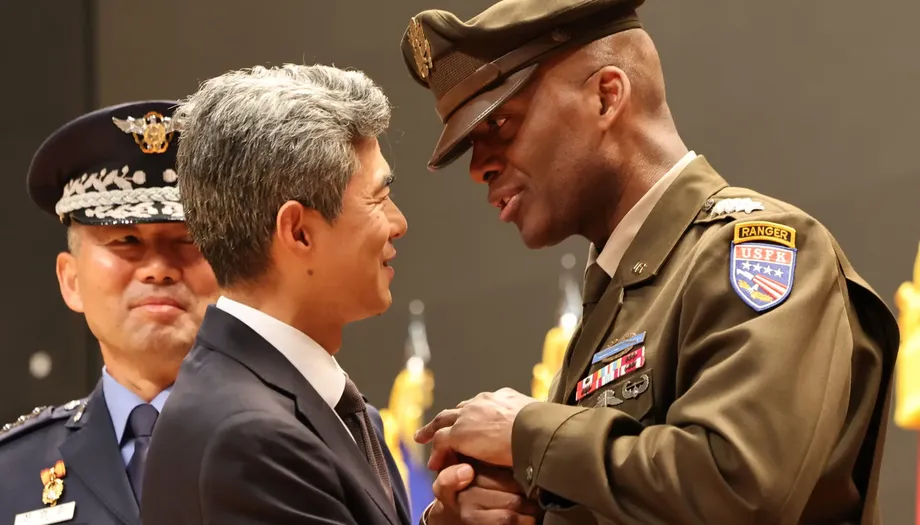
Seoul consulted the command before announcing its proposal. With direct military communication lines between the two Koreas cut, the offer would likely be conveyed through the command's surviving channel to the North Korean military.
No meeting date or North Korean acceptance had been announced. Seoul's previous invitation, made in November 2025, received no response. Acceptance would open the way to the first formal meeting between the two countries' military authorities since their October 2018 talks at Panmunjom.
How the border became difficult to identify
The Military Demarcation Line, or MDL, is the boundary running through the Demilitarized Zone, or DMZ. The zone is the wider buffer area established under the armistice that halted the 1950–53 Korean War. Soldiers can therefore be inside the DMZ while remaining on their own side of the MDL.
South Korea's government described the history behind the current dispute in its November 2025 announcement, published on Korea.net. It said boundary markers were installed in August 1953 under the supervision of the Military Armistice Commission.
The government account says repair work stopped in 1973 after North Korean troops fired on a United Nations Command repair crew. The markers have not been properly maintained since.
Only about 200 of the original 1,292 posts can now be identified, roughly 15 percent. That leaves troops relying heavily on maps and coordinates rather than signs they can see on the ground.
South Korea began working with the U.S. National Geospatial-Intelligence Agency in 2004 to match the MDL shown on original maps to the actual terrain. The resulting line is used on South Korean military maps. The United Nations Command uses coordinates developed through its own 2016 MDL project, while North Korea is believed to rely on its own interpretation of the physical markers.
Soldiers approaching the same location can consequently act on different understandings of which side they occupy. Seoul wants the parties to establish a shared reference so those decisions no longer depend on competing maps.
What happened in the September mine explosion
The September 21 explosion occurred during a mission to clear a path for a joint investigation with the United Nations Command into North Korean border construction. South Korea's military concluded that North Korean antipersonnel mines planted south of the MDL caused the blast on the western front.
Seoul said three South Korean soldiers were injured, two seriously, although a published casualty figure also put the number injured at two. North Korea denied responsibility and accused South Korea of fabricating the investigation.
The location is central to the confrontation. South Korea places the mine laying and explosion site 10 meters south of the line. North Korea describes its construction as work inside its territory, north of the boundary.
South Korea and the United Nations Command conducted an inspection before Seoul formally blamed North Korean mines. Seoul subsequently called on Pyongyang to apologize and remove the remaining mines.
South Korea's military also assesses that a considerable number of the mines laid during North Korea's recent construction campaign were placed south of the MDL. Pyongyang's rejection of the investigation has left the two governments arguing about both responsibility for the injuries and the location of the boundary itself.
How the confrontation developed
North Korea's construction campaign followed Kim Jong-un's declaration in late 2023 that relations with the South were those of two hostile states. Work detected from April 2024 has included clearing vegetation, building roads for military movement, erecting fences and barriers against tanks, and laying mines.
- August 1953: Boundary markers were installed following the Korean War armistice.
- 1973: Marker repairs stopped after North Korean fire on a United Nations Command repair crew, according to South Korea's government.
- April 2024: South Korea detected an increase in North Korean border construction.
- November 17, 2025: Seoul proposed military talks to establish a shared MDL reference line.
- September 21, 2026: A mine explosion injured South Korean soldiers inside the DMZ.
- October 23, 2026: Seoul renewed its proposal, adding communication lines and measures to prevent accidental clashes to the agenda.
South Korea says North Korean troops crossed the MDL about 50 times during construction this year. Seoul also says North Korea sent as many as 7,000 workers to the border. South Korean forces have responded to crossings with warning broadcasts and warning shots intended to make the troops withdraw.
The scale of the mine campaign
South Korea's military gave its estimate of 960,000 newly planted North Korean mines to the National Assembly, according to lawmakers serving on the intelligence and defense committees. The estimate covers activity since 2024.
The figure points to the scale of the work facing soldiers who patrol, inspect or clear routes through the border area. Antipersonnel mines are designed to injure or kill people, and buried explosives can remain dangerous after the operation that placed them has ended.
Unification Minister Chung Dong-young gave a broader estimate during a parliamentary audit earlier in October: more than 2 million mines across the DMZ, including those planted by South Korean forces. The 960,000 figure concerns North Korea's recent planting campaign, while the larger estimate includes mines from both sides.
For troops on the ground, agreeing on coordinates would help determine where patrols and construction crews may operate. Removing the explosives already in place would require further action, making mine clearance a separate practical challenge alongside boundary verification.
North Korea threatens broadcasts and military action
Kim Yo Jong, the North Korean leader's sister and a senior voice on relations with Seoul and Washington, inspected border fortifications with Marshal Pak Jong-chon, an adviser to North Korea's defense ministry. Her statements tied the construction work to Pyongyang's policy of permanently severing relations with the South.
Kim announced a timetable for renewing loudspeaker broadcasts toward South Korea:
Our tactical hunting teams are taking new positions, and within October, the loudspeakers for psychological warfare against the ROK will be in operation along the whole border.
ROK refers to the Republic of Korea, South Korea's formal name. Kim subsequently said the loudspeakers would be on standby within days. She also threatened retaliation if South Korean warning shots harmed North Korean territory or personnel.
Pak rejected Seoul's description of the construction as incursions. In a statement, the North Korean defense adviser said:
Our army knows where our borderline is better than any others, and we are doing what we should do in our territory.
Pyongyang has also threatened additional tactical weapons along the border and said new units had taken firing positions. Those threats make the disagreement over warning shots especially dangerous: Seoul describes them as a way to prevent crossings, while North Korea presents them as a threat to its troops.
Seoul pairs diplomacy with a guarded response
South Korean Defense Ministry spokesperson Chung Binna said Seoul would take proportionate measures in response to North Korea's moves. Joint Chiefs of Staff chairman Jin Yong-sung ordered the military to respond firmly to potential provocations.
South Korea's Foreign Ministry moved to raise the mine incident with the United Nations Security Council through a letter describing it as an armistice violation. Seoul has therefore pursued diplomatic pressure alongside the proposed military meeting.
A South Korean government official, speaking anonymously, said stronger measures beyond demonstrating new weapons were not currently planned and that restarting loudspeaker broadcasts toward the North was not under consideration. South Korea's warning announcements aimed at troops crossing the MDL serve a different immediate purpose from broader propaganda broadcasts across the border.
President Lee Jae Myung halted South Korean propaganda broadcasts after taking office in 2025 in an effort to improve relations. North Korea later stopped its own. Pyongyang's announced resumption would reverse that period of restraint.
Lim Eul-chul, a professor at Kyungnam University's Institute for Far Eastern Studies, expressed skepticism about the invitation. He said North Korea views completion of the fortifications as the final step in establishing its framework of two hostile states. Park In-hwi, dean of Ewha Womans University's Graduate School of International Studies, said Seoul appeared concerned that a stronger response could reinforce that policy, while public anger over injured soldiers pulled in the other direction.
Why the surviving hotline matters
The United Nations Command retains a hotline with North Korea's Korean People's Army, commonly called the pink phone. With direct connections between Seoul and Pyongyang severed, it is the remaining military communication route through which messages can pass between the sides.
The command reaffirmed its commitment to the armistice and to reducing the risk of miscalculation and unintended escalation along the MDL. It declined to disclose whether it had contacted North Korea about Seoul's latest offer, citing its practice of keeping communications with Pyongyang private.
A meeting involving the command would bring together the authorities using the different boundary references. Restored military telephone lines would also give officers a way to seek clarification when a patrol or construction crew approaches disputed ground.
Seoul's immediate objective is concrete: get the parties to agree where soldiers may stand and work, and provide a way to communicate before warning shots turn into an exchange of fire. North Korea's announced deadline for operating loudspeakers, the end of October, gives the confrontation another near date even as military talks await a response.
Key Points
- South Korea proposed military talks on October 23, 2026, to verify the land boundary, restore communication lines and prevent accidental clashes.
- Only about 200 of the original 1,292 boundary markers remain identifiable.
- Seoul blamed North Korean mines for the September 21 explosion; Pyongyang rejected responsibility.
- South Korean lawmakers say the military estimates North Korea has planted 960,000 mines since 2024.
- North Korea threatened to operate propaganda loudspeakers along the border by the end of October.
- The United Nations Command could join the talks and retains a hotline to North Korea's military.
- No meeting date or North Korean acceptance had been announced.