Death penalty offences double as UN warns of tighter control
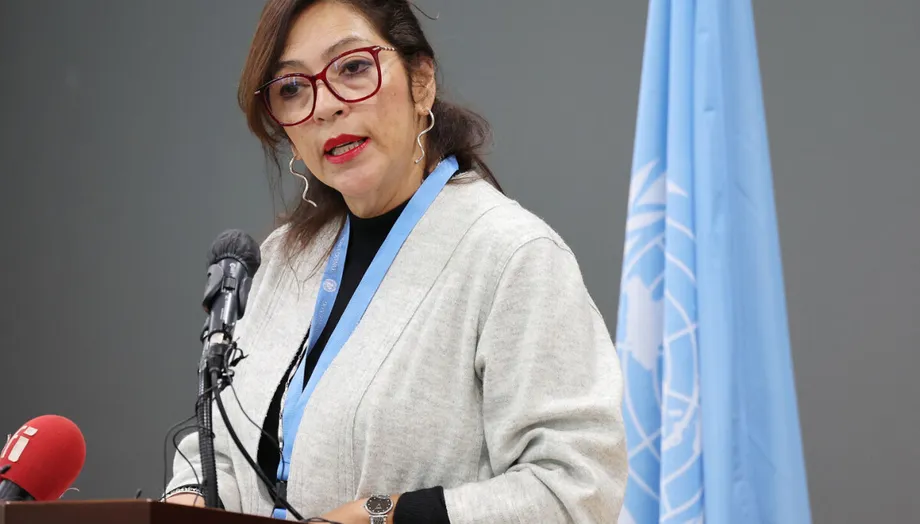
North Korea has increased the number of crimes punishable by death under its Criminal Law from eight to 16, while seven separate statutes also authorize executions, according to United Nations Special Rapporteur Elizabeth Salmón. Her latest report describes a widening threat to life, from punishment for distributing foreign media to preventable deaths in detention and heavy losses among soldiers sent to fight alongside Russia.
Contents
- Death penalty offences double as UN warns of tighter control
- How the law reaches beyond intentional killing
- Foreign media becomes a matter of life and death
- Eleven returned women, two reported executions
- Hunger and forced labour put detainees at risk
- Soldiers face heavy losses and pressure to sacrifice themselves
- Two prisoners of war need privacy and protection
- A timeline of warnings and legal changes
- What Salmón wants governments to do
- Key Points
The report describes the fate of 11 women forcibly returned from China: two were reportedly executed after a public trial on August 31, 2024, and nine received life sentences. It also raises concerns about approximately 14,000 North Korean soldiers deployed to the war against Ukraine, with more than 2,000 reportedly killed and more than 4,000 wounded.
Salmón, the UN independent expert responsible for monitoring human rights in North Korea, argues that these cases reflect the state's failure to protect life. Her findings connect legal changes inside North Korea with the treatment of people crossing its borders and soldiers serving abroad.
A broader assessment by the UN Human Rights Office, or OHCHR, supports that warning. Published on September 12, 2025, the UN human rights assessment drew on interviews with 314 people who had left North Korea and examined conditions since 2014. It found that executions had become more widely permitted by law and more widely used in practice.
UN High Commissioner for Human Rights Volker Türk described the period covered by that assessment in stark terms.
What we have witnessed is a lost decade.
How the law reaches beyond intentional killing
North Korea's expansion of capital punishment extends well beyond murder. Salmón identifies laws covering foreign media, South Korean forms of speech and writing, drugs, and breaches of emergency epidemic or disaster rules. A December 2023 revision of the Criminal Law added capital offences involving propaganda against the state and the illegal manufacture or use of weapons, ammunition and explosives.
Separate legislation includes the Anti-Reactionary Thought and Culture Rejection Law, adopted in 2020 and revised in 2022, and the Pyongyang Cultural Language Protection Law, adopted in 2023. Other statutes govern emergency quarantine, crisis response and the handling of objects considered hostile by the authorities.
International human rights law restricts capital punishment, in countries that retain it, to the most serious crimes involving intentional killing. Salmón says executions for offences outside that threshold constitute arbitrary deprivation of life and may amount to crimes against humanity. Arbitrary deprivation of life means a person is killed in circumstances that violate international legal protections.
The OHCHR assessment identified six new laws permitting the death penalty since 2015, including for vaguely defined propaganda against the state. That figure describes legislation introduced during a particular period; Salmón's figures describe the current reach of the Criminal Law and separate statutes.
North Korea accepted two recommendations during its November 2024 Universal Periodic Review: reduce the number of crimes punishable by death and restrict executions to the international threshold of the most serious crimes. The review is a UN process in which countries examine each other's human rights records. At a February 6, 2026, press conference in Seoul, Salmón said her office continued to receive testimony about public executions.
Foreign media becomes a matter of life and death
OHCHR interviewees described an increase from 2020 onward in executions for distributing unauthorized foreign content. Public trials and executions by firing squad were used to frighten communities and discourage others from breaking the rules, according to the assessment.
James Heenan, head of the OHCHR office working on North Korea, explained the conduct covered by the evidence his office had gathered.
"The crime is for distributing at a certain level, foreign information, foreign media," he said.
Kang Gyuri, who escaped North Korea in 2023, said three of her friends were executed after being caught with South Korean content. She described attending the trial of a friend aged 23 who received a death sentence.
Kang said her friend's case was heard alongside cases involving drugs, illustrating how the authorities were treating cultural material as a grave criminal matter.
"He was tried along with drug criminals. These crimes are treated the same now," she said.
For residents, the consequences reach into ordinary choices about what to share, say or write. OHCHR found that new laws and stronger surveillance had tightened state control over daily life, while the threat of public punishment helped enforce those restrictions.
Eleven returned women, two reported executions
The case of the 11 women forcibly returned from China shows why Salmón is urging governments to protect people before sending them back to North Korea. According to the findings described in her report, the women faced a public trial on August 31, 2024. Two were executed that day, and the other nine were sentenced to life imprisonment.
The two women reportedly executed had themselves experienced human trafficking and sexual exploitation. They nevertheless faced accusations including operating trafficking networks and prostitution. UN human rights mechanisms sought answers from North Korean authorities about the case but had received no response.
Salmón says trafficking victims must be protected from punishment for conduct arising from their exploitation. She also argues that immigration status cannot remove a government's responsibility to safeguard a person's life.
Salmón explained the protection owed to women who have crossed the border.
"Even if these women are viewed as undocumented migrants, we must respect our human rights obligations regarding their safety and survival," she said.
China continues to describe North Korean escapees as illegal migrants, Salmón said in February 2026. She has urged governments with influence over Pyongyang to stop forced returns. The relevant principle, known as non-refoulement, prohibits sending someone to a place where they face a real risk of torture or other grave abuse.
Hunger and forced labour put detainees at risk
North Korean detention facilities remain another focus of the warning. Salmón describes deaths linked to torture, forced labour, severe malnutrition and inadequate medical care. Her recommendations call for independent investigations into every death in custody and access for independent monitors.
The broader OHCHR assessment found that at least four political prison camps were still operating. People interviewed for the assessment described witnessing prisoners die from abuse, overwork and insufficient food. Some also reported limited improvements in detention conditions, including a slight decrease in violence by guards at certain facilities.
Food shortages deepen those risks. Almost everyone interviewed for the broader assessment said they lacked enough to eat, with three meals a day described as a luxury. Escapees reported deaths from hunger during the COVID-19 pandemic and restrictions on informal markets that families relied on to earn a living.
OHCHR also documented hazardous forced labour outside detention. Thousands of orphans and children living on the streets were reportedly placed in so-called shock brigades, groups assigned physically demanding work in settings such as coal mines. People from poor families joined similar brigades hoping to improve their social standing or enter the ruling party.
Schoolchildren were also assigned exhausting agricultural work when they should have been in class. Heenan said the authorities presented such work as education in practical skills, while the information gathered by OHCHR showed that children had no choice. The assessment described frequent deaths in dangerous work and official praise for those deaths as sacrifices to the leader.
Soldiers face heavy losses and pressure to sacrifice themselves
Approximately 14,000 North Korean troops have been deployed to support Russia in its war against Ukraine, according to the figures cited in Salmón's report. More than 2,000 were reportedly killed and more than 4,000 wounded. The reported deaths alone amount to more than one in seven of that deployment.
Salmón's concern extends to the preparation and protection soldiers receive. The report describes troops entering a battlefield shaped by drones without adequate preparation or protective equipment, as well as pressure to kill themselves rather than be captured.
The state's responsibility to protect life applies to its military personnel too, Salmón said. Soldiers need information, training and equipment appropriate to the dangers they face.
Salmón also warned that messages glorifying sacrifice were reaching children, including students still in high school.
There is also some very concerning news: young high school students are beginning to believe that they must die for their country. This is highly abnormal. Children must be protected.
Her account links the treatment of soldiers abroad with practices inside North Korea, where deaths during hazardous labour are also publicly praised. In both settings, she is calling for practical protection of life rather than pressure to accept death as a duty.
Two prisoners of war need privacy and protection
Two North Korean soldiers captured by Ukrainian forces in January 2025 have become a particular concern. Their capture was publicized by Ukrainian President Volodymyr Zelensky, and their faces and identities circulated widely in the media.
At her February 6, 2026, Seoul press conference, Salmón discussed the men as prisoners whose fate remained for Ukraine to determine. She said Ukraine could grant them asylum or send them to a third country. Accounts accompanying the latest report describe their subsequent arrival in South Korea, approximately one year and eight months after capture; Salmón said information about their safety and human rights conditions remained insufficient.
Salmón cited Article 13 of the 1949 Third Geneva Convention, which protects prisoners of war from abuse, humiliation and public curiosity. She warned that exposure could endanger both men and their relatives in North Korea.
Explaining the risk at the Seoul press conference, Salmón said:
The exposure of these two young men may result in reprisals for their families and also the soldiers themselves if they are repatriated to the DPRK.
The men have reportedly expressed a wish to settle in South Korea. Salmón says decisions about their future must respect international humanitarian law, human rights obligations, their individual wishes and protection against forced return to danger.
A timeline of warnings and legal changes
The concerns in Salmón's report developed across several years. The broader OHCHR assessment traces tightening restrictions over a decade, while the latest findings identify particular legal changes, punishments and wartime risks.
- 2014: A UN commission of inquiry found that North Korean authorities were committing crimes against humanity.
- Since 2015: Six new laws identified by OHCHR have permitted capital punishment.
- From 2020: Escapees described more executions for distributing unauthorized foreign media.
- December 2023: A Criminal Law revision added capital offences involving propaganda against the state, weapons, ammunition and explosives.
- August 31, 2024: Eleven forcibly returned women reportedly faced a public trial, followed by two executions and nine life sentences.
- November 2024: North Korea accepted UN review recommendations to narrow the use of capital punishment.
- January 2025: Ukrainian forces captured two North Korean soldiers.
- September 12, 2025: OHCHR published its assessment based on interviews with 314 people who had left North Korea.
- February 6, 2026: Salmón urged protection for the prisoners of war during a Seoul press conference.
The latest annual report was released on October 13 ahead of an interactive dialogue with the UN General Assembly's Third Committee scheduled for October 27. The committee examines human rights and other social and humanitarian issues.
What Salmón wants governments to do
Salmón calls on North Korea to announce an official suspension of executions as a step toward abolition, narrow capital offences to meet international law, and publish statistics on death sentences and executions. She also seeks notification for families about prisoners' whereabouts, executions and burial locations.
Her recommendations include ending torture and forced labour in detention, investigating deaths promptly and independently, and allowing independent monitoring. OHCHR has separately called for the closure of political prison camps and referral of North Korea's human rights situation to the International Criminal Court.
International action faces political constraints. A Security Council referral would be needed to bring the situation before the court through that route. China and Russia, both permanent council members with veto powers, have repeatedly blocked attempts to impose new sanctions on North Korea since 2019. In February 2026, Salmón described European efforts toward a tribunal addressing North Korean abuses and involvement in Russia's invasion as being at an early stage.
Salmón also wants human rights included in future diplomacy with Pyongyang, including potential talks with the United States. For dialogue between the two Koreas, she has called for priority attention to seven South Korean Christians detained by the North between 2013 and 2014, and reunions for families separated by the Korean War of 1950 to 1953.
North Korean escapees should participate meaningfully in policy and resettlement discussions, she said. Her proposals put concrete protections at the centre of diplomacy: fewer executions, safer detention, protection from forced return, and decisions that take account of the people directly affected.
Key Points
- Capital offences under North Korea's Criminal Law increased from eight to 16, while seven separate statutes also authorize the death penalty.
- OHCHR interviewed 314 people for its assessment of conditions since 2014 and found wider use of executions and tighter state control.
- Two of 11 women forcibly returned from China were reportedly executed after an August 2024 trial; nine received life sentences.
- Among approximately 14,000 soldiers deployed alongside Russia, more than 2,000 were reportedly killed and more than 4,000 wounded.
- Salmón urged privacy and legal protection for two captured soldiers, warning of possible retaliation against their families.
- Her recommendations include suspending executions, investigating deaths in custody and keeping human rights central to diplomacy.