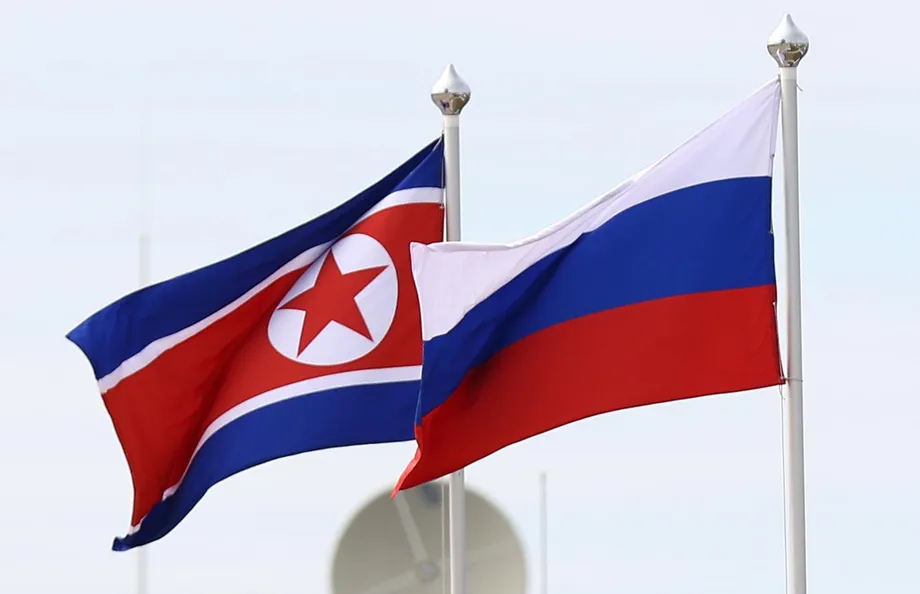
A Russian assembly line with risks for Asia
A Russian drone manufacturing complex with capacity to produce more than 5,500 aircraft a month could also become a training ground for North Korea's weapons industry. A joint study released on October 14, 2026, by the Center for Strategic and International Studies (CSIS) and the George W. Bush Institute warns that North Korean technicians working at Alabuga could return home with practical knowledge of mass production and improvements developed during Russia's war against Ukraine.
Contents
- A Russian assembly line with risks for Asia
- How large is North Korea's role?
- What workers could learn at Alabuga
- How combat changes the drones
- Who supplies the factory?
- The workers behind the expansion
- A military partnership with several channels for learning
- Trade networks extend the concern beyond drones
- What action is being proposed?
- Key Points
The complex, near Yelabuga in Russia's Republic of Tatarstan, brings together Iranian drone designs, Russian manufacturing, Chinese components and North Korean labor. The study, titled Human Rights Abuses in Drone Production at Yelabuga, connects two concerns often discussed separately: the exploitation of workers and the spread of military expertise.
Victor Cha, the Korea chair at CSIS, and Joseph Kim, a policy program manager at the Bush Institute, describe factory experience as another benefit Pyongyang could gain from supporting Moscow. They write:
North Korean labor also transfers technical know-how. Technicians sent to Alabuga will return to Pyongyang with invaluable lessons from working at a mass-production drone assembly line, having observed Russian refinements to the constantly improving Geran drones.
The Geran is Russia's version of the Iranian Shahed attack drone. Learning how to assemble thousands of these weapons, and how to incorporate changes quickly, could help North Korea expand its own production. For South Korea, Japan and American forces in the region, the concern is both more drones and more capable ones.
How large is North Korea's role?
The CSIS and Bush Institute study cites a figure of up to 12,000 North Korean workers assigned to Alabuga. The underlying Ukrainian military intelligence announcement in November 2025 described plans to recruit roughly that number by the end of that year; the number who actually arrived and worked at the complex remains unclear.
The recruitment proposal offered about $2.50 an hour for shifts lasting at least 12 hours. At that rate, a shift would generate about $30 before deductions. The study says North Korean authorities withhold 70 to 90 percent of workers' wages, leaving workers with only a small share of the money paid for their labor.
The Multilateral Sanctions Monitoring Team (MSMT), in a September report, estimated that Russia hosted between 15,000 and 30,000 North Korean workers at the end of 2025. Some worked in military drone manufacturing. The team also said Moscow used a student visa scheme to disguise workers as students.
The Russia total covers workers across industries, while the 12,000 figure concerns a recruitment plan for Alabuga. Keeping those categories separate matters when assessing both the factory's workforce and the scale of North Korea's labor exports.
What workers could learn at Alabuga
Alabuga offers exposure to an industrial process that goes beyond putting individual aircraft together. Workers can observe how an assembly line organizes tasks, handles components and introduces design changes while continuing production. Those skills would be useful to a country seeking to manufacture drones in large numbers.
The study describes a complex that has expanded to roughly 17 facilities and as many as 116 buildings. Satellite imagery also shows extensive construction of accommodation for workers. The authors cite Ukrainian military intelligence assessments that a workforce initially numbering about 1,000 was intended to grow to 40,000.
The stated capacity of more than 5,500 drones a month would amount to more than 66,000 a year if maintained throughout the year. Capacity describes what a factory can produce under particular operating conditions; actual output depends on staffing, supplies and other constraints.
Thae Yong-ho, a former North Korean diplomat who later became a South Korean lawmaker, told a discussion accompanying the study that North Korea could replicate the Alabuga factory domestically. Cha said improving drone operations and manufacturing was a major reason for Pyongyang's involvement in Russia's war, alongside material benefits.
How combat changes the drones
Iran initially supplied completed Shahed aircraft to Russia before helping Moscow establish domestic production. Russia then modified the design in response to Ukrainian defenses, creating a continuing cycle of production, combat use and revision.
A separate CSIS study published in September describes changes to navigation, communications and other systems. Improved navigation equipment sought to counter electronic jamming, which disrupts signals that a drone uses to find its way. Some variants also acquired communications modules and cameras that can transmit information and allow operators to redirect attacks during flight.
Early models followed programmed routes without reporting whether they reached their targets. Connected variants can send information about their progress and surroundings. That feedback helps operators understand where aircraft are being lost and adjust later missions.
CSIS describes successful changes moving into production within weeks. For North Korean technicians, the valuable lesson would be how to manage that process: identify a battlefield problem, change the equipment and introduce the revision across an assembly line. The concern is that Russia's experience against Ukrainian defenses could help Pyongyang shorten its own development work.
Who supplies the factory?
Iran, China and North Korea contribute different parts of the production network described by the joint study. Iran supplied the original design and helped establish Russian production. North Korea supplies workers under arrangements controlled by its government. Chinese companies supply equipment and components needed to keep manufacturing running.
Those Chinese supplies include engines and engine parts, batteries, electronics and navigation equipment, including systems intended to resist jamming. Chinese machinery has also supported drone body manufacturing, while trading networks route components through China and Hong Kong.
Joseph Kim told the discussion accompanying the study that China's role also includes financial transactions, payment clearance and equipment subject to sanctions. His account describes a network in which design knowledge, manufacturing equipment, finance and labor support the same Russian production operation.
Russia has consequently turned an imported weapon into a domestic industrial program that it can revise as the war continues. North Korea's position within that network gives it access to both earnings and a working example of how to organize drone production.
The workers behind the expansion
North Korean laborers face surveillance by government minders, restrictions on movement and the loss of most of their earnings, according to the joint study. The authors describe the arrangement as state controlled trafficking, extending an overseas labor system previously used in Chinese factories, Russian logging camps and construction projects in the Gulf.
The MSMT estimates that each North Korean worker in Russia generates an average of $7,500 in annual wages. Depending on the industry, monthly earnings can reach up to five times those of North Korean workers in China. Those higher wages make Russia an attractive source of revenue for Pyongyang, even as workers receive only a fraction of their pay.
Russian teenagers and foreign recruits also form part of Alabuga's workforce. The study says teenagers as young as 15 have been recruited through Alabuga Polytechnic under a work experience program, facing long shifts, production quotas and threats of penalties for revealing their work.
Foreign recruitment has targeted women in their teens and twenties from Africa, Latin America, Southeast Asia and Central Asia. Some were promised hospitality jobs, education or travel opportunities before being assigned to weapons assembly. The study describes confiscated passports, wage deductions and restrictions on movement.
These recruitment routes differ, but the reported working conditions share a practical consequence: people have limited control over their jobs, pay and ability to leave. North Korea's arrangement adds direct government control over the workers and their earnings.
A military partnership with several channels for learning
North Korea's factory role sits within a wider relationship built on weapons supplies, troop deployments and a treaty signed by Kim Jong-un and Vladimir Putin. Pyongyang has supplied millions of artillery rounds and short range ballistic missiles, while thousands of its troops have served against Ukrainian forces in Russia's Kursk region.
Several developments show how the relationship has expanded:
- June 2024: Kim and Putin signed a strategic partnership treaty that includes mutual military assistance.
- November 2025: Ukrainian military intelligence described plans to recruit roughly 12,000 North Korean workers for Alabuga by the end of the year.
- End of 2025: The MSMT estimated that 15,000 to 30,000 North Korean workers were in Russia across industries.
- October 14, 2026: CSIS and the Bush Institute released their joint study on labor abuses and the security risks linked to drone production.
North Korea has portrayed its troop deployment as support for a treaty partner. Its involvement also exposes personnel to drone warfare, electronic warfare and coordination on a modern battlefield. Electronic warfare includes disrupting communications and navigation signals, capabilities that affect both attacking drones and the forces trying to stop them.
An August analysis by 38 North found credible evidence that North Korean KN-23 missiles used against Ukraine had become more accurate, potentially through Russian assistance in overcoming electronic interference. The precise modifications and the extent of improvements across North Korea's own missile arsenal were uncertain. Drone manufacturing would provide another route for technical learning, alongside experience gained from missile use and troop deployments.
Trade networks extend the concern beyond drones
Cha also described growing commercial connections between Russia and North Korea. He said Russian companies had expanded their presence in North Korean economic zones, while substantial infrastructure construction was underway at the Tumangang–Khasan railway crossing between the two countries.
CSIS is examining the use of North Korean labor by Russian and Chinese companies in those zones. Cha warned that goods produced using North Korean workers could enter international supply chains labeled as products of China or Russia.
For importers and customs authorities, that creates a concrete tracing problem. A product's stated country of origin may identify where it was manufactured without revealing who performed the work or who controlled the workers. Investigating labor arrangements therefore requires information about employers, recruitment agencies, payments and production sites, as well as labels.
What action is being proposed?
The joint study recommends sanctions against intermediaries involved in trafficking and a multinational investigation into conditions at Alabuga. It also calls for international monitoring and action to disrupt the labor transfers that support production.
Olivia Enos, a senior researcher at the Heritage Foundation who participated in the discussion, identified two existing American policy tools. Global Magnitsky sanctions can freeze assets and restrict entry for people and organizations involved in serious human rights abuses. Rules covering goods made with North Korean labor can also block imports unless the required evidence shows that forced labor was not involved.
Enos urged the United States to work with South Korea on a policy that addresses human rights abuses and the revenue supporting the North Korean government. The authors' proposals similarly connect worker protection with restrictions on the money, equipment and labor sustaining military production.
Cha and Kim set out the regional security concern in their study:
A North Korea with a more sophisticated and growing drone program poses a new order of military challenge for South Korea, Japan, and U.S. forces in the Indo-Pacific.
For those countries, the central issue is the combination of scale and adaptation. North Korean technicians could learn how to build more aircraft while incorporating changes learned in combat. The policy proposals target the production network supporting that exchange, as well as the exploitation of the people working within it.
Key Points
- CSIS and the Bush Institute warn that North Korean workers at Alabuga could bring drone manufacturing expertise home.
- The complex has stated capacity for more than 5,500 drones a month and combines Iranian designs, Russian production, Chinese supplies and North Korean labor.
- The figure of 12,000 North Korean workers originated in a recruitment plan; actual arrivals remain unclear.
- North Korean authorities withhold 70 to 90 percent of workers' wages, according to the study.
- The MSMT estimated that 15,000 to 30,000 North Korean workers were in Russia at the end of 2025.
- The study recommends sanctions against trafficking networks, international monitoring and an investigation into factory conditions.