A new crossing finally gets an opening date
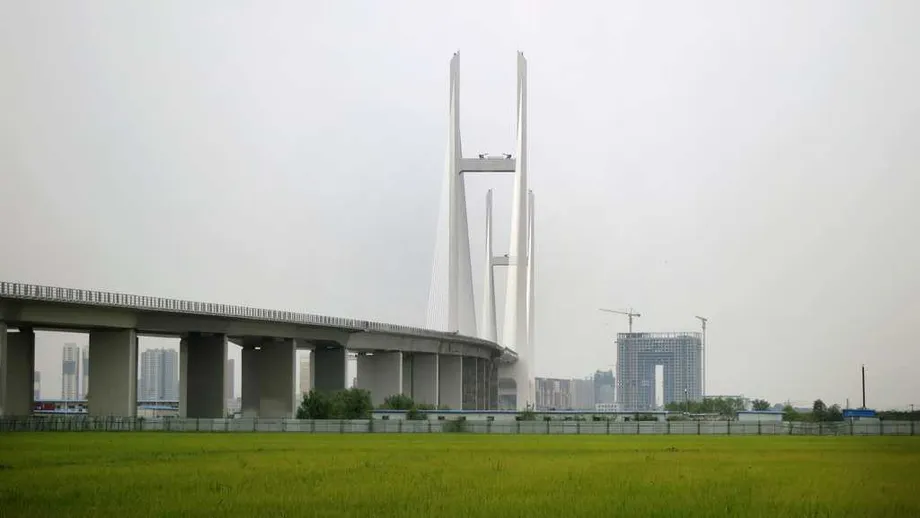
A bridge measuring 3,026 metres across the Yalu River is scheduled to open on Thursday, October 15, giving China and North Korea a new route for trucks after more than a decade of delay. The four lanes connect Dandong in China's Liaoning province with Sinuiju in North Korea's North Pyongan province, two cities already central to trade between the neighbours.
Contents
- A new crossing finally gets an opening date
- Why a finished bridge waited since 2014
- Four lanes could relieve an ageing route
- Trade gains may arrive gradually
- Sanctions still limit investment
- Passenger exchanges face a slower start
- A second new bridge strengthens regional connections
- The milestones leading to Thursday
- Key Points
Chinese Foreign Ministry spokesperson Mao Ning announced on Wednesday that the two countries had agreed to open the New Yalu River Bridge and would jointly hold an opening ceremony. China invested approximately 2.2 billion yuan in the project, which was completed in 2014 but remained unused as connecting roads and border facilities on the North Korean side lagged behind.
Mao said the crossing would support trade, exchanges between people and the wellbeing of residents in both countries. Describing the relationship between China and the Democratic People's Republic of Korea, North Korea's official name, she said:
China and the DPRK are friendly neighbors linked by rivers and mountains.
Freight is expected to be the bridge's main business at first. Chinese group tours to North Korea and normal visa processing have yet to resume, limiting the immediate prospects for the passenger travel that Beijing hopes the crossing will eventually support.
Why a finished bridge waited since 2014
China completed the bridge and developed access roads, customs facilities and related infrastructure on its side for an anticipated opening in 2014. North Korea did not complete the corresponding connections and facilities in time, and the opening was repeatedly postponed.
A border bridge needs more than a road across a river. Trucks must be able to reach it from both countries, while officials need places to check cargo, collect any applicable duties and process permission to cross. Without those arrangements at both ends, a completed bridge can remain disconnected from the trade it was built to carry.
Dandong residents had expected the project to bring more business to their city, and the prolonged delay prompted public frustration. The crossing is now approaching service more than 12 years after its original opening target.
The reasons for the full delay have not been disclosed. Possible explanations discussed over the years include disagreements about the bridge's location, tensions over China's support for United Nations sanctions and North Korea's border closures during the COVID-19 pandemic. The unfinished roads and border facilities were the practical obstacle identified throughout the project's long wait.
Four lanes could relieve an ageing route
Dandong and Sinuiju already have a crossing, the Sino-Korean Friendship Bridge, which carries both rail and road traffic. Its road section allows vehicles to move in only one direction at a time. Trucks travelling in opposite directions therefore have to take turns using the crossing.
The existing bridge carries more than 70% of official bilateral trade, according to the most frequently cited estimate, while another published estimate puts the share above 90%. Descriptions also differ on its age, giving 1937 or 1943 as the construction year. Both sets of figures point to an old crossing carrying a large concentration of trade.
The new bridge provides four road lanes for traffic moving in both directions. Moving freight onto this route could ease pressure on the older bridge and reduce the need to alternate the direction of vehicle movements.
Jeong Eun-i, an analyst at South Korea's Institute for National Unification, said the new crossing was likely capable of handling traffic around the clock in both directions, including containers and heavy cargo trucks. Customs checks and the operation of the connecting roads will also shape how quickly goods move.
South Korean government figures cited for the wider border give at least 17 active road and rail links along more than 1,400 kilometres; other published figures give at least 15 links along more than 1,300 kilometres. Despite those other routes, Dandong and Sinuiju remain the principal trading gateway described in the accounts of the bridge opening.
Trade gains may arrive gradually
China accounted for about 98% of North Korea's external trade last year. Put simply, roughly 98 out of every 100 units of recorded trade value were exchanged with China, leaving about two for all other trading partners combined. A more efficient crossing on this route therefore matters to a large part of North Korea's commercial relationship with the outside world.
Gyubeom Kim, an expert at Seoul's Institute for National Security Strategy, expects the bridge to improve transport efficiency and support trade gradually. His analysis suggests that Chinese exports to North Korea are unlikely to jump sharply at first, partly because Beijing would take Pyongyang's interests into account.
Kim identified processed goods, food products, cosmetics and alcoholic beverages as North Korean exports to China that could increase. Those categories offer a more specific picture of potential business than the broad promise of greater trade.
North Korean producers could benefit from an additional road route to their largest market. Chinese suppliers could also gain a less congested path to customers across the river. The pace of growth will depend on demand and border operations as well as the space available for trucks.
Sanctions still limit investment
North Korea remains subject to United Nations sanctions over its nuclear weapons programme. An analysis published in late August by South Korea's Institute for National Security Strategy said those sanctions limit the prospects for large industrial investments.
Transport capacity and investment permission are separate parts of the trading picture. The bridge creates a physical route for goods, while sanctions continue to govern which transactions and investments are allowed. Businesses considering projects in North Korea still face those restrictions.
The institute's assessment helps explain why the first benefits may be improvements to existing freight movements rather than a rapid expansion of factories or other major industrial projects. A wider road can make an established journey easier, while investment requires financing, permission and commercial demand.
Passenger exchanges face a slower start
Mao's announcement included exchanges between people as well as trade. For Dandong and Sinuiju, a functioning road bridge could eventually support visits alongside commercial journeys.
Chinese group tourism to North Korea and visa processing have not returned to normal, however. Those restrictions make cargo transport the more immediate use expected for the bridge when it opens.
Travellers need permission to enter a country even when the road is open. The distinction matters for businesses in Dandong hoping to benefit from visitors: a freight opening can help transport and trading companies before it brings the same opportunities to tourism businesses.
A second new bridge strengthens regional connections
North Korea and Russia opened a road bridge across the Tumen River roughly a month before the planned Yalu River opening. The Russian government said the new border crossing could handle up to 300 vehicles a day.
The Tumen bridge is approximately one kilometre long, compared with just over three kilometres for the new China crossing. The Yalu bridge is therefore about three times as long. The Russian figure describes daily vehicle capacity, while the length comparison describes the size of the structures.
Kim Jong Un has deepened ties with Russia in recent years, sending thousands of troops and conventional weapons to support President Vladimir Putin's war in Ukraine, reportedly in exchange for military and economic assistance. The new road connection adds another physical link to that relationship.
China remains North Korea's dominant trading partner despite the closer relationship with Moscow. Opening the Yalu crossing strengthens a route to the country responsible for almost all of North Korea's recorded external trade, while the Tumen bridge expands its road access to Russia.
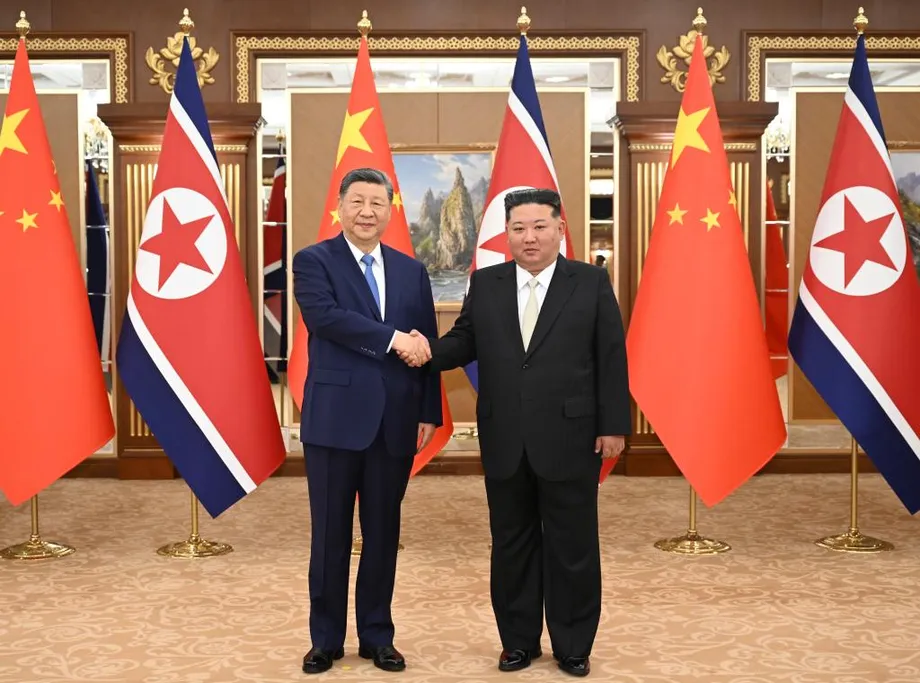
Kim has also renewed high level contact with Beijing. He visited China in September 2025, and Chinese President Xi Jinping visited Pyongyang in June 2026. At their June summit, Xi expressed willingness to expand cooperation in trade, agriculture, construction and technology. Kim described relations with China as a top strategic priority.
The milestones leading to Thursday
The opening follows years of unfinished border connections and a more recent period of renewed diplomatic contact. The key milestones are:
- 2014: The new Yalu River bridge was completed, but its planned opening did not take place.
- September 2025: Kim Jong Un visited Beijing.
- June 2026: Xi Jinping visited Pyongyang and discussed wider cooperation with Kim.
- Roughly one month before the Yalu opening: North Korea and Russia opened their Tumen River road bridge.
- Wednesday, October 14: Mao Ning announced the agreement to open the new China and North Korea crossing.
- Thursday, October 15: The two countries are scheduled to hold a joint opening ceremony and bring the bridge into service.
The first practical change will be another road route between Dandong and Sinuiju. Its early importance lies in moving freight across a border where the existing bridge has long carried most official trade. Passenger travel and major investment face additional limits beyond the completion of the crossing itself.
Key Points
- The New Yalu River Bridge is scheduled to open on October 15 after an original opening target of 2014.
- The crossing measures 3,026 metres and has four lanes connecting Dandong with Sinuiju.
- China invested approximately 2.2 billion yuan in construction.
- Unfinished North Korean access roads and border facilities repeatedly delayed its use.
- The bridge is expected to relieve freight pressure on the ageing Sino-Korean Friendship Bridge.
- China accounted for about 98% of North Korea's external trade last year.
- Trade gains are expected to be gradual, while sanctions continue to limit major industrial investment.
- Freight is likely to dominate early operations because Chinese group tours and visa processing have not returned to normal.