A disputed assessment threatens Seoul's transfer timetable
South Korea wants to complete a crucial wartime command assessment in 2026, but Washington considers some military capabilities insufficient, including requirements it reportedly accepted last year. The disagreement threatens Seoul's effort to set a transfer date and exposes a deeper problem: the allies agree that readiness must come first, yet disagree over how to measure it.
Contents
- A disputed assessment threatens Seoul's transfer timetable
- What would actually change in wartime command?
- The official plan sets three conditions
- Why the 2022 exercise did not finish FOC verification
- How earlier deadlines became a conditions based process
- Why previously accepted capabilities are being questioned
- AI and secure communications reshape the requirements
- North Korea's experience in Russia broadens the challenge
- Political talks could advance the process, but readiness has a cost
- Key Points
President Lee Jae Myung's administration seeks to place a Korean general in charge of combined South Korean and American forces during war before his term ends in 2030. A target of 2028 has been reported, alongside hopes for a transfer as early as 2027. Gen. Xavier Brunson, commander of U.S. Forces Korea and the Combined Forces Command, reportedly identified the first quarter of 2029 as a goal for meeting the conditions at an April congressional hearing.
The immediate obstacle is verification of full operational capability, or FOC. This is the second of three stages used to assess whether the future combined headquarters can carry out its wartime duties. Seoul wants to finish this stage this year and recommend a target year to the two presidents. American military authorities reportedly consider the requirements unmet.
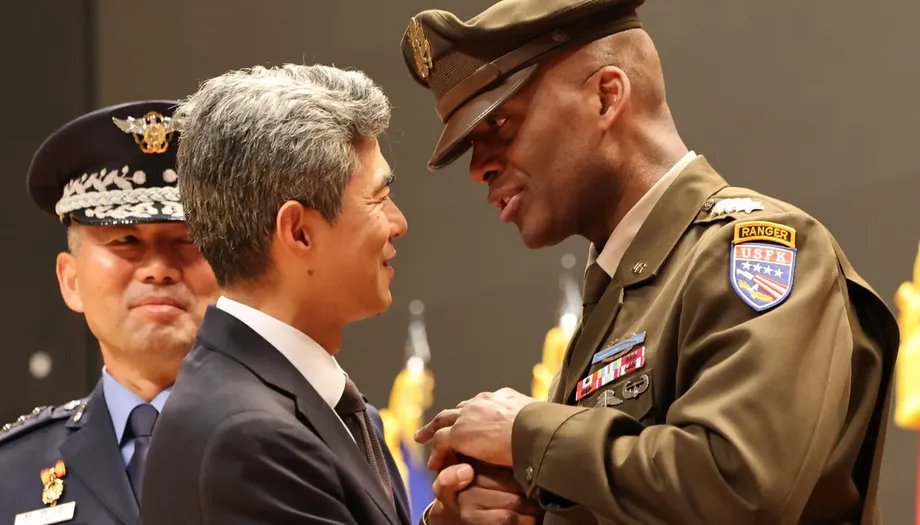
Brunson, speaking at the Gold Institute for International Strategy's summit in Washington on October 14, described himself as supporting the transfer while insisting that changing threats require updated standards.
"Because the conditions have changed, because we've changed our plan, we have new standards which we have to uphold," Brunson said.
The dispute now reaches beyond equipment purchases. It involves annual reassessment, secure communications, artificial intelligence used in targeting, the interpretation of exercise results and the confidence each military places in the other's judgment.
What would actually change in wartime command?
South Korea already controls its forces during peacetime. That authority transferred to the Korean military on December 1, 1994. During war, the current Combined Forces Command exercises operational control over designated Korean and American units under instructions from both countries' presidents through their joint military and defense consultation arrangements.
Operational control, usually shortened to OPCON, means authority to direct assigned forces for military missions. The debate concerns who leads the combined wartime headquarters and whether that headquarters has the people, systems and support needed to direct a war.
The allies agreed in 2018 to retain the Combined Forces Command after the transition, with a South Korean general holding four stars as commander and an American general holding four stars as deputy. Both governments would retain national authority over their own armed forces. American troops would continue to operate within an alliance framework.
Brunson nevertheless said in October that the eventual form of the command remained uncertain. His remarks place the details of the future headquarters back into the discussion, even though the basic leadership arrangement has already been agreed. How intelligence, communications and American support would work under that leadership is central to the readiness assessment.
The official plan sets three conditions
South Korea's Ministry of National Defense describes the agreed requirements on its OPCON transition page. The Conditions based OPCON Transition Plan, commonly called COTP, requires capabilities to lead combined defense, comprehensive allied capabilities against North Korean nuclear and missile threats, and a security environment suitable for a stable transfer.
The first condition covers Korean military capabilities and the future command's ability to conduct operations across the Korean theater. The ministry says the United States supplies complementary and continuing capabilities. The second covers detecting threats, deciding how to respond, defeating attacks and defending against them. The third involves regular assessment of North Korean capabilities and intentions, regime stability and the surrounding regional environment.
The ministry also states that the allies evaluate fulfillment of the conditions every year using mutually agreed methods and standards. Results go to the Military Committee Meeting and the Security Consultative Meeting, or SCM, where senior military leaders and defense ministers review progress.
Annual reassessment is therefore part of the published framework. The current argument centers on which standards apply during each review, how changing threats affect earlier results and whether both sides have agreed on the revisions.
Why the 2022 exercise did not finish FOC verification
The Ministry of National Defense says the allies completed revisions to the plan's appendices and annexes in August 2022. Those revisions established capability lists and assessment methods and criteria. During that month's Ulchi Freedom Shield exercise, they also conducted an FOC assessment under a Korean general leading the future command structure.
The ministry describes that exercise as demonstrating progress in wartime mission capability. It separately says FOC verification proceeds when joint assessments of the capabilities and systems under the first two transfer conditions reach mutually agreed levels. An exercise assessment is therefore one part of a broader verification process.
The three stages are initial operational capability, full operational capability and full mission capability, abbreviated IOC, FOC and FMC. The allies successfully assessed and verified the basic capabilities required for IOC in August 2019. FOC is the current sticking point, with FMC still to follow.
Military reporting describes roughly 130 items on a combined mission task list, with requirements ranging from 70 to 90 percent depending on the stage. The ministry's public page does not provide a current score for each item. Readers can see the broad requirements, while the detailed results driving the disagreement remain largely outside public view.
How earlier deadlines became a conditions based process
South Korea and the United States have repeatedly adjusted the transition as North Korea's military threat developed. The ministry's account shows that the present process grew from earlier agreements with fixed dates into an arrangement requiring joint approval of readiness.
- December 1, 1994: South Korea assumed peacetime operational control.
- 2006 and 2007: The allies agreed on basic wartime transfer principles and approved a Strategic Transition Plan.
- June 2010: The planned transfer moved from April 17, 2012, to December 1, 2015, following changes in the security situation.
- 2014 and 2015: The allies replaced a fixed date with agreed conditions and signed the COTP.
- October 2018: They agreed to retain a combined command led by a Korean general.
- August 2019: The first capability assessment stage was successfully completed.
- August 2022: Updated assessment criteria were completed and an FOC assessment took place during Ulchi Freedom Shield.
- 2023 and 2025: The allies recognized progress and reaffirmed that agreed conditions must be fulfilled before transfer.
The ministry records substantial progress at the 55th SCM in 2023. At the 57th SCM in 2025, both governments again committed to advancing evaluation of the future command while maintaining the requirement to meet agreed conditions. Seoul's current deadline ambitions sit within that continuing framework.
Why previously accepted capabilities are being questioned
American military authorities reportedly judged some capabilities insufficient this year after accepting them last year. Korean officials argue that previously completed items, added to newly satisfied requirements, should allow FOC verification to finish. Washington's reported position is that some capabilities need fresh assessment as battlefield conditions change.
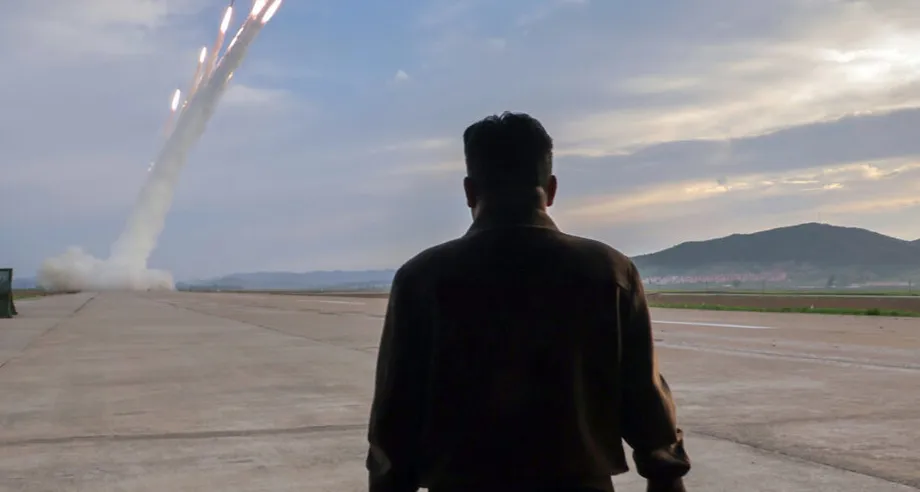
A senior American military official reportedly pointed to lessons from the Russia and Ukraine war when explaining why criteria could not remain the same as a decade ago. Brunson also cited North Korea's tactical ballistic missile launches that week. North Korea fired the missiles toward the East Sea on Monday, and its state media described the test as a "big success."
The allies also give different accounts of this year's exercise assessments. An American official reportedly said a reduced Ulchi Freedom Shield exercise in August prevented the necessary evaluation. Former South Korean Defense Minister Ahn Gyu-back said two FOC related items were assessed during the exercise's first part, while Korean officials maintain that the jointly agreed assessment procedures were completed.
Those accounts reveal two disagreements: whether the exercise covered enough of the required work and whether completed assessments produced satisfactory results. Discussions through the Korea Integrated Defense Dialogue in May and September reportedly failed to resolve them.
Korean complaints that Washington is moving the goalposts arise from this gap. The practical issue is whether both militaries share a current list of required capabilities, a common method for testing them and an agreed explanation for any changes since the previous review.
AI and secure communications reshape the requirements
American concerns reportedly focus on intelligence, surveillance and reconnaissance, often grouped under the abbreviation ISR, and on command and control systems. ISR provides information about enemy activity. Command and control systems let headquarters turn that information into decisions and communicate orders to forces.
Maven, an American system using artificial intelligence for targeting analysis, has become part of the discussion. Washington reportedly wants improved Korean data links and communications security so the future headquarters can work with advanced American systems. Data links are the connections through which military sensors, aircraft, ships and command centers exchange information.
American planners are also pursuing Joint All Domain Command and Control, or JADC2, which connects information and forces across different parts of the battlefield and potentially across allied militaries. The reported concern is whether a Korean commander could use this connected structure effectively, rather than simply receive information from an American counterpart.
The peninsula's limited geographic depth makes speed especially valuable. A simultaneous attack using missiles, drones and artillery could give commanders little time to detect threats and decide which to address first. Compatible systems, protected communications and trained operators all affect that response.
Buying or upgrading equipment is only part of the work. Personnel must learn to operate it together under pressure. American military authorities reportedly judge that acquisition, modification and training could make a transfer within one or two years difficult.
North Korea's experience in Russia broadens the challenge
North Korea's deployment of troops to Russia adds another concern to the assessment. Brunson's October remarks described potential lessons in mobilizing troops, moving personnel and equipment over long distances, supplying deployed forces and cooperating with another military. Russian electronic jamming equipment and information from the use of KN-23 missiles also featured in the discussion.
Military commentator David Maxwell argues that the future command should be tested against the capabilities North Korea could possess when the transition occurs. He highlights Brunson's calls for dispersed command elements and training beyond the two major annual command post exercises.
A dispersed headquarters operates from multiple locations rather than concentrating its staff and systems in one predictable place. It must keep exchanging information and issuing orders while moving, losing communications or coming under attack. Maxwell also points to wartime road congestion, displaced civilians, damaged infrastructure and the difficulty of keeping ammunition and supplies moving.
Washington reportedly wants combined exercises to account for China and Russia as well as North Korea. On October 13, Brunson discussed a proposed Multi-Domain Task Force intended to build layers of sensing capability on the peninsula and improve understanding of the wider region. The broader discussion concerns what American support would be available if crises occurred in several places at once.
Maxwell proposes testing alternative command concepts, including a Future Warfighting Command and a regional Combined Northeast Asia Combatant Command. These are proposals for debate. The agreed transition framework continues to center on a Korean led combined command.
Political talks could advance the process, but readiness has a cost
Seoul is reportedly considering moving the SCM from its usual period in late October or November to December. As of October 14, the meeting date had not been set. American scheduling considerations reportedly include November's congressional midterm elections and circumstances surrounding the war involving Iran.
South Korean Defense Minister Kang Shin-chul and U.S. Defense Secretary Pete Hegseth may meet at the ASEAN Defence Ministers' Meeting-Plus in the Philippines around October 27 to 30. Seoul is also considering discussions between Lee and President Donald Trump at November's Asia-Pacific Economic Cooperation summit.
Cho Yong-geun, a former Defense Ministry director for North Korea policy, argues that presidential involvement may be needed because the command issue has become entangled with investment in the United States, a Hormuz Strait deployment and the Coupang issue. Those connections form part of the political debate, while capability verification remains the military task.
Reported damage to trust between the countries' intelligence leadership has added anxiety about cooperation. Intelligence sharing is central to detecting threats and assessing readiness, so strained relationships could complicate an already difficult negotiation.
Retired Lt. Gen. Chun In-bum, former commander of the Republic of Korea Army Special Warfare Command, argues that greater Korean responsibility requires spending and difficult personnel choices. He calls for discussion of longer military service, service by women or other national service arrangements, and more resources for ammunition, logistics and realistic training.
South Korea's 2024 to 2028 defense plan allocated approximately 113.9 trillion won to improving its forces, according to the ministry. Its listed assets include F-35A fighters, Global Hawk surveillance aircraft, Aegis destroyers and missile defense systems. The assessment dispute concerns how those assets and allied support function together during sustained operations.
Key Points
- Seoul wants to finish FOC verification in 2026 and set a wartime command transfer target.
- Washington reportedly considers some capabilities insufficient, including items accepted during an earlier review.
- The official plan requires annual evaluations using mutually agreed methods and standards.
- The 2022 FOC exercise assessment demonstrated progress, while completion of verification depends on broader joint capability results.
- Secure communications, surveillance, AI supported targeting and realistic command exercises are central to the dispute.
- The future combined command is intended to have a Korean commander and an American deputy.
- The SCM date remained unset as of October 14, with ministerial talks possible later in October and presidential discussions possible in November.
- The next practical milestone is agreement on the outstanding assessment results and requirements, followed by the remaining verification stage.