A deadline meets a readiness test
South Korea is seeking agreement by the end of 2026 on a target year for taking charge of allied military operations in wartime, while Washington is reaffirming that the handover will happen only when both countries agree that the required conditions have been met.
Contents
- A deadline meets a readiness test
- What would change in wartime command?
- The three conditions that govern the handover
- Why the second verification stage matters
- Brunson's remarks expose a disagreement over standards
- Military radios bring the timing problem into focus
- Command networks face their own delivery schedule
- Reinforcement routes and regional roles also matter
- The milestones leading to the next talks
- Key Points
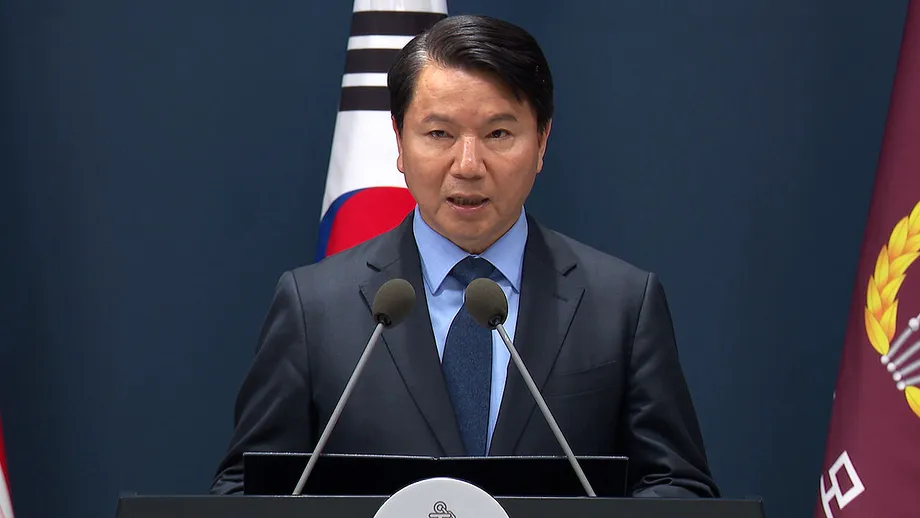
Defense Minister Kang Shin-chul told lawmakers at an October 26 parliamentary audit that Seoul and Washington were coordinating on completing full operational capability certification, the second stage of a three stage verification process, and identifying a transfer year. President Lee Jae Myung wants the change completed before his administration ends in 2030.
The immediate dispute concerns how readiness should be measured as North Korea develops its weapons. A reported U.S. request to include upgrades to military radios in the assessment adds a concrete scheduling problem: South Korea's SATURN communications project is due for full deployment in 2032, beyond Lee's term.
Seoul is reportedly trying to finish the portions relevant to the command assessment in 2028 or 2029. That places the discussion at the intersection of military testing, equipment delivery and a presidential deadline.
A U.S. administration official reaffirmed Washington's intention to transfer wartime operational control, commonly called OPCON, once the agreed requirements are satisfied:
The United States intends to transfer wartime operational control to South Korea when the agreed conditions have been met, which will ensure the safety and security of the people of South Korea and U.S. forces stationed there.
The official said U.S. policy had been consistent for decades. Seoul is pressing for a timetable within that process, while Washington is reserving judgment on its outcome.
What would change in wartime command?
Wartime OPCON is the authority to direct designated military units during a conflict. Under the existing combined defense structure, a U.S. general commands the South Korea-U.S. Combined Forces Command, which would direct allied wartime operations. The proposed future command would be led by a South Korean general with four stars.
The Sejong Institute explains the scope of that authority in its June 2025 policy brief, written by principal research fellow Beomchul Shin. OPCON concerns units assigned to particular operations, within a combined defense system guided by the two countries' political and military leadership.
For troops, the practical change would be who leads the combined command and directs its assigned forces. South Korea already exercises peacetime operational control through its Joint Chiefs of Staff, an arrangement in place since 1994.
For Lee, the change also carries political meaning. He has argued that South Korea has sufficient military strength to take greater responsibility for its defense and has called for wartime OPCON to be regained swiftly. Patrick Cronin, chair for Asia-Pacific security at the Hudson Institute, has described the transfer as a symbol of recovering sovereignty for many South Koreans, while urging attention to deterrence and the alliance's ability to respond to threats.
The three conditions that govern the handover
South Korea and the United States replaced an approach based on a fixed date with an approach based on readiness in October 2014. Their defense ministers agreed on the subsequent transition plan in 2015.
The Sejong Institute brief identifies three central requirements:
- South Korea must possess the military capabilities needed to lead combined forces.
- The allies must have the capabilities to respond to North Korean nuclear and missile threats.
- The security environment on the peninsula and in the surrounding region must support a stable transfer.
Kang told lawmakers that these remain the agreed foundation. Asked whether the conditions still applied, the defense minister answered:
Yes. The three conditions remain the basic framework.
Military officials assess capabilities through the Combined Mission Essential Task List, or CMETL. In plain language, it is a list of jobs the combined force must be able to perform, covering areas such as command, surveillance, firepower and sustaining operations.
Why the second verification stage matters
Full operational capability, or FOC, is the second of three assessments of the future combined command. It tests whether that command has sufficient capabilities to perform its major missions. Completing this stage would move the transition forward, with full mission capability verification still forming the final stage.
The Sejong Institute brief records an initial operational capability assessment in August 2019. It describes FOC assessment as scheduled for August 2022 and says efforts were addressing shortcomings, while giving no schedule for the final full mission capability assessment.
Kang's October remarks concern completing FOC verification and certification. Seoul hopes to secure progress at the Security Consultative Meeting, the annual gathering of the two countries' defense chiefs, expected in Washington in December. The allies still disagree over whether the requirements for that assessment have been satisfied.
Kang has described the objective as completing FOC verification and determining a target transfer year by the end of 2026. Setting that year would give officials a planning deadline; certification would record their judgment about the future command's readiness.
A Pentagon official stressed that the assessment remains a joint process and said Washington would leave its outcome to bilateral deliberations:
Both nations remain committed to ensuring that the necessary conditions are met before any transition occurs. We will not prejudge decisions or outcomes of this bilateral process.
Brunson's remarks expose a disagreement over standards
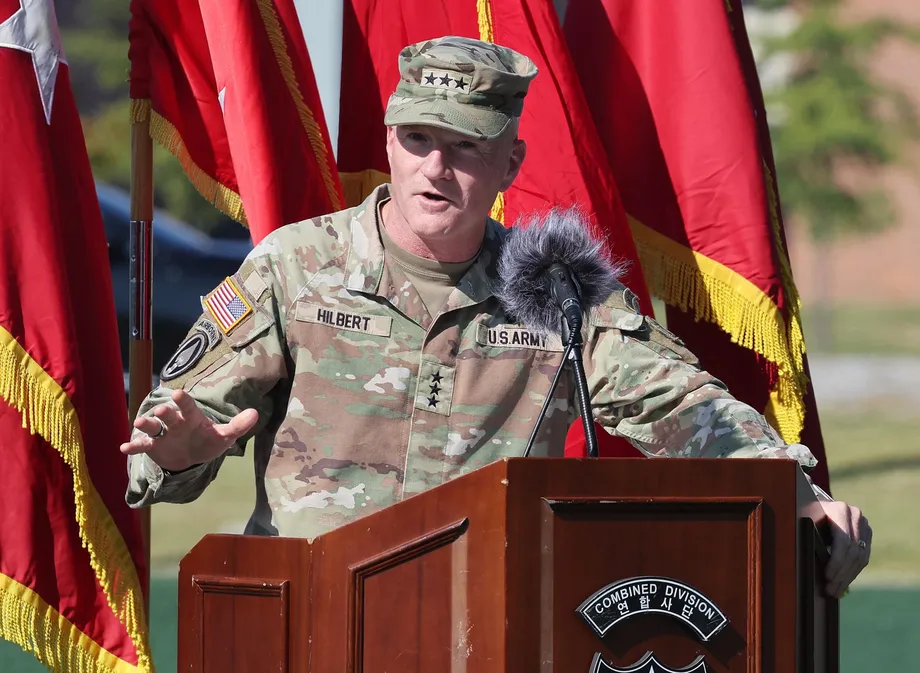
Gen. Xavier Brunson, commander of U.S. Forces Korea, brought the disagreement into public view at a policy forum in Washington. Referring to an evolving security environment, including North Korean weapons development and recent missile activity, he said:
Because the conditions have changed, because we've changed our plan, we have new standards which we have to uphold.
South Korean officials responded by defending the framework already agreed between the allies. Defense Ministry spokesperson Chung Bin-na warned that continually changing requirements could prevent completion. She explicitly presented that warning as her personal view:
I believe transfer of wartime operational control would never be achieved if the goalpost continues to be moved.
Chung said the ministry's official position remained close coordination on the conditions agreed by both countries. Kang later told lawmakers that Seoul had raised concerns about Brunson's remarks with Washington and that there had been areas of agreement.
The Pentagon has not publicly clarified whether formal transition criteria have been revised. The central negotiation is how to account for changing threats while giving South Korea a sufficiently clear set of requirements to complete.
Military radios bring the timing problem into focus
The SATURN combat radio upgrade offers a specific example of the capabilities under discussion. The United States reportedly asked around the middle of 2026 for improvements in communications between aircraft and ground forces to be included in the OPCON assessment.
South Korea has been pursuing the program from 2022 to 2032, with investment exceeding 2 trillion won. It covers radios used by the Army, Navy, Air Force and Marine Corps, replacing aging equipment with systems compatible with U.S. and NATO standards.
SATURN uses digital frequency hopping, which rapidly changes the frequency carrying a radio signal. This helps protect communications against interception and jamming, the use of electronic interference to disrupt messages. Reliable communications allow allied aircraft and ground units to exchange instructions during operations.
A reported South Korean planning target of 2028 would fall four years before full SATURN deployment in 2032. Seoul is therefore reportedly prioritizing the parts needed for the OPCON assessment for completion in 2028 or 2029. Washington and Seoul have not jointly announced a transfer date.
Cho Yong-geun, a former director general for North Korea policy at the Defense Ministry, said the United States had previously promised complementary capabilities, meaning continued U.S. military support for combined defense. He argued that Washington was now giving the impression South Korea had to fill every capability requirement itself.
The Defense Ministry said the radio project had long been pursued to strengthen combined defense and South Korean capabilities. It declined to disclose matters under discussion in the OPCON negotiations.
Command networks face their own delivery schedule
South Korea is also planning upgrades to the Allied Korean Joint Command and Control System, scheduled to become operational by 2029. The system is the digital backbone used to coordinate combined operations.
Planned improvements include servers using cloud computing, automation assisted by artificial intelligence, interpretation tools that work as communication occurs, and stronger cybersecurity. These changes concern how commanders receive information, share instructions and coordinate forces across the alliance.
The 2029 schedule puts another major modernization effort inside the period Lee has identified for completing the transfer. Readiness discussions therefore extend beyond the number of weapons South Korea owns to the systems that help commanders use forces together.
Shin's Sejong Institute brief recommends strengthening command and control, surveillance, reconnaissance, firepower and the capacity to sustain operations. It also calls for greater use of drones and artificial intelligence. An earlier five year policy roadmap expressing Lee's ambitions remained open to revision rather than being a final government plan.
Reinforcement routes and regional roles also matter
Gwangju Air Base presents another practical alliance issue. Kang said the allies were discussing alternative airports for receiving U.S. reinforcements because the military airport in the southwestern city is expected to be relocated to support a major semiconductor cluster project.
Gwangju is one of five collocated operating bases used to receive and handle U.S. personnel and equipment during a contingency. Kang said discussions covered alternative aerial ports of debarkation, meaning airports where incoming forces and supplies would arrive and be processed. He called for resolution through decisions at senior levels.
The airport issue connects local development with wartime logistics: moving a military facility requires arrangements for the reinforcement work it performs. It sits alongside the command negotiations as a concrete task for maintaining combined readiness.
The Sejong Institute brief also examines a wider policy question: strategic flexibility for U.S. Forces Korea. This means the potential use of those forces in contingencies beyond the peninsula, including a Taiwan crisis. Shin argues that a larger South Korean role in peninsula defense could be connected to Washington's regional priorities concerning China.
Shin presents those links as policy possibilities and recommends narrowing differences between Seoul and Washington over how they assess regional threats. He also recommends preserving an integrated combined command and cooperation with the United Nations Command after the transfer.
The milestones leading to the next talks
The command arrangement has changed several times since the Korean War. The current negotiations follow years of postponed deadlines and a later decision to make readiness the basis for the handover.
- 1950: South Korea placed operational control under the U.S. led United Nations Command during the Korean War.
- 1978: The newly established South Korea-U.S. Combined Forces Command assumed wartime operational control.
- 1994: South Korea recovered peacetime operational control.
- 2006: The allies agreed on basic principles for a wartime transfer, with an initial April 2012 deadline later moved to December 2015.
- 2014 and 2015: The allies adopted the approach based on conditions and agreed on the transition plan.
- August 2019: The initial operational capability assessment took place.
- October 2026: Public exchanges over standards accompanied Seoul's effort to complete FOC verification and agree on a target year.
Kang was expected to meet U.S. Defense Secretary Pete Hegseth on the sidelines of the ASEAN Defense Ministers' Meeting-Plus in the Philippines on October 29. The minister said he expected OPCON to come up in their alliance discussions.
The larger negotiating milestone is the expected December Security Consultative Meeting in Washington, for which an exact date had not been announced. Earlier scheduling discussions had pointed to a meeting after the November 3 U.S. midterm elections.
Foreign Minister Cho Hyun told lawmakers that the U.S. side had described the timing and substance of the transfer as coming closer together through communication. He also said South Korean military authorities considered the conditions satisfied.
Kang has left room to review options if Washington declines to agree on a target year, while supporting negotiations rather than a proposal from ruling party lawmaker Kim Byung-joo for Seoul to declare it would exercise wartime OPCON independently. Kang said the transfer should proceed through close consultations and mutual trust.
Key Points
- Washington says wartime OPCON will transfer only after mutually agreed conditions are met.
- Seoul seeks to complete FOC verification and agree on a target year by the end of 2026.
- Lee wants the handover before his administration ends in 2030; a reported internal target is 2028.
- The three conditions cover combined command capabilities, responses to North Korean nuclear and missile threats, and a suitable security environment.
- Radio upgrades scheduled through 2032 and command network improvements planned for 2029 bring equipment delivery into the timing debate.
- The expected December defense ministers' meeting is the next major opportunity to reconcile the timetable and readiness assessments.