A border warning puts a quieting measure at risk
North Korea is considering restarting loudspeaker broadcasts and deploying more weapons along its border with South Korea, Kim Yo-jong said on October 19, 2026, after mine blasts injured three South Korean soldiers and renewed a dispute over military activity near the dividing line.
Contents
- A border warning puts a quieting measure at risk
- What Kim said the military is considering
- The mine blasts behind the latest dispute
- Why construction is bringing troops close together
- What the warning figures show
- How the border reached this point
- What renewed broadcasts would mean for residents
- A warning amid renewed weapons activity
- Key Points
Kim, director of the Workers' Party of Korea's general affairs department and the sister of leader Kim Jong-un, accused Seoul of threatening North Korean personnel with warning broadcasts and gunfire. She claimed South Korea issued 2,870 loudspeaker warnings and fired 201 warning shots between August 1 and October 17.
South Korea's military has described its actions as responses to North Korean troops crossing the Military Demarcation Line while building border fortifications. It reported about 50 such crossings this year and said the North had deployed as many as 7,000 workers to install mines and fences.
The warning threatens to reverse a reduction in noise along the border after President Lee Jae Myung's government stopped propaganda broadcasts in 2025 and North Korea stopped its own broadcasts in response. A restart would affect soldiers facing each other across the boundary and residents whose daily lives had been disrupted by loud sound.
What Kim said the military is considering
Kim's statement was carried by the Korean Central News Agency, North Korea's state news agency. She described the border situation and blamed South Korea, using ROK, the abbreviation for the Republic of Korea, South Korea's official name.
"Now the situation of the southern border is very unstable. A grave situation is prevailing along the southern border due to the reckless behavior of the ROK military gangsters," Kim said.
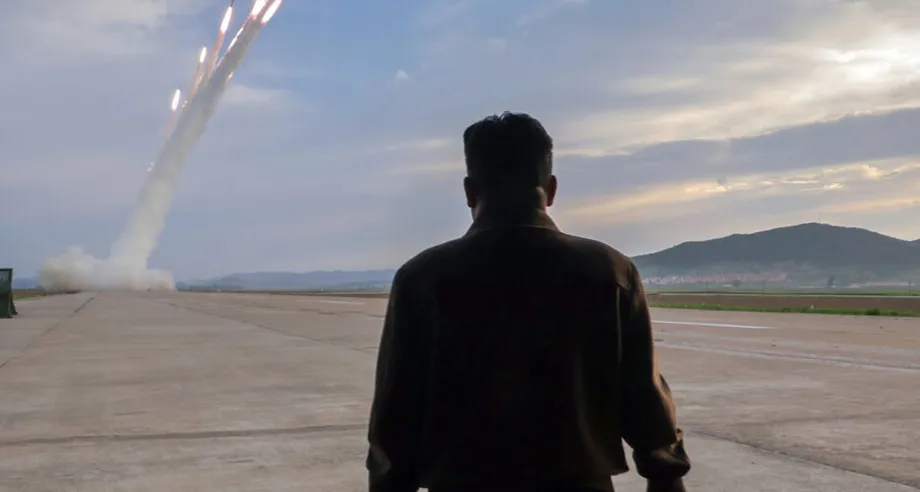
Kim said North Korea's military leadership was considering additional weapons and renewed broadcasts. Her statement described possible deployments as measures to prepare for a military emergency.
"To cope with the prevailing situation, our military leadership is examining the issues of deploying more tactical strike means along the southern border as a pre-emptive and suppressive measure to deal with contingency, and of resuming loudspeaker broadcasting against the ROK, and considering other necessary and appropriate measures," she said.
Tactical strike weapons generally refer to weapons intended to hit military targets in a particular area. Kim named no weapon systems, deployment date or date for restarting broadcasts, and left the other measures unspecified.
The mine blasts behind the latest dispute
The September 21 explosions occurred in the western part of the Demilitarized Zone, or DMZ, the buffer area separating the two militaries. Three South Korean soldiers were injured, two seriously. Initial descriptions focused on the two soldiers with serious injuries.
South Korea formally attributed the blasts to mines planted by North Korea earlier in October. Seoul called on Pyongyang to apologize and remove other mines, and also urged it to stop the fortification work.
North Korea has repeatedly denied responsibility. Kim accused South Korea of inventing the incident and said its military actions had become more aggressive since the explosions. Seoul's attribution and Pyongyang's denial leave the two governments directly opposed over who caused the injuries.
The location matters. The mine explosions occurred in the western DMZ, while recent accounts of repeated crossings describe an eastern area near South Korea's 21st Division. The confrontation therefore involves military activity in more than one part of the border.
Why construction is bringing troops close together
North Korea began its current border fortification campaign in April 2024. Its work has included mines, barbed wire fences and barriers designed to obstruct tanks, alongside a policy of cutting ties with South Korea.
South Korea's military said on October 5 that North Korea had used as many as 7,000 workers during 2026 to install mines and fences. It counted about 50 incidents in which North Korean personnel crossed the Military Demarcation Line during the work.
The Military Demarcation Line is the actual dividing line between the two sides inside the wider DMZ. The buffer zone was established under the armistice that stopped fighting in the Korean War in 1953. Despite its name, the DMZ sits within one of the world's most heavily fortified border areas.
North Korean troops have reportedly been creating a patrol route near the eastern front's 21st Division area and repeatedly moving south of the line. South Korea says it has responded with warning broadcasts and warning shots. Kim disputes Seoul's grounds for declaring those movements crossings and accused its troops of firing automatic rifles and large caliber machine guns.
What the warning figures show
Kim's figures include a shorter period within the August to October total: she claimed South Korea conducted 998 warning broadcasts and fired 91 warning shots between October 1 and October 17. Seoul had not released corresponding totals for its responses to the fortification work.
Using Kim's numbers, those 17 days accounted for about 35 percent of the 2,870 broadcasts and 45 percent of the 201 warning shots she counted across the full 78 days from August 1. Her figures describe a faster pace of warning activity during the first part of October.
Warning broadcasts tell approaching troops to stop or withdraw. Propaganda broadcasts, which North Korea is threatening to restart, aim to influence or unsettle listeners across the border. South Korea continued to use spoken warnings against crossings after suspending its propaganda broadcasts.
Lim Eul-chul, a professor at Kyungnam University's Institute for Far Eastern Studies, said South Korea had remained on high alert during the construction work. He offered this assessment of Pyongyang's concern:
And Pyongyang seems to be worrying that such warning activities by Seoul might escalate tensions near the border or cause a military conflict.
How the border reached this point
The October warning follows several rounds of confrontation and attempts to reduce tension. Loudspeakers have repeatedly become part of those exchanges.
- 2015: Mine blasts blamed on North Korea maimed two South Korean soldiers. Seoul resumed propaganda broadcasts after an 11 year pause, and the confrontation brought the two sides close to armed conflict.
- April 2024: North Korea began its current border fortification campaign.
- June 2024: South Korea resumed propaganda broadcasts after a pause lasting six years, amid North Korea's campaign of sending balloons carrying rubbish across the border.
- 2025: Lee's government stopped propaganda broadcasts after taking office, and North Korea subsequently stopped its own broadcasts.
- August: North Korea began dismantling some loudspeakers after South Korea removed its propaganda speakers a week earlier.
- September 21, 2026: Mine explosions injured three South Korean soldiers in the western DMZ.
- October 19, 2026: Kim threatened renewed broadcasts and additional weapons deployments.
The 2015 confrontation provides a direct precedent for the present dispute: injuries from mines were followed by a loudspeaker confrontation. The current threat comes after both governments had already taken steps to quiet the border.
What renewed broadcasts would mean for residents
Residents near the border have complained that broadcasts from both sides disrupted their lives during the day and at night. South Korea has aired news and K-pop, while North Korea has used loud sounds including sirens and drums.
South Korea previously said its broadcasts could travel as far as six miles across the border during the day and more than twice that distance at night. That reach helps explain why a military decision about loudspeakers can quickly become a daily concern for nearby communities.
Lee's suspension of broadcasts was intended to rebuild trust. North Korea's subsequent halt gave residents relief from an activity that could continue beyond normal waking hours.
Kim also attacked the political basis of Lee's approach. She accused his government of pursuing confrontation despite its language of reconciliation and peace, and compared it unfavorably with the previous conservative government of Yoon Suk Yeol. Her statement puts Seoul's attempts to improve relations alongside an immediate military demand: change how South Korean troops respond to North Korean personnel near the dividing line.
A warning amid renewed weapons activity
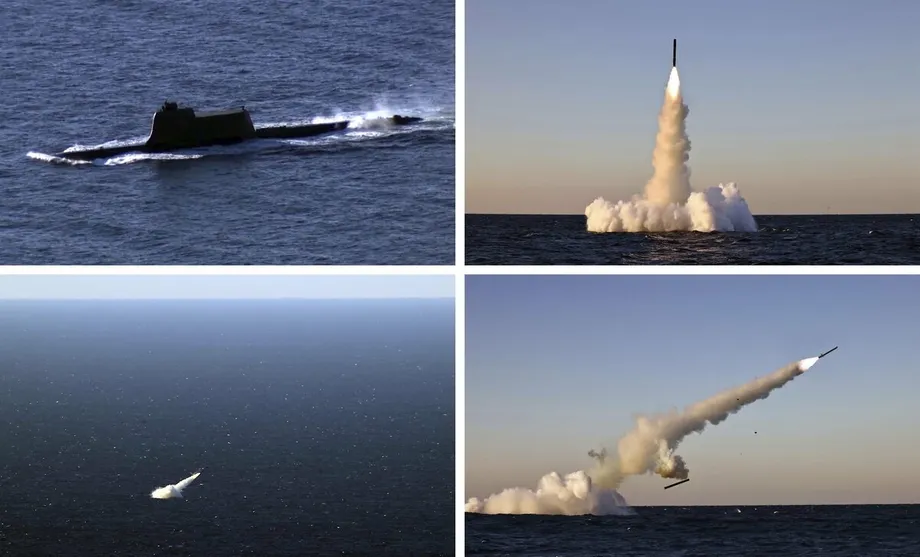
North Korea's border threat came alongside renewed weapons testing. On October 17, state media claimed the country had successfully tested the Zam-2.0 torpedo system two days earlier, describing it as using artificial intelligence for target detection and guidance.
North Korea said the test followed more than 180 evaluations over five years and checked the weapon's propulsion system. It gave little detail about how the claimed artificial intelligence worked. In simple terms, such a guidance system would use computer processing to help identify a target and direct the weapon toward it.
President Donald Trump has renewed efforts to restore diplomacy with Kim Jong-un, while Pyongyang has increased its weapons testing activity. Kim Yo-jong's statement added a specific border threat to that wider diplomatic setting.
For South Korea, the immediate issue is how to respond to further crossings while seeking calmer relations. For border residents, the practical concern is whether the loudspeakers return. South Korea's military had not immediately responded to Kim's latest warning.
Key Points
- Kim Yo-jong said North Korea is considering renewed propaganda broadcasts and more weapons along the border.
- September 21 mine blasts injured three South Korean soldiers, two seriously. Seoul blamed North Korean mines; Pyongyang denied responsibility.
- South Korea's military reported about 50 crossings during North Korean fortification work in 2026.
- Kim claimed South Korea issued 2,870 warning broadcasts and fired 201 warning shots from August 1 to October 17.
- Both sides had stopped propaganda or noise broadcasts after Lee Jae Myung took office in 2025.
- No weapons systems or timetable were announced for the measures under consideration.