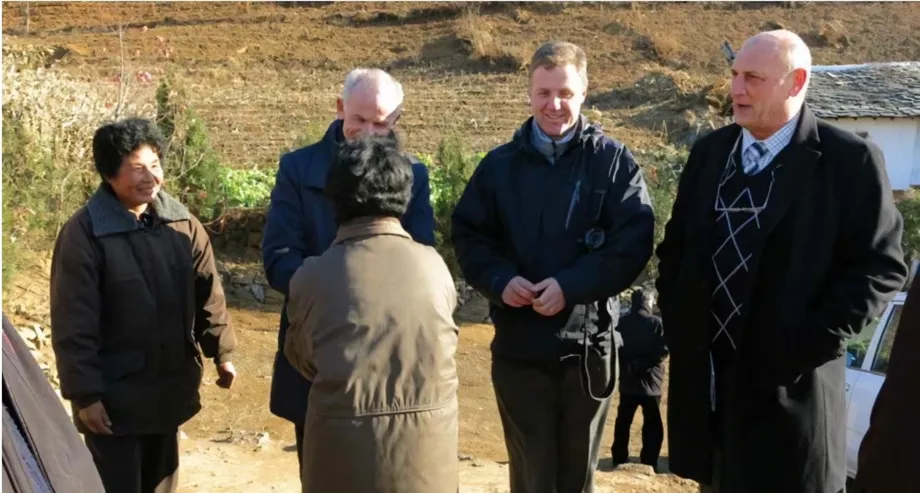
A Swiss diplomatic presence returns after six years
Switzerland has restored a permanent presence in Pyongyang after a six year absence, opening a diplomatic office with a political role and exploring whether humanitarian assistance can resume. The Swiss Federal Department of Foreign Affairs said the office began normal operations on the 19th, although the announcement did not specify the month.
Contents
- A Swiss diplomatic presence returns after six years
- A political office with Beijing still in charge
- How Switzerland reached this point
- Why restoring aid requires more than reopening an office
- The access conditions North Korea would need to meet
- A small mission with a defined budget
- Switzerland wants a channel for security dialogue
- A limited European return, with sanctions continuing
- Key Points
The office occupies the premises of the former Swiss humanitarian cooperation office, whose international staff withdrew in March 2020 after North Korea closed its borders during the COVID-19 pandemic. Its return gives Switzerland a resident political presence in North Korea for the first time since the countries established diplomatic relations in 1974.
The planned operation is small: one resident Swiss diplomat and two local employees. The office reports to the Swiss embassy in Beijing, which retains responsibility for diplomatic and consular relations with North Korea. Switzerland is therefore adding a permanent channel for contact in Pyongyang while keeping its existing embassy structure.
For North Korean residents, the most immediate practical issue is whether that contact can lead to renewed assistance in health, drinking water and food security. Switzerland says any return to humanitarian work depends on access to project locations, permission to bring in supplies, freedom of movement for specialists and the ability to check how Swiss money is spent.
Those requirements put two separate tasks before the returning office: rebuilding political communication and finding out whether aid can operate under Swiss standards. The foreign ministry says its position on North Korea's nuclear and missile programmes, and its implementation of international sanctions, remain unchanged.
A political office with Beijing still in charge
The former Swiss Agency for Development and Cooperation office, established in 1997, coordinated humanitarian projects and supported communication between the two countries. It did not function as a formal diplomatic mission. The new office adds a dedicated political purpose to Switzerland's presence in the North Korean capital.
The Federal Department of Foreign Affairs, known as the FDFA, described the office's intended work when announcing plans for a permanent return:
The Swiss Office in Pyongyang serves to facilitate bilateral dialogue between Switzerland and North Korea as well as coordinate possible Swiss humanitarian programs in North Korea,
A resident diplomat can maintain contact with North Korean authorities from inside the country, while the embassy in Beijing continues to manage the wider relationship. Consular responsibility, which includes official assistance to a country's citizens abroad, also stays with Beijing.
The ministry's bilateral relations overview confirms that diplomatic responsibility rests with the Beijing embassy and that regular political dialogue continues. It also records that no Swiss nationals were living in North Korea at the end of 2025, before the newly announced permanent return.
How Switzerland reached this point
Switzerland's involvement on the Korean Peninsula began decades before its humanitarian office opened. Its current return brings together two longstanding activities: support for communication over security issues and assistance aimed at civilian needs.
The main milestones show how those roles developed:
- 1953: Switzerland joined the Neutral Nations Supervisory Commission following the Korean War.
- 1974: Switzerland established diplomatic relations with North Korea.
- 1995: The Swiss Agency for Development and Cooperation began humanitarian assistance during a severe famine.
- 1997: Switzerland opened its cooperation office in Pyongyang.
- 2012: Swiss activities in North Korea became strictly humanitarian.
- March 2020: Staff withdrew and programmes on the ground were suspended after pandemic border restrictions.
- November 2024: An FDFA visit to Pyongyang assessed whether the office could reopen.
- April 2026: The FDFA confirmed plans to restore a permanent Swiss presence during the year.
The latest announcement moves the process from planning to operation. Earlier preparations included the arrival of the new office head in Pyongyang and Swiss government statements that North Korea had sent positive signals about a return.
Why restoring aid requires more than reopening an office
Swiss humanitarian work previously covered health, drinking water, food security, sustainable agriculture, reforestation, sanitation and hygiene. Projects also included monitoring assistance, meaning checks on whether supplies and funding reached their intended uses.
The ministry dates the suspension of programmes on the ground to March 2020, when foreign staff lost access. The remaining humanitarian programmes operated or supported by the Swiss development agency ended in 2024. The two dates describe different stages: direct work inside the country stopped first, and the remaining programmes ended later.
The new diplomatic office will work with the Swiss Agency for Development and Cooperation, known as the SDC, to discuss possible projects with North Korean authorities. That gives Switzerland a local channel through which to assess needs and negotiate practical arrangements.
No project start date, renewed aid budget or list of approved locations has been announced. The foreign ministry says future assistance would focus on urgent needs among North Korean residents and comply with international sanctions.
The access conditions North Korea would need to meet
Swiss personnel must be able to travel directly to project sites outside Pyongyang before humanitarian programmes can resume under the conditions set out by the foreign ministry. Access to provincial locations would allow staff to inspect work and assess conditions where assistance is intended to reach people.
North Korean authorities would also need to allow the import of necessary supplies and ensure that project specialists can enter and leave the country freely. Water, health and agricultural projects require both materials and people with the skills to install, maintain or assess them.
Switzerland also requires the ability to verify at any time that its funding has been used properly. In practical terms, a project needs a way to follow money and materials through to their intended purpose, alongside permission to inspect the result.
These conditions connect the office's political work directly to its humanitarian possibilities. Meetings with North Korean officials can establish contact, but operating an aid programme requires agreement on travel, shipments, staffing and financial checks. Switzerland says those arrangements are necessary to carry out projects according to its standards and values.
A small mission with a defined budget
Swiss government plans envisaged one resident diplomat supported by two local employees, subject to North Korean approval. The Federal Council, Switzerland's cabinet, described a reduced operation with a small diplomatic staff rather than a large embassy.
The planning estimates put renovation of the former humanitarian premises at 200,000 to 500,000 Swiss francs. Annual operating costs, including travel and administration, were estimated at 900,000 francs. These were projected costs; final expenditure has not been announced.
The annual operating estimate is between 1.8 and 4.5 times the projected renovation bill, comparing 900,000 francs with the renovation range of 500,000 to 200,000 francs. Maintaining a continuing presence therefore represents a larger recurring commitment than preparing the building for its return.
The staffing plan also helps explain the office's structure. A single Swiss diplomat provides a permanent point of contact in Pyongyang, while the Beijing embassy retains responsibility for the broader diplomatic relationship and consular work.
Switzerland wants a channel for security dialogue
The Swiss foreign ministry says Switzerland has maintained direct political dialogue with North Korea since 2003, making it one of the few Western countries with that continuing relationship. It argues that communication is particularly valuable when security tensions are high and channels between governments are limited.
Switzerland's role in the Neutral Nations Supervisory Commission dates to 1953. The commission is part of the arrangements intended to prevent renewed hostilities on the peninsula after the Korean War. Participation was the Swiss Armed Forces' first mission abroad.
Geneva has also served as a meeting place for negotiations. Switzerland hosted talks involving North Korea, South Korea, China and the United States between 1997 and 1999. It hosted three other meetings between the United States and North Korea concerning their relations and conditions for restarting talks on denuclearisation.
The FDFA connected the return to that diplomatic history in its statement:
Switzerland remains committed to facilitating dialogue, peace and stability on the Korean Peninsula through its tradition of good offices and mediation, including its historic presence in the Neutral Nations Supervisory Commission,
Good offices means helping governments communicate, for example by providing a venue or supporting contact between them. Switzerland says it is ready to perform that role as it develops political dialogue with North Korea.
A limited European return, with sanctions continuing
Switzerland is returning to a capital where relatively few European diplomatic operations have resumed since the pandemic. Sweden and Poland were identified as the only European countries with active embassies in the accounts accompanying the Swiss reopening preparations.
Russia, China, Vietnam and Laos maintained diplomatic presences through the border closure. Other countries, including India, Nigeria, Brazil, Nicaragua and Indonesia, returned after North Korea began easing restrictions in 2023.
Germany sent a delegation to inspect its closed embassy in February 2024, but diplomatic sources described continuing reluctance to reopen while North Korea supported Russia's war against Ukraine. The differing decisions show that a return to Pyongyang depends on each government's political assessment as well as permission to operate.
Switzerland has paired its return with a commitment to keep applying sanctions. The foreign ministry's bilateral overview says economic relations and trade are modest and that the State Secretariat for Economic Affairs rigorously applies United Nations sanctions against North Korea.
The immediate change is a resident Swiss political contact in Pyongyang. Any renewed humanitarian assistance will require a further agreement on how projects can operate, while Switzerland's stated positions on nuclear weapons, missiles and sanctions stay in place.
Key Points
- Switzerland says its Pyongyang diplomatic office has resumed normal operations after a six year absence.
- The office adds a dedicated political role at the former humanitarian cooperation premises.
- Plans provide for one Swiss diplomat and two local employees, with the Beijing embassy retaining diplomatic and consular responsibility.
- Humanitarian work depends on access to project sites, supply imports, specialist travel and checks on spending.
- Renovation was estimated at 200,000 to 500,000 Swiss francs, with annual operations projected at 900,000 francs.
- Switzerland says its sanctions policy and position on North Korea's nuclear and missile programmes remain unchanged.