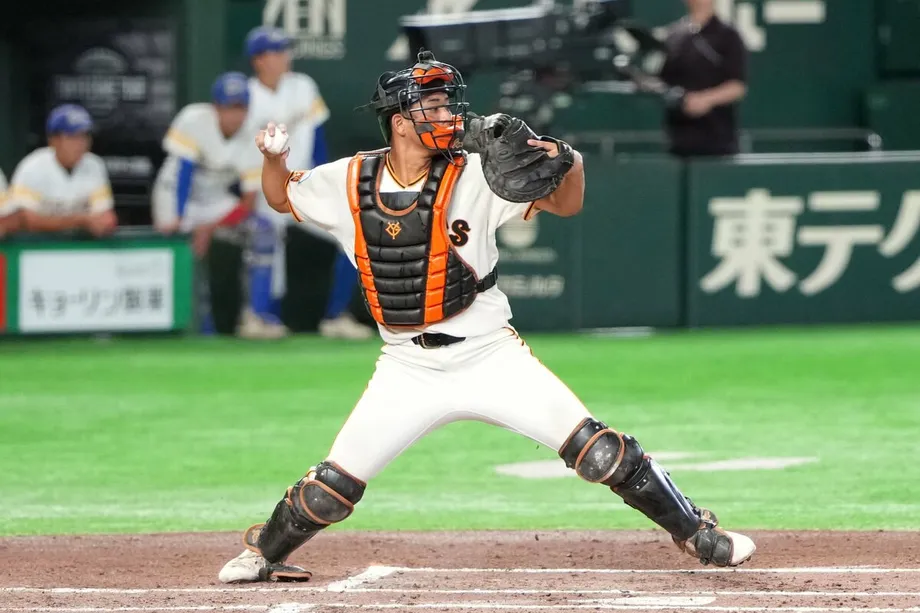
A Record Selection With School Still Ahead
The Yomiuri Giants selected 14-year-old catcher Rentaro Seki on October 22, 2026, making the Kawasaki junior high school student the youngest player ever chosen in Japan's professional baseball draft, according to Nippon Professional Baseball (NPB).
Contents
- A Record Selection With School Still Ahead
- Why the Giants Chose a Junior High Catcher
- Japan's Captain Delivered in Mexico
- A Giants Connection Built Over Several Years
- How High School and Professional Training Would Fit
- NPB Says the Selection Is Allowed
- What the Previous Age Record Shows
- A Former Catcher Calls for Patience
- The Dates Behind an Unusual Route
- Key Points
Seki, a third year student at Kawasaki Municipal Mukogaoka Junior High School in Miyamae Ward, was the Giants' fifth and final selection in the developmental draft. Born on December 26, 2011, he was still more than two months away from turning 15.
The Giants' developmental draft announcement sets out why they chose him: an exceptionally strong throwing arm, international success as Japan's Under-15 captain and the potential to become their starting catcher in the first team. At the 2026 WBSC U-15 Baseball World Cup in Mexico, he batted .333, hit two home runs and drove in 11 runs.
The immediate decision, however, belongs to Seki and his family. Selection gives him an opportunity to join the club's professional development system. He said he wanted to discuss his future before deciding whether to accept.
If he joins, the proposed arrangement would combine attendance at a full time high school with training at Giants facilities. His education would continue, while his baseball development would move into a professional club rather than a school team.
That combination makes the story larger than an age record. The Giants are preparing a route for a teenager they already know through their youth program, with the responsibility of matching professional instruction to a body and a school life still developing.
Why the Giants Chose a Junior High Catcher
Seki stands 179 centimeters tall, weighs 82 kilograms, and bats and throws right handed. The Giants list him as a member of their U15 Junior Youth program, whose federation registration name is Tamagawa Boys.
The club identifies his throwing as his strongest asset. Its assessment says he can send the ball from home plate to second base in under two seconds. For a catcher, that quick release and strong throw can help stop runners trying to steal second.
Seki can also pitch and play in the outfield. The Giants say he runs 50 meters in the low six second range, giving him speed alongside the strength expected of a catcher.
Shinsuke Kurematsu, the Giants' scouting director, described Seki as an outstanding prospect and explained that the club was preparing for an unfamiliar development arrangement.
This is an unprecedented case, and we'll probably have to figure things out as we go," Kurematsu said. "But we have various facilities available, and we plan to develop him using those resources.
The club's stated goal is to develop Seki over the long term into a first team starting catcher. Its announcement places the emphasis on what he could become after years of training, rather than an immediate role in the senior team.
Japan's Captain Delivered in Mexico
Seki's World Cup performance gave the Giants evidence of his ability against international opponents. He was Japan's captain, starting catcher and fourth batter, a position in the batting order usually assigned to a player expected to drive runners home.
His .333 batting average means he recorded a hit in roughly one out of every three official at bats. His two home runs and 11 runs batted in show how often his hitting helped produce runs.
The Giants also list his OPS at 1.058. OPS combines two measures: how often a player reaches base and how much power he produces through extra base hits. It gives a broader view of batting performance than batting average alone.
Japan won bronze, with Seki hitting a two run home run against host Mexico in the game for third place. He received the Fighting Spirit Award and was selected for the tournament's Best Nine, its team of leading performers.
Those results add a competitive record to the club's measurements of his size, speed and arm strength. Seki had already handled the demands of catching, batting in a central role and captaining a national team during the same tournament.
A Giants Connection Built Over Several Years
Seki's selection follows a route through the Giants' own youth teams. He represented Giants Junior while in his final year of elementary school, then became a founding member of Giants U15 Junior Youth when it began in April 2024.
The U15 team started with players entering junior high school. Seki became its first captain and helped it finish runner up in three national tournaments in 2026.
The program combined training suited to physical growth with nutrition guidance. Players were also encouraged to think about the purpose of their practice and make decisions for themselves. That approach formed part of the environment in which Seki developed before the draft.
His connection to the club began even earlier than his U15 captaincy. As a Giants Junior player in sixth grade, he hit a home run estimated to have traveled 90 meters at the NPB Junior Tournament.
Seki, speaking through the Giants after his selection, described both his happiness and his wish to consult his family.
"I'm happy because I've worn the Giants uniform at both the junior and junior youth levels. But there are still many things I don't understand, so I'd like to discuss my future with my family before deciding what to do," Seki said.
His response leaves the next step open. The club has selected him and outlined its intentions, while Seki has reserved his decision until after those family discussions.
How High School and Professional Training Would Fit
The proposed schedule would allow Seki to attend a full time high school from his family home beginning in spring 2027. On weekdays, he would train at the Giants' farm facilities in the evening, after classes.
Weekends and public holidays would initially include training with the club's third team, according to the plan described by club officials. The third team is part of the Giants' development structure, below their first team and second team.
A developmental selection is intended to give a player time and resources to progress toward the main playing squad. For Seki, that would mean access to professional facilities while continuing his schooling, with a longer preparation period than an older recruit might need.
Seki had previously expressed a preference for becoming a professional early in an environment where he could think independently and receive quality training, rather than first pursuing the traditional high school route toward Koshien, Japan's major national high school baseball stage.
The arrangement would change his daily routine in concrete ways. Classes would occupy the school day, baseball would follow in the evening, and much of his weekend training would take place inside the Giants' system. Managing study, travel, recovery and practice would become part of the development task.
NPB Says the Selection Is Allowed
NPB secretary general Katsuhiko Nakamura said the draft rules permit a junior high school player to be selected. Unlike high school players, junior high school players do not need to submit the formal declaration of their intention to turn professional before entering the draft process.
Nakamura also addressed the school baseball issue. He said that, under the Student Baseball Charter, Seki would be unable to belong to a high school baseball team while following the proposed professional route.
Attending high school and playing baseball for that school would therefore be separate matters. The Giants' plan is for Seki to receive his education at school and pursue baseball through the professional club.
The exact arrangements for his future competitive appearances remain to be determined. The club has described a likely training schedule, while NPB has explained the rules governing his selection and school baseball status.
For Seki's family, the decision involves more than accepting a place in a sports organization. It also means choosing where his baseball instruction will take place during the years when most players his age are preparing to join high school teams.
What the Previous Age Record Shows
The previous youngest selection was pitcher Kento Tsujimoto, who was 15 when the Hanshin Tigers chose him in the eighth round of the 2004 draft. Seki lowers that age record from 15 to 14.
Seki is also described as the first player selected while attending a Japanese junior high school. An account of the development challenges groups Tsujimoto with junior high age selections, but Tsujimoto had already entered a high school in the United States and was taking time away from it when Hanshin drafted him.
Tsujimoto's professional career was interrupted by repeated injuries. Hanshin released him in 2009, when he was 20, and he never appeared for the first team.
The comparison puts physical preparation at the center of the Giants' task. Seki's size and international results have earned him the opportunity, while the proposed development program must account for his age, workload and recovery over several years.
A Former Catcher Calls for Patience
Toshihiro Noguchi, a former catcher who played for Yakult, Hanshin, Nippon Ham and Yokohama, has urged the Giants to build Seki's strength gradually. He said a player finishing junior high school has three fewer years of physical development than one finishing high school, even when the younger player looks large and strong.
Catching brings particular demands. A catcher repeatedly receives pitches, rises from a squat and makes hard throws to bases. Noguchi said the amount of throwing a player has already done matters when deciding how much work his shoulder can handle.
Drawing on his coaching experience, Noguchi described seeing catchers develop shoulder pain after heavy throwing sessions, including players recruited from university or adult amateur baseball. His recommendation was to assess Seki's capacity individually and avoid immediately matching the workload of established professionals.
Noguchi proposed treating the next three years as a period of training at an intensity appropriate for a high school player. He suggested that receiving pitchers in practice could be one possible starting role while Seki develops his body and endurance.
He also argued that the Giants should allow roughly 10 years for development. Eight years after this draft, Seki would be 22, around the age when a player completing university might begin a professional career.
Noguchi saw an advantage in early access to professional instruction, which could provide consistent technical guidance. His central condition was patience: the opportunity would work best if the club adapted its program to the teenager's development.
The Dates Behind an Unusual Route
Seki's progress links an established Giants youth connection with a new decision about education and professional baseball. The main stages are:
- December 26, 2011: Seki was born.
- April 2024: Giants U15 Junior Youth began, with Seki among its founding players. He became the team's first captain.
- 2026: He helped his club finish runner up in three national tournaments and captained Japan to bronze at the U-15 World Cup in Mexico.
- October 22, 2026: The Giants selected him fifth in the developmental draft, setting the youngest selection record.
- Spring 2027: If he joins, the proposed plan would combine full time high school attendance with training at Giants facilities.
The Giants have already watched Seki develop within their youth structure. Their next task, if he accepts, would be to carry that relationship into professional baseball while preserving the time he needs for school and physical growth.
Key Points
- The Giants selected 14-year-old Rentaro Seki fifth in the developmental draft on October 22, 2026.
- NPB says he is the youngest player ever drafted in Japanese professional baseball.
- The Kawasaki catcher captained Japan to Under-15 World Cup bronze, batting .333 with two home runs and 11 runs batted in.
- Seki said he would discuss his future with his family before deciding whether to join.
- The proposed plan combines high school classes with Giants training, rather than membership of a school baseball team.
- The club aims to develop him over the long term into a first team starting catcher.