Transporters Want Pollution Gains Measured Before Longer Restrictions
The All India Motor and Goods Transport Association (AIMGTA) has asked Delhi's government to test planned winter vehicle restrictions for 15 days from November 1, 2026, and publish the results before continuing them through January 31, 2027. The association says the assessment should measure changes in air pollution alongside the effects on deliveries, factory supplies, transport costs and employment.
Contents
- Transporters Want Pollution Gains Measured Before Longer Restrictions
- Which Vehicles Face Entry Restrictions?
- What Would the Trial Measure?
- Why Freight Operators Fear Higher Costs
- Factories, Jobs and Public Revenue
- The Winter Measures Extend Beyond Trucks
- Enforcement and Transport Investment
- Dust, Construction and Regional Inspections
- Key Points
Association president Rajendra Kapoor wrote to Chief Minister Rekha Gupta and Environment Minister Manjinder Singh Sirsa seeking a scientific assessment. His proposal would put the restrictions into operation for an initial trial, track air quality and review the economic consequences before a decision on their continuation.
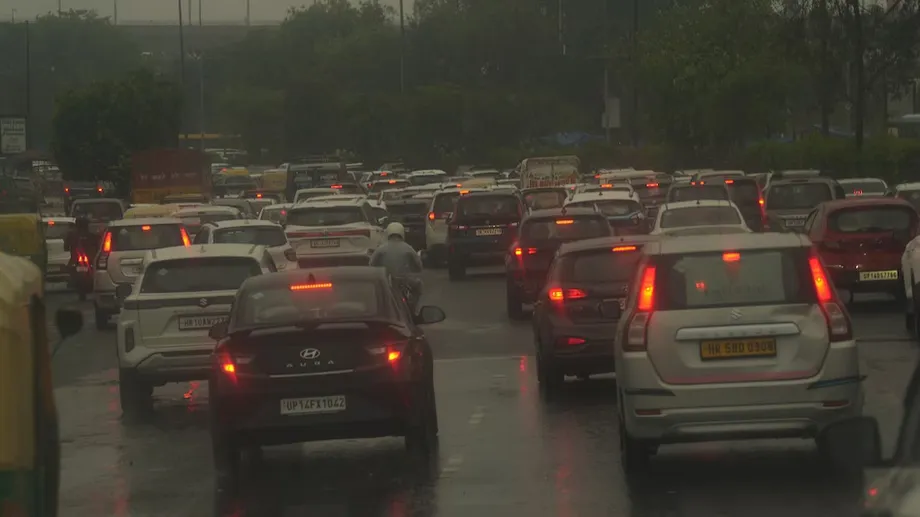
The request comes as Delhi prepares restrictions on vehicles entering the capital, alongside measures affecting offices, parking, construction and pollution inspections. The announced winter entry restrictions cover vehicles registered outside Delhi that do not meet Bharat Stage VI, or BS-VI, emission standards. More detailed guidance for commercial transport allows electric vehicles, vehicles using compressed natural gas (CNG), and diesel vehicles meeting BS-VI standards.
For businesses supplying the capital, the immediate concern is how goods now carried by older trucks would reach shops, markets and factories. AIMGTA says heavy trucks carrying 20 to 25 tonnes may have to unload their cargo into smaller vehicles, adding handling, journeys and delays.
Delhi's government has presented cleaner transport as one part of a broader programme addressing road dust, construction, industrial emissions and waste burning. The central issue in the transporters' appeal is how much cleaner the air becomes during the restrictions, and what arrangements keep essential supplies moving while that improvement is measured.
Which Vehicles Face Entry Restrictions?
Gurugram Traffic Police has advised that commercial goods vehicles and buses meeting BS-IV or older emission standards will be barred from entering Delhi from November 1, 2026. The guidance covers light, medium and heavy goods vehicles, as well as buses operating under All India Tourist Permits (AITP). Delhi registered buses are currently exempt.
Electric vehicles, CNG vehicles and BS-VI diesel commercial vehicles will be permitted entry under that advisory. Bharat Stage standards set limits on pollutants released through vehicle exhausts. BS-VI is a stricter standard than BS-IV, making the vehicle's emission category central to whether it can enter.
Police have asked transporters, tour operators and drivers to check emission standards and registration documents before travelling to Delhi. Violations may bring fines and legal action. For operators arranging deliveries, checking which vehicle is assigned to a journey will therefore matter alongside choosing a route and departure time.
The broader winter announcement also covers vehicles registered outside Delhi that fall short of BS-VI standards, extending the issue beyond goods transport. Those restrictions run from November 1, 2026, to January 31, 2027. AIMGTA's appeal focuses on the practical consequences for freight, including businesses dependent on supplies arriving from other states.
What Would the Trial Measure?
AIMGTA proposes monitoring PM2.5 and PM10 during the first 15 days of restrictions. These are categories of tiny particles suspended in the air. PM2.5 refers to particles no more than 2.5 micrometres across, while PM10 includes particles up to 10 micrometres across. Both are important measures of particle pollution.
The association also wants weather, wind direction and pollution across the surrounding region monitored during the trial. Those factors matter because Delhi's air changes with both emissions and the movement of air. Wind can carry pollution into or away from the city, while weather conditions can allow particles to accumulate.
A useful assessment would therefore need to examine pollution readings alongside those conditions. A fall in particle levels during stronger winds and a fall during calm weather would require different explanations. The association has asked for the findings to be made public, allowing the environmental results and transport costs to be considered together.
AIMGTA says restrictions could continue if the trial produces a substantial improvement, following a review of economic and operational effects. If the expected improvement does not occur, it wants greater priority given to road dust, construction activity, industrial emissions and waste burning. The government has not announced whether it will accept the proposed trial.
Why Freight Operators Fear Higher Costs
Delhi's markets and industries rely on goods arriving from other states, according to AIMGTA. The association says a restriction affecting trucks carrying 20 to 25 tonnes could require cargo to be transferred to smaller vehicles before entering the city.
Each transfer creates another stage in the delivery. Goods must be unloaded, sorted or reassigned, loaded again and dispatched. Operators may face extra labour charges, vehicle costs and waiting time. Smaller vehicles would also need enough carrying capacity between them to replace the load of a heavy truck.
AIMGTA warns that this could increase congestion at Delhi's borders and on nearby roads. That concern connects freight planning with the government's own effort to reduce traffic bottlenecks: restrictions may change the number and pattern of delivery journeys as well as the types of engines entering the capital.
Fruit, vegetables and other essential goods are among the supplies the association says could be affected. Delays matter especially for goods that deteriorate quickly. Transporters warn that higher delivery and handling costs could eventually reach consumers through prices, although they have provided no estimate of the possible increase.
Factories, Jobs and Public Revenue
Delhi's industrial businesses could face two pressures at once, AIMGTA argues: more expensive transport and less predictable deliveries of raw materials. A factory waiting for an input may have to adjust its production schedule, while higher delivery charges can raise the cost of producing or selling goods.
The association has asked the government to consider competitiveness, production, trade and employment before a final decision. These are concerns about how restrictions would operate across supply chains, from the vehicle bringing material into Delhi to the business using it and the customer buying the finished product.
AIMGTA also wants an assessment of possible reductions in diesel sales and goods and services tax (GST) revenue. Its letter provides no financial forecast. A pilot assessment would need actual information on fuel purchases, business activity and delivery costs to put amounts against those concerns.
The Winter Measures Extend Beyond Trucks
Union Environment Minister Bhupendra Yadav chaired a meeting on September 28, 2026, with Gupta, Sirsa and senior officials of the Commission for Air Quality Management. The meeting formalised an institutional action plan for winter pollution across Delhi and the National Capital Region.
Gupta announced the Winter Action Plan on Tuesday, with measures running from November 1 to February 28. The winter package includes staggered office timings, doubled parking charges and weekly inspections of pollution hotspots. Government and private offices are required to have 50% of staff work from home from November 1 to February 28, with the remaining half attending office. Similar vehicle and workplace measures were implemented in 2024 and 2025.
Municipal Corporation of Delhi (MCD) offices will operate from 8:30 am to 5 pm, while Government of the National Capital Territory of Delhi (GNCTD) offices will operate from 10 am to 6:30 pm, from November 1 to February 28. Parking charges at authorised parking facilities will be doubled from November 1 to February 28, 2027, except at facilities owned and managed by the Delhi Metro Rail Corporation (DMRC).
The wider Air Pollution Mitigation Action Plan, 2026, had described staggered office hours, work from home and further restrictions on polluting vehicles as measures the government could consider during severe pollution. The Winter Action Plan sets out the requirement for half of office staff to work from home during the winter pollution season.
The main dates and proposed review period are:
- September 28, 2026: The Union environment minister chaired the meeting formalising the winter action plan.
- November 1, 2026: Vehicle entry restrictions and the winter package are scheduled to begin.
- First 15 days from November 1: AIMGTA wants restrictions tested, pollution monitored and operational effects assessed.
- January 31, 2027: The announced entry restrictions on vehicles registered outside Delhi that fall short of BS-VI standards are scheduled to end.
- February 28, 2027: The winter plan's staggered office timings, 50% work from home requirement and doubled parking charges are scheduled to end.
Enforcement and Transport Investment
Gupta has said the goods vehicle rules form part of an effort backed by technology and stricter enforcement. Announcing the Air Pollution Mitigation Action Plan, 2026, the chief minister described the entry requirement:
From November 1, entry of goods vehicles into Delhi will be restricted to those compliant with BS VI norms or powered by CNG or electricity,
The No PUC, No Fuel rule has been in force in Delhi since October 1. The Commission for Air Quality Management ordered in May that fuel stations across Delhi-NCR must not dispense fuel to vehicles without a valid Pollution Under Control (PUC) certificate. Enforcement uses automatic number plate recognition cameras and digital tracking. PUC means Pollution Under Control, the certificate associated with a vehicle's emissions check. The cameras identify registration numbers so vehicles can be checked through digital records.
Delhi has identified 62 traffic hotspots for congestion reduction. Its longer term transport targets include expanding the bus fleet to 13,760 by 2028-29, with priority for electric buses, and installing 32,000 electric vehicle charging points over four years.
The plan also calls for better connections between Metro and Regional Rapid Transit System services and feeder buses, electric autorickshaws and shared transport. These connections address the shorter journeys between stations and final destinations, which can affect whether people choose public transport or a private vehicle.
Dust, Construction and Regional Inspections
Delhi's plan identifies 11 priority sectors, with responsibilities, deadlines and monitoring arrangements. Measures include mechanical road sweeping, water sprinklers and work on nearly 3,500 kilometres of roads, including paved surfaces and green buffers. Construction pollution is to be tracked through the C&D Portal 2.0, using location records and automated enforcement. The Winter Action Plan also includes curbs on construction and demolition activities and AI-based monitoring of construction sites.
Industrial units are to install online emission monitoring systems, while the plan includes a complete ban on biomass burning. Delhi also intends to expand its air quality monitoring network and create a central Green War Room and an Integrated Command and Control Centre. Ward teams called Vayu Rakshak are planned to support local action.
Haryana Environment Minister Rao Narbir Singh has separately directed stronger pollution inspections across districts in the National Capital Region before the Graded Response Action Plan takes effect. That plan, commonly called GRAP, sets out responses to worsening air pollution.
Haryana State Pollution Control Board officials are to submit weekly reports to guide corrective action by municipal bodies and the Gurugram Metropolitan Development Authority. Inspection priorities include construction sites, plants making ready mix concrete, road cleaning and large waste generators, alongside sewage treatment plant monitoring.
Delhi's vehicle restrictions will therefore operate alongside measures targeting several other pollution sources. AIMGTA's proposed trial would add a public assessment of the vehicle rules themselves, including whether changes in freight movements bring measurable improvements in air quality and what they cost the businesses supplying the capital.
Key Points
- AIMGTA wants a 15 day trial from November 1, 2026, before vehicle restrictions continue through the winter.
- The commercial vehicle advisory bars BS-IV and older goods vehicles and covered buses, while allowing electric, CNG and BS-VI diesel vehicles.
- Transporters want PM2.5, PM10, weather and regional pollution measured alongside delivery costs and business effects.
- The association warns that transferring heavy truck loads to smaller vehicles could increase handling costs, delays and border congestion.
- Delhi's entry restrictions on vehicles registered outside Delhi that fall short of BS-VI standards run through January 31, 2027; staggered office timings, 50% work from home requirements and doubled parking charges run through February 28, 2027, with DMRC-managed parking facilities exempt from the increase.
- The government has not announced a decision on the requested trial.