Smog and street violations bring a warning from the bench
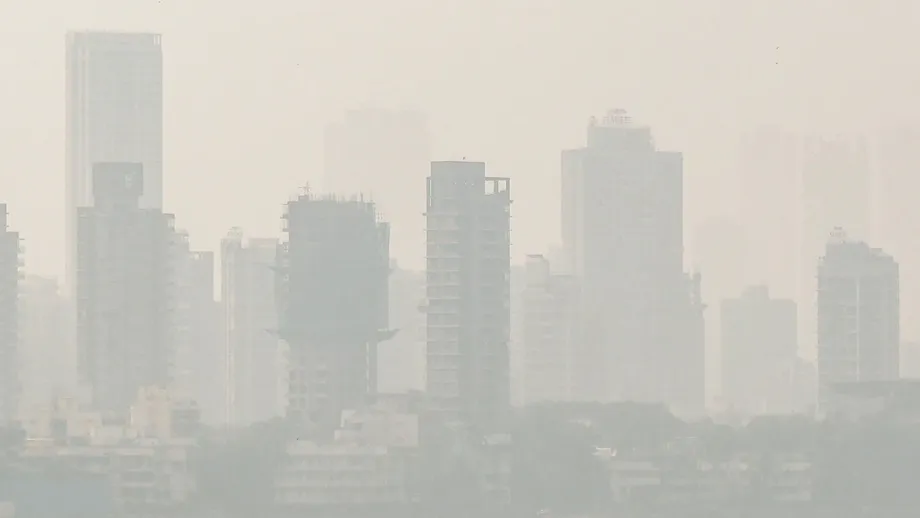
The Bombay High Court has ordered public pollution warnings by October 24 and demanded answers from senior officials on October 26 after criticising Mumbai's civic administration, pollution regulator and police for failing to enforce restrictions on firecrackers and festival noise. The bench described the situation as an emergency, citing visibility below 500 metres and residents struggling to go outdoors.
Contents
- Smog and street violations bring a warning from the bench
- What police and civic officials must do
- How the orders developed
- Where firecrackers are prohibited
- Noise readings show the scale of the enforcement problem
- Deposits put money behind noise restrictions
- Why cleaner neighbourhood readings concerned the judges
- Warnings must reach people before celebrations
- October 26 will test the response
- Key Points
Justices Girish S Kulkarni and Neela K Gokhale issued the directions during a Wednesday hearing on October 21 in a public interest case the court had initiated itself. Their criticism followed orders on September 22 and October 15 intended to control noise and air pollution during celebrations.
The court was told Mumbai was the country's second most polluted city at the time. Justice Kulkarni expressed alarm that pollution was surpassing Delhi despite Mumbai's sea breeze and open coastal spaces. No numerical air quality index readings or underlying ranking dataset were identified at the hearing as described.
Justice Kulkarni, explaining the effect of the smog on ordinary activities, said:
People are suffering and cannot move out, morning walks are impossible... The smog is very bad and we do not know where we are heading.
The immediate dispute concerns whether authorities are carrying out directions already issued. The court pointed to missing public notices, firecrackers allegedly burst outside a police station near Crawford Market, and festival processions proceeding without required permissions or undertakings on noise limits.
For residents, the court's demands translate into practical changes: clearer warnings, a police response to violations, checks on procession sound systems and action against construction pollution. For officials, the next hearing brings a requirement to document what they have done.
What police and civic officials must do
The Mumbai Police Commissioner must convene a meeting of all police station officers in charge and prepare a standard operating procedure for handling violations. Such a procedure gives officers a common set of instructions, so enforcement does not depend entirely on decisions made separately at each station.
The commissioner must also file an affidavit confirming that police personnel have been informed of the court's directions and will implement them. An affidavit is a written statement formally affirmed as true and submitted to the court.
The Brihanmumbai Municipal Corporation, known as the BMC, and the police commissioner must submit compliance affidavits before the October 26 hearing. The court also directed the commissioners of the BMC and Maharashtra Pollution Control Board, or MPCB, to attend that hearing and present the steps taken.
The judges warned that officers responsible for inaction could face penalties and prosecution. They connected enforcement failures to Articles 14 and 21 of India's Constitution, which protect equality before the law and the right to life and personal liberty. Their warning placed responsibility on the officials charged with protecting residents from pollution.
How the orders developed
The proceedings began with concern about noise from festival processions and expanded into a broader demand for enforcement against firecrackers, excessive sound and deteriorating air quality. The case is a suo motu public interest litigation, meaning the court took up a matter affecting the public on its own initiative.
The main dates trace the shift from issuing restrictions to requiring proof of action:
- September 21: The court took up concerns about noise pollution from processions on its own initiative.
- September 22: The bench issued restrictions covering firecrackers, laser lights, music, instruments and sound systems during festival processions, alongside requirements for permissions, deposits and monitoring.
- October 15: The court issued further directions on festival pollution and the use of firecrackers on public streets.
- October 20: Awaaz Foundation recorded noise during Durga Visarjan processions at several Mumbai locations.
- October 21: The bench criticised enforcement failures and described the pollution situation as an emergency.
- October 24: Authorities must publish public awareness notices and circulate them through social media.
- October 26: The court is scheduled to examine compliance and hear presentations from senior civic and pollution control officials.
The court's extension of the street firecracker restrictions across festivals makes enforcement a continuing responsibility, rather than an exercise confined to one celebration.
Where firecrackers are prohibited
The High Court's directions prohibit bursting firecrackers on public streets, lanes and footpaths throughout the year. The restriction applies across festivals, including Navratri, Diwali and Christmas. Firecrackers are also prohibited entirely in silence zones.
The bench clarified that it had not prohibited the manufacture or sale of firecrackers. Its directions address where firecrackers are used and how authorities must control the resulting noise and pollution. Earlier directions also called for promoting green crackers, which are designed to produce fewer emissions than conventional varieties.
The court singled out an incident near Crawford Market in south Mumbai, where firecrackers were allegedly burst on busy streets outside a police station on Tuesday. The judges described it as a "rampant breach" of their orders.
Police enforcement also came under scrutiny over procession sound systems. The bench said licences must be displayed and questioned processions taking place without required permissions or undertakings to observe prescribed decibel limits. A permission requirement has little practical effect unless officers check it where the event is happening.
Noise readings show the scale of the enforcement problem
Awaaz Foundation, an organisation campaigning against pollution, recorded loudspeaker noise of 110.8 decibels in Mahim at 8:51 pm on October 20 during Durga Visarjan. It recorded firecrackers at 103.1 decibels in Prabhadevi at 9:21 pm.
In Dadar West, the foundation recorded firecracker noise ranging from 82 to 102.6 decibels at 9:15 pm and observed smoke lingering in the air. Sound amplifiers at Cuffe Parade registered between 87.2 and 100.4 decibels between 9:53 pm and 9:55 pm.
The stated noise limits are 65 decibels during the day and 55 at night in commercial areas, and 55 during the day and 45 at night in residential areas. Under these rules, daytime runs from 6 am to 10 pm, so all four sets of readings were taken during the daytime period, even though they occurred after sunset.
The Mahim reading of 110.8 decibels was 45.8 decibels above the stated daytime commercial limit of 65. Decibels use a logarithmic scale, meaning increases represent much larger changes in sound energy than an ordinary counting scale would suggest. A location's legal classification determines which limit applies.
Sumaira Abdulali of Awaaz Foundation described the enforcement duty placed on police:
The court has ordered the police to measure decibel levels and take appropriate action.
The foundation said many activities took place in the presence of police, while no decibel meters were visible at the sites it observed.
Deposits put money behind noise restrictions
The September 22 directions required festival organisers and mandals, or organising associations, to deposit Rs 100,000 as a condition for permission under the Noise Pollution (Regulation and Control) Rules, 2000. Individuals were required to deposit Rs 50,000.
The amount required from an organisation is twice that required from an individual. Deposits may be forfeited if prescribed noise limits are breached at the venue or during a procession. The arrangement gives organisers a direct financial reason to control sound levels.
The court also required permissions, decibel meters and undertakings. Together, these measures create a sequence of responsibilities: organisers commit to the rules before an event, sound is checked while it takes place, and a breach can lead to loss of the deposit and action under the law.
Awaaz Foundation also described laser lights directed towards traffic in Mahim and Cuffe Parade, and towards residential buildings and traffic near Haji Ali. It observed firecracker use in Worli and Babulnath as well. These observations extended its concerns beyond loudspeaker volume to activities affecting people travelling through or living beside procession routes.
Why cleaner neighbourhood readings concerned the judges
Justice Gokhale warned that officials might point to air quality readings from Mumbai's cleanest areas while overlooking conditions near traffic signals and in slum areas. Her concern focused on whether official descriptions captured the places where residents were actually breathing polluted air.
An air quality index, or AQI, translates measurements of pollutants into a scale intended to make air conditions easier to understand. Pollution varies across a city, so a reading from one monitoring location can describe a different situation from conditions beside a busy road.
The judge's observation matters for enforcement choices. If officials focus on cleaner locations, areas with heavy traffic or dense settlement may receive less attention even when residents there face worse conditions. The court wanted authorities to respond to pollution across Mumbai.
Justice Kulkarni also questioned the BMC's control of construction activity. He said the corporation appeared to be doing too little to control developers and construction sites, and called for fines to be recovered. That criticism broadened the hearing beyond festival activities to another source of emissions requiring routine civic enforcement.
Warnings must reach people before celebrations
The court found that the BMC and MPCB had not issued public notices explaining restrictions on firecrackers in public streets, lanes and footpaths, or warning about smoke, toxic emissions and noise. It ordered publication and circulation through social media by October 24.
Earlier directions called for joint notices from the Maharashtra government, BMC and MPCB, awareness campaigns in schools and public transport, celebrity participation, and an efficient complaint mechanism connected to police. The latest deadline gave urgency to communication measures that the bench said were still missing.
Awaaz Foundation said it had emailed Chief Minister Devendra Fadnavis's office on September 26, September 28 and October 13 about loudspeakers, firecrackers and laser lights during Ganeshotsav. Its correspondence raised concerns about chemicals in firecrackers and lights directed into homes and towards traffic.
The foundation also described a mixed enforcement picture during Ganesh Visarjan on September 25. Most Ganesh pandals appeared to have followed noise norms by dispensing with DJs mounted on trucks and equipment that increased noise. Loudspeakers at political party booths near immersion sites, however, exceeded 100 decibels at several locations and continued late into the night.
October 26 will test the response
The next hearing is set to bring the BMC and MPCB commissioners before the bench to explain their actions. Compliance affidavits from the civic administration and police will give the court a written account of enforcement, staff instructions and public communication.
The practical test is whether warnings and restrictions produce action on streets, at construction sites and along procession routes. The judges have identified concrete duties: inform residents, equip and instruct police, check permissions, measure noise and act against violations.
Justice Kulkarni's concern was that residents should not have to check air quality before deciding whether to step outside. The deadlines now put the responsibility for a response on the public bodies with the power to enforce the court's orders.
Key Points
- The Bombay High Court called Mumbai's pollution situation an emergency and criticised slow enforcement by civic, pollution control and police authorities.
- Public awareness notices must be published and circulated through social media by October 24.
- The BMC and MPCB commissioners must attend the October 26 hearing and present their actions.
- The Mumbai Police Commissioner must meet station officers, prepare enforcement procedures and file an affidavit.
- Firecrackers are prohibited on public streets, lanes and footpaths throughout the year and entirely in silence zones.
- Awaaz Foundation recorded loudspeaker noise of 110.8 decibels in Mahim during October 20 processions.
- The court also questioned construction pollution controls and warned officials of possible penalties and prosecution for inaction.