Four basil varieties bring a national seed debate home
Four holy basil varieties protected for 12 years, from 2024 to 2036, have put a much larger decision before Thailand: how to reward plant breeders without making seeds harder for farmers to save, share and afford.
Contents
- Four basil varieties bring a national seed debate home
- What the basil registrations actually cover
- How CPRAM's varieties were developed
- The seed saving rule Thailand would have to write
- Why breeders and seed traders support reform
- Longer protection and closely derived varieties
- Farmers fear costs and fewer practical choices
- Consumers are part of the cost debate
- Asian experience offers gains and warnings
- Trade talks increase pressure for a decision
- Key Points
CPRAM's Kaewjuree 01, 02, 03 and 04 were registered under Thailand's Plant Varieties Protection Act of 1999. Their protection has prompted fears among vegetable growers, even as the Department of Agriculture studies changes that would bring Thai law closer to UPOV 1991, the international framework for protecting new plant varieties.
The department's law reform Q&A identifies 2024 to 2026 as a period of study, analysis and drafting. Thailand has not joined UPOV. The final terms of a revised law and a decision on membership remain unsettled, with no parliamentary vote or accession date announced.
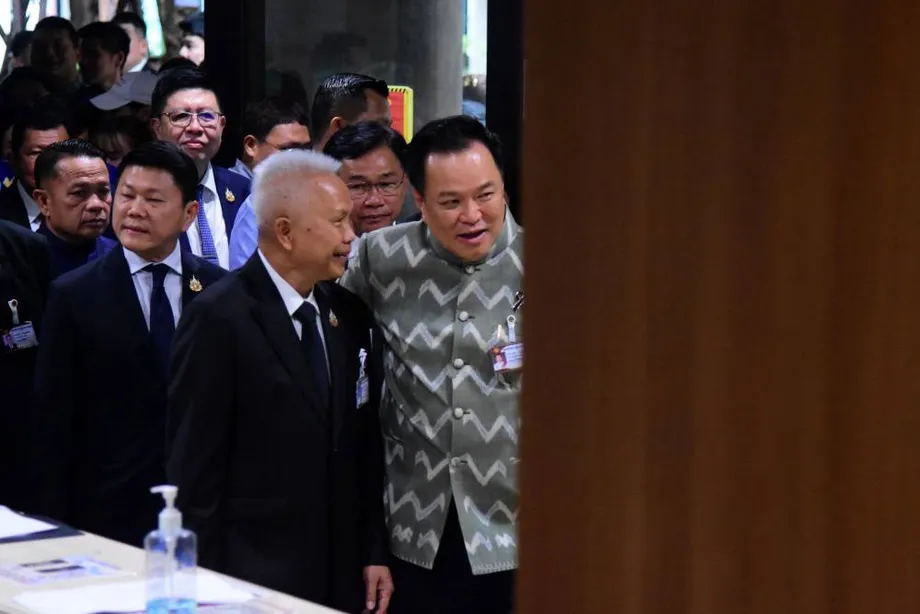
At an October 22, 2026 discussion organised by the Thai Agricultural Journalists Association and Kasetsart University, government officials, breeders, seed businesses and farmer representatives described sharply different expectations. Supporters anticipated investment and better protection overseas. Opponents feared recurring seed bills and restrictions on community exchanges.
The basil dispute makes those concerns tangible. In Ban Non Sawan, Ban Dan district, 69-year-old community vegetable grower Nuchan Sunnaron described selling basil to market traders in orders worth about 20 baht. Small purchases helped pay for household meals. She feared that selling plants she had long grown might become unlawful.
For growers earning such modest sums, understanding which variety they have, and which activities require permission, can matter as much as the price of a packet of seeds.
What the basil registrations actually cover
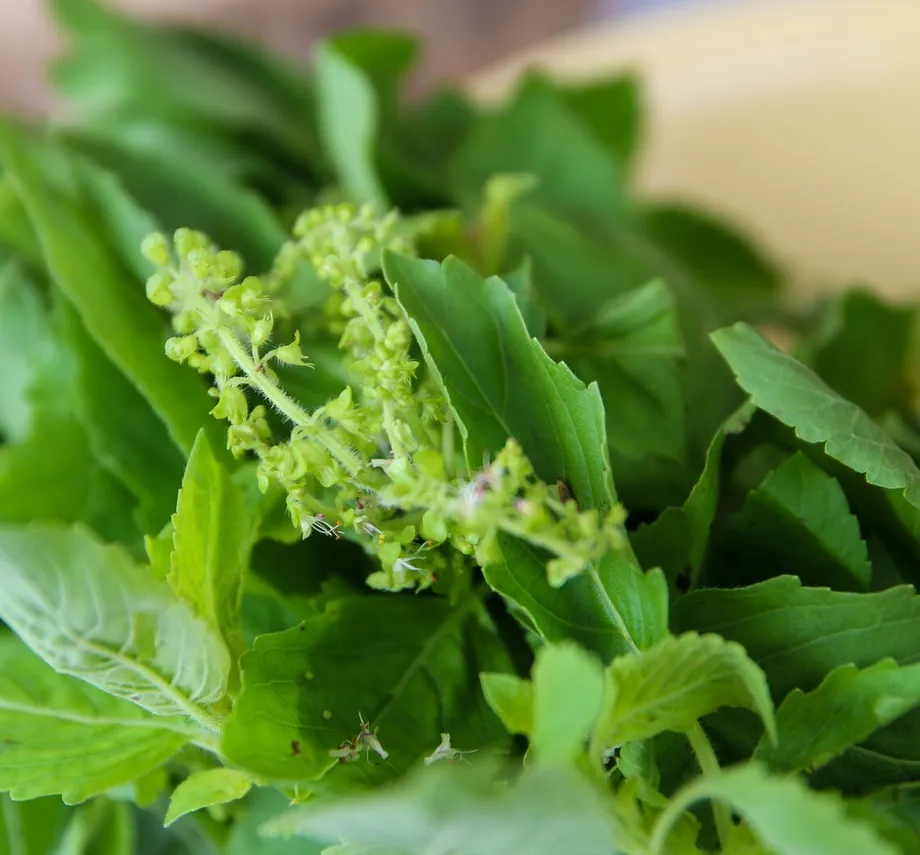
The Department of Agriculture identifies five protected holy basil varieties: CPRAM's four Kaewjuree varieties and another held by Kasetsart University. Protection attaches to those registered varieties, while ordinary local basil remains available for cultivation and sale.
Agriculture and Cooperatives Minister Suriya Jungrungreangkit said households could grow the protected basil and pick leaves for their meals. Describing the effect on household use, he said registration:
"does not affect the everyday lives of the general public".
Suriya identified the activity requiring the rights holder's permission as:
"propagating protected plant varieties for commercial sale without permission".
Propagation means producing more plants, through seeds, cuttings or other plant material. Growing basil for a family meal, harvesting leaves and operating a business selling planting material involve different uses. The applicable rights and exceptions determine what is permitted for a protected variety.
The department also explained that farmers could retain seeds for another planting cycle under existing rules, while commercial sale of protected seed could require permission. Government deputy spokesperson Phatdarasmi Thongsaluaykorn said the registrations leave cultivation of traditional varieties unaffected.
The Department of Agriculture and CPRAM put Thailand's holy basil diversity at more than 200 varieties; Thai Seed Trade Association president Boonyanath Nathwong cited more than 300 available choices. Both descriptions point to a market extending well beyond the four Kaewjuree registrations.
How CPRAM's varieties were developed
CPRAM and Kasetsart University's Kamphaeng Saen campus developed the four varieties from local basil coded CPR1. Work began in April 2020, with trials at the university in Nakhon Pathom and at CPRAM in Pathum Thani.
The breeding process used chemicals to increase the number of chromosome sets, alongside tissue culture. Chromosomes carry genetic information. Changing their number can alter plant characteristics, while tissue culture allows researchers to grow plants from small pieces of plant tissue under controlled conditions.
CPRAM says the varieties were selected for aroma, spicy flavour and consistent yields for prepared food production. Officials also described a goal of producing larger leaves. The company supplies its factories through a network of contracted growers and does not sell these four varieties' seeds to the general public.
The department said CPRAM obtained permission to access the relevant local and wild plant resources and shared benefits with the Plant Varieties Protection Fund. BioThai Foundation's Witoon Lianchamroon has nevertheless called for scrutiny of the research funding arrangements involving a public university.
The chronology connects today's dispute to several years of breeding and registration:
- April 2020: Development began using local basil coded CPR1.
- March 12, 2024: Kaewjuree 01 received protection.
- May 24, 2024: Kaewjuree 02, 03 and 04 received protection.
- October 1 to 11, 2026: The National Farmers Council collected views on UPOV 1991.
- October 21 and 22, 2026: Consumer and agricultural forums examined the proposed changes.
- 2036: The four basil varieties' current protection terms expire.
The seed saving rule Thailand would have to write
Article 15(2) of UPOV 1991 sits at the centre of the dispute. The Department of Agriculture explains that it offers an optional exception allowing farmers to use material harvested from a protected variety to grow another crop on their own holdings.
Thailand would have to decide whether to adopt that exception and define its reach. UPOV requires it to operate within reasonable limits while safeguarding breeders' legitimate interests. Choices about covered crops, eligible farmers and conditions would directly affect planting costs.
UPOV also requires exceptions for private activities without a commercial purpose, experiments and the use of protected varieties to breed other varieties. This last provision, often called the breeder's exemption, allows research to continue using existing breeding achievements, subject to rules governing certain closely derived varieties.
Saving seed for one's own field and giving or selling it to another grower are different activities. Article 15(2) concerns reuse on the farmer's own holding. Community exchange and seed sales therefore need their own careful examination in the drafting process.
Deputy permanent secretary for agriculture Krit Uttamavetin said the proposed approach would retain seed saving for small farmers growing important food crops. The department's official explanation makes the legal task explicit: farmers need clear rules about when permission is required, backed by advice and accessible dispute procedures.
Why breeders and seed traders support reform
Thidakun Saenudom, director of the Department of Agriculture's Plant Product Standards and Certification Division, said stronger alignment could attract investment and improve access to modern breeding technology. She acknowledged restrictions affecting farmers and said their interests should guide the design of exceptions.
Boonyanath, president of the Thai Seed Trade Association, supports bringing the 1999 act into line with UPOV 1991. Her association also wants farmers to retain seed for planting on their own land in the following season and wants conservation provisions for local and wild plants preserved.
Rice breeder Apichart Vanavichit, a senior adviser at Kasetsart University's Rice Science Center, argued that protection should be considered across the chain from research to the price farmers receive. He cited Riceberry being commercially cultivated in neighbouring countries and sold online as an example of the difficulty of protecting Thai breeding work abroad.
Overseas protection would still involve applications and examination under the relevant jurisdiction's rules. Apichart said testing could take years. Applicants must satisfy novelty requirements and the DUS criteria: distinctness, uniformity and stability.
In simple terms, a variety must be recognisably different, sufficiently consistent among its plants and able to retain its defining characteristics through repeated propagation. Those tests require time and resources, whether the applicant is a company, public institute or farmer breeder.
Longer protection and closely derived varieties
Thailand's existing law provides protection periods of 12, 17 or 27 years, depending on the plant category. UPOV 1991 sets minimum terms of 20 years for most plants and 25 years for trees and vines.
For a category currently receiving 12 years, the 20 year minimum would mean eight additional years of protection, an increase of about two thirds. Thailand's existing 27 year category already exceeds UPOV's minimum for trees and vines. Any change to existing registrations would depend on the transition provisions lawmakers adopt.
The seed association also wants explicit protection concerning essentially derived varieties, known as EDVs. These are varieties predominantly derived from an initial variety while retaining its essential characteristics, although they have identifiable differences.
Breeding techniques, including tissue culture and genome editing, can produce plants with a limited change while retaining much of the original variety's genetic makeup. Supporters of EDV rules argue that breeders need protection when another developer builds closely on their work. The definition matters because it helps determine when commercial use of a derived variety requires the initial breeder's permission.
Rules on genetic resources create another drafting task. Thailand's current law includes access and benefit sharing provisions for local and wild plants. The seed association wants conservation protections retained, while BioThai has raised concerns about preserving community interests as breeders' rights expand.
Farmers fear costs and fewer practical choices
Pramote Charoensilp, president of the Thai Rice Farmers and Farmers Association, opposes accession. He fears restrictions on keeping and sharing seed could force farmers to buy replacements each year and expose them to legal disputes over familiar practices.
The National Farmers Council's October 1 to 11 consultation recorded 322,803 responses. Of those, 321,397, or 99.56%, opposed UPOV 1991; 1,198 supported it and 208 were unsure. The figures describe responses submitted to the consultation, rather than a population survey of all Thai farmers.
Competition concerns extend beyond the number of varieties on sale. Kanoknai Thavornpanich, a law lecturer at Thammasat University, has highlighted the bargaining power of a market dominated by a few sellers. A 2007 study of Thai feed maize seed put the five largest sellers at about 75% of sales and nearly 80% of planted area.
Jennifer Clapp and colleagues, writing in Food Policy in 2025, put the leading four or five companies' share of the global seed market at about 60%. The older Thai figures describe one crop market in an earlier period; the global figures concern a much wider market. Each identifies concentration as a relevant issue when designing rights and competition policy.
For a farmer, practical choice depends on seed price, suitable growing conditions, access to suppliers and whether buyers will purchase the crop. A long catalogue of varieties offers limited help if affordable planting material or a reliable buyer is missing.
Consumers are part of the cost debate
The Thailand Consumers Council's consumer impact statement, following an October 21, 2026 online forum, connects seed rules to food prices, supply chains and the variety of foods reaching shops and restaurants.
At the forum, BioThai's Prokchon Ousap cited research submitted to the National Health Commission Office estimating that seed or planting material prices could rise by two to six times, with increases of six to eight times in some countries. The research also estimated food price increases of around 5% to 10% or more. These were projections and comparisons presented in the debate, rather than measured price changes following Thai accession.
The council's policy and innovation head, Monrudee Nijtrirat, called for attention to safety assessment, traceability and labelling for genetically modified and genome edited plants. She cited reports of genetically modified pink pineapples being sold online despite lacking authorisation in Thailand.
Plant variety registration assesses breeding characteristics, while food safety and permission to cultivate particular products are handled through other laws and regulatory systems. Monrudee argued that those systems need sufficient capacity alongside any expansion of breeders' rights.
Prokchon also warned that concentration from seed supply through processing and retail could narrow the tastes and local varieties available to consumers. For restaurants using basil, the immediate legal issue is how any future law defines protected material and the circumstances in which rights extend to harvested crops or products made from them.
Asian experience offers gains and warnings
Vietnam joined UPOV 1991 in 2006. A 2021 legal study by Ho Bich Hang Nguyen and Katja Weckstrom Lindroos described more applications for breeders' rights, higher agricultural output and annual farmer incomes more than 24% above the level at accession after over a decade.
The same study identified gaps in Vietnam's provisions on farmers' privileges, including seed exchange and sales when circumstances prevent a farmer from planting saved seed. The legal scope of everyday transactions remained a concern alongside the economic gains described.
Economist Aat Pisanwanich discussed Vietnam's experience at the Thai forum, including increased breeding activity across crops and concerns about protected seed prices, foreign companies' market role and the reduced role of community seed groups in the Mekong Delta.
Indonesia offers a different comparison. It has not joined UPOV, but its domestic protection rules were examined in a 2021 study by Saurav Ghimire and colleagues. The researchers called for stronger safeguards for farmers saving, exchanging and breeding seed. Its experience shows why the content of national legislation matters throughout this debate.
China's horticultural variety applications reached a cumulative 17,702 by the end of 2022, although annual applications fell about 30% that year. China joined UPOV under its earlier framework, while Japan adopted the 1991 framework in 1998 and passed legislation in 2020 removing seed saving exceptions for some varieties. Across Asia, protection systems and farmers' permissions have evolved through distinct national choices.
Trade talks increase pressure for a decision
Thailand and the European Union held their tenth round of free trade negotiations in Phuket from September 28 to October 6, 2026, with both sides aiming to conclude negotiations during 2026. Plant variety protection is among the policy issues under discussion.
Before that round, 146 civil society organisations raised concerns about UPOV 1991 and intellectual property commitments extending beyond the World Trade Organization's TRIPS agreement. Their objections also covered access to medicines, health and Thailand's freedom to set domestic policy.
The Commerce Ministry and negotiating team have said the UPOV issue remains under discussion. Relevant international commitments would require constitutional scrutiny under Article 178, while amendments to the plant protection act would require the legislative process.
The Department of Agriculture proposes safeguards that make the debate more concrete: clear exceptions, advice on checking a variety's protection status, complaint and appeal channels, and monitoring after implementation. Its proposed monitoring covers seed prices, production costs, access to varieties, public and private research, and genetic diversity.
For Thailand, the central decisions are therefore specific. Lawmakers must determine who can save which seeds, what exchanges require permission, how breeders receive a return and how farmers can challenge an accusation. Those rules would shape both the rewards for developing a new variety and the cost of planting the next crop.
Key Points
- Thailand is studying changes to its 1999 plant variety law and has not joined UPOV.
- CPRAM's four Kaewjuree basil varieties have protection from 2024 to 2036; ordinary local basil remains available to grow and sell.
- Article 15(2) allows countries to create a qualified exception for replanting saved material on farmers' own holdings.
- Breeders and seed traders seek stronger protection, while farmer representatives fear higher costs and restrictions on sharing seed.
- The Department of Agriculture proposes advice, appeals and monitoring of prices, access and genetic diversity.
- Plant variety rules remain under discussion in Thailand's trade negotiations with the EU.