Samsung gains buyers as Apple draws attention to foldables
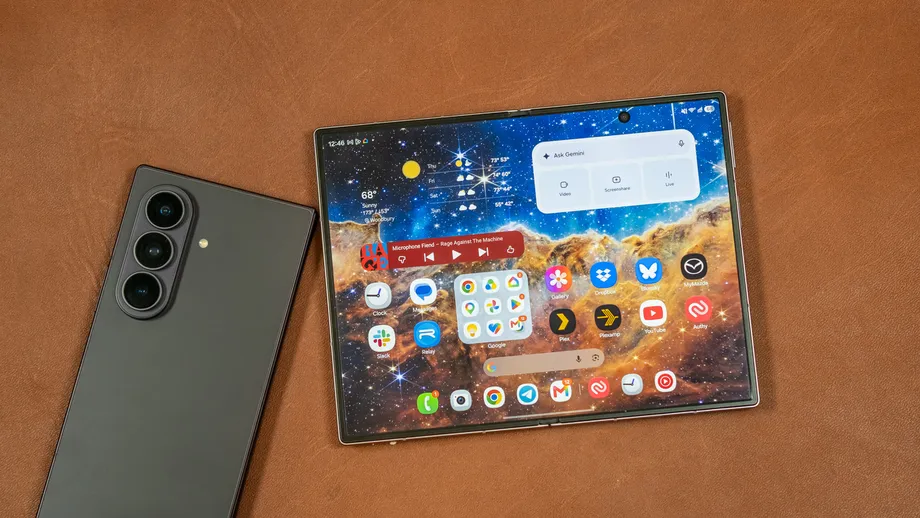
Samsung says combined European sales of its Galaxy Z Fold8 and Galaxy Z Fold8 Ultra rose 45% in their first nine weeks on sale, compared with the Galaxy Z Fold7 over the equivalent period in 2025. The phones launched on August 7, 2026, giving Samsung a head start before Apple's first foldable, the iPhone Duo, was scheduled to reach stores on October 23.
Contents
- Samsung gains buyers as Apple draws attention to foldables
- What the 45% sales increase measures
- The September search surge puts Apple in the picture
- How the launches and sales updates unfolded
- Why the wider Fold8 matters
- The Flip8 figures reveal another route to growth
- Price gives shoppers a concrete comparison
- Samsung competes with Apple and supplies its displays
- Key Points
The sales increase comes alongside a sharp rise in online interest. Across 32 European markets, Samsung says searches for its foldable phones increased 460% during September 6 to 12 compared with August 30 to September 5. Apple unveiled the iPhone Duo on September 9, in the middle of that surge.
The timing suggests Apple's announcement encouraged shoppers to explore Samsung's alternatives. Samsung's October 22 update does not mention Apple, however, and the company has not published a calculation of how many purchases came from interest generated by the iPhone Duo.
Samsung also gave buyers a broader choice this year. Its wider, passport shaped Fold8 and more traditional Fold8 Ultra are counted together against a single predecessor, the Fold7. The increase therefore measures the performance of an expanded product range.
For shoppers, the contest brings a practical choice: Samsung's wider foldable starts at $1,899.99, below the iPhone Duo's $1,999 starting price. Both remain expensive purchases, even as the gap between foldables and conventional flagship phones has narrowed.
What the 45% sales increase measures
Samsung's comparison covers the nine weeks following the August 7 launch and the equivalent weeks for the Fold7 in 2025. Put simply, for every 100 Fold7 phones sold during last year's comparison period, Samsung sold 145 Fold8 and Fold8 Ultra phones combined this year.
The company has not released unit totals, revenue figures or a breakdown between the two new models. Those missing details leave the size of the business and the relative popularity of the wider Fold8 and Fold8 Ultra unknown.
Samsung had announced a larger percentage increase earlier. Its September 9 European sales announcement put combined growth at 50% since launch. The later update extends the comparison to nine weeks and gives the figure as 45%. Both announcements describe sales above the previous year's level.
Richard Chang, Samsung's Mobile Corporate Vice President for the UK and Ireland, presented the growth as a turning point for the category. He said:
foldables have officially gone mainstream
Samsung's figures describe rising demand within its own range. A broader measure of adoption would require figures showing foldable sales alongside the much larger market for all smartphones, which the company did not include in these announcements.
The September search surge puts Apple in the picture
Samsung's search figures cover 32 European markets, including Germany, the United Kingdom, France, Spain, Italy, Poland and the Nordic countries. Searches increased by more than 260% in September compared with August, with the strongest weekly jump occurring around Apple's September 9 announcement.
A 460% increase means searches reached 5.6 times the previous week's level. The monthly increase of more than 260% means September searches were more than 3.6 times August's level. These figures describe how quickly attention grew from each comparison period, rather than the number of people buying phones.
Apple's arrival gave consumers another reason to investigate a category Samsung has sold since 2019. Someone interested in the iPhone Duo could also look for competing devices, compare prices or examine the different screen shapes before choosing a phone.
Samsung already had both Fold8 models in stores when that attention arrived. Its sales growth and the September search surge fit a picture of an established supplier benefiting from renewed curiosity, while the exact contribution from Apple's announcement remains unmeasured.
How the launches and sales updates unfolded
The dates explain why Samsung had an opportunity to attract shoppers before Apple's foldable reached stores. They also separate the period when consumers could research the iPhone Duo from the point when they could buy it in shops.
- August 7, 2026: Samsung's Galaxy Z Fold8 and Fold8 Ultra went on sale.
- August 30 to September 5: Samsung's baseline week for the subsequent 460% search increase.
- September 6 to 12: Searches for Samsung foldables surged, with Apple's September 9 iPhone Duo announcement falling within that week.
- September 9: Samsung announced combined European Fold8 and Fold8 Ultra sales growth of 50% since launch.
- October 22: Samsung published its update showing 45% growth across the first nine weeks.
- October 23: The iPhone Duo was scheduled to reach stores.
Samsung's nine weeks of sales began before the iPhone Duo announcement and ended before its scheduled retail debut. The next competitive phase would put both companies' foldables on store shelves, allowing shoppers to compare products they could purchase rather than weighing an available Samsung phone against an announced Apple device.
Why the wider Fold8 matters
Samsung's two larger foldables take different approaches to the same basic idea: a phone that opens like a book to reveal a bigger display. The Fold8 uses a wider, passport shaped format, while the Fold8 Ultra follows the more traditional book style design.
The shape matters because a large screen is useful only when the content fits it well. A relatively square display can leave substantial unused space around widescreen video. A wider display can give that video a more suitable frame, making better use of the available screen.
Documents and apps also behave differently depending on a display's proportions. The wider Fold8 offers another option for reading pages and using apps whose layouts have not been designed specifically for folding screens. Buyers are choosing between shapes as well as screen sizes.
Apple's iPhone Duo brings attention to a similar wider format. Samsung's expanded range gives people interested in that shape an Android alternative, alongside the Fold8 Ultra. Samsung's unpublished model breakdown means the sales increase cannot yet be assigned to either design.
The Flip8 figures reveal another route to growth
Samsung's September announcement contains details about customers moving between brands and between its own foldable designs. The company says 20% of Galaxy Z Flip8 purchasers switched from competing brands, with many experiencing a foldable for the first time.
The Flip8 is a different proposition from the Fold8 models. It folds into a smaller package for carrying, while the larger Fold devices open into a bigger workspace. Samsung's customer figures show that compactness and a larger display are attracting different groups of buyers.
Samsung also reported a threefold increase in customers moving from the Galaxy Z Flip series to the Galaxy Z Fold8 compared with those moving to the Fold7. That gives the larger model another source of demand: people who already own a folding phone and now want a different format.
The company previously said its larger foldables represented about 80% of foldable purchases. Its latest European sales update focuses on those larger devices and gives no corresponding growth rate for the Flip8. The 20% figure describes where Flip8 customers came from, rather than whether total Flip8 sales rose or fell.
Price gives shoppers a concrete comparison
The Galaxy Z Fold8 starts at £1,699 in the United Kingdom and $1,899.99 in the United States. The iPhone Duo is priced at £1,999 and $1,999, while the Fold8 Ultra starts at £1,899 and $2,099.
Those prices put the Fold8 £300 below the iPhone Duo in Britain and about $99 below it in the United States. Samsung's wider model is also £200 below the Fold8 Ultra in Britain and about $199 below it in the United States.
The different gaps matter for buyers. A British shopper comparing starting prices faces a larger saving from choosing the Fold8 over the iPhone Duo than an American shopper does. Local prices therefore shape the contest differently, even when the same products are involved.
Retail discounts add another moving part. The Fold8 Ultra later received a $300 discount at Amazon, and the wider Fold8 has also been discounted at some retailers since launch. A purchase comparison needs the current local price, storage capacity and any conditions attached to the offer.
Samsung competes with Apple and supplies its displays
Samsung's relationship with the iPhone Duo extends beyond competition for phone buyers. Apple's foldable uses Samsung displays, connecting the two companies through the components needed to make a screen bend.
Samsung released its first foldable phone in 2019. Its September announcement describes eight generations of development shaped by experience with hardware, software, reliability and different ways of using folding devices. Apple is entering a category whose components and designs have developed over several years.
The display relationship also means rising interest in Apple's foldable reaches beyond Apple's own retail business. Samsung participates as both a competing phone maker and a component supplier. The commercial terms and financial value of that supply arrangement have not been disclosed here.
In the United States, Samsung said in September that combined Fold8 and Fold8 Ultra purchases were tracking 30% ahead of the Fold7. That earlier snapshot concerns a different market and period from Europe's nine week result. Samsung has not provided a comparable updated American total in the announcements discussed here.
Europe's figures give Samsung a strong opening: a larger range is selling faster, interest surged during Apple's announcement week, and the wider Fold8 offers a lower starting price. Apple's scheduled October 23 retail arrival creates the next direct test of how buyers divide their spending between the two companies.
Key Points
- Samsung says combined European Fold8 and Fold8 Ultra sales rose 45% over nine weeks compared with the Fold7 in the equivalent period of 2025.
- The comparison combines two current models against one previous model; Samsung has not released individual model sales or unit totals.
- Searches for Samsung foldables jumped 460% during September 6 to 12, the week Apple announced the iPhone Duo.
- Samsung's September announcement said 20% of Flip8 buyers switched from competing brands.
- The wider Fold8 starts at £1,699 or $1,899.99, below the iPhone Duo's £1,999 or $1,999.
- The iPhone Duo, which uses Samsung displays, was scheduled to reach stores on October 23.