A temporary ban reaches shops, online sellers and wearers
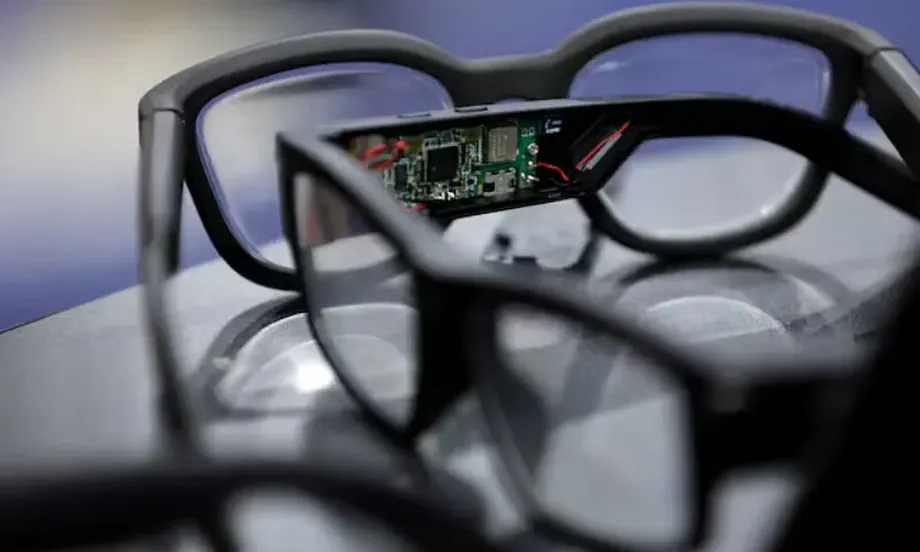
Pakistan's Punjab province has banned the wearing and operation of smart glasses with hidden recording capabilities, along with miniature cameras concealed in everyday objects, for 30 days. The order also stops retailers, wholesalers, traders and distributors from selling the devices or offering them for sale, whether in shops or online.
Contents
- A temporary ban reaches shops, online sellers and wearers
- Which devices are covered?
- Why airports, hospitals and examination centres are named
- How the decision became an enforceable order
- Why the Lahore High Court case matters
- Child protection figures show the wider scale of abuse
- Victims need protection after a recording is made
- Other countries are choosing different restrictions
- What enforcement must reach
- Key Points
The Punjab Home Department secretary issued the restriction under Section 144 of the Code of Criminal Procedure, 1898. It took effect immediately, following a provincial cabinet decision on October 19, 2026, and an announcement the day before the formal order. Chief Minister Maryam Nawaz subsequently directed police to ensure enforcement across the province.
Women and children are central to the government's stated concerns. The Home Department says concealed recording devices can be used for harassment, blackmail and unauthorised surveillance, while also putting sensitive information and secure facilities at risk.
Punjab's action brings together two connected disputes: how to stop people being secretly recorded, and how to regulate devices that combine ordinary consumer functions with cameras and microphones. A separate case before the Lahore High Court is examining the unregulated import and sale of smart glasses.
The restriction leaves laptops, handheld tablets, mobile phones and terminal equipment approved by the Pakistan Telecommunication Authority exempt. Authorised law enforcement personnel are also exempt. For shoppers and sellers, the immediate change concerns the concealed recording products named in the order, rather than a general prohibition on devices with cameras.
Which devices are covered?
The order targets camera enabled smart glasses with hidden recording abilities and miniature cameras disguised as ordinary objects, including pens and key chains. The government's wider announcement also identified wristwatches fitted with concealed cameras or recording equipment.
Smart glasses can take photographs, record video, make calls, play music, translate text and connect to artificial intelligence assistants. Punjab's restriction focuses on glasses with hidden recording capabilities. Cameras concealed inside familiar objects create a similar privacy concern because a person nearby may see an ordinary pen or watch rather than recording equipment.
The Home Department described devices capable of capturing, processing and transmitting speech, images, video and sound. In simple terms, the concern extends from secretly making a recording to sending that recording elsewhere.
The sales restriction covers offers as well as completed transactions. An online listing for a prohibited device therefore falls within the conduct described in the order, just as an offer at a shop counter does. A Home Department spokesperson also warned of strict legal action over purchase, use and sale, while the quoted operative provisions expressly prohibit wearing or operating the devices and selling or offering them for sale.
Why airports, hospitals and examination centres are named
The Home Department identified airports, examination centres, secure government establishments, healthcare facilities, shopping malls and court premises as places of particular concern. The restriction applies across Punjab, rather than only at those locations.
Several kinds of harm sit behind that list. A concealed camera can capture someone's private interaction, record information inside a protected building or transmit material from an institution where access is controlled. The order refers both to personal dignity and to the security of sensitive data and installations.
Examination centres and government establishments also feature in the department's concern about institutional integrity. That term refers to an institution's ability to carry out its work securely and fairly. Secretly capturing or transmitting protected material can interfere with that work.
The Punjab Home Department, explaining the purpose of its preventive order, said:
Immediate preventive action is necessary to ensure public safety, integrity and dignity of persons particularly women and children, and the maintenance of order within the province,
The government has warned that violations will bring legal action. The order sets a duration of 30 days unless withdrawn earlier; the enforcement directions give no calendar expiry date or next court hearing date.
How the decision became an enforceable order
Punjab's announcement, formal notification and later enforcement instructions mark different stages of the same action. When the cabinet first approved the restriction, Home Secretary Dr. Ahmad Javed Qazi said a notification would follow within days. The Home Department secretary subsequently issued the order with immediate effect.
The main developments unfolded as follows:
- October 15, 2026: The Lahore High Court directed federal authorities to refer the separate matter of smart glasses imports and sales to the federal cabinet.
- October 19: Punjab's cabinet, chaired by Maryam Nawaz, approved restrictions on concealed recording devices. Information and Broadcasting Minister Azma Bokhari announced the decision.
- The following Tuesday: The Home Department secretary issued the order under Section 144, imposing the restriction for 30 days with immediate effect.
- October 22: Maryam Nawaz's direction to police to ensure enforcement of the ban was reported.
Section 144 gives authorities a way to impose preventive restrictions through an administrative order. Here, Punjab has used it for a temporary limit on specified devices and their sale. The federal proceedings concern how smart glasses enter and are sold in Pakistan, a wider regulatory issue that continues alongside the provincial restriction.
Why the Lahore High Court case matters
The Lahore High Court is considering a public interest petition challenging the unregulated import and sale of smart glasses equipped with cameras and microphones. The petition raises concerns about privacy, personal dignity and national security.
The petitioner's lawyer told the court that Meta smart glasses were openly available through online platforms and shops in Lahore, although Pakistan was not officially listed as a market for the product. That places online sellers and local retail channels at the centre of the dispute.
The court directed the federal government to forward a summary to the federal cabinet about imports and sales. A summary is a formal document that puts an issue before the cabinet for consideration and a possible decision.
Punjab can act against specified uses and sales within the province through its temporary order. Federal consideration addresses the rules governing supply into Pakistan. The two processes therefore reach different parts of the same market: devices already being offered locally and the channels through which they become available.
Child protection figures show the wider scale of abuse
A September 2026 study by UNICEF's Office of Strategy and Evidence–Innocenti, ECPAT International and Interpol estimated that about 1.5 million Pakistani internet users aged 12 to 17 had experienced some form of sexual exploitation or abuse involving technology during a single year.
The study described risks involving images shared without consent, threats and blackmail. Technology can allow an abuser to keep pressuring a victim after an initial incident, for example by threatening to distribute a private image.
Sahil, a Pakistani organisation that monitors child abuse, documented 3,630 reported cases in 2025 and 1,914 during the first six months of 2026. Its figures come from newspaper reports and cover categories including sexual assault, abduction and child marriage. The first six months of 2026 contained about 53% of the number recorded during all of 2025.
The UNICEF partnership's estimate concerns abuse involving technology, while Sahil counts cases appearing in newspapers across several categories. The number involving concealed cameras is unknown. Punjab's response targets one means of recording people within this much broader child protection problem.
Victims need protection after a recording is made
Agha Zamin Abbas, Sahil's media coordinator, welcomed the restrictions while calling for tighter controls on imports and online sales, effective investigations and prompt help for affected children. He also urged parents to pay attention to children's digital activities.
Abbas said privacy protection should preserve legitimate access to technology, including for education and healthcare. His position connects the government's device restrictions with the practical challenge of targeting abuse while keeping useful tools available.
Syed Jowdat Nadeem, a digital rights activist and member of the Human Rights Commission of Pakistan, called for confidential reporting channels, stronger digital forensics and rapid removal of exploitative material. Digital forensics means examining devices and electronic records to recover evidence and understand what happened.
Nadeem described the danger that victims, particularly women and children, can face stigma, blame, restrictions on their freedom or retaliation after an unauthorised recording. Threats to expose images can give an abuser continuing power over someone who fears consequences at home or in the community.
His proposed response includes legal help, psychological support and protection from retaliation. He also warned that weak controls over imports and online marketplaces could allow prohibited products to move from shop shelves to internet sellers.
Saeedain Khan, a senior advocate at the Lahore High Court's Rawalpindi Bench, focused on prevention. He called for children to be taught how to recognise abuse and to be able to report inappropriate behaviour without fear of punishment, disbelief or retaliation, including when the adult involved holds a position of trust.
Other countries are choosing different restrictions
Concern about covert filming has also spread beyond Pakistan. In Britain, a petition has sought a ban on smart glasses sales following accounts of women and girls being recorded secretly. In August, a girl aged 17 described being approached by a man who recorded their interaction without her knowledge.
Oslo has banned smart glasses in schools, while France's data protection watchdog, CNIL, has urged vigilance. Meta is reportedly developing a facial recognition feature, adding to concern about the kinds of information glasses might eventually connect to the people they capture.
Victoria, Australia, has set out a more detailed policy focused on schools. In its school device announcement, published on October 21, 2026, the state government said students across government, Catholic and independent schools must switch off and store personal electronic devices, including smart glasses, during school hours and school activities from the start of the 2027 school year.
In government schools, the restriction on smart glasses and covert filming devices also covers adults, including teachers, parents and volunteers. It extends to school grounds and organised activities away from school, including camps and excursions. Exemptions for smart glasses are limited to adjustments for disability when no suitable alternative is available.
Gabrielle Williams, Victoria's deputy premier and education minister, stated the government's position:
Smart glasses have no place in our classrooms or on school grounds.
Victoria said extending the adult restriction to schools outside the government sector would require legislation under a reelected Carroll Labor government. Punjab's measure is broader geographically and commercially, covering specified devices throughout the province and their sale, but lasts 30 days. Victoria's announced approach centres on school settings and the 2027 school year.
What enforcement must reach
Punjab's order reaches both people operating concealed recording devices and businesses offering them for sale. Maryam Nawaz's instruction puts police enforcement behind that restriction, while the exemptions preserve the use of ordinary phones, computers and approved terminal equipment.
Online availability is a central practical issue because the same devices can be advertised beyond a physical shop. Abbas and Nadeem both called for attention to digital marketplaces and imports, alongside investigations and support for victims. Their proposals address how devices reach buyers and what happens after someone reports abuse.
The 30 day restriction and the federal cabinet referral now sit alongside each other. One changes what people and sellers may do immediately in Punjab. The other brings the import and sale of smart glasses before federal decision makers. For people targeted by secret recordings, confidential reporting, evidence collection and removal of abusive material remain concrete needs alongside the ban.
Key Points
- Punjab has imposed a 30 day restriction on wearing or operating smart glasses with hidden recording abilities and cameras disguised as everyday objects.
- Retailers, wholesalers, traders and distributors cannot sell or offer the prohibited devices in shops or online.
- Laptops, handheld tablets, mobile phones, PTA approved terminal equipment and authorised law enforcement personnel are exempt.
- The government cites privacy, harassment, blackmail and risks to sensitive information, with particular concern for women and children.
- The Lahore High Court has directed federal consideration of the separate issue of smart glasses imports and sales.
- Child protection and digital rights advocates are calling for stronger investigations, confidential reporting and support for victims alongside device restrictions.