Two bills would widen drug enforcement powers
Thailand's Prime Minister Anutin Charnvirakul submitted two bills to Parliament on 21 October 2026 that would presume people possessing illegal drugs intend to sell them and extend a detention period for drug investigations from three days to seven.
Contents
- Two bills would widen drug enforcement powers
- Possession would trigger a presumption of selling
- Detention could rise from three days to seven
- Police would seek court approval for information
- Officials could remove material encouraging drug use
- Caregivers could request rehabilitation
- Phetchaburi clash adds urgency to the proposals
- Workshops shaped the bills before submission
- Key Points
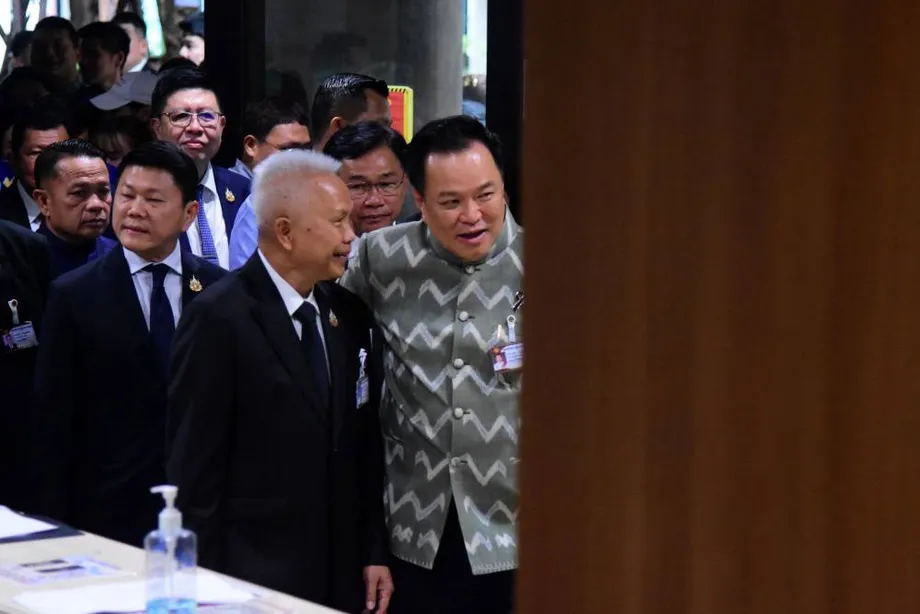
Anutin, who also serves as interior minister and leads the Bhumjaithai Party, presented the proposals with party lawmakers to House Speaker Sophon Sarum at Parliament in Bangkok. The bills would amend the Narcotics Code and the law governing criminal proceedings in drug cases.
The package combines tougher enforcement with changes to treatment and rehabilitation. It would widen access to information for investigators, allow officials to stop the spread of online material encouraging drug use, and let caregivers request treatment on behalf of people suspected of using drugs.
Anutin sought rapid parliamentary consideration, citing an intensified campaign involving police, narcotics officials, local administrators and the military. He referred to a confrontation during an operation in Phetchaburi on the night of 20 October and said the government wanted to reduce deaths during encounters between officers and suspected traffickers.
Sophon said he would push for urgent consideration after workshops involving government agencies, local personnel and members of the public. The proposals must still pass through the parliamentary process before they can become law.
Possession would trigger a presumption of selling
Anutin described a central change to the Narcotics Code: a person found possessing illegal drugs would be presumed to hold them for distribution. In plain language, possession would give authorities a legal starting point for pursuing an allegation of dealing.
The proposed approach matters because possessing drugs for personal use and possessing them for sale involve different conduct. The government wants the possession rule to strengthen the way charges are brought and close opportunities to avoid prosecution through legal loopholes.
Anutin also outlined higher penalties connected with drug offences involving young people. The package includes tougher punishment for people who use or induce young people to commit offences. His presentation also referred to increased penalties for drug users and young offenders who exploit legal loopholes.
Several details remain unspecified in the announcement: drug quantities or exceptions under the possession rule, the exact offences and sentences covered by the penalty changes, safeguards governing the new information powers, and how a caregiver's treatment request would interact with the wishes of the person concerned. No parliamentary debate date or commencement date was given.
Detention could rise from three days to seven
The bill on drug case procedures would extend the maximum detention period under the power Anutin described from three days to seven. Authorities would gain four additional days, taking that period to more than twice its current length.
Anutin said investigators needed more time both to investigate an arrest and to pursue connections beyond the person initially detained. This means following evidence toward other people involved in the same drug activity, rather than ending an investigation with the first arrest.
For someone held under this provision, the practical change would be a longer possible period in custody. For investigators, the government's stated aim is more time to gather information and pursue a wider network.
The seven days would be a maximum under the proposed power. The measure is part of a bill being submitted for parliamentary consideration, while the existing limit described by Anutin is three days.
Police would seek court approval for information
Officers in the Narcotics Suppression Bureau would gain authority to ask the Criminal Court for permission to obtain information needed for drug investigations. Anutin described the proposed scope as information in any format or through any channel.
The process would therefore involve a police application followed by a court decision authorizing access. Communications and other information relevant to investigating drug offences fall within the scope outlined by the prime minister.
This power would sit alongside the longer detention period. Both are intended to help investigators pursue evidence beyond an initial arrest: one gives them more time, while the other creates a route to seek information through the court.
The Office of the Narcotics Control Board, known as the ONCB, would receive a different information power. Its officials would be able to request records from central databases for prosecutions, treatment and rehabilitation. That proposal connects information access with both criminal enforcement and care for people with drug dependence.
Officials could remove material encouraging drug use
The amendments would also authorize officials to suspend the distribution of, or remove, computer information that encourages others to use drugs. The measure would give enforcement agencies a way to act against such material within computer systems.
Anutin presented the online provision alongside the ONCB's proposed access to central databases. The two measures address different tasks: obtaining records to support official work and stopping material intended to persuade people to take drugs.
The package would consequently extend beyond arrests and physical drug seizures. It would bring digital information into the enforcement campaign through both investigative access and powers to restrict the circulation of content encouraging drug use.
Caregivers could request rehabilitation
Families and caregivers would gain a route to request treatment and rehabilitation on behalf of someone whose behaviour gives reasonable grounds to suspect drug use. Anutin said the broader rehabilitation changes were intended to make procedures clearer and easier to carry out.
Treatment addresses a person's drug use and health needs. Rehabilitation supports recovery and a return to daily life. The proposed caregiver provision would allow another responsible person to initiate a request for that help, rather than leaving the request entirely to the suspected user.
The government is presenting this access to care alongside stronger criminal measures. Police would receive more investigative time, ONCB officials would gain access to records for treatment as well as prosecution, and caregivers would have an additional way to seek help.
For families, the concrete proposed change is the ability to make that request on another person's behalf. For agencies, the stated goal is a clearer process for handling treatment and rehabilitation while enforcement becomes more intensive.
Phetchaburi clash adds urgency to the proposals
Anutin referred to a confrontation during a drug operation in Phetchaburi on the night before the bills were submitted. He spoke about deaths during confrontations and said he did not want lives lost, whether those involved were officers or suspected offenders.
Police said two suspected drug smugglers, Chatrin Klanpradit and Rung-arun Boonchuay, both 27, were killed in an exchange of gunfire with Narcotics Suppression Bureau officers near the Nong Chumphon flyover on the southbound section of Phetkasem Road in tambon Bang Khem, Khao Yoi district. Pol Lt Patthama Suriya, an inquiry officer at Khao Yoi police station, reported the incident at 8.50pm on Tuesday.
According to police, officers had monitored the suspects after receiving intelligence about a planned drug shipment to southern Thailand. Officers identified themselves and attempted to search the vehicle, but the suspects opened fire, prompting police to return fire. Police reported finding more than 10 large cardboard boxes containing 500 kilogrammes of crystal methamphetamine in the vehicle. Investigators were continuing efforts to identify and arrest other members of the drug trafficking network.
The prime minister linked the legislation to the danger of enforcement operations, including clashes along border areas. Explaining why he wanted broader prevention and suppression measures, Anutin said:
We do not want to rely on luck to avoid losses.
Anutin also said he had approved four additional X-ray vehicles for the Royal Thai Police. The vehicles form part of the equipment support for the intensified campaign, alongside the proposed changes to legal powers.
The immediate sequence was:
- 20 October 2026: Anutin said a drug operation in Phetchaburi involved a confrontation during the night.
- 21 October 2026: Anutin and Bhumjaithai lawmakers submitted the two bills to House Speaker Sophon Sarum in Bangkok.
- After submission: Anutin requested rapid consideration, while Sophon said he would push to place the proposals before the House urgently.
Workshops shaped the bills before submission
Sophon said Parliament had acted as a central host for workshops and discussions involving government agencies, personnel working in local areas and members of the public. Bhumjaithai's legal team then used the conclusions to draft the legislation.
The speaker described the drug situation as a crisis causing public hardship. He said his work on drug legislation had continued from his earlier period as deputy prime minister, and presented the bills as cooperation between the executive branch, which runs the government, and the legislative branch, which considers and passes laws.
Anutin and Sophon are seeking to turn that cooperation into an urgent place on Parliament's agenda. Their stated aims bring together several concrete changes: a stronger basis for pursuing dealing allegations, longer investigative detention, wider information access, action against online encouragement of drug use and a caregiver route into rehabilitation.
Parliament's next task is to examine the wording that would put those aims into practice. Until the legislative process is completed, the seven day detention limit and other proposed powers remain measures awaiting approval.
Key Points
- Anutin submitted amendments to the Narcotics Code and drug case procedures law on 21 October 2026.
- The package would presume that possession of illegal drugs is for distribution.
- A proposed detention limit would rise from three days to seven, adding four days.
- Narcotics Suppression Bureau officers could seek Criminal Court approval to obtain information for investigations.
- ONCB officials would gain central database access and powers targeting computer material that encourages drug use.
- Caregivers could request treatment and rehabilitation on behalf of people suspected of using drugs.
- Police said two suspected smugglers were killed in the Phetchaburi confrontation and 500 kilogrammes of crystal methamphetamine were seized.
- Sophon sought urgent parliamentary consideration; the bills still require approval before taking effect.