Tokyo seeks firm language while keeping dialogue open
Japan is considering retaining its description of China as its greatest strategic challenge in a planned revision of its National Security Strategy, resisting pressure for the tougher label of serious threat. The approach would preserve the central judgment of the strategy approved on December 16, 2022, while keeping diplomatic engagement alongside efforts to deter Beijing.
Contents
- Tokyo seeks firm language while keeping dialogue open
- What the current strategy actually says
- How the language changed, and why some want more
- Deterrence and dialogue are both written into policy
- Communication, trade and personal ties have specific roles
- The United States is part of Tokyo's calculation
- Beijing rejects the designation
- What the revision would carry forward
- Key Points
Several Japanese government officials have described discussions about keeping the existing designation in a revision planned for completion by the end of the year. The exact wording and an adoption date have not been settled. One proposal would say that China continues to be Japan's greatest strategic challenge, presenting the assessment as an enduring concern.
The wording matters because the National Security Strategy is the highest document among Japan's three main security documents. It explains how the government sees the international situation and sets the direction for its response. Its language also sends a message to China, the United States and other governments about Tokyo's intentions.
The debate exposes competing demands: Japanese conservatives want a sharper warning about China, officials want to preserve room for diplomacy, and Beijing already condemns the existing language as a justification for military expansion.
What the current strategy actually says
Japan's Ministry of Foreign Affairs records that the National Security Council decided on the National Security Strategy and the Cabinet approved it on December 16, 2022. That formal approval makes the document the government's adopted policy framework.
The Cabinet's 2022 strategy text connects its assessment directly to China's external stance, military activities and other actions. It describes the challenge as affecting Japan's security, international peace and stability, and an international order based on the rule of law.
The strategy sets out the scale of that judgment in these words:
China's current external stance, military activities, and other activities have become a matter of serious concern for Japan and the international community, and present an unprecedented and the greatest strategic challenge
The document says Japan should respond through its comprehensive national power and cooperation with its ally, countries with similar positions and others. In plain language, Tokyo sees the response as involving more than its armed forces: diplomacy, economic policy and international partnerships also have a role.
Keeping that formulation would maintain an already severe assessment. The government's reported preference is to preserve its force while avoiding an additional diplomatic confrontation over the word threat.
How the language changed, and why some want more
Japan first adopted a National Security Strategy in 2013, describing China as a matter of concern. The 2022 revision moved to the stronger language of strategic challenge, reflecting terminology also used in American strategy documents at the time.
The Japan Innovation Party now wants China explicitly designated a serious threat alongside North Korea. Some conservatives within the ruling camp also favor a tougher assessment. Their push would move the wording beyond the framework adopted in 2022.
Government discussions appear to favor holding the line. The prevailing view among officials is that challenge is already a strong expression and that going further would offer little diplomatic benefit. The disagreement is therefore about how to express the government's judgment of China, as well as how much political value stronger language would bring.
The main stages in the policy debate are:
- 2013: Japan adopts its first National Security Strategy and describes China as a matter of concern.
- December 16, 2022: The National Security Council and Cabinet approve a new strategy identifying China's activities as an unprecedented and the greatest strategic challenge.
- Planned revision by the end of the year: Officials consider retaining the central designation, potentially adding that China continues to present that challenge.
Deterrence and dialogue are both written into policy
Japan's intended approach combines deterrence with dialogue. Deterrence means trying to discourage another country from taking an action by making the likely costs clear. Dialogue means maintaining communication so disagreements can be managed and cooperation can continue where interests overlap.
The 2022 strategy gives both ideas concrete content. Japan says it will oppose Chinese attempts to change the status quo by force and respond calmly and firmly. The status quo means the existing situation, including arrangements that Tokyo believes should not be changed through coercion.
Tokyo also calls for greater transparency about China's expanding military capabilities and activities. It says it will encourage Beijing to cooperate with international efforts on arms control and disarmament, working with the United States and other partners.
At the same time, the strategy commits Japan to building a constructive and stable relationship with China through communication at different levels. It calls for Japan to state its positions, seek responsible conduct and continue discussions on both disagreements and shared interests. Preserving this combination is the central purpose of the wording now under consideration.
Communication, trade and personal ties have specific roles
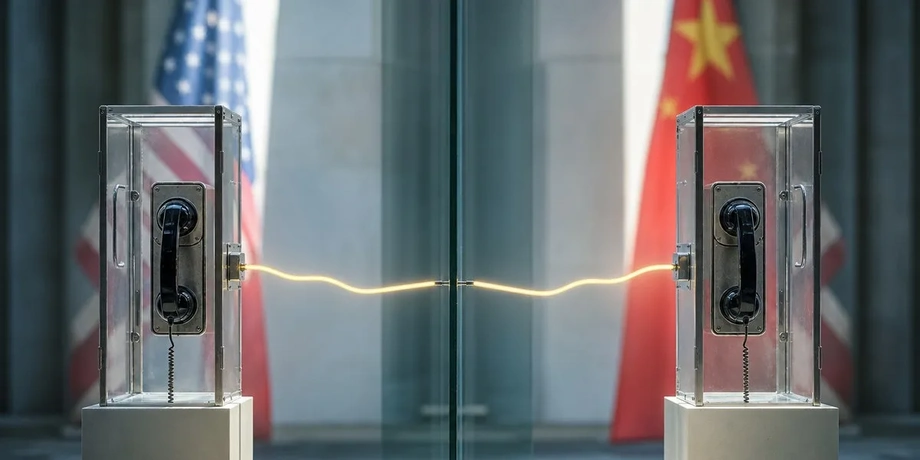
Japan's existing strategy goes beyond a general promise to talk. It calls for stronger security communication with China and a framework to avoid and prevent unforeseen situations. Such arrangements are intended to help governments manage unexpected incidents before they become larger confrontations.
The document also identifies economic relations and exchanges between people as areas where cooperation can benefit both countries. It says Japan will develop appropriate economic ties that contribute to its economic development and economic security, while seeking to revive personal exchanges.
Economic security, in this context, means considering a country's safety and resilience alongside commercial gains. The strategy places that concern next to its support for mutually beneficial relations, making both part of the same policy.
For businesses and people who travel between Japan and China, those passages are among the document's most practical commitments. They keep trade and human contact within the government's stated goals even as security tensions shape the wider relationship. Tokyo also leaves room to cooperate with Beijing on global issues while pressing it to follow international rules and act more transparently.
The United States is part of Tokyo's calculation
The Trump administration's approach is also influencing Japan's discussions. Its National Security Strategy does not designate China as a threat, while Washington seeks to stabilize relations amid competition over military power, economics and technology.
Japan's current strategy already places cooperation with its American ally at the center of its response to China. Officials weighing the revision are therefore considering both the message to Beijing and the language used by Washington.
The connection has a precedent: Japan's shift to challenge in 2022 reflected similar language in American strategic documents of that period. The present debate again shows how Tokyo's assessment of China develops alongside its alliance relationship, even as domestic political groups press for stronger terms.
Beijing rejects the designation
Chinese Foreign Ministry spokesperson Guo Jiakun criticized Japan's designation at a regular press conference on November 5. He accused Tokyo of using its assessment of China to justify expanding its military.
The so-called 'greatest strategic challenge' is nothing but a pretext for Japan to engage in military expansion in the name of defense,
Guo also accused Japan of breaching its policy of keeping military activity exclusively for defense. He argued that Japanese remilitarization threatens regional peace and the international order established after World War II. Beijing's response shows that retaining challenge would preserve language China already strongly opposes.
Lü Chao, a specialist on Northeast Asian affairs at the Liaoning Academy of Social Sciences, argued that Japanese political forces were using concern about China to build support for military production, offensive weapons and weaker constraints on security policy. He also questioned the sincerity of Tokyo's stated commitment to dialogue.
Chinese military affairs expert Song Zhongping connected the same debate to possible constitutional revision. He argued that changing Japan's pacifist constitution would make further military expansion and stronger offensive capabilities easier to justify. Those are interpretations of Japan's intentions by named Chinese commentators; Tokyo's adopted strategy sets out its own position through the combination of opposition to coercion, stronger security cooperation and continued engagement.
What the revision would carry forward
The government's preferred wording would carry forward two commitments that can pull policy in different directions: preparing to resist Chinese pressure and maintaining a working relationship with Beijing. The 2022 document gives each a place, from cooperation with allies to communication about security incidents and mutually beneficial economic ties.
The immediate political choice is whether a stronger label would help Japan pursue those aims. The Japan Innovation Party favors serious threat. The prevailing government view favors retaining greatest strategic challenge, with language that could underline its continuing relevance.
For China, the existing designation is already objectionable. For Tokyo, keeping it would signal continuity in a demanding security assessment while preserving the diplomatic commitments written into the same strategy.
Key Points
- Japan is considering retaining greatest strategic challenge as its central description of China in a planned strategy revision.
- The current National Security Strategy was approved on December 16, 2022.
- The Japan Innovation Party wants China designated a serious threat alongside North Korea.
- Japan's existing policy combines deterrence with security communication, economic cooperation and exchanges between people.
- China rejects the designation and accuses Japan of using it to justify military expansion.
- The final wording and a specific adoption date have not been settled.