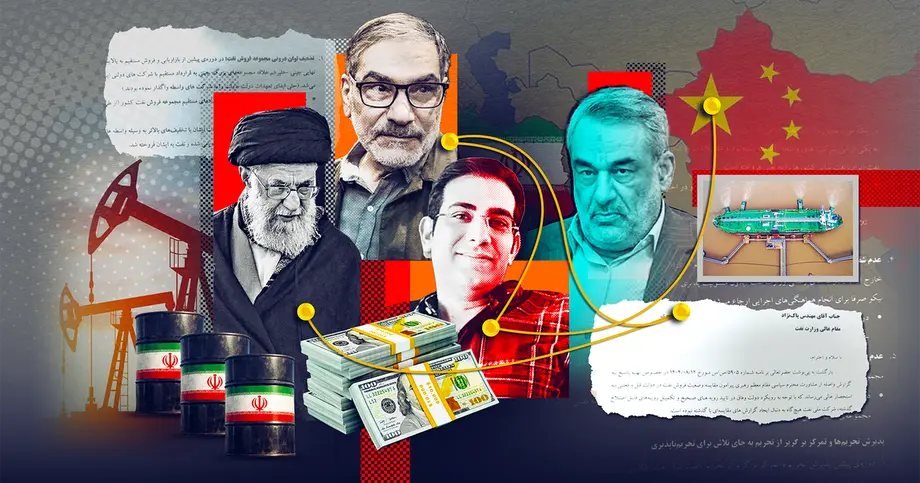
Three port locations and seven storage tanks anchor Iran's strategy
Iran has secured access to port facilities at three locations in China and acquired seven oil storage tanks to keep sanctioned tankers delivering crude to its biggest market, according to a confidential letter attributed to acting Oil Minister Hamid Bovard and accounts from two Iranian Oil Ministry sources.
Contents
- Three port locations and seven storage tanks anchor Iran's strategy
- How docks and storage keep sanctioned vessels moving
- Storage brings flexibility, fees and money tied up in oil
- US sanctions reach from the tanker to the refinery
- Independent Chinese refineries remain essential buyers
- China's buying power squeezes Iran's returns
- Debts and political rivalry run through the trade
- Exports continue at a much smaller scale
- A widening campaign against oil and payments
- Key Points
The arrangement reportedly connects docks at Ningbo-Zhoushan, Qingdao and a location identified as Pant in Shandong province with storage facilities spread across China's coast. Oil can arrive before a buyer is secured, then move from storage to Chinese refineries. Bovard's letter describes negotiations by Iran's Foreign Ministry and what he portrays as covert Chinese cooperation.
US government documents show why terminals and storage have become central to the sanctions campaign. The Treasury Department said Iran held approximately $2 billion worth of oil at Chinese ports in January 2025. On May 1, 2026, the State Department sanctioned Qingdao Haiye Oil Terminal Co., Ltd., saying it had imported tens of millions of barrels of sanctioned Iranian crude since Washington announced National Security Presidential Memorandum 2.
The confidential correspondence also describes financial strain behind the trading network: demands from China for deeper discounts, disputes over billions of dollars owed by intermediaries and accusations involving tanker owner Hossein Shamkhani. Several allegations come from officials engaged in a struggle over control of Iran's oil sales.
For Tehran, the practical problem is getting paid, rather than simply getting oil onto a ship. A tanker needs somewhere to unload, a refinery needs permission and capacity to buy, and the seller needs a way to turn the proceeds into usable money. Washington is targeting each part of that chain.
How docks and storage keep sanctioned vessels moving
Bovard, the former head of the National Iranian Oil Company, described the arrangement in a response to complaints from Ali Shamkhani, the former secretary of Iran's Supreme National Security Council and political adviser to then supreme leader Ali Khamenei. Shamkhani had attacked oil sales under President Masoud Pezeshkian.
Iranian authorities instructed trusted intermediaries to continue using sanctioned vessels that could dock at designated Chinese facilities, according to Bovard's account. He criticized the administration of former President Ebrahim Raisi for relying on newer vessels and presented access to terminals as a way to keep existing ships working.
Hossein Shamkhani, Ali Shamkhani's son, owns tankers described as part of a shadow fleet. This term refers to ships used to move restricted cargoes through networks that obscure ownership, trading relationships or the origin of oil. The reported Chinese arrangement allows his vessels to deliver Iranian crude to docks under Tehran's control. The US Treasury has sanctioned 51 vessels linked to him.
The two Oil Ministry sources said Iran gained control of a terminal in the Ningbo-Zhoushan free trade zone by helping build smaller transit facilities. They also described secret stakes in smaller docks at Qingdao and Pant. Nearby pipelines reportedly allow crude to reach refineries without another transfer between ships.
Bovard's letter refers to leases lasting many years, while the ministry sources describe purchases and ownership stakes. The precise legal ownership, lease terms, storage capacities and identities of the Chinese counterparties have not been publicly detailed.
Storage brings flexibility, fees and money tied up in oil
Four of the seven tanks reportedly acquired by Iran are at Dalian, Huizhou, Dongying and Weifang. Three others are in the Zhoushan area: the Kamergi tank on Aoshan Island, a tank at the Shulanghu Island terminals and another in the Zengyamuo oil zone, according to the ministry sources.
Storage separates the arrival of a cargo from its eventual sale. Iran can unload a tanker and free it for another journey while the crude waits for a refinery buyer. The same arrangement leaves money tied up in unsold oil and creates continuing storage costs.
An earlier account put Iranian crude stranded in Chinese storage at 25 million barrels and the storage fees paid by Tehran at $450 million. The Treasury Department supplied another measure of the stockpile in its October 2025 sanctions announcement: approximately $2 billion worth of Iranian oil was stored at Chinese ports in January that year.
Treasury identified the tanker MADESTAR as transporting two million barrels from that stored oil. It also said the vessel carried multiple Iranian crude cargoes to China between September 2024 and August 2025, receiving shipments first loaded in Iran by sanctioned vessels.
A previously disclosed instruction attributed to Mohammad Javad Bavand, a special assistant to the oil minister, offers a closer view of the system. Bavand directed intermediary Mohammad Hadi Momenin, who reportedly owed $2 billion, to use a Hossein Shamkhani vessel to deliver oil into Chinese storage. The account links shipping access, stored cargo and unpaid debts within the same trading operation.
US sanctions reach from the tanker to the refinery
The Treasury Department's October 9, 2025, action targeted more than 50 individuals, entities and vessels. Among them were Rizhao Shihua Crude Oil Terminal and Shandong Jincheng Petrochemical, an independent refinery in Shandong province.
Rizhao Shihua's terminal at Lanshan Port had accepted more than a dozen shadow fleet vessels carrying several million barrels of Iranian oil, Treasury said. Jincheng had received more than a dozen shipments worth hundreds of millions of dollars and had bought Iranian oil through Naftiran Intertrade Company, the National Iranian Oil Company's trading arm.
Treasury also identified Qingdao Hexin United International Shipping Agency as helping the vessels PROGRESS V and SCORPIUS unload nearly two million barrels each at Haiye Terminal in Qingdao in 2024. Those cargoes were handled on behalf of the National Iranian Oil Company, according to the department.
US Treasury Secretary Scott Bessent described the purpose of the October measures in terms of reducing money reaching Tehran:
"The Treasury Department is degrading Iran's cash flow by dismantling key elements of Iran's energy export machine," said Secretary of the Treasury Scott Bessent.
The State Department's May 2026 sanctions statement, issued by spokesperson Thomas "Tommy" Pigott, extended that pressure to Qingdao Haiye itself. It accused the operator of accepting cargo from vessels involved in illicit transfers with sanctioned ships and enabling billions of dollars to reach Tehran.
Treasury simultaneously designated three Iranian currency exchange houses, affiliated individuals and associated companies. The State Department said those exchanges process billions of dollars annually, converting oil receipts into currency Iran can use.
Independent Chinese refineries remain essential buyers
China's independent refineries, commonly called teapots, buy most of Iran's crude exports, according to Treasury. They process oil into fuels and other products outside China's largest state oil groups. Intermediaries have helped keep much of this trade away from China's major banks and three largest oil companies.
Washington expanded its focus on buyers on April 24, 2026, sanctioning Hengli Petrochemical (Dalian) Refinery Co., Ltd. Treasury described Hengli as China's second largest independent refinery and said it had purchased billions of dollars worth of Iranian petroleum.
The department's April 2026 sanctions announcement identified BIG MAG, GALE and ARES as vessels that together delivered more than five million barrels of Iranian crude to Hengli. Treasury said the refinery had received Iranian cargoes since at least 2023.
Some Hengli shipments were overseen by Sepehr Energy Jahan Nama Pars Company, which Treasury identified as the oil sales arm of Iran's Armed Forces General Staff. Those transactions generated hundreds of millions of dollars for Iran's military, the department said.
The same action targeted approximately 40 shipping firms and vessels, including 19 shadow fleet ships. Treasury's examples included MAGNOLIA, which delivered approximately two million barrels of Iranian crude to China in January 2026, and SEEKER 8, which carried more than four million barrels between January and February for discharge in China.
China's buying power squeezes Iran's returns
Bovard's letter says China began pulling back from Iranian oil before the conflict that began on February 28, 2026. Beijing rejected Tehran's request for higher crude import quotas for Chinese refineries, increased purchases from Venezuela and demanded deeper discounts, according to his account.
Import quotas limit how much crude a refinery is permitted to bring into China. More docking space and storage can help Iran deliver cargo, while a refinery's quota still limits its ability to buy. Access to infrastructure and access to customers are separate parts of the business.
Ali Shamkhani alleged in his letter to Khamenei that discounts had risen from 50 cents per barrel under Raisi to $9 per barrel under Pezeshkian. The Oil Ministry disputed those figures. A September disclosure described a different arrangement in which Bavand assigned four intermediaries, including Hossein Shamkhani, to sell 86 million barrels at an 8.5 percent discount.
The percentage discount depends on the price used as a reference, while the other claims give a fixed reduction per barrel. Both disputes concern how much money Iran gives up to secure buyers willing to handle sanctioned oil.
China also has interests across the wider Gulf. Earlier Chinese aid to Iran accompanied calls for an end to fighting, while Beijing maintained major relationships with Saudi Arabia and the United Arab Emirates. Its role as Iran's main oil customer gives it commercial influence, alongside reasons to protect shipping and energy supplies elsewhere in the region.
Debts and political rivalry run through the trade
Bovard accused Ali Shamkhani of protecting his son's business interests rather than Iran's oil revenue. He alleged that Hossein Shamkhani used Iranian government loans to buy vessels, then deployed them to transport Russian oil. He also alleged that Shamkhani received Iranian crude on consignment without collateral.
Consignment means an intermediary receives oil to sell and returns the proceeds later. Collateral is an asset pledged as protection if payment fails. Without that protection, the state depends more heavily on the intermediary returning the money.
Former lawmaker Ahmad Amirabadi Farahani said the then head of NICO, the National Iranian Oil Company's international trading arm, had barred Hossein Shamkhani and three other intermediaries from selling crude because they owed several billion dollars. Farahani also alleged that four intermediaries met at Charlie restaurant in Dubai after Khamenei's death and discussed keeping oil proceeds because they expected the government to collapse.
Control of sales reportedly moved from a network linked to Iran's Intelligence Ministry to another connected to the intelligence arm of the Islamic Revolutionary Guard Corps, or IRGC. The government remained in power, but Oil Minister Mohsen Paknejad was later dismissed.
Hossein Ghorbanzadeh, a Persian Gulf Petrochemical Company board member associated with parliament speaker Mohammad Bagher Ghalibaf, said Pezeshkian told a cabinet meeting that Khamenei had requested Paknejad's removal over the intermediary crisis. Ghorbanzadeh said the dismissal had been planned for Esfand, the Iranian calendar month spanning February and March, but was delayed by the war and Khamenei's death.
Exports continue at a much smaller scale
Iman Nasseri, senior vice president for Middle East and Asia at consultancy FGE NexantECA, estimates Iran is still exporting approximately 500,000 barrels a day of crude and refined products despite sanctions and the US blockade.
His estimate divides that trade into 400,000 barrels a day of crude, mostly loaded in Iraqi waters, and another 100,000 barrels a day of mainly fuels moved overland. Nasseri said the IRGC's sanctioned merchant arm was handling sales and had effectively taken control of oil.
Iran was thought to be shipping 1.6 million barrels a day of crude at the end of 2025. Nasseri's estimate of 400,000 barrels a day is one quarter of that volume, a decline of 75 percent. At the market prices used in the estimate, those crude shipments could generate about $1.2 billion a month before the substantial discounts expected on the cargoes.
OPEC figures cited for September put Iranian production at 1.957 million barrels a day, compared with 3.142 million in the first quarter of 2026. That is a decline of approximately 38 percent. Production measures oil pumped, while exports measure oil shipped abroad; some production goes to domestic refineries or storage.
Shipping restrictions also continue to shape China's access. In November, an Iranian lawmaker announced Hormuz transit exemptions for vessels from China, India, Iraq and Qatar, with Chinese and Indian ships still liable for Iranian transit fees. Passage through the strait, permission to unload and payment for the cargo remain separate decisions.
A widening campaign against oil and payments
US sanctions have expanded across the same network Iran relies on: vessels, port operators, refinery buyers and financial intermediaries. The principal dated developments are:
- January 2025: Iran held approximately $2 billion worth of oil at Chinese ports, according to Treasury.
- October 9, 2025: Treasury sanctioned more than 50 individuals, entities and vessels, including Rizhao Shihua and Shandong Jincheng.
- February 28, 2026: US and Israeli strikes began; Khamenei and Ali Shamkhani were killed.
- April 2026: The United States began blockading Iranian ports.
- April 24, 2026: Treasury sanctioned Hengli and targeted approximately 40 shipping firms and vessels.
- May 1, 2026: The State Department sanctioned Qingdao Haiye, alongside Treasury action against Iranian currency exchange networks.
- August 2026: Washington launched Operation Economic Outcast to further restrict Iranian oil sales.
The October, April and May actions cite Executive Orders 13902 or 13846 and National Security Presidential Memorandum 2. These authorities support Washington's campaign of maximum economic pressure on Iran's petroleum trade.
Designations block property within US jurisdiction or controlled by US persons and generally prohibit transactions involving that property without authorization or an exemption. Treasury also warns foreign financial institutions and other businesses that certain dealings with designated parties can expose them to sanctions.
Iran's reported Chinese facilities provide places to unload and hold oil. Washington's successive actions aim to make the rest of the transaction harder, from finding a refinery buyer to bringing the payment home. The continuing exports, reduced volumes and disputes over unpaid proceeds show how those pressures meet inside Iran's oil business.
Key Points
- Iran reportedly obtained access to facilities at three Chinese port locations and acquired seven oil storage tanks.
- Bovard's confidential letter describes using designated docks to keep sanctioned tankers delivering crude.
- US authorities have targeted Chinese terminals, independent refineries, shipping networks and Iranian currency exchanges.
- Treasury said Iran held approximately $2 billion worth of oil in Chinese ports in January 2025.
- Disputed discounts and allegations of unpaid debts expose conflict over who controls Iran's oil revenue.
- Nasseri estimates continuing crude exports at 400,000 barrels a day, one quarter of the estimated level at the end of 2025.