A dawn encounter puts Dongsha's waters under scrutiny
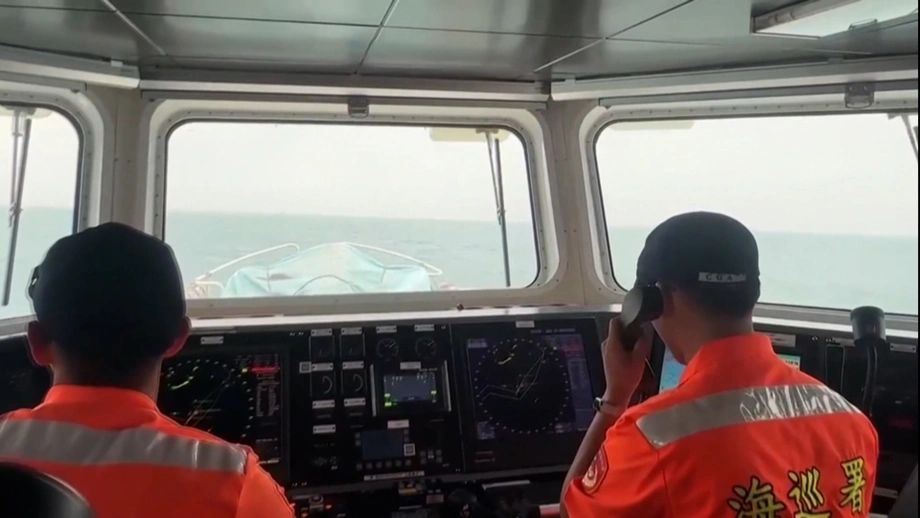
A Chinese coast guard ship entered restricted waters near Taiwan administered Dongsha Island at about 4 a.m. on Saturday with its Automatic Identification System switched off, Taiwan's Coast Guard Administration said. A Taiwanese patrol vessel challenged the ship in English and Mandarin, and the two vessels came within about 1.85 kilometers, or one nautical mile, of each other before the Chinese vessel departed.
Contents
- A dawn encounter puts Dongsha's waters under scrutiny
- What happened during the interception?
- Repeated encounters across several months
- Why repeated patrols matter to Taiwan
- From claiming authority to controlling access
- New patrol boats help close to shore
- Pressure also extends east of Taiwan
- What the Philippines comparison reveals
- Key Points
The encounter took place near a remote coral island in the northern South China Sea, more than 400 kilometers from Taiwan's main island. Dongsha, also known as Pratas Island, is administered as part of Kaohsiung City but claimed by Beijing. Its distance from Taiwan makes reliable access by ship and aircraft essential for the personnel stationed there.
Taiwan's coast guard described Saturday's entry as the 13th such incident around Dongsha that year, involving 16 Chinese ships. Another coast guard tally put the number of Chinese vessels expelled at 17, including the latest ship, compared with 16 beforehand. The published figures leave the cumulative vessel count unclear, while the incident count is consistently given as 13.
The confrontation brings together two concerns for Taipei: Chinese ships entering waters Taiwan restricts around its outpost, and Chinese crews presenting those operations as ordinary law enforcement. Taiwanese officials say repeated patrols could gradually make Beijing's claim to authority a practical obstacle for fishing, shipping and island supplies.
China describes its patrols as lawful operations in waters under its jurisdiction. Taiwan rejects that claim and says its coast guard will continue taking measures to defend its sovereignty and maintain maritime security.
What happened during the interception?
Taiwan's coast guard first located the Chinese vessel northwest of Dongsha early Saturday. A Taiwanese patrol ship then detected it entering restricted waters from the west at 4 a.m. and repeatedly demanded that it leave.
The Chinese crew answered by claiming that the area belonged to China and that the vessel was enforcing Chinese law. The exchange turned a close encounter between patrol ships into a direct dispute over which government could issue instructions in the surrounding waters.
The Automatic Identification System, usually shortened to AIS, broadcasts information such as a vessel's identity, position and movement. With that system switched off, the ship was not providing its usual identification signal. Taiwan's coast guard nevertheless located and intercepted it.
Taipei accused Beijing of harassment and called for it to stop. Chinese authorities defended the patrol as routine law enforcement and said they would continue operations in waters they claim. Taiwan also accused China of intimidating shipping and undermining regional stability.
Repeated encounters across several months
Saturday's confrontation followed other activity around Dongsha and along Taiwan's coast. The reported sequence shows how patrols, radio broadcasts and entries into restricted waters have become recurring points of friction.
- June: China announced a special maritime traffic enforcement operation east of Taiwan. Taiwan's coast guard said Chinese government vessels did not enter its restricted waters during that operation and navigation continued normally.
- July 1: Taiwan completed a wharf renovation at Pratas, allowing newly built patrol boats of 100 tons to be stationed there.
- October 1 and October 18: Encounters involving Pratas were reported. On October 18, Chinese coast guard, research and fishing vessels also operated around Hualien, Pingtung and Kaohsiung.
- October 20: Chinese coast guard ship 3102 entered Dongsha's restricted waters with AIS switched off, according to Ocean Affairs Council specialist Pai Pang-ting.
- Saturday: A Chinese coast guard ship entered restricted waters from the west at about 4 a.m. and left after Taiwanese warnings.
The October 18 activities included entries into restricted waters and interference with Taiwanese fishing operations, Pai said. Taiwan's coast guard responded with monitoring, expulsions and protection for fishing vessels.
Why repeated patrols matter to Taiwan
Pai Pang-ting, a specialist at Taiwan's Ocean Affairs Council, told a Taipei security forum that coast guard, research and fishing vessels can challenge Taiwan's authority through activities presented as patrols, surveys, fishing or administrative work. Military deployments draw attention, he said, while these other vessels contest the everyday exercise of government authority at sea.
Pai warned that repeated intrusions could become a claimed management routine. The practical concern is straightforward: a Chinese ship repeatedly announcing that it controls an area could eventually begin telling other vessels where they may go or what permission they need.
Ship 3102's October 20 entry illustrated the connection between movement at sea and political messaging, according to Pai. He said its crew broadcast statements denying the existence of the Republic of China, Taiwan's official name, while operating in the restricted area.
Pai said whether the different types of Chinese vessels operate under common command still required verification. He urged Taiwan to respond to specific conduct under the relevant law, rather than delay action while debating whether a fishing vessel had a militia role.
He also referred to a warning by Ma Chen-kun, a professor at Taiwan's National Defense University: Taiwan could retain an island while losing freedom to use the surrounding sea. For fishermen, crews carrying provisions and personnel awaiting transport, that would mean growing interference even while Taiwanese authorities remained on shore.
From claiming authority to controlling access
Benjamin Blandin, a maritime security specialist and visiting research fellow at Taiwan's Institute for National Defense and Security Research, said Beijing could gain advantages through selective restrictions rather than a complete blockade.
"China could achieve significant strategic benefits without imposing a complete blockade or forcing an immediate Taiwanese withdrawal," said Blandin.
Blandin described three potentially overlapping developments: making China's maritime presence routine, asserting jurisdiction and gaining effective control over access. Demands for identification, inspections or changes of course would move the dispute toward Chinese ships exercising authority over other vessels.
Repeated interference with deliveries, personnel rotations or emergency evacuations would put direct pressure on Taiwan's ability to sustain the outpost. Requirements to seek advance permission could also force Taipei into a difficult choice between resisting Chinese instructions and keeping transport moving.
Sylwia M. Gorska, a doctoral candidate in international relations at Britain's University of Central Lancashire, said making the island impossible to sustain would require restrictions affecting its different supply routes.
"Making Taiwan's presence unsustainable would require much more extensive restrictions, particularly given the island's existing air and maritime supply options," Gorska said.
Beijing's next operational steps around Dongsha have not been announced. The immediate issue remains whether future patrols continue as confrontations over competing claims or begin obstructing the ships and aircraft that support the island.
New patrol boats help close to shore
Taiwan has strengthened its ability to operate around Pratas itself. The coast guard said in September that a wharf renovation completed on July 1 allowed newly built patrol boats of 100 tons to be stationed at the island, alongside regular deployments of larger patrol vessels nearby.
Pratas has an airstrip and two piers. Those facilities give Taiwan both air and maritime supply options, although the island's location makes transport a continuing operational concern. It lies more than 400 kilometers from Taiwan and about 260 kilometers from the Chinese mainland.
Sea transport remains important for moving substantial quantities of equipment and provisions, Blandin said. Aircraft provide another option when conditions allow. Larger reserves on the island would give Taiwan more time to respond if deliveries were interrupted.
Gorska said the wharf improvements strengthen the local response while supply routes remain exposed to interference farther out. Taiwan could send more coast guard vessels, improve surveillance or involve military assets more directly, but those decisions would also affect the risk of a confrontation.
For crews at sea, sustained obstruction would create repeated decisions about whether to press ahead, change course or wait. For personnel on Dongsha, reliable deliveries support food supplies, equipment, changes of staff and medical transport.
Pressure also extends east of Taiwan
Taiwan's coast guard has also challenged Chinese operations off its eastern coast, an area Taipei regards as important for wartime supply routes. It identified Chinese patrol vessels Hushi, numbered CCG 1308, and Meishan, numbered CCG 2303, and said Taiwanese ships, including the Ji An, were sent to monitor them.
Chinese state media showed a vessel broadcasting that it was conducting law enforcement and offering assistance, alongside footage of an unidentified fishing trawler. The intended recipient of the radio message was not identified.
Taiwan's coast guard accused China of using such broadcasts to harass shipping and assert a jurisdiction that Taipei rejects. It said Taiwan holds sovereign rights and jurisdiction in its exclusive economic zone east of the island.
An exclusive economic zone gives a coastal government particular rights over resources and specified activities, including fishing. Its legal powers differ from those in territorial waters or restricted areas around an island. Pai urged Taiwanese authorities to distinguish those areas carefully when deciding how to respond to Chinese vessels.
China has described its wider operations as efforts to protect territorial sovereignty and maritime rights. Taiwan says the same activities combine political messaging with pressure on its maritime administration. France, Germany and the United Kingdom jointly expressed concern over Chinese activities around Taiwan in June.
What the Philippines comparison reveals
The Philippines' efforts to supply personnel aboard the grounded BRP Sierra Madre at Second Thomas Shoal offer a practical comparison for Taiwan. Both situations involve maintaining access to an outpost while Chinese vessels challenge activity nearby, although their geography, supply needs and security arrangements differ.
Blandin pointed to Manila's persistence in continuing deliveries and its documentation of confrontations as lessons for Taiwan. Surveillance, defensive equipment and proportionate responses could help sustain access during encounters at sea.
Gorska said arrangements to reduce dangerous encounters also require political care. Communication about safe passage could become contentious if China presents it as Taiwan accepting Beijing's authority to approve deliveries.
The security relationship with Washington is another major difference. The Philippines has a mutual defense treaty with the United States, and American defense guidelines include armed attacks on Philippine coast guard vessels in the South China Sea within those commitments. Taiwan has no equivalent treaty.
The Taiwan Relations Act treats efforts to determine Taiwan's future through nonpeaceful means, including boycotts or embargoes, as a matter of grave concern to the United States. It leaves the American military response to interference with Pratas supplies unspecified.
Gorska said sustained restrictions would create risks for Beijing as well as Taipei. Stopping one delivery leaves room for negotiation or withdrawal. Repeatedly preventing escorted vessels or aircraft from reaching the island could produce a much wider crisis.
For Taiwan, the immediate task is keeping patrols, fishing, transport and supplies operating while responding to Chinese claims of authority. Saturday's encounter ended with the Chinese vessel leaving, but the repeated deployments keep that daily work under pressure.
Key Points
- Taiwan said a Chinese coast guard vessel entered Dongsha's restricted waters at about 4 a.m. on Saturday with AIS switched off.
- A Taiwanese patrol ship issued warnings in English and Mandarin. The vessels came within about one nautical mile before the Chinese ship departed.
- Taiwan described the encounter as the year's 13th incident. Published cumulative vessel counts were 16 and 17.
- Beijing called its operations lawful patrols; Taipei accused it of harassment and rejected its jurisdictional claims.
- A wharf renovation completed on July 1 enabled patrol boats of 100 tons to be stationed at Pratas.
- Named specialists warned that inspections, permission requirements or repeated obstruction of deliveries could put Taiwan's access to the island under greater pressure.