Five Chinese arrest warrants, two men out of prison
Thailand says China must use a formal extradition process to seek the return of five Uyghur men detained since 2014, placing their cases before Thai courts as human rights groups warn they could face torture and enforced disappearance in China.
Contents
- Five Chinese arrest warrants, two men out of prison
- What the extradition process would involve
- A lawyer has been appointed, but access is disputed
- The men have asked not to be returned
- How more than 12 years of detention unfolded
- What happened to the 40 returned in 2025?
- Thai law places protection from torture at the centre
- China defends cooperation with Thailand
- A safe destination would require another government
- Key Points
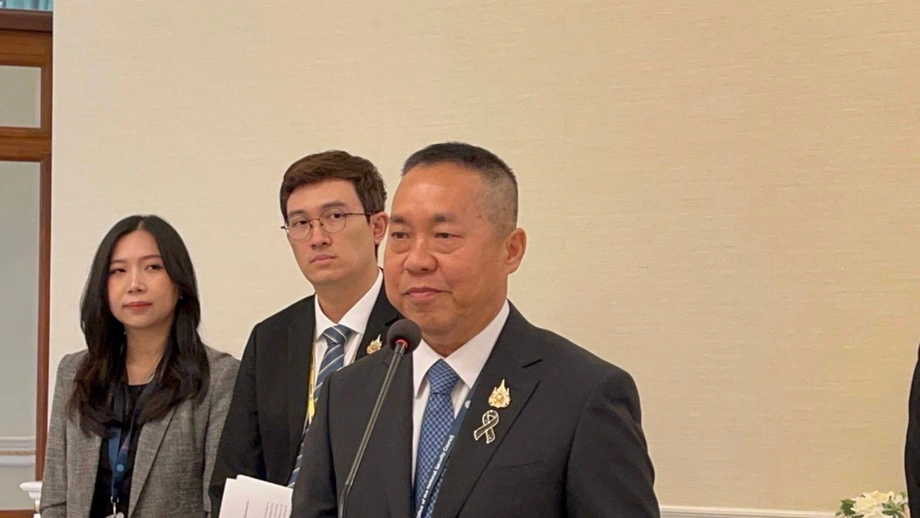
National Security Council Secretary-General Chaiyapruek Duangprapat said on November 4, 2026, that all five face Chinese arrest warrants and none has refugee status. Two received a royal pardon on October 21 and were transferred from prison to immigration detention in Bangkok. The other three have about a year remaining on sentences connected to an attempt to escape detention.
The immediate concern is the fate of the two pardoned men. Their release from prison has left them in immigration custody rather than free to leave. Both have asked not to be returned to China, where they fear abuse.
Chaiyapruek said Thailand's Foreign Ministry would assess the Chinese warrants and any extradition request before the matter proceeded through the courts. The men would be able to appoint lawyers and oppose their return. He described that route as different from the government's February 2025 deportation of 40 Uyghurs to China.
Amnesty International's November statement adds a crucial legal issue: Article 13 of Thailand's Prevention and Suppression of Torture and Enforced Disappearance Act prohibits deportation when substantial grounds exist to expect torture, cruel treatment or enforced disappearance. The law has been in force since 2023.
For the two men, the case therefore involves both the procedure for examining China's demands and Thailand's obligation to protect people from serious abuse.
What the extradition process would involve
Thailand and China signed their extradition treaty in 1993, and it entered into force in 1999. Extradition is the legal process through which one country asks another to surrender a person for criminal proceedings. Deportation is an immigration measure used to remove someone from a country.
Chaiyapruek said the five men's cases would go through the judicial system rather than be decided by his agency as a policy matter. A Thai court would consider whether the requested surrender could proceed, with the men entitled to challenge it.
Chaiyapruek, speaking as the head of the National Security Council, described the possible outcome:
But if the court rules against them, they will be extradited according to the treaty. This is the judicial process.
China's Foreign Ministry spokesperson Mao Ning did not say whether Beijing had submitted a formal extradition request. No hearing date or timetable for a decision was announced.
A court ruling in the men's favour would leave another practical decision: where they could go. Chaiyapruek said resettlement would depend on another country agreeing to accept them.
A lawyer has been appointed, but access is disputed
Government spokesperson Ekkapob Pianpises said the two men had been appointed a lawyer and would be able to challenge extradition in court. His assurance addresses a central concern for people held in immigration custody: whether they can prepare a legal response before being removed.
Amnesty International, however, said authorities had denied the men access to their lawyers since their transfer on October 21. It also said access by civil society organisations and Thailand's National Human Rights Commission had been blocked.
The government's statement concerns the appointment of legal representation; Amnesty's complaint concerns whether representatives can actually reach their clients. The men need contact with lawyers to explain their fears, examine the case against their return and present objections.
Amnesty International Secretary General Agnès Callamard called for access to legal counsel and a safe destination:
Thai authorities must now allow them access to a lawyer of their choice and, together with the international community, urgently find a safe and voluntary third-country solution for them and the other Uyghurs still detained in Thailand.
The men have asked not to be returned
The two men expressed their fears in letters circulated by Kannavee Suebsang, a former Thai lawmaker and founder of the Peace Rights Foundation, which represents them. Their appeal is personal and direct: they want protection from being sent back to China.
One of the men wrote in English about his fear of return. In the letter shared by Kannavee, he said:
Every time we are worrying from China to take back us,
The same man rejected China's description of the detainees as terrorists:
We aren't terrorist,
The two men are being held at Bangkok's Suan Phlu immigration detention centre. Amnesty says they have spent more than 12 years in Thai detention, beginning with their apprehension in March 2014.
The five were jailed in 2020 for trying to escape immigration detention. Thai law permits deportation of imprisoned foreign nationals only after their sentences end, which explains why the two pardoned men now face a more immediate prospect of removal while the other three remain in prison.
How more than 12 years of detention unfolded
Amnesty dates the original apprehension of the group to March 13, 2014. More than 300 Uyghurs who had fled China were detained in southern Thailand near the Malaysian border. Uyghurs are a predominantly Muslim Turkic ethnic group native to Xinjiang in northwestern China.
Thailand subsequently sent groups to different destinations. Women and children were allowed to travel to Türkiye, while large groups of men were returned to China despite objections from rights organisations and international officials.
- March 13, 2014: Thai authorities apprehended more than 300 Uyghurs, according to Amnesty International.
- June 2015: Thailand allowed 173 women and children to travel to Türkiye. During 2015, it also deported at least 109 Uyghurs to China.
- 2020: Five men were jailed for attempting to escape immigration detention.
- January 7, 2025: The Chinese embassy requested the repatriation of 45 Uyghur men, according to a document obtained by Amnesty.
- February 2025: Thailand deported 40 Uyghurs to China, leaving five serving prison sentences.
- October 21, 2026: Two of the five received a royal pardon and were transferred to immigration detention.
- November 4, 2026: Thai officials said extradition would require court proceedings.
The January 2025 embassy letter connects the latest cases to the earlier deportation: China sought 45 men, Thailand returned 40, and five remained in prison. Those five are now the subject of the warrants described by Thailand's security chief.
What happened to the 40 returned in 2025?
Thailand deported the 40 men in February 2025 despite appeals from the men themselves, Thai lawmakers and United Nations officials. Before the operation, the Thai government had denied that it planned to send them to China.
Thai officials later said the men had signed forms in Chinese agreeing to return voluntarily. Thailand's National Human Rights Commission said the officials involved failed to provide evidence of consent or assurances of the men's safety.
Amnesty says Thai authorities visited Xinjiang in February and March 2025 at China's invitation. Organisations monitoring the case said the visitors were able to meet fewer than 10 deportees. Selected Thai media groups also joined an official tour but lacked independent access to interview the returned men.
The whereabouts and wellbeing of all 40 have not been established. Kannavee said official inquiries he made while serving as a lawmaker received no reply. He said Thailand's Foreign Ministry and others also tried to follow up; the ministry declined to comment.
Elaine Pearson, Asia director at Human Rights Watch, warned about the treatment of people returned in earlier operations:
Previous Thai governments have kept Uyghurs in inhumane detention for years and then complied with Beijing's demands to send them to China, where they were forcibly disappeared,
Enforced disappearance means a person is detained and authorities conceal or refuse to acknowledge their fate or whereabouts, leaving them beyond ordinary legal protection.
Thai law places protection from torture at the centre
Thailand is not a party to the United Nations Refugee Convention. It is nevertheless bound by the Convention against Torture and the international principle of non-refoulement, which prohibits sending people to places where they face a real risk of specified serious abuses.
Article 13 of Thailand's Prevention and Suppression of Torture and Enforced Disappearance Act gives that protection a domestic legal basis. Amnesty says the provision bars deportation where substantial grounds exist to believe someone would face torture, cruel, inhuman or degrading treatment, or enforced disappearance.
Chaiyapruek's statement that the five lack refugee status sits alongside these obligations. Protection against return to torture applies to people facing that danger regardless of whether they have been formally recognised as refugees.
Sasinan Thamnithinan, a lawmaker from the opposition People's Party, said Thailand had duties under both domestic and international law. In a statement, she urged the government to put those duties ahead of diplomatic convenience:
Maintaining international relations is important, but it must not take precedence over human rights and the rule of law. No one should be sent back to face danger simply because the government wants to end a problem,
China defends cooperation with Thailand
Beijing has repeatedly sought the Uyghurs' return and described members of the detained group as terrorists. China's Ministry of Public Security called the 40 men deported in 2025 illegal migrants.
Mao Ning, spokesperson for China's Foreign Ministry, defended cooperation with Thailand when asked about the latest cases:
China and Thailand's cooperation in combating cross-border crimes, including illegal immigration, is in accordance with the laws of both countries, as well as international law and international practice,
China denies allegations of abuses in Xinjiang and says its policies have supported economic development and countered extremism. Human rights organisations and the United Nations have accused Beijing of serious abuses against Uyghurs and other predominantly Muslim communities, including mass detention and forced labour.
Amnesty's 2021 investigation documented imprisonment, torture and persecution that it described as crimes against humanity. A United Nations assessment released in August 2022 said abuses in Xinjiang could constitute crimes against humanity. The term describes certain grave acts committed as part of a widespread or systematic attack on civilians.
Those findings underpin the rights groups' warnings about the five men. Callamard said assurances from China could not override Thailand's obligation to protect people from a real risk of torture or other serious violations.
A safe destination would require another government
Amnesty International and Human Rights Watch are urging Thailand to allow the two pardoned men to travel to a safe third country. Such an arrangement would require another government to accept them and a process that allows them to leave Thai custody safely.
Thailand has previously allowed members of the original group to leave for Türkiye. Amnesty gives the number as 173 women and children in June 2015. For the five men still in Thailand, the security chief has made acceptance by another country a condition of possible resettlement after a favourable court ruling.
The immediate decisions concern access to lawyers, the handling of China's request and the application of Thailand's protections against return to serious abuse. For the two men already pardoned, those decisions will determine whether the end of their prison terms leads to safety elsewhere or transfer to China.
Key Points
- Thailand says Chinese requests for five Uyghur men must proceed through its judicial system.
- Two men received royal pardons on October 21, 2026, but remain in immigration detention in Bangkok.
- The government says a lawyer has been appointed; Amnesty says authorities have denied access to legal representatives.
- Thai law prohibits deportation where substantial grounds exist to expect torture, cruel treatment or enforced disappearance.
- The whereabouts and wellbeing of all 40 Uyghurs deported to China in February 2025 remain unknown.
- Rights groups want safe resettlement in another country for the men still detained in Thailand.