A dispute over access closes the Cebu meetings
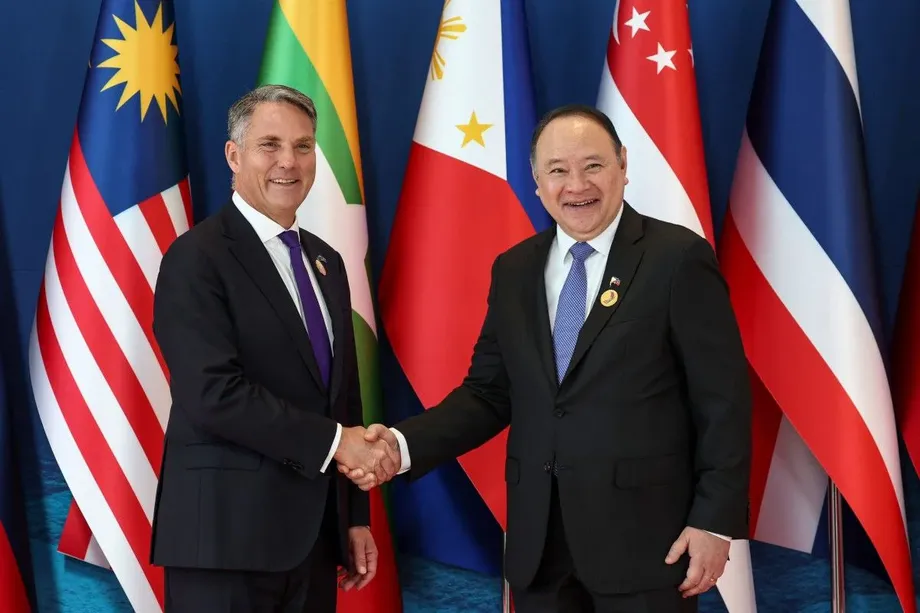
Philippine Defence Secretary Gilberto Teodoro rejected China's accusation that Manila obstructed its participation in regional defence talks as the two-day gathering ended in Cebu on October 29, 2026. China sent its embassy defence attaché, Yang Lei, to the 13th ASEAN Defence Ministers' Meeting-Plus instead of Defence Minister Dong Jun, marking its lowest representation since the forum began in 2010.
Contents
- A dispute over access closes the Cebu meetings
- What China accused the Philippines of doing
- Manila points to an invitation and a speaking opportunity
- Why the rank of China's representative mattered
- How the dispute unfolded
- South China Sea claims remain the central fault line
- US and Japanese discussions reinforce Manila's partnerships
- Earlier exchanges had already strained relations
- Code of Conduct talks continue alongside the friction
- Key Points
Chinese Ministry of National Defense spokesperson Zhang Xiaogang accused the Philippines of allowing an unnamed politician to abuse the country's chairmanship and place obstacles in Beijing's way. Teodoro said Manila had invited China, its representative had spoken, and no ASEAN member had raised similar concerns with him.
Teodoro, who chaired the meetings, rejected Beijing's description of the regional bloc's position:
It is China's position; it is not ASEAN's position.
The disagreement went beyond who attended. Beijing accused the host of undermining the forum's rules, while Manila defended ASEAN's authority to decide how its meetings operate. Both governments said China had participated, but they gave sharply different accounts of the treatment it received.
The meetings also brought proposals for closer defence cooperation with the United States, discussions with Japan about Chinese activities at sea, and renewed Philippine support for the 2016 South China Sea arbitration ruling. Manila concluded the gathering by handing leadership of ASEAN's defence agenda to Singapore for 2027.
What China accused the Philippines of doing
Zhang said Philippine actions violated ASEAN's principle of reaching consensus through consultation, the meeting's commitment to openness and inclusiveness, and basic diplomatic protocols. He also said they undermined China's rights as a participant.
Speaking for China's defence ministry, Zhang described the alleged conduct in these terms:
Such moves seriously violate ASEAN's principle of consensus through consultation and run counter to the open and inclusive spirit of the ADMM-Plus.
Zhang alleged that several ASEAN countries had questioned and opposed Manila's actions. Teodoro gave the opposite account, saying no member had expressed such concerns to him. Their competing descriptions placed ASEAN's internal position at the centre of the dispute.
China did not identify the politician or specify the alleged obstacles. Its defence ministry linked the reduced delegation to Philippine actions, while Dong was also thought likely to be attending a Chinese Communist Party meeting in Beijing. His attendance there was not confirmed in the accounts of the gathering.
Beijing nevertheless presented its decision to send a representative as support for ASEAN's central role in regional security and for continued defence dialogue. Zhang warned that the Philippine approach would damage trust and unity within the bloc.
Manila points to an invitation and a speaking opportunity
The Philippine defence ministry said it had notified its Chinese counterpart and invited it to the forum. Teodoro focused his response on China's opportunity to speak and on the authority of ASEAN members to manage proceedings.
At his closing news conference in Lapu-Lapu City, Cebu, Teodoro described the discussion as an open exchange:
We allowed the exchange of views to be robust, and I think that was the important thing, the opportunity to be heard.
China raised the South China Sea during the talks, Teodoro confirmed. He said its position was consistent with its previous statements, but declined to disclose how other participating countries responded.
Teodoro also said decisions about how dialogue partners are heard belong to ASEAN itself. Dialogue partners are countries outside the Southeast Asian bloc that participate in its cooperation forums. They have a place in the discussions, while ASEAN members organise the bloc's own processes.
Why the rank of China's representative mattered
Yang Lei's attendance kept China represented at a gathering where the United States, Japan and Australia sent their defence chiefs. An embassy defence attaché is a military official responsible for defence relations in the country where the embassy operates, rather than the minister directing national defence policy.
The difference in rank became another point of friction. Asked why he had not personally received Yang, Teodoro said an undersecretary had done so because diplomatic receptions should reflect the standing of the officials involved.
Teodoro explained his approach by referring to rank and stature:
There should [be] some parity in rank and in stature. So I think an undersecretary receiving an attaché, that is already more than courteous.
The ADMM-Plus brings ASEAN defence ministers together with eight dialogue partners: Australia, China, India, Japan, New Zealand, Russia, South Korea and the United States. Its purpose is to maintain security dialogue and practical cooperation among governments whose positions often conflict.
China's choice therefore carried diplomatic weight. Its seat remained occupied, but its delegation was led at a lower level than in previous years, when Dong attended. That reduced the opportunity for an exchange between the Chinese defence minister and his counterparts in Cebu.
How the dispute unfolded
The public disagreement developed around a short sequence of announcements and meetings. China's delegation decision came before the closing exchange between Zhang and Teodoro.
- October 27: China announced that its embassy defence attaché would represent it at the 13th ADMM-Plus in Cebu.
- October 28: The two-day defence gathering opened, and US Defence Secretary Pete Hegseth proposed a new framework for defence cooperation with ASEAN.
- October 29: Zhang accused the Philippines of obstructing China's participation. Teodoro rejected the accusation and said China had been able to present its position.
- At the conclusion: The Philippines handed leadership of ASEAN's defence agenda to Singapore for the following year.
The sequence meant that the dispute over representation remained unresolved in public even after the substantive discussions had taken place. Singapore will inherit the task of keeping the defence forum useful while its members and partners disagree over maritime security.
South China Sea claims remain the central fault line
China and the Philippines entered the Cebu meetings after years of confrontations in disputed waters and, more recently, Chinese sanctions against Teodoro. Beijing's nine-dash line stretches across much of the South China Sea and overlaps maritime areas claimed by the Philippines, Malaysia, Vietnam, Brunei and Indonesia.
Several of those areas fall within the exclusive economic zones of coastal countries. An exclusive economic zone gives a coastal state rights over resources, including fish and offshore energy, generally extending up to 200 nautical miles from its coast. Those resource rights are central to the competing positions at sea.
An international arbitral tribunal ruled in 2016 against China's claimed historic rights to resources within the nine-dash line where those claims exceeded the rights allowed by international maritime law. Beijing rejects the ruling. Teodoro raised it in bilateral meetings in Cebu, including with counterparts from other South China Sea claimant states.
Teodoro argued that the principles behind the ruling form part of international law and concern more than the Philippines alone. His position connects Manila's immediate confrontations with a wider issue for neighbouring coastal states: which rules govern access to maritime resources.
Manila has also pursued a separate legal process through its extended seabed claim, presented to a United Nations commission on July 28. That submission seeks recognition of rights to seabed and subsoil beyond the standard exclusive economic zone off western Palawan, adding another point of disagreement with Beijing.
US and Japanese discussions reinforce Manila's partnerships
Hegseth used the Cebu gathering on October 28 to propose an ambitious US-ASEAN defence framework and pledge that Washington would defend its interests and those of allies and partners. The United States is a Philippine ally, and Manila has defended its growing network of security relationships as a response to pressure at sea.
The proposed framework's contents were not detailed at the closing news conference. Teodoro directed questions about its shape to the eventual reports of ASEAN working groups, leaving the proposal's practical commitments and timetable unspecified.
Japanese Defence Minister Shinjiro Koizumi and Teodoro also expressed serious concern about the increasing scale and frequency of what they described as China's coercive activities in disputed waters. Their discussion connected the wider regional talks with Manila's immediate security concerns.
Teodoro rejected suggestions that the Philippines' partnerships were undermining regional stability. Explaining why he believed other countries would also resist comparable pressure, he said:
If other ASEAN countries were subjected to the same kind of action in the magnitude the Philippines is experiencing, I am sure that they would resist this to the best of their ability.
Earlier exchanges had already strained relations
The Cebu dispute followed an unusually sharp diplomatic argument over Chinese Ambassador Jing Quan's remarks about military force. On October 15, the Philippine Department of Foreign Affairs issued a rebuke after Jing said China could easily win if it chose to use force against the Philippines, while also saying Beijing would not do so because it valued peace.
That rebuke of China's envoy showed how references to military strength were already worsening relations before the defence gathering. Philippine senators subsequently called for the ambassador to be declared persona non grata, a diplomatic designation used to demand an envoy's departure.
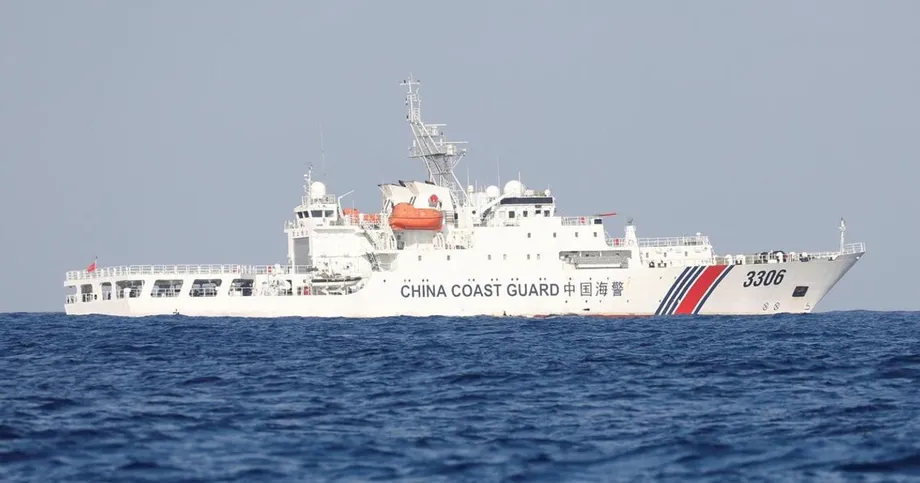
Regional concerns were also extending beyond the disputed South China Sea. On October 28, Taiwan's National Security Council Secretary-General Joseph Wu published a map identifying 53 Chinese naval and other official vessels across waters stretching from southern Japan to the east of the Philippines.
The regional vessel deployment included 34 navy warships and 19 coast guard and other official vessels. China's aircraft carrier Liaoning and its accompanying group were operating east of the Philippines. Beijing described the carrier's operations as routine training, while Taiwan warned of pressure affecting itself, Japan and the Philippines.
Code of Conduct talks continue alongside the friction
Zhang also addressed the Philippine president's call for progress on a South China Sea Code of Conduct. The president had warned that missteps involving fishermen or soldiers could cause an escalation, bringing the risks faced by people at sea into the diplomatic discussion.
A code of conduct is an agreement intended to guide how parties behave in contested waters. Its practical value would depend on the rules governments accept and how they apply them during encounters between vessels and personnel.
Zhang said China remained committed to accelerating consultations with ASEAN and argued that maritime disputes should not determine the entire China-Philippines relationship. He paired that position with a firm statement that Beijing would defend its sovereignty and maritime interests.
ASEAN foreign ministers had previously expressed hope of concluding negotiations by December 2026. That target gives the diplomatic effort a near deadline as Singapore prepares to take over the defence agenda. Cebu ended with channels for discussion still operating, but with China and the Philippines publicly divided over both conduct at sea and the management of the meeting itself.
Key Points
- The Philippines rejected China's allegation that it obstructed Beijing's participation in the October 28-29 defence gathering in Cebu.
- China sent defence attaché Yang Lei instead of Defence Minister Dong Jun, its lowest representation at ADMM-Plus since 2010.
- Zhang Xiaogang alleged that ASEAN countries opposed Manila's actions; Teodoro said no member had raised those concerns with him.
- Manila said China received an invitation and an opportunity to present its views, including on the South China Sea.
- The United States proposed a new defence cooperation framework, while Philippine and Japanese ministers discussed Chinese activities in disputed waters.
- Singapore takes over ASEAN's defence agenda in 2027, with South China Sea Code of Conduct negotiations still a pressing regional task.