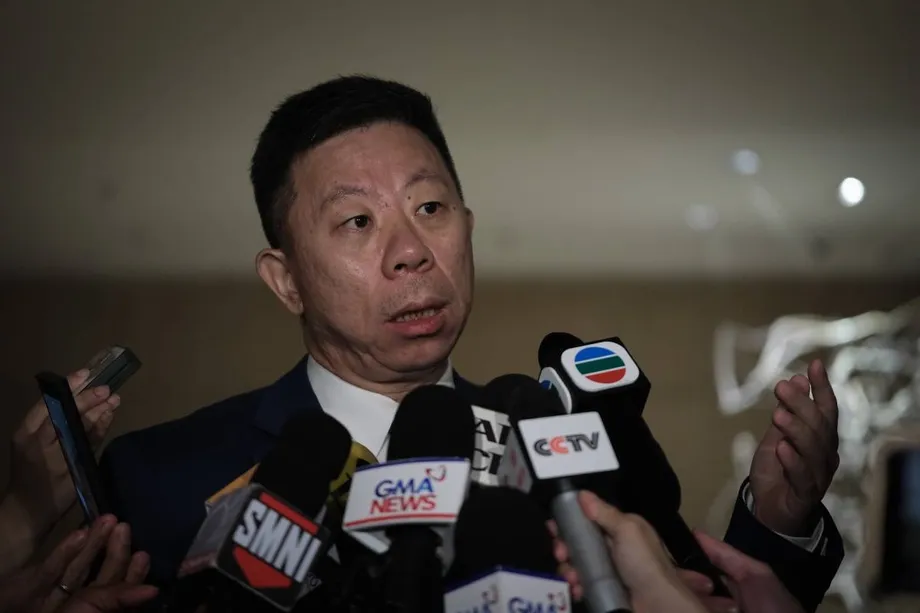
Manila Objects to Jing Quan's Remarks About Force
The Philippine Department of Foreign Affairs issued a rebuke after 10 p.m. on Thursday, October 15, accusing Chinese Ambassador Jing Quan of using language that appeared to convey a threat of force. The statement came minutes after the Chinese Embassy published its account of his remarks during a media interview at the second Diliman Dialogues in Quezon City.
Contents
- Manila Objects to Jing Quan's Remarks About Force
- What the Ambassador Said
- Why Manila Rejected the Reassurance
- China's Embassy Accuses Tarriela of Distortion
- Which Communication Channels Remain Open?
- Four Small Boats Near Lawak Island
- The Legal Rules Behind Manila's Position
- Dialogue, Trade and Protection From Prejudice
- Regional Talks Continue Alongside the Dispute
- Key Points
Jing said China could easily win if it chose to use force against the Philippines, while also saying Beijing would not do so because it valued peace. His comments drew criticism from Philippine Coast Guard spokesperson Rear Admiral Jay Tarriela and a response from the embassy accusing Tarriela of taking the remarks out of context.
The dispute unfolded alongside a disagreement over suspended military communications and continuing friction at sea. Defense Secretary Gilberto Teodoro Jr. said diplomatic and coast guard channels remained open, even as Manila kept direct military communications suspended over concerns about how Beijing had used them.
The DFA, in a statement shared by its maritime affairs spokesperson Rogelio Villanueva Jr., described the ambassador's language as damaging to an already difficult relationship:
It is regrettable that Chinese Ambassador Jing Quan today had a poor choice of words that would seem to convey a thinly veiled threat of the use of force, which is hardly helpful in the context of the complicated bilateral ties between the Philippines and China.
The department did not identify the particular remarks that prompted its response. Its criticism nevertheless addressed the central issue in the public exchange: whether a promise to avoid force could reassure a neighbor when paired with a claim that military victory would be easy.
What the Ambassador Said
Jing spoke to reporters on the sidelines of the second Diliman Dialogues, organized by the Philippines-China Studies Center of Diliman College. His interview followed a speech at Diliman Preparatory School in Quezon City.
The ambassador presented China's stated preference for peace alongside an assessment of its military advantage:
If we want to use force, we may easily win. But no, we will not use force. You know, we love peace, and in this region, we enjoy the peace.
Jing also said the Philippines should consider itself fortunate to have China as a neighbor. He rejected Teodoro's description of China as the region's troublemaker and alleged that accusations against Beijing were being used to stir hatred between the two countries.
Teodoro had made his comments on October 14, responding to Vice President Sara Duterte's characterization of the Philippines as Southeast Asia's troublemaker. The defense secretary instead pointed to Chinese aggression against Filipino troops at sea and said the Philippines was defending its maritime rights.
Jing's response brought two competing descriptions of the relationship into direct conflict. Beijing presented itself as a powerful neighbor choosing peace. Philippine officials focused on Chinese conduct at sea and the pressure conveyed by references to military strength.
Why Manila Rejected the Reassurance
Tarriela, the Philippine Coast Guard spokesperson for the West Philippine Sea, posted footage of Jing's interview and described the remarks as a direct threat. He argued that the ambassador's claim of restraint did not make the reference to force acceptable.
Tarriela used the relationship between a guest and a host to explain his objection:
A guest who reminds his host that he could easily beat him up, but has graciously decided not to, is not describing friendship. He is threatening the very country that received him and asking us to be grateful for it.
The DFA used more measured language, saying the remarks appeared to convey a threat and calling for greater care from all diplomats accredited to the Philippines. Its statement stressed that diplomacy required tact and restraint so governments could continue talking despite deep disagreements.
Manila's objection concerned the language used to frame those talks. A discussion about managing disputes becomes harder when one side invokes its ability to defeat the other, even while saying it prefers negotiation.
China's Embassy Accuses Tarriela of Distortion
The Chinese Embassy said Jing had been discussing what could happen if the two countries became embroiled in conflict and confrontation. It presented his comments as an argument for avoiding that outcome and managing differences through dialogue.
The embassy also accused Tarriela of distorting facts, spreading lies and rumors, and taking statements about maritime issues out of context. In its post on X, it alleged that he was undermining relations, encouraging confrontation and hatred, and promoting the risk of war.
The embassy said Jing had urged both sides to sit down, talk through their differences and avoid incidents or escalating tensions. Its defense of the ambassador therefore combined an appeal for dialogue with a sharp personal attack on the Philippine official criticizing him.
The sequence of exchanges shows how quickly the argument widened:
- October 14: Teodoro described China as the regional troublemaker because of its actions against Filipino troops at sea and defended the continued suspension of military communications.
- October 15: Jing spoke at the Quezon City forum and told reporters China could easily win through force but would not use it.
- October 15: Tarriela criticized the remarks, while the Chinese Embassy accused him of distortion and defended Jing's call for talks.
- After 10 p.m. on October 15: The DFA issued its rebuke, minutes after the embassy published its account.
Which Communication Channels Remain Open?
Jing also warned that the Philippines faced greater risks of confrontation if direct communications between the two militaries were not restored. He said Manila would lose out by declining those exchanges.
Teodoro gave a different explanation for keeping the channels suspended. He cited Beijing's abuse of the communications arrangements and distortion of narratives, and said security concerns justified maintaining the suspension.
The Armed Forces of the Philippines supported his position, saying dialogue required mutual trust, sincerity and respect for international law. Communication through the DFA and the Philippine Coast Guard remained available, according to Teodoro.
A military communication channel allows defense officials or armed forces to contact each other directly. Diplomatic and coast guard channels connect different institutions with different responsibilities. The disagreement therefore concerns which agencies should talk, under what conditions, and whether those exchanges can be trusted.
Neither side announced a date for restoring military communications. Jing continued to call for more contact, while Philippine defense officials set out concerns they wanted addressed.
Four Small Boats Near Lawak Island
The diplomatic argument coincided with another reported encounter near Lawak Island, a feature occupied by the Philippines and administered as part of Kalayaan municipality in Palawan.
According to the Philippine Coast Guard, the Chinese fishing vessel Yuetaiyu 63168 anchored within the island's territorial sea and reportedly deployed four small boats. Tarriela said the Chinese vessels initially ignored repeated radio challenges but eventually left.
A territorial sea is the belt of water immediately around land where a coastal state exercises sovereignty, subject to international rules such as passage by foreign vessels. The location mattered because the coast guard described the boats as operating in waters surrounding an island administered by the Philippines.
The encounter gave a concrete setting to the debate over communication. Coast guard personnel were using radio challenges at sea while officials in Manila and Beijing argued over the language and channels needed to prevent confrontation.
Access to these waters also matters for work beyond patrols. Filipino scientists have sought sustained marine research funding for repeated surveys in the West Philippine Sea, including the Kalayaan Island Group. Their work requires dependable access to ships, equipment and research sites, connecting maritime stability with the ability to monitor fisheries and ecosystems.
The Legal Rules Behind Manila's Position
Tarriela invoked Article 2(4) of the United Nations Charter, which prohibits the threat or use of force against the territorial integrity or political independence of a state, or otherwise contrary to UN purposes. His reference placed the exchange within rules governing how countries conduct their disputes.
At the South China Sea International Conference in Hanoi, DFA Undersecretary Leo Herrera-Lim set out the wider Philippine position. He said coercive conduct and unilateral actions beyond what international law permits had increased risks for coastal states.
Herrera-Lim identified the 1982 United Nations Convention on the Law of the Sea, known as UNCLOS, and the final and binding 2016 South China Sea Arbitral Award as the two anchors of Philippine maritime policy. The Hanoi gathering brought together more than 300 officials, policymakers, maritime specialists, academics and other participants.
UNCLOS sets rules for how countries use the oceans, including rights over maritime areas and resources. The 2016 award applied those rules to key issues in the dispute between the Philippines and China, including the legal basis for claimed maritime rights.
For Manila, those legal rules provide the standard for addressing conduct at sea. Herrera-Lim's position was that lasting peace and prosperity depended on countries acting within that framework, rather than relying on pressure against coastal states.
Dialogue, Trade and Protection From Prejudice
Jing urged the Philippines to maintain balanced relations with China, the United States and other countries. He called for more visits and meetings in person, and encouraged trade and investment to continue despite maritime disagreements.
The ambassador described communication as a practical way to manage disputes:
We should encourage the two sides to visit each other more and sit face to face.
Several participants at the Quezon City forum supported continued engagement while setting out different priorities. Former national security adviser Clarita Carlos favored cooperation with multiple countries without becoming beholden to any one of them. House special committee on the West Philippine Sea chairman Antolin Oreta III said the dispute involved upholding the law as well as territory.
Philippines-China Studies Center director Rommel Banlaoi advocated diplomatic balance and cooperation in areas of mutual benefit. Association for Philippines-China Understanding chairman Raul Lambino identified technology, energy and food security as areas where closer cooperation could support development.
Diliman College president and CEO Anna Dominique Coseteng added a concern about the effects of hostile rhetoric at home. She cautioned that national security concerns should not fuel prejudice against Filipino-Chinese communities. Her warning placed the treatment of people in the Philippines alongside the debate over relations between governments.
Regional Talks Continue Alongside the Dispute
Jing also expressed hope that negotiations on a South China Sea Code of Conduct could be completed. The proposed code is intended to set agreed expectations for behavior in the disputed sea and help manage tensions between China and Southeast Asian countries.
The ambassador said China had actively participated in the negotiations. He gave no completion date or details of provisions ready for agreement.
Manila and Beijing both continued to call for dialogue during the exchange. Their public statements exposed a more immediate disagreement over the conditions for useful talks: China urged more communication, while Philippine officials stressed restraint, trustworthy channels and respect for international law.
The practical choices now concern how officials speak publicly, which institutions maintain contact, and how vessels behave around disputed waters. Those decisions affect whether the shared call to avoid confrontation is reflected in daily encounters at sea.
Key Points
- The Philippine DFA rebuked Ambassador Jing Quan after he said China could easily win through force but would not use it.
- The Chinese Embassy defended his remarks as a call to avoid conflict and accused Rear Admiral Jay Tarriela of distortion.
- Direct military communications remain suspended, while diplomatic and coast guard channels remain open.
- The Philippine Coast Guard said Chinese boats near Lawak Island left after repeated radio challenges.
- Philippine officials cited the UN Charter, UNCLOS and the 2016 arbitral award in explaining their objections and maritime policy.
- Jing called for continued dialogue, trade and investment, and expressed hope for completion of a South China Sea Code of Conduct.