Seven countries, three diplomats and a push for talks
China is sending three senior diplomatic representatives to seven countries across the Middle East, the Red Sea region and the Horn of Africa in early and mid-November, widening a peace initiative that combines talks with Iran and Gulf states with visits to African capitals.
Contents
- Seven countries, three diplomats and a push for talks
- How the November visits are organised
- Beijing hosts Iran, Oman and Saudi Arabia
- Wang urges a political solution with Iran
- Saudi talks connect peace with shipping security
- Oman's historic visit brings 14 agreements
- Why Hormuz is central to the discussions
- African visits widen the diplomatic effort
- Key Points
Zhai Jun, the Chinese government's special envoy on the Middle East issue, will visit Iran, Oman and Saudi Arabia. Liu Xianfa, its special representative on African affairs, will travel to Ethiopia, Djibouti and Egypt. Hu Changchun, the Foreign Ministry's special envoy for Horn of Africa affairs, will visit Eritrea.
The November 2 announcement comes alongside meetings in Beijing involving President Xi Jinping, Foreign Minister Wang Yi and senior officials from Oman, Iran and Saudi Arabia. Together, the visits and meetings put political negotiations, energy supplies and the safety of shipping routes at the centre of China's diplomatic effort.
Chinese Foreign Ministry spokesperson Mao Ning said the representatives would travel during the same period to encourage negotiations and reduce tensions. At a press conference in Beijing, she described their purpose:
These shuttle diplomacy visits in this period of time by the Chinese special envoys and special representative are aimed at promoting peace talks, easing tensions, and playing a constructive role for upholding regional peace and stability,
Shuttle diplomacy means diplomats move between countries to discuss positions and carry messages. It gives governments a way to explore possible agreements through an intermediary while maintaining separate talks with each other.
How the November visits are organised
China has divided the travel among officials with different regional responsibilities. Zhai's itinerary focuses on Iran and two Gulf neighbours. Liu's route includes countries in the Horn of Africa and Egypt, while Hu will make a dedicated visit to Eritrea.
The announced schedule sets out overlapping travel windows rather than a single tour by one delegation:
- November 2: China announced the planned diplomatic visits.
- Early November: Hu Changchun is scheduled to visit Eritrea.
- Early and mid-November: Zhai Jun is scheduled to visit Iran, Oman and Saudi Arabia.
- Early and mid-November: Liu Xianfa is scheduled to visit Ethiopia, Djibouti and Egypt.
Mao said the missions would put into practice Xi's initiatives and proposals on peace and security in the Middle East, alongside Beijing's four principles for constructive participation in resolving pressing African issues.
The announcement did not give exact arrival dates, identify the officials who would receive the envoys, explain the four principles or set a date for joint peace negotiations. Its immediate commitment is to send representatives for discussions across the seven countries.
Beijing hosts Iran, Oman and Saudi Arabia
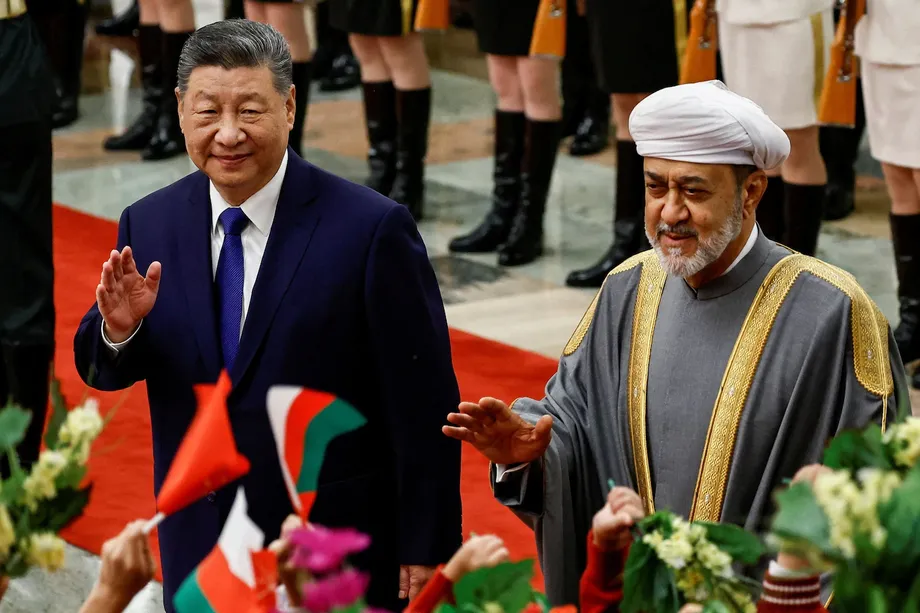
Xi and Wang held separate talks with Omani, Iranian and Saudi representatives in Beijing on Monday, bringing the same three countries on Zhai's itinerary into discussions at senior levels before his planned travel.
Xi met Oman's Sultan Haitham bin Tariq. Wang met Ali Bagheri Kani, deputy secretary of Iran's Supreme National Security Council, and Saudi National Security Adviser Musaad bin Mohammad al-Aiban.
The meetings gave China opportunities to discuss the conflict with an Iranian security official, a senior Saudi adviser and Oman's head of state. Each conversation had a different focus, but the public messages shared a central goal: a return to political negotiations.
Bagheri Kani's visit had not been announced beforehand by China's Foreign Ministry. His meeting with Wang placed Iran's sovereignty and security alongside the broader effort to prevent another round of fighting.
Wang urges a political solution with Iran
Wang told Bagheri Kani that China supported Tehran in safeguarding its sovereignty and security, according to a Chinese statement describing their meeting. He also urged the parties to choose a political settlement over renewed military action.
China is a major economic partner of Iran and a buyer of Iranian crude oil. That relationship gives Beijing a direct commercial interest in reducing disruption, alongside its stated diplomatic goal of regional stability.
Wang, China's foreign minister, set out his appeal to the Iranian official in these terms:
All parties should… in a spirit of reason and pragmatism, focus on a political solution rather than once again resorting to armed conflict,
The talks took place amid renewed threats by US President Donald Trump more than eight months into a conflict triggered by US and Israeli strikes on Iran. Fighting has at times spread into neighbouring countries and disrupted international shipping.
Trump said on Saturday that the United States had destroyed much of Iran's military but still had one or two targets to address. Tehran warned that it would retaliate if attacked. The threat of further strikes gives the diplomatic visits an urgent purpose: opening discussions while the parties are still warning of additional force.
Saudi talks connect peace with shipping security
Wang's meeting with al-Aiban connected a political settlement to two practical concerns: dependable energy supplies and safe passage for ships. Those priorities also help explain why China's initiative stretches beyond Iran to other Gulf countries.
Wang, speaking to the Saudi national security adviser, called for dialogue to end the conflict while protecting those interests:
while safeguarding regional energy security and the safety of shipping lanes
Energy security means being able to obtain enough fuel reliably. Safe shipping lanes are the routes vessels need to carry that fuel and other goods between ports. When fighting interrupts those journeys, suppliers, shipping companies and customers all face uncertainty about when cargo will arrive.
Iran and Saudi Arabia are both on Zhai's route, giving the envoy opportunities to hear their security concerns separately. Oman provides a third diplomatic channel, with the safety of the Strait of Hormuz also featuring in its discussions with China.
Oman's historic visit brings 14 agreements
Sultan Haitham's meeting with Xi was the first visit to China by an Omani head of state since the two countries established diplomatic relations in 1978, a relationship spanning 48 years.
China and Oman signed 14 cooperation agreements during the visit. The subjects included artificial intelligence, green energy, supply chains and currency exchange, placing economic cooperation alongside talks about the regional conflict.
Supply chains are the connected steps through which materials and products reach customers, from producers and factories to ports and shops. Their inclusion in the agreements links the two countries' business plans to the wider concern about reliable transport.
Xi, China's president, told Sultan Haitham that Beijing was ready to support regional security and development:
contribute to peace, stability and prosperity in the region
Oman's visit therefore produced both commercial agreements and a shared diplomatic message. A joint statement called for the safe resumption of shipping through the Strait of Hormuz and renewed talks between the United States and Iran.
Why Hormuz is central to the discussions
Oman faces Iran across the Strait of Hormuz, the narrow sea passage connecting the Gulf with waters leading to the Indian Ocean. Its location puts the country close to one of the routes at the centre of the shipping crisis.
The China-Oman joint statement's call for safe passage gives the peace initiative a concrete objective. Governments are seeking conditions in which vessels can resume journeys safely, alongside a return to negotiations between Washington and Tehran.
China, one of the world's largest energy importers, has a direct interest in those journeys. Its talks with Iran addressed sovereignty and security; its Saudi discussions addressed energy and shipping; and its statement with Oman called for safe navigation through a specific waterway.
Those three strands connect the separate meetings. Beijing is pursuing discussions about the military conflict while also addressing the movement of fuel and goods that regional economies and overseas customers depend on.
African visits widen the diplomatic effort
Liu's visits to Ethiopia, Djibouti and Egypt, together with Hu's trip to Eritrea, extend the initiative beyond the Gulf to the Horn of Africa and the Red Sea region. Four of the seven destinations are in Africa.
Djibouti, Eritrea and Egypt sit along the wider maritime corridor between the Indian Ocean, the Red Sea and the Mediterranean. Ethiopia adds an inland Horn of Africa destination to a programme that includes several countries bordering important sea routes.
Mao presented the concurrent missions as an effort to encourage reconciliation and dialogue across the regions. Assigning separate representatives allows discussions in African capitals to proceed during the same period as Zhai's meetings in Iran, Oman and Saudi Arabia.
The combined programme brings together two levels of Chinese diplomacy: senior leaders receiving visitors in Beijing and regional specialists travelling abroad. Its announced goals are peace talks, reduced tensions and regional stability, with energy supplies and maritime transport among the practical issues already raised in the Beijing meetings.
Key Points
- China plans to send three diplomatic representatives to seven countries in early and mid-November.
- Zhai Jun will visit Iran, Oman and Saudi Arabia; Liu Xianfa will visit Ethiopia, Djibouti and Egypt; Hu Changchun will visit Eritrea.
- Xi Jinping and Wang Yi held separate meetings in Beijing with senior Omani, Iranian and Saudi officials.
- Wang urged a political solution and called for protection of regional energy supplies and shipping routes.
- Sultan Haitham's historic visit produced 14 China-Oman cooperation agreements.
- China and Oman called for safe shipping through the Strait of Hormuz and renewed US-Iran talks.