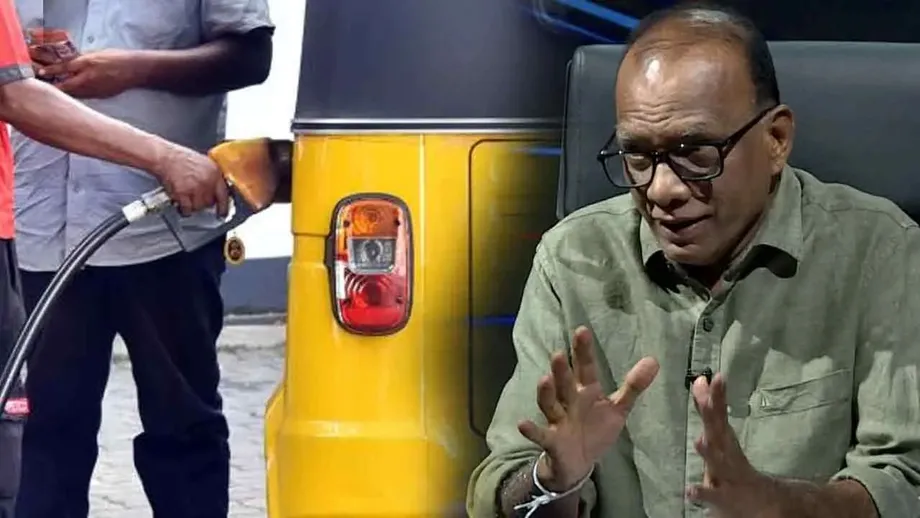
Higher pump prices add pressure to household budgets
Sri Lanka's Ceylon Petroleum Corporation increased petrol and diesel prices from November 2, 2026, adding to transport and business costs just days after October inflation reached 8.3%. The increase comes as Energy Minister Anura Karunathilaka says the country's fuel import expenditure is about 50% higher than last year.
Contents
- Higher pump prices add pressure to household budgets
- What motorists will pay
- Why the government says fuel costs more
- Inflation was already above target
- How fuel increases reach other prices
- Why an interest rate response is not automatic
- Subsidies cushion consumers but use public money
- Cost recovery meets the next budget test
- Key Points
The revised prices put 92 Octane Petrol at Rs. 424 per litre and Auto Diesel at Rs. 397. Kerosene remains unchanged at Rs. 285 per litre, leaving users of that fuel outside the latest increase.
The adjustment brings together two pressures on Sri Lanka's recovery: the cost of paying for imported energy and the strain on families already facing rising prices. Charging more at the pump helps the state petroleum supplier recover its costs. It also leaves motorists and businesses paying more for the fuel they use every day.
October's inflation rate was already above the Central Bank's target range for a fourth consecutive month. The November increase now creates another potential source of price pressure, although public transport authorities have indicated that bus fares will not rise immediately following the Rs. 5 increase in diesel.
What motorists will pay
The CPC raised prices across four petrol and diesel categories. The size of the increase varies by fuel:
- 92 Octane Petrol: up Rs. 10, from Rs. 414 to Rs. 424 per litre.
- 95 Octane Petrol: up Rs. 15, from Rs. 475 to Rs. 490 per litre.
- Auto Diesel: up Rs. 5, from Rs. 392 to Rs. 397 per litre.
- Super Diesel: up Rs. 15, from Rs. 528 to Rs. 543 per litre.
- Kerosene: unchanged at Rs. 285 per litre.
For a motorist buying 20 litres of 92 Octane Petrol, the change adds Rs. 200 to the bill, bringing the total to Rs. 8,480. A business buying 100 litres of Auto Diesel will pay Rs. 500 more, taking its bill to Rs. 39,700. These examples use the published price changes and assume the amount purchased stays the same.
Why the government says fuel costs more
Energy Minister Anura Karunathilaka attributed the increase to tensions in the Middle East and higher international crude oil prices. Speaking during a live political discussion on the evening of November 2, he said fuel import expenditure was approximately 50% above last year's level.
A rise of 50% means an import bill previously costing Rs. 100 would cost about Rs. 150 on the same spending comparison. The minister's figure concerns expenditure, which reflects the bill Sri Lanka pays for imports, rather than a stated increase in the price of each litre.
Sri Lanka's energy import bill had reached approximately US$4.5 billion by September. Higher international costs leave the government choosing how much to pass on to consumers and how much to meet through public funds.
Karunathilaka also rejected opposition proposals to sell fuel at its import price on arrival at the port. He said he knew of no country using that approach and argued that the government could not fully reduce prices or provide substantially more relief while import costs remained elevated.
The price paid when fuel reaches a port is only one part of supplying it to motorists. Moving, storing and distributing fuel also costs money, while taxes and subsidies affect the final pump price. The political dispute centres on how those costs should be shared between customers and the government.
Inflation was already above target
The Department of Census and Statistics recorded annual Colombo Consumer Price Index inflation of 8.3% in October, up from 8.0% in September. The Central Bank targets headline inflation of 5%, with a tolerance band from 3% to 7%. October's reading was 1.3 percentage points above that upper limit.
The October inflation increase also showed pressure extending beyond petrol stations. Transport, restaurants and hotels accounted for 87% of the monthly rise in the index, while annual food inflation reached 8.8%, its highest level since May 2023.
The CCPI measures changes in the cost of a basket of goods and services bought by households in Colombo. Annual inflation of 8.3% means that measured basket cost 8.3% more than a year earlier. Individual families experience different increases because their spending patterns differ.
October's index rose to 209.9 from 209.1 in September, an increase of approximately 0.4% over the month. The November 2 fuel revision comes after the period covered by those figures and will enter subsequent price developments.
The main dates show how the pressures have accumulated:
- Early 2026: the government provided Rs. 57 billion in universal fuel subsidies, including a Rs. 100 per litre reduction in diesel prices.
- October 1: an earlier fuel price adjustment took effect.
- October 30: figures showed annual inflation reaching 8.3% in October.
- November 2: the latest CPC petrol and diesel increases took effect, and the energy minister explained the government's position that evening.
- November 12: presentation of the 2027 budget is scheduled.
How fuel increases reach other prices
Transport companies, farmers and manufacturers use fuel to move goods, operate equipment and deliver products. A diesel increase can therefore affect the cost of getting food from farms to markets or bringing manufactured goods to shops.
Businesses facing higher costs have several choices. They can raise selling prices, accept smaller profits or reduce other spending. Companies with little room to absorb another expense may pass some of it to customers, creating further price increases beyond the original change at the pump.
Small and medium enterprises and informal service providers can face particular pressure because fuel purchases take cash away from other operating needs. A delivery operator charging the same fee after the increase, for example, keeps less of that payment once fuel has been bought.
Public transport authorities have indicated that bus fares will not increase immediately after the latest Auto Diesel revision. That leaves operators absorbing the additional fuel expense for now. The extent and timing of price changes by other businesses are not yet clear.
Households paying more for petrol also have less money available for food, services and other purchases unless their income rises. Higher fuel costs can therefore push some prices upward while weakening spending elsewhere in the economy.
Why an interest rate response is not automatic
Central Bank Governor Nandalal Weerasinghe told an investor forum the previous week that authorities would assess the source of inflation and whether it was affecting future price expectations and demand before deciding whether monetary policy needed to respond.
Interest rates influence the cost of borrowing. Higher rates tend to discourage loans and spending, which can slow price increases when demand is running ahead of what the economy can supply. They cannot directly lower the international price Sri Lanka pays for imported oil.
The Central Bank must therefore consider whether the fuel shock stays concentrated in energy and related costs or leads to more persistent increases across the economy. Expectations matter because businesses may set prices, and workers may seek wage increases, based partly on what they believe future living costs will be.
The bank kept its Overnight Policy Rate unchanged at its September meeting. Its stated outlook was for inflation to remain in the higher single digits through the first quarter of 2027 before moving toward the 5% target. The latest fuel adjustment adds another cost change for policymakers to assess.
Subsidies cushion consumers but use public money
The government has already used substantial public funds to soften fuel price increases. Alongside the Rs. 57 billion provided earlier in 2026, it subsequently committed another Rs. 41 billion to maintain a diesel subsidy of Rs. 70 per litre through the final quarter.
Those two amounts total Rs. 98 billion in support provided or committed. The earlier Rs. 57 billion programme included a Rs. 100 per litre diesel reduction. During his November 2 remarks, Karunathilaka referred to the Rs. 57 billion allocation as part of the government's effort to give consumers relief.
A universal fuel subsidy reduces the price for everyone buying the covered fuel, including households and businesses. Assistance directed at particular groups, such as farmers or transport operators, would require reliable information identifying eligible recipients. Gaps in that information have limited the government's ability to direct help more narrowly.
Subsidies move part of the fuel bill from the buyer to the public budget. Reducing fuel taxes also lowers government revenue. Both approaches can ease immediate pressure on consumers while leaving less public money available for other spending or requiring savings elsewhere.
Cost recovery meets the next budget test
Sri Lanka committed to pricing fuel in line with its costs after the 2022 sovereign default, under structural benchmarks in the International Monetary Fund's Extended Fund Facility programme. The aim includes preventing state enterprises such as the CPC from accumulating losses when they sell below cost.
The November adjustment supports that approach, while continued subsidies show the government's effort to limit the burden on consumers. Recovering more money through pump prices reduces pressure on the supplier and public finances, but raises immediate expenses for people and businesses.
The scheduled November 12 presentation of the 2027 budget is the next major fiscal event. It will come with inflation above target, a larger fuel import bill and substantial spending already devoted to relief. Decisions on revenue and expenditure will take place against those competing demands.
Key Points
- CPC raised petrol and diesel prices from November 2, 2026; kerosene remains Rs. 285 per litre.
- 92 Octane Petrol now costs Rs. 424 per litre and Auto Diesel Rs. 397.
- October inflation reached 8.3%, above the Central Bank's 7% upper limit for a fourth consecutive month.
- Energy Minister Anura Karunathilaka says fuel import expenditure is about 50% higher than last year.
- Government fuel relief includes Rs. 57 billion provided earlier and another Rs. 41 billion committed for the final quarter.
- Bus fares will not rise immediately, according to public transport authorities.
- The 2027 budget is scheduled for presentation on November 12.