November Talks Put Aid and Investment on the Agenda
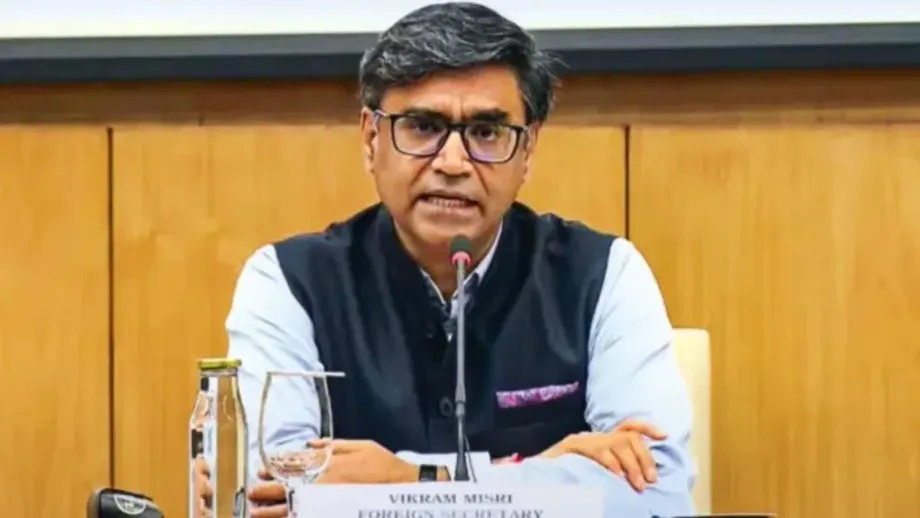
Indian Foreign Secretary Vikram Misri will visit Nepal on November 4 and 5 to prepare for Prime Minister Balendra Shah's proposed trip to India, with Kathmandu seeking flood reconstruction money, fresh hydropower investment and progress on delayed infrastructure projects. Dates between November 22 and 24 are under consideration for Shah's visit, with November 22 emerging as the most likely option.
Contents
- November Talks Put Aid and Investment on the Agenda
- Who Misri Will Meet in Kathmandu
- A New Ambassador Arrives Before the Talks
- How Relations Moved From Friction to Renewed Contact
- The Boundary Dispute Remains Sensitive
- Flood Recovery Gives the Visit Urgency
- Nepal's Energy Ambition Requires Investment and Connections
- Trade Talks Reach Beyond Goods at the Border
- What the Proposed Visit Could Deliver
- Key Points
Shah's press adviser Dipa Dahal said he was likely to travel on November 22 or 23, though the duration of the visit remained unconfirmed. Nepal's Foreign Ministry had not proposed a specific date to India.
The preparations bring practical economic needs into a relationship strained by disagreements over the boundary and difficulties arranging meetings with Nepal's new leadership. Shah, commonly known as Balen, would travel at the invitation of Indian Prime Minister Narendra Modi for his first official bilateral visit abroad since taking office.
Nepal wants concrete financial commitments from the talks. India and Nepal are also examining projects that could be inaugurated or launched during the visit, alongside possible Indian assistance for reconstruction after the devastating August 26 flash flood.
India's Ministry of External Affairs announced Misri's visit on November 2, saying discussions would cover bilateral, regional and global matters of mutual interest. The ministry described the relationship in a statement:
India and Nepal share strong and friendly ties which have seen substantial progress across diverse areas of cooperation.
The immediate task is to turn that diplomatic language into an agreed agenda. Roads, railways, air connections, electricity transmission and changes to trade arrangements are all priorities, while flood recovery gives the discussions an urgent humanitarian purpose. For Kathmandu, the proposed visit offers a chance to secure resources and restart projects; for New Delhi, it offers a way to rebuild regular engagement with Shah's government.
Who Misri Will Meet in Kathmandu
Nepal's Ministry of Foreign Affairs says Misri will hold bilateral talks with Foreign Secretary Amrit Kumar Rai. He is also scheduled to make courtesy calls on senior Nepali officials, giving the two governments an opportunity to discuss Nepal's expectations before a meeting between the prime ministers.
The announced November 4 and 5 programme points to a Thursday departure, while another reported itinerary puts Misri's return to New Delhi on November 6. Neither government has formally announced Shah's travel dates, and whether Misri will meet Shah during the preparatory visit is also unclear.
Finance Minister Swarnim Wagle began much of the immediate groundwork during a September visit to India. He met Indian Finance Minister Nirmala Sitharaman and External Affairs Minister S Jaishankar, discussing the possibility of Shah travelling to New Delhi. Misri's talks are intended to carry those conversations forward and narrow the list of possible agreements.
A New Ambassador Arrives Before the Talks
India's incoming ambassador to Nepal, Sudhakar Dalela, is expected to arrive in Kathmandu on November 3, one day before Misri. His arrival places a new diplomatic representative in the capital as both governments prepare for a potentially consequential meeting.
Dalela, an Indian Foreign Service officer from the 1993 batch, will succeed Naveen Srivastava. India announced his appointment on October 16. His experience includes Nepal and Bhutan affairs, work in the Indian prime minister's office and international trade negotiations, as well as diplomatic assignments in several countries.
The embassy transition matters because the agenda extends beyond a single visit. Investment proposals, construction schedules, electricity connections and trade negotiations require continuing contact between ministries and businesses. Dalela will take up his assignment as Kathmandu seeks faster delivery on projects already discussed with India.
How Relations Moved From Friction to Renewed Contact
Shah's government entered office after an election that overturned established political expectations. His election victory over Oli included 68,348 votes against former prime minister K.P. Sharma Oli's 18,734 in Jhapa-5, a margin of 49,614. That result brought a new political leadership into a relationship with India already carrying sensitive territorial disagreements.
Early contacts proved difficult. Shah declined to meet Ambassador Srivastava and was reluctant to meet Misri during an attempted visit in May. India had sought confirmation for May 11 and 12 following an understanding between Nepal's Foreign Minister Shisir Khanal and Jaishankar during talks in Mauritius.
India initially cited Misri's other commitments when the visit was postponed. Shah's refusal to meet him, protocol disagreements and tensions over Lipulekh were also reported as reasons for the delay. Subsequent contacts gradually reopened the diplomatic channel:
- May: Misri's proposed visit did not go ahead amid difficulties arranging meetings and disagreements over the boundary.
- June: Rabi Lamichhane, leader of the ruling Rashtriya Swatantra Party, visited New Delhi and met Modi and Indian Home Minister Amit Shah.
- August 26: A devastating flash flood created urgent rescue, relief and reconstruction needs.
- September: Shah thanked India for its assistance, while Wagle held talks with senior Indian ministers.
- November 3 to 5: Dalela's expected arrival and Misri's announced visit are intended to prepare for Shah's proposed trip later in the month.
Lamichhane's June meetings show that the effort to repair relations began before the flood. The disaster then gave both governments another immediate reason to cooperate.
The Boundary Dispute Remains Sensitive
Shah's remarks in May seeking involvement by China and the United Kingdom in addressing the boundary dispute caused unease in New Delhi. India rejected outside involvement and said the issue should be handled through established bilateral mechanisms, meaning direct discussions between the two governments.
Lipulekh, near the meeting point of Nepal, India and China, has been a particular source of tension. Shah's administration objected to Indian and Chinese decisions to resume journeys by Hindu pilgrims to Mount Kailash and Mansarovar in Tibet through the disputed area.
The disagreement affects how political trust is rebuilt. Nepal has pressed its territorial objections, while India has insisted on direct dialogue. Preparations for Shah's visit place that unresolved issue alongside a substantial economic agenda, requiring officials to maintain contact even where their positions remain apart.
Flood Recovery Gives the Visit Urgency
The August 26 flash flood left at least 270 Indians still reported missing. The proposed prime ministerial visit would give the governments an opportunity to exchange information on rescue and relief efforts as well as discuss the longer task of rebuilding damaged infrastructure.
India sent humanitarian aid, disaster relief supplies, emergency power support and Bailey bridges after the disaster. Bailey bridges are assembled from prefabricated sections and can restore a crossing when a permanent bridge has been damaged or destroyed.
Shah thanked India in early September for its timely assistance. Nepal now intends to seek financial support for reconstruction following the Bhotekoshi floods, taking the discussions beyond immediate relief and towards repairing the infrastructure communities need for travel, supplies and economic activity.
A senior official at Nepal's Ministry of Foreign Affairs said Kathmandu was seeking a large-scale Indian assistance package with fewer conditions attached, without specifying an amount. Wagle has requested concessional loans and grants to rebuild damaged bridges, roads and hydropower infrastructure.
Possible Indian announcements during Shah's visit include economic assistance and reconstruction support. Kathmandu's interest is in firm commitments that can help move recovery work forward, alongside information sharing about people affected by the disaster.
Nepal's Energy Ambition Requires Investment and Connections
Nepal is targeting 35,000 megawatts of electricity capacity over the next nine years through a combination of run-of-river and storage projects. The target is equivalent to 35 gigawatts, giving a sense of the scale of the investment Kathmandu wants to attract.
Run-of-river hydropower uses the flow of a river to generate electricity, generally with less capacity to hold water for later use. Storage projects retain water in reservoirs, allowing electricity production to be timed more closely to demand. Both require major construction and connections to the electricity network.
Transmission infrastructure is therefore central to the talks. Power stations produce electricity, but transmission lines carry it to homes, factories and buyers across the border. Nepal's request for new Indian hydropower investment is linked to its push for the connections needed to move that electricity.
Kathmandu also wants faster implementation of infrastructure projects that have remained pending despite earlier agreements. Officials are considering which projects could be opened and which could receive a formal launch during Shah's visit. Those decisions would give the meeting visible outcomes alongside longer investment negotiations.
The two governments are exchanging lists of potential projects for inauguration. Officials said these include the India-funded Nepal Police Academy in Panauti, the integrated check post in Bhairahawa and a motorable bridge over the Mahakali River. The two prime ministers are also expected to mark the start of construction on the integrated check post in Dodhara Chandani, the Lower Arun hydropower project and a petroleum pipeline from Siliguri in India to Jhapa in Nepal.
Trade Talks Reach Beyond Goods at the Border
Nepal's economic priorities extend to digitalisation, agriculture producing goods of higher value, manufacturing that uses cleaner energy, tourism and production sharing. Production sharing means businesses in different countries carry out different stages of making the same product, moving parts between factories before final assembly.
The two governments are expected to discuss updating their trade treaty to address services, investment protection, the return of profits to investors and the movement of parts and components. These subjects affect whether companies can organise production across the border and manage the money earned from their investments.
Profit repatriation means transferring earnings from the country where an investment operates back to the investor's home country. Investment protection concerns the rules governing how investments are treated. For companies considering a factory or energy project, those arrangements can be as relevant as the cost of moving goods.
Road, rail and air connectivity are closely tied to that agenda. Nepal is landlocked and depends heavily on India for transit and access to international markets. A predominant share of its imports originates in India or passes through Indian territory, making dependable transport links a daily economic concern rather than simply a diplomatic objective.
What the Proposed Visit Could Deliver
Kathmandu's priorities provide a concrete way to assess the proposed meeting: financial commitments for flood recovery, new hydropower investment and faster movement on delayed projects. Project inaugurations and construction launches could accompany those commitments, while trade discussions could identify changes requiring further negotiation.
New Delhi is seeking steadier political engagement after the difficulties of the first months of Shah's government. Misri's talks with Rai, followed by continuing work through the embassy, are the immediate steps towards agreeing what the prime ministers can announce.
The November preparations bring territorial disagreement, disaster recovery and economic cooperation into the same diplomatic process. For people and businesses in Nepal, the most tangible outcomes would be repaired connections, more reliable infrastructure and investment that moves from discussion into construction.
Key Points
- Misri's announced Nepal visit is November 4 and 5, with talks scheduled with Foreign Secretary Amrit Kumar Rai.
- Shah's proposed India visit is being considered for November 22 to 24, with November 22 the most likely date.
- Nepal seeks flood reconstruction assistance, hydropower investment and faster delivery of delayed infrastructure projects.
- Kathmandu's energy target is 35,000 megawatts over nine years, supported by generation projects and transmission connections.
- Trade treaty discussions are expected to cover services, investment protection, profit transfers and production components.
- Disagreements over Lipulekh remain part of the political backdrop as both governments rebuild regular contact.