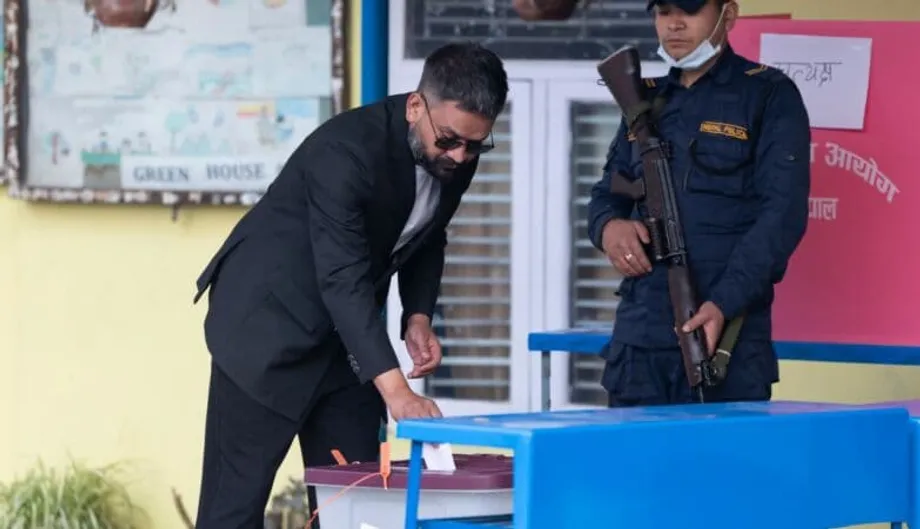
A Nearly 50,000 Vote Defeat for Oli
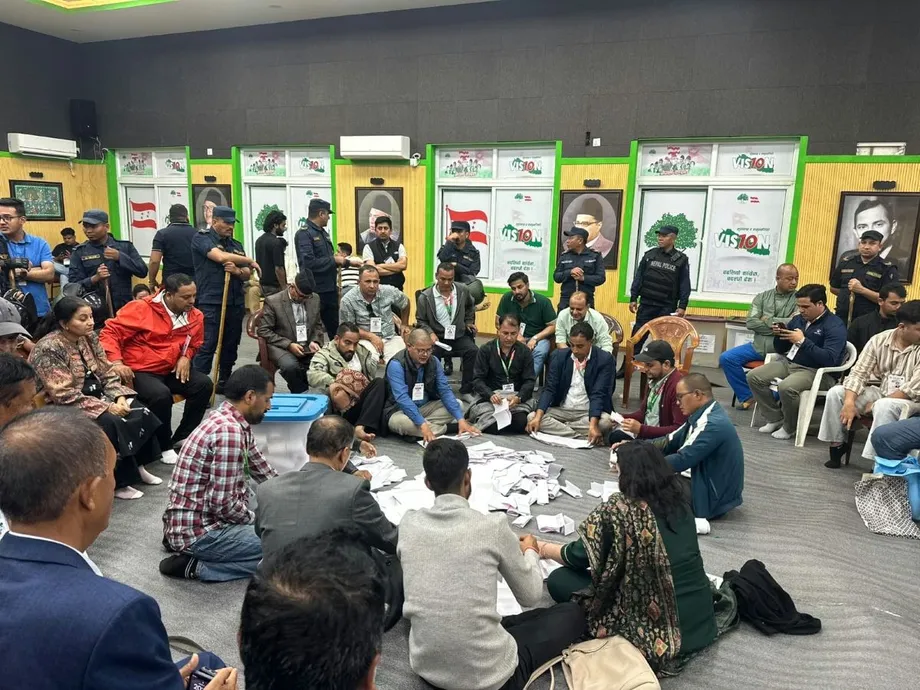
Balendra Shah, the 35 year old structural engineer and former rapper known as Balen, has defeated four time Prime Minister K.P. Sharma Oli in Jhapa-5, the veteran leader's own constituency. Election officials confirmed 68,348 votes for Shah against 18,734 for Oli, a margin of 49,614 and a result approaching four votes for Shah for every one for his opponent.
Contents
- A Nearly 50,000 Vote Defeat for Oli
- From September's Protests to March's Ballot
- The Campaign Behind the Bell
- How Shah's Music Became Political Language
- A Sweep of Kathmandu and a Breakthrough in Madhesh
- Senior Leaders Lose Their Seats
- What a Large Parliamentary Mandate Would Mean
- Jobs, Income and Accountability for the Dead
- India, China and a Project Left Out
- Key Points
By March 8, 2026, partial results showed Shah's Rastriya Swatantra Party (RSP) taking more than two thirds of Nepal's directly elected parliamentary seats. The party had won 106 direct seats and was leading in proportional representation, with projections suggesting it could reach 190 seats in the parliament of 275 members. Counting was still shaping the final total, and Shah stood poised to become prime minister.
The result puts Nepal on course for its youngest prime minister and its first from Madhesh, the southern plains long marginalized by political elites from the hills and Kathmandu Valley. Shah served as Kathmandu's mayor until January and entered electoral politics only four years ago. His defeat of Oli, a 74 year old communist leader, captures the scale of the challenge to the established parties.
Thursday's election was the first democratic test of the Generation Z movement that helped bring down Oli's government in September 2025. Six months after protests against a social media ban expanded into an uprising over corruption, nepotism and economic stagnation, that movement's demand for change has moved from the streets into parliament.
Shah's mandate could reshape governance in the Himalayan country more profoundly than any election since the monarchy was abolished in 2008. It also leaves a party founded in 2022 facing immediate demands for jobs, accountability for protest deaths and an end to the revolving governments that have frustrated voters.
From September's Protests to March's Ballot
Oli's government triggered the September 2025 uprising by banning social media platforms TikTok and YouTube. Demonstrations quickly grew beyond access to the platforms, becoming a broader challenge to corruption, inherited political privilege and an economy that many young Nepalis felt offered them too few opportunities.
Security forces killed 77 protesters, including 19 in a single day, according to official counts. The violence forced Oli to resign, and an interim administration governed Nepal for the following six months. Accountability for those deaths now forms part of the incoming government's responsibilities.
About 800,000 people registered to vote for the first time in this election. Many were drawn to Shah's promise of accountability after the September violence. With youth unemployment hovering near 20 percent, the campaign also targeted the privilege enjoyed by children of political elites who had inherited legislative seats and ministerial positions.
The sequence explains how quickly Nepal's political contest changed:
- In 2008, Nepal abolished its monarchy, beginning a period marked by repeated changes of government.
- In 2022, television host Rabi Lamichhane founded the RSP, while Shah began his electoral political career.
- In September 2025, protests against a social media ban widened into an uprising, and Oli resigned after deadly violence.
- In January 2026, Shah's service as Kathmandu mayor ended.
- Thursday's election brought the protest movement's demands to the ballot, with results available by March 8 showing an RSP landslide.
The RSP's bell symbol became a familiar sight in urban centers. Young volunteers used encrypted messaging apps to coordinate turnout, building an electoral network outside the traditional party structures that have long dominated rural Nepal. For a movement first known for demonstrations, the election provided a way to turn public anger into control of elected institutions.
The Campaign Behind the Bell
The RSP coordinated its campaign from the upper floors of a building with six stories in Kathmandu's Balaju neighborhood. Party officials described the effort as the most sophisticated electoral operation in Nepali history. At its center was an 11 member Research, Strategy and Documentation Department overseeing 300 workers divided into three national teams.
Those teams handled work ranging from rally logistics to digital content creation. A social media team of 660 people helped distribute Shah's messages, while his major speeches came every eight days. The spacing gave campaign workers time to circulate each address before the next one arrived.
An RSP campaign strategist, who requested anonymity, explained how the schedule was intended to keep Shah's message focused while allowing opponents to put their arguments into the public debate:
If you keep giving speeches, people get confused,
We let opposition parties raise some issues, and then respond once. This way, our message stays clear.
Shah's campaign also organized daily road shows across five to seven districts. He made brief appearances in each of Nepal's seven provinces, combining a centrally managed digital operation with direct contact with voters. The demanding itinerary moved from the southern plains to the northern hills and visibly energized the campaign despite its exhausting pace.
Traditional parties could draw on patronage networks developed over decades and on their influence within local administrative machinery. The RSP relied instead on its digital reach, volunteers and coordinated events to compete with those established advantages.
The Nepali diaspora supplied a substantial part of the campaign's financing, particularly professionals in the United States who had watched Nepal stagnate under rotating coalitions. Individual candidates managed local events, while the central party paid for large rallies and digital operations. The arrangement allowed local campaigning to proceed alongside a consistent national message.
The party also bypassed traditional media outlets that it viewed as controlled by the old political guard. Its campaign machinery linked Shah's personal popularity to the RSP's organizational network, giving a party just four years old the reach needed to challenge much older rivals.
How Shah's Music Became Political Language
Shah had built his reputation as an artist through lyrics attacking corruption and inequality. Those subjects carried directly into a campaign centered on reforming government, rather than the ideological arguments between communist and democratic socialist parties that had alternated in power since 2008.
His song "Balidan," meaning sacrifice, accumulated millions of views on YouTube. Another song, "Nepal Haseko," or Nepal Smiling, became an anthem during the September demonstrations. His music supplied a familiar language for young people already demanding accountability and a fairer political system.
The combination of engineering, music and municipal government gave Shah a public identity outside the careers of Nepal's established national leaders. His record as Kathmandu mayor and his reputation for challenging corruption helped connect an existing audience with the RSP's promise of practical changes in governance.
Generation Z's role extended beyond support for a popular performer. Registration, volunteer coordination and turnout converted the energy of the demonstrations into votes. Shah's success shows how a generation accustomed to digital communication could organize beyond traditional party structures and defeat entrenched political networks at the ballot box.
A Sweep of Kathmandu and a Breakthrough in Madhesh
The RSP won all 15 constituencies in the Kathmandu Valley, including the 10 in Kathmandu district. That clean sweep dismantled an important base for the Nepali Congress and the Communist Party of Nepal (Unified Marxist Leninist), known as CPN-UML.
The party's advance also reached beyond the capital and its young urban electorate. In Madhesh province, the RSP had secured eight seats and was leading in another 22 constituencies. Those results pointed to support among rural plains communities that traditional parties had spent years cultivating.
Shah campaigned as the "son of Madhesh" and used the slogan "Ab ki bar Balendra sarkar," meaning "This time, Balendra's government." That appeal gave his campaign a regional identity alongside its national call for cleaner government.
The Terai plains are home to nearly half of Nepal's population, yet communities there have historically been excluded from the highest offices by elites from the hill regions and Kathmandu Valley. Shah's prospective premiership would therefore carry significance beyond his age or former occupation. It would bring a leader from the southern plains to the country's highest executive office.
Jhapa-5 lies in the eastern plains and had been represented by Oli for years. Shah's victory there made the rejection of the established leadership especially visible: he defeated a former prime minister on familiar political territory while extending the RSP's appeal outside the capital.
The geographic spread of the victories helps explain why the result is larger than an urban protest vote. Kathmandu's sweep and the party's progress in Madhesh brought together voters from places with different political histories around the same demand for change.
Senior Leaders Lose Their Seats
Oli's defeat was part of a much broader collapse among established leaders. Gagan Thapa, the 49 year old president of the Nepali Congress and its projected candidate for prime minister, lost Dhanusha-4 to the RSP's Amaresh Singh by nearly 11,000 votes.
Ten office bearers of CPN-UML also lost, including general secretary Shankar Pokharel and vice presidents Bishnu Paudel and Prithvi Subba Gurung. At the stage of counting described, the Nepali Congress, Nepal's oldest democratic party, had managed only 15 direct seats, while CPN-UML had secured seven.
Former Maoist guerrilla commander Pushpa Kamal Dahal, known as Prachanda, survived the wave against established leaders with a narrow victory in Rukum Purba. The royalist Rastriya Prajatantra Party secured just one seat, won by Gyanendra Shahi in Jumla.
Nepal has had 14 governments in 18 years, with none completing a full term of five years. For voters, repeated changes in leadership had come to represent instability without enough progress on corruption, employment or public services.
Bhoj Raj Pokharel, a former election commissioner, described the result as an expression of frustration accumulated over decades. He characterized the repeated rotation of the same leaders as a contest for office rather than a response to public needs:
eruption of long suppressed public frustration
game of chairs
The losses reached across the leading traditional parties and even limited the royalists' gains. The election's central message was a demand to replace the familiar faces and governing arrangements that had dominated the years since the monarchy's fall.
What a Large Parliamentary Mandate Would Mean
The RSP's projected 190 seats would put it above the threshold for two thirds of the parliament of 275 members. Projections pointed toward a supermajority and a mandate on a scale last achieved in 1959.
Nepal's results include both directly elected seats and seats allocated through proportional representation. Direct contests choose a representative for an individual constituency. Proportional representation distributes another part of parliament according to party support. The RSP's success in the constituency contests and its lead in the proportional vote together explain the projection of a much larger final parliamentary total.
A commanding majority would give the party substantial power to pursue its program. It would also concentrate responsibility: a party elected to end years of rotating coalitions would face public expectations that its strength in parliament should produce stable government and visible results.
The RSP must now move from opposition into the practical work of government. It will need to staff ministries, manage competing interests within its own ranks and avoid internal fragmentation or overreach. Coalition style bargaining may take place inside the party even with an absolute majority.
Bipin Adhikari, a constitutional expert, warned that the scale of the victory brings a challenge of sustaining public support while delivering anticorruption measures and institutional reform:
The question is whether the new leaders will be able to understand this wave and sustain it,
Young voters who helped create the mandate want immediate results. Maintaining their confidence will require the RSP to turn campaign promises into decisions that affect employment, public administration and accountability.
Jobs, Income and Accountability for the Dead
The RSP's manifesto promised 1.2 million jobs, an increase in per capita income from $1,447 to $3,000 within five years, and an expansion of the economy to $100 billion in gross domestic product. GDP measures the value of goods and services produced in an economy. Per capita income expresses income as an average per person, rather than the amount every individual earns.
The income target would slightly more than double the starting figure. Together, the promises set a demanding economic program for a government expected to address youth unemployment and the migration of workers to Gulf states and Malaysia.
Corruption in procurement, the process through which public bodies purchase goods and services, is another immediate concern. The RSP has pledged to bring technology into public administration, modernize tax collection and improve service delivery as part of its effort to reduce corruption across the bureaucracy.
The incoming government must also decide how to handle the Gauri Bahadur Karki Commission report investigating the lethal force used against demonstrators in September. If its findings implicate senior figures from the defeated parties, Shah will face pressure to prosecute predecessors while maintaining the stability needed to govern.
Accountability for the 77 deaths connects the election directly to the events that brought down Oli. The same voters who supported the RSP for its promises of cleaner government will expect a response to the violence that helped make this election possible.
India, China and a Project Left Out
Shah will have to balance relations with India, which shares an open border and deep cultural ties with Nepal, against China's economic influence and investments associated with the Belt and Road Initiative.
Indian Prime Minister Narendra Modi quickly congratulated Nepal on the peaceful election. The message signaled New Delhi's readiness to work with a new government despite its lack of established ties to the RSP leadership.
The party's manifesto omitted the China backed Damak Industrial Park, even though the project is in Shah's own constituency. Its location near India's Siliguri Corridor makes it politically sensitive, and the omission suggested caution toward Chinese infrastructure development in that area.
Regional diplomacy will sit alongside the more immediate work of forming a government and responding to voters. Shah enters that task with a broad mandate, a new party and expectations shaped by years of unstable leadership. Whether the RSP can deliver stable governance will determine whether this election becomes a lasting consolidation of Nepal's democracy or another chapter of political turbulence.
Key Points
- By March 8, partial results showed the RSP with 106 direct seats and a lead in proportional representation, with projections of 190 seats in parliament.
- Shah received 68,348 votes in Jhapa-5 against Oli's 18,734, winning by 49,614 votes.
- The 35 year old former rapper and Kathmandu mayor was poised to become Nepal's youngest prime minister and its first from Madhesh.
- The election followed September 2025 protests in which security forces killed 77 protesters, according to official counts, and Oli resigned.
- The RSP swept the Kathmandu Valley's 15 constituencies and made major gains in Madhesh, while senior traditional party leaders lost.
- The campaign combined a social media team of 660 people, diaspora financing, speeches every eight days and daily road shows across five to seven districts.
- The party promised 1.2 million jobs, per capita income of $3,000 within five years and an economy worth $100 billion.
- Immediate responsibilities include responding to the Karki Commission report, tackling corruption and unemployment, and managing relations with India and China.