A Longer Spring Celebration Around the Palace
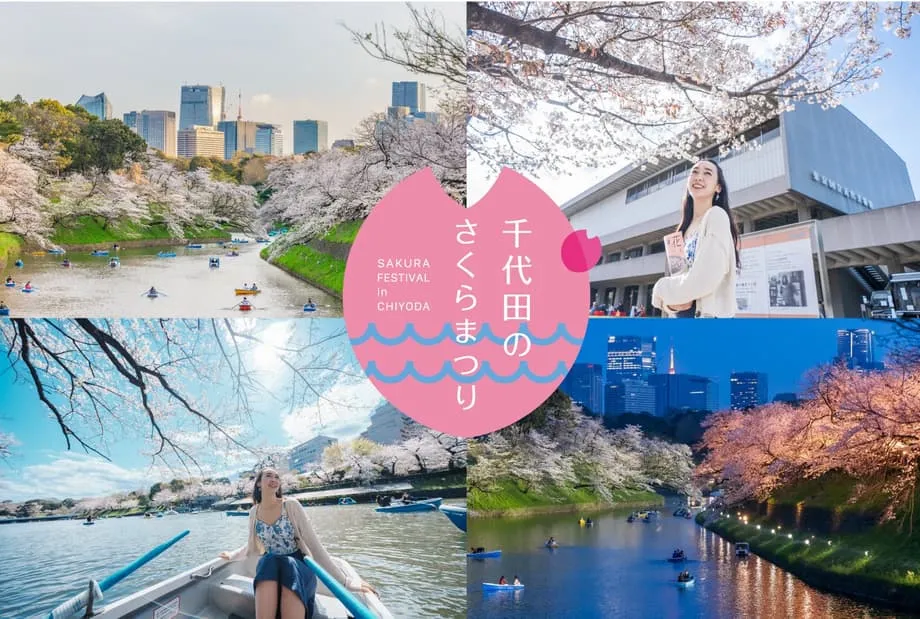
Tokyo's Chiyoda Ward will hold its Sakura Festival from March 5 through April 22, 2026, bringing nearly seven weeks of blossom viewing, cultural performances, character collaborations and local shopping events to the district around the Imperial Palace. The centerpiece will remain Chidorigafuchi, where approximately 250 Somei Yoshino cherry trees line a 700-meter promenade beside the palace moat.
Contents
- A Longer Spring Celebration Around the Palace
- Chidorigafuchi's Blossoms Will Light Up the Moat
- Reserved Boats Offer a New Way to Plan a Visit
- Traditional Music Will Open the Festival on March 5
- Food and Shopping Will Spread Beyond the Promenade
- Anime and Rilakkuma Will Bring Visitors Across the Ward
- The Dates to Put on the Calendar
- Getting There and Checking the Crowds
- How Chiyoda Fits Into Tokyo's Spring Celebrations
- Key Points
The Chiyoda City Tourism Association has planned a longer calendar than the short periods traditionally built around peak flowering. Activities across several venues will accommodate early and late blooming varieties and spread visitors through the ward, rather than concentrating the entire celebration at the moat during its busiest days.
The festival period and the main blossom viewing period will follow different schedules. Chidorigafuchi's nighttime illuminations are planned for late March through early April, with exact dates adjusted to flowering conditions. Other events, including stamp rallies and cultural programming, will give visitors reasons to explore Chiyoda before and after that central viewing window.
Boat access will also change. Online smart tickets will go on sale on March 10, allowing visitors to reserve a date and time for 10,000 yen per boat. Tickets sold on the day will remain available at lower prices, while part of the boat rental proceeds will support the Chiyoda Ward Sakura Fund, which cares for the trees.
Chiyoda's expanded calendar combines the district's historic setting with practical changes to booking, dining and visitor information. Organizers are also planning lighting supplied through renewable energy and carbon offsetting measures, alongside a website offering current blossom conditions and live crowd tracking.
Chidorigafuchi's Blossoms Will Light Up the Moat
Chidorigafuchi's promenade follows the northwestern moat of the Imperial Palace grounds. Its approximately 250 Somei Yoshino trees form a canopy of pale pink blossoms along the 700-meter route, creating the tunnel effect that makes the location one of Japan's most photographed sakura destinations. Sakura means cherry blossoms, while hanami is the practice of gathering to enjoy them.
Nighttime viewing, known as yozakura, will bring another perspective during the main flowering period. LED lights will cast a warm glow through the branches until 9 p.m., with reflections on the water creating a mirror effect beneath the trees. The moat and palace landscape will provide the historic setting, while the modern buildings of the Marunouchi business district form a contrasting backdrop.
The lighting is planned for 12 days, timed to the blossoms. Chiyoda Ward is testing new renewable energy systems for the event, with renewable power and carbon offsetting measures intended to give the illumination period a zero carbon footprint. Carbon offsetting means balancing emissions through measures that reduce or absorb emissions elsewhere.
The environmental approach is part of a change in how the festival is managed. Visitors will be able to enjoy illuminated branches and their reflections while the organizers address the energy use and carbon impact associated with large outdoor lighting installations.
Reserved Boats Offer a New Way to Plan a Visit
The Chidorigafuchi Boat Pier will extend its usual daytime operation during the illumination period, staying open until 7:30 p.m. or 8 p.m. Visitors will be able to row beneath branches hanging over the moat, seeing the blossoms from below and closer to the water than the promenade allows.
The advance booking system responds to the long queues that formed in previous years, when some visitors arrived before dawn to try to secure a boat. From March 10, smart tickets purchased online will allow customers to choose a specific date and time, making the boat trip something they can arrange before arriving.
An advance reservation will cost 10,000 yen for a boat carrying up to three passengers. Bookings can be changed until 8 p.m. on the preceding day, subject to availability. The reservation price buys a scheduled place in a popular activity whose supply is limited by the boats available.
Tickets sold on the day will remain an option for visitors making spontaneous plans or spending less. During the peak illumination period, a rental of one hour will cost 1,600 yen per boat. Outside the main bloom window, a session of 30 minutes will cost 800 yen. Ticket distribution will begin at 9 a.m., and high demand typically exhausts the supply within hours.
The advance and same day arrangements give visitors different choices: paying more to secure a time beforehand, or arriving early for a lower priced rental. A portion of all boat rental proceeds will go directly to the Chiyoda Ward Sakura Fund, connecting time spent on the moat with maintenance and protection of its aging cherry trees.
Traditional Music Will Open the Festival on March 5
The festival will open on March 5 at Wadakura Fountain National Park, on the southeastern grounds of the Imperial Palace. Programming will run from 11 a.m. to 3 p.m., providing an opening event away from the Chidorigafuchi promenade.
Rei, a musical ensemble whose members serve as cultural tourism ambassadors for the Chiyoda City Tourism Association, will perform with traditional Japanese instruments, including the koto and shamisen. Classical dance routines will accompany the music, bringing historical forms of entertainment into the contemporary festival program.
The park will also host a regional specialty market featuring food and crafts from prefectures across Japan. The performances and market will give the opening day a cultural focus even before the principal nighttime blossom viewing period begins.
Wadakura's role also illustrates the broader festival layout. Rather than asking every visitor to spend the entire visit along the same stretch of moat, the program will draw people to different parts of the palace district at different points in the spring calendar.
Food and Shopping Will Spread Beyond the Promenade
Food arrangements will change from previous years, when temporary stalls lined the Chidorigafuchi moat. Those stalls contributed to congestion and waste management difficulties. For 2026, culinary activities will be concentrated in designated areas near Tokyo Station and Tokyo Torch Park.
The separation will allow the promenade to serve primarily as a blossom viewing corridor. Visitors looking for meals will instead be directed toward established dining facilities able to handle large numbers of customers, keeping food activity away from the narrow focus of the moat walk.
More than 50 local eateries will participate in a bar hopping ticket program, while more than 100 stores will offer festival coupons. Together, the dining and shopping arrangements will extend the festival's economic reach beyond the main viewing site and into the surrounding neighborhood.
The ward's approach links crowd management with local spending. A visitor drawn by the blossoms can continue to a restaurant, shop or another festival stop, distributing activity across Chiyoda instead of concentrating every part of the visit beside the water.
Anime and Rilakkuma Will Bring Visitors Across the Ward
My Happy Marriage, the popular light novel and anime series, will feature in the 2026 festival through a stamp rally running from March 11 to April 22. Participants will collect stamps at five locations across Chiyoda and receive small commemorative prizes.
The series is set in the Taisho period and combines historical aesthetics with a romantic narrative. Its collaboration gives the festival another connection to Japanese cultural imagery while providing a reason to move between several locations during the extended spring program.
Rilakkuma, the relaxed bear character, will mark his fifth anniversary as an official tourism ambassador for Chiyoda Ward. The anniversary will bring exclusive merchandise, including a limited edition keychain featuring Kiiroitori, his yellow bird companion.
The keychain will go on sale on March 17 at the Chiyoda Ward Tourist Information Center for 2,200 yen. Its design shows Kiiroitori wearing a traditional hanten, a short winter coat, with sakura accessories.
A Rilakkuma stamp rally will run alongside the main festival and encourage visits to less familiar corners of the ward. Together with the My Happy Marriage collaboration, it forms part of Chiyoda's effort to attract attention during Tokyo's busy spring event calendar and turn blossom viewing into a wider neighborhood visit.
The Dates to Put on the Calendar
The festival's activities will begin in stages. The opening ceremony, boat reservations, character rally and merchandise launch each have their own start date, while the illumination schedule will depend on when the trees flower.
- March 5: The festival begins, with music, dance and a regional specialty market at Wadakura Fountain National Park from 11 a.m. to 3 p.m.
- March 10: Online smart tickets for reserved boat sessions go on sale.
- March 11: The My Happy Marriage stamp rally begins at five locations across the ward.
- March 17: The Kiiroitori anniversary keychain goes on sale at the Chiyoda Ward Tourist Information Center for 2,200 yen.
- Late March through early April: Chidorigafuchi's illuminations are planned for a period of 12 days, with lighting until 9 p.m.
- April 22: The festival and the My Happy Marriage stamp rally end.
Previous illumination schedules have included March 28 through April 8. As of March 4, exact lighting dates for 2026 have not been confirmed; the schedule will adjust to flowering conditions. Visitors planning around the illuminated trees should check the official festival information closer to their travel dates.
Getting There and Checking the Crowds
Chidorigafuchi is approximately five minutes on foot from Kudanshita Station or Hanzomon Station. Kudanshita is served by the Shinjuku, Hanzomon and Tozai subway lines, while Hanzomon Station is on the Hanzomon line.
Visitors coming through Kudanshita should use Exit 2 or 3 and walk north along Yasukuni Dori toward Kitanomaru Park, following the gradual slope toward the palace moat. The district's proximity to Tokyo Station also makes it accessible for visitors coming for the day and international travelers staying in the capital's hotel district.
The Chiyoda City Tourism Association has a dedicated website offering real time blossom reports and live crowd tracking. Visitors can use those updates to judge both the progress of flowering and how busy the viewing areas are before deciding when to arrive.
Crowd management is a central concern for 2026, following reports of heavy tourism putting pressure on other famous sakura locations. The longer calendar, multiple venues and online information are intended to help distribute visitors while still allowing them to see the blossoms at favorable stages.
Weather will remain part of the planning. The flexible illumination dates acknowledge that the trees follow seasonal conditions rather than a fixed event timetable. Boat reservations, opening hours and festival activities can be planned in advance, while a visit centered on peak flowers will depend on updated bloom information.
How Chiyoda Fits Into Tokyo's Spring Celebrations
Tokyo's blossom destinations offer different settings. Along the Meguro River, 800 trees stretch across 3.8 kilometers, creating a more intimate neighborhood atmosphere. Sumida Park combines a history dating to the Edo period with views of Tokyo Skytree.
Roppongi's Midtown Blossom and the Sakura Skytree light up provide other nighttime experiences. Chidorigafuchi's distinctive combination is the Imperial Palace setting, the opportunity to row beneath the branches and, for 2026, an extended calendar that reaches beyond the main flowering period.
The Chiyoda program will give visitors activities to join, including cultural performances, stamp rallies and local dining events, alongside the traditional experience of walking under the trees. Its daily and weekly programming is designed to make the ward a place to explore throughout the celebration, rather than a single stop for a view of the moat.
The lighting plan also addresses an issue facing other Tokyo municipalities: the energy cost and carbon impact of seasonal illuminations. Chiyoda's combination of renewable energy and offsetting offers an approach to festival lighting while its boat proceeds connect tourism with care for the landscape.
For visitors, the central planning task is straightforward. Choose the activities that have fixed dates, then check flowering and crowd updates before a blossom viewing trip. The festival will last nearly seven weeks, with the illuminated moat concentrated into a much shorter period within that calendar.
Key Points
- The Sakura Festival in Chiyoda 2026 runs from March 5 through April 22 around Tokyo's Imperial Palace district.
- Chidorigafuchi's 700-meter promenade has approximately 250 Somei Yoshino cherry trees.
- Illuminations are planned for 12 days in late March through early April, until 9 p.m., using renewable energy and carbon offsetting measures.
- Reserved boat tickets go on sale on March 10 for 10,000 yen per boat, carrying up to three passengers. Tickets sold on the day will remain available.
- Part of boat rental proceeds will support the Chiyoda Ward Sakura Fund's care for aging trees.
- Rei will perform at the March 5 opening event at Wadakura Fountain National Park from 11 a.m. to 3 p.m.
- The My Happy Marriage stamp rally runs from March 11 to April 22. Rilakkuma's fifth anniversary merchandise includes a 2,200 yen Kiiroitori keychain available from March 17.
- Food activities will move away from the moat toward designated areas near Tokyo Station and Tokyo Torch Park.
- Official blossom reports and live crowd tracking will help visitors plan around flowering conditions and congestion.