A 2018 request and a 2020 appeal remain central
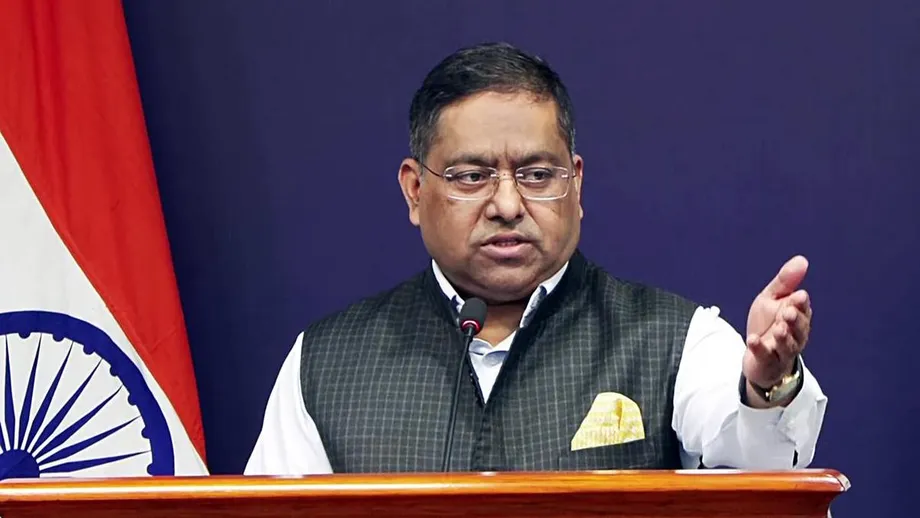
Malaysia has received no new formal extradition request from India for Islamic preacher Zakir Naik and has made no commitment to hand him over, Home Minister Saifuddin Nasution Ismail said in a written parliamentary reply. The government continues to stand by its decision against extradition, citing Article 6 of the extradition treaty signed with India in 2010 and Malaysia's Extradition Act 1992.
Contents
Saifuddin identified two dated communications: India's formal request, received on January 19, 2018, and a diplomatic note received on May 29, 2020, asking Malaysia to reconsider its refusal. The reply treats the later note as an appeal to revisit the existing decision, while saying no new extradition application has arrived.
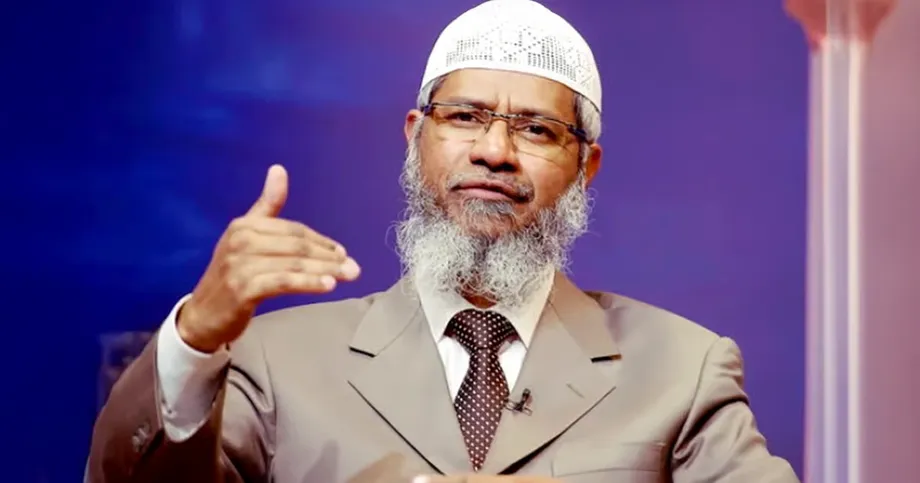
Naik, an Indian national who received permanent resident status in Malaysia in 2015, is wanted by Indian authorities over allegations including money laundering and inciting hate speech. He denies the allegations. Extradition is the legal process through which one country hands a person to another country to face criminal proceedings or serve a sentence.
Saifuddin was answering Ahmad Marzuk Shaary, the Perikatan Nasional MP for Pengkalan Chepa, who asked when the latest request had been received, whether India's documents and evidence met the legal requirements, and whether Malaysia had promised to surrender Naik.
The home minister stated the government's position:
The government has decided not to extradite Zakir to India. No commitment has been made to extradite him.
The statement matters both to Naik's position in Malaysia and to a diplomatic dispute that has continued across successive Malaysian administrations. It also answers a domestic political concern: whether private discussions with India had produced a promise to return him.
What Malaysia says the law allows
The Home Ministry grounded its refusal in Article 6 of the 2010 Malaysia and India Extradition Treaty, together with the Extradition Act 1992. The treaty sets out the countries' agreed framework for handling extradition, while the Malaysian law governs the process within Malaysia.
The Malaysia-India extradition treaty was signed in New Delhi on January 20, 2010. Article 6, titled "Restrictions on Surrender", states:
1. A fugitive offender shall not be surrendered if the Requested State is satisfied that -
(a) the offence of which that person is accused of or was convicted is an offence of a political character; or
(b) if the prosecution for the offence in respect of which his return is sought is, according to the laws of the Requesting State barred by time.2. For the purposes of this Treaty, the following offences shall not be considered to be of a political character -
(a) murder or other wilful crime against the person of a Head of State or Head of Government of one of the Contracting States, or a member of his immediate family;
(b) an offence for which the Contracting States have the obligation pursuant to a multilateral/international treaty to extradite the person sought or to submit the case to their competent authorities for decision as to prosecution; or
(c) an attempt, abetment or a conspiracy to commit any of the foregoing offences.3. The executive authority of the Requested state may refuse extradition -
(a) for offences under military law which are not offences under ordinary criminal law; or
(b) if it appears by reason of -
(i) the trivial nature of the case; or
(ii) the application for the return not being made in good faith or in the interests of justice or being made for political reasons or for any other reason, it would, having regard to all the circumstances, be unjust or oppressive to return the person to the Requesting State.
The article therefore bars surrender for political-character offences, subject to its listed exceptions, or where prosecution is time-barred under the requesting country's law. It also permits refusal for military-law offences that are not ordinary crimes, or where the circumstances would make return unjust or oppressive, including a trivial case or a request not made in good faith or in the interests of justice, or made for political reasons.
By citing those instruments, the ministry presented the decision as an exercise of Malaysia's legal rights under the extradition framework. Its explanation focused on the government's authority to refuse the request, rather than offering a detailed public assessment of the allegations against Naik.
Ahmad Marzuk also asked whether the documents and evidence India submitted satisfied the treaty and the Act. The reply did not directly answer that question or identify the particular grounds within Article 6 that Malaysia applied. Readers therefore have the government's decision and its stated legal basis, but not a public explanation of how officials assessed each part of India's submission.
How the dispute developed
Naik's case stretches back to Indian investigations opened in 2016. India also declared the Islamic Research Foundation, which he founded, an unlawful organisation that year. Naik left India in 2016 and has continued to contest the accusations against him.
The dated developments show how the criminal proceedings in India and Malaysia's diplomatic decisions have unfolded along separate tracks:
- 2010: Malaysia and India signed their extradition treaty.
- 2015: Naik received permanent resident status in Malaysia.
- 2016: Indian authorities opened cases against him, and India declared his Islamic Research Foundation unlawful.
- January 19, 2018: Malaysia received India's formal extradition request.
- June 2019: An Indian court ordered Naik to appear, while India's foreign ministry said it would continue pursuing extradition.
- June 28, 2019: Malaysian Foreign Minister Saifuddin Abdullah said the government was maintaining its original decision.
- May 29, 2020: Malaysia received India's diplomatic note seeking reconsideration.
The formal request and the diplomatic note were received more than two years apart. The latest parliamentary answer connects those earlier steps to the government's present position: the refusal continues, and no new formal application has been received.
India continued pursuing the case
India's Ministry of External Affairs said in June 2019 that the government had formally requested Naik's extradition and would continue pursuing the matter with Malaysia. An Indian court also ordered him to appear that month.
India's Enforcement Directorate obtained an arrest warrant after Naik failed to appear in the money laundering case. The proceedings were described at the time as involving funds equivalent to RM113 million. Naik denies wrongdoing.
Malaysia's refusal means India has not secured his return through the extradition request described by the Home Ministry. For Indian authorities, the central practical issue remains bringing him before the courts; for Malaysia, the decision concerns whether to surrender a permanent resident under its law and the bilateral treaty.
India's May 2020 note shows that diplomatic efforts continued after the original refusal. A diplomatic note is a formal written communication between governments. Here, its stated purpose was to ask Malaysia to reconsider, rather than submit the new extradition request that Ahmad Marzuk asked about.
Why earlier Malaysian governments refused
Former prime minister Mahathir Mohamad defended Naik's continued presence in Malaysia in 2018, saying he could remain as long as he did not cause problems in the country. In 2019, Mahathir argued that Malaysia could refuse extradition if Naik would not receive justice in India.
Mahathir compared the dispute with Malaysia's effort to obtain the return of Sirul Azhar Umar from Australia, where concerns about the death penalty had affected the extradition question. His comparison drew criticism locally and abroad.
Then foreign minister Saifuddin Abdullah, a different official from current Home Minister Saifuddin Nasution Ismail, confirmed the unchanged Malaysian position on June 28, 2019:
For now, there is no new decision. We are sticking to the original decision.
The earlier statements help explain the continuity behind the latest reply. Malaysia's refusal predates Anwar Ibrahim's premiership, and concerns about Naik's treatment in India have featured in the political explanation for years. The current Home Ministry answer places its formal justification in the treaty and Malaysian legislation.
Anwar balances evidence and relations with India
Prime Minister Anwar Ibrahim has discussed the case in the context of Malaysia's wider relationship with India. In a September 12 interview, he confirmed that Naik's extradition had been discussed privately with Indian representatives in New Delhi. He said legal principles and relations between the two countries needed to be considered.
At an earlier appearance at the Indian Council of World Affairs, Anwar said Malaysia might consider extradition if India supplied sufficient evidence linking Naik to extremism. He also said Malaysia was open to reviewing evidence and that the case should not obstruct stronger bilateral relations.
Anwar said India had not raised the matter during the Tuesday discussions associated with that earlier appearance, although Prime Minister Narendra Modi had brought it up before. His later confirmation of private discussions concerned a subsequent diplomatic exchange.
Those statements describe a willingness to examine evidence alongside an effort to keep the dispute from dominating relations. Saifuddin's parliamentary reply supplies the current government position on surrender itself: Malaysia has made no commitment to extradite Naik and continues to uphold its refusal.
Political pressure and Naik's own position
PAS sought clarification after Anwar acknowledged discussions with India. Its secretary general, Takiyuddin Hassan, questioned whether Malaysia had made any political commitment concerning Naik's possible return.
Takiyuddin warned that Naik could become a:
political victim or diplomatic concession
His concern was that a desire to demonstrate friendship with India could come at the expense of the legal process. The Home Ministry's statement that no commitment had been given directly addresses the central issue raised by PAS, while leaving the government's legal assessment of India's evidence unexplained.
Naik has also tied his willingness to return to India's political leadership. In comments published on October 21, he said he would return only after Modi's Bharatiya Janata Party was no longer in power, alleging that he would not receive a fair trial under its government.
For now, the concrete position is unchanged: Naik remains in Malaysia, India continues to seek his return, and Malaysia has declined extradition. The parliamentary reply announced no new hearing, deadline or timetable for reconsidering that decision.
Key Points
- Malaysia says it has received no new formal extradition request from India for Zakir Naik.
- India's formal request arrived on January 19, 2018; a diplomatic note seeking reconsideration followed on May 29, 2020.
- The Home Ministry says Malaysia has made no commitment to extradite him.
- Malaysia cites Article 6 of the 2010 extradition treaty and the Extradition Act 1992 as its legal basis.
- The parliamentary reply did not directly answer whether India's evidence met the treaty and statutory requirements.
- Naik denies the allegations against him, and no timetable for a new decision was announced.