Safety pledge comes as further returns are prepared
Malaysia will not send anyone back to Myanmar if there is clear evidence or a risk of persecution, torture or threats to their life, Home Affairs Minister Saifuddin Nasution Ismail said in a written parliamentary reply on October 21, 2026. His assurance followed the return of 1,476 people on September 29 under a programme covering up to 5,000 Myanmar nationals held in immigration detention.
Contents
- Safety pledge comes as further returns are prepared
- What the minister promised Parliament
- Who left Lumut on September 29?
- Why consent is under scrutiny
- UN and Malaysian rights bodies seek safeguards
- Conflict sharpens concerns about returning people
- Why the Rohingya figures need care
- Pressure in Malaysia reaches homes and classrooms
- How the programme has unfolded
- Key Points
The government intends to continue the programme in phases, subject to identity checks, documentation and transport arrangements. Saifuddin's reply set out a condition for those returns rather than announcing a suspension of the entire operation. Another 3,524 people have been approved for the second phase, according to the Human Rights Research Center.
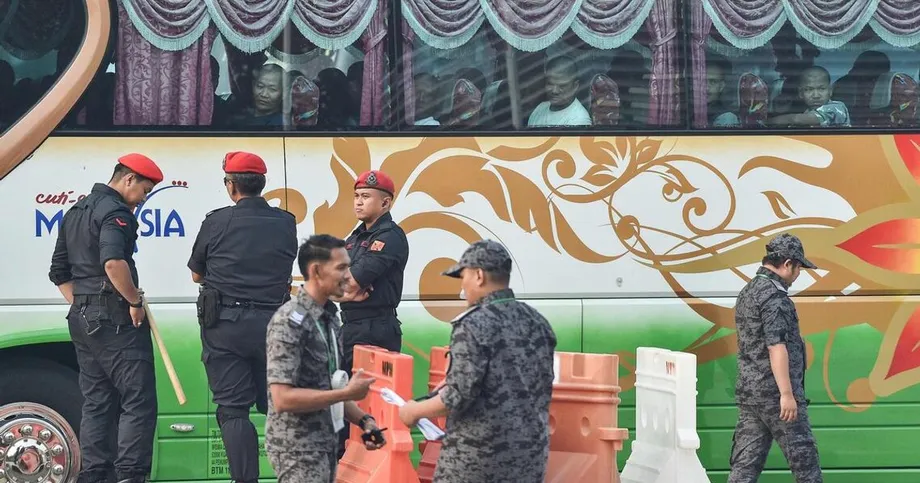
The first group left the Royal Malaysian Navy Base in Lumut, Perak, aboard three Myanmar naval vessels. It included 1,370 men, 79 women and 27 children. The Human Rights Research Center said they came from 14 detention depots, ranged in age from eight to 60, and arrived in Myanmar on October 4.
United Nations agencies and Malaysia's human rights commission have called for individual protection assessments before further departures. Their concerns centre on the conflict in Myanmar, whether people in detention can freely choose to return, and whether those who need asylum have had an opportunity to explain their circumstances.
Saifuddin was answering MP Jimmy Puah Wee Tse, who asked about a plan to repatriate 5,000 Rohingya and the safeguards, timetable and arrangements for doing so humanely. The ministry described the programme as covering Myanmar refugees, without specifying the ethnic composition of the first group.
What the minister promised Parliament
Saifuddin said safety, welfare and human rights would guide the repatriation process. He told Parliament that Myanmar had given assurances about the safety of people being returned and that Malaysia would monitor each stage.
The home affairs minister also addressed Malaysia's position outside the main international refugee treaty:
Although Malaysia is not a signatory to the 1951 Convention Relating to the Status of Refugees or its 1967 Protocol, the Madani government is committed to ensuring that every measure taken upholds the rule of law and international humanitarian standards.
The 1951 convention and its 1967 protocol form the central international framework for protecting refugees, people who have fled their country because they fear persecution. Malaysia does not formally recognise refugee status under its domestic framework, making access to protection assessments especially consequential for people held under immigration powers.
Saifuddin said the operation involved direct negotiations with Myanmar, rather than action by Malaysia alone. The stages include identification, verification of identity and status, security screening, confirmation by Myanmar, documentation and transfer.
Those steps establish who a person is and whether Myanmar will accept them. The assessment sought by UN agencies and rights bodies addresses a further question: what danger that particular person could face after arrival.
Who left Lumut on September 29?
The first transfer involved the UMS Moattama, the escort vessel UMS King Sin Phyu Shin and the medical ship UMS Thanlwin. Myanmar supplied the vessels, while Malaysia's Home Affairs Ministry coordinated the operation through the Immigration Department and other agencies.
The 27 children included 20 boys and seven girls, according to the Human Rights Research Center's protection concerns assessment. Children accounted for about 1.8 percent of the 1,476 returnees. Men made up nearly 93 percent.
Myanmar submitted the names through an official diplomatic note dated August 13, 2026, the centre said. A diplomatic note is a formal written communication between governments. Malaysia's Home Ministry, Foreign Ministry, National Security Council and Defence Ministry were involved in coordinating the operation.
The first departure completed about 29.5 percent of the planned 5,000 returns. The remaining 3,524 people represent just over 70 percent, meaning most of the programme would still lie ahead if the full number proceeds.
Why consent is under scrutiny
Saifuddin described the programme on September 29 as voluntary, based both on Myanmar's agreement to receive its nationals and on each individual's consent to return. UNHCR, the UN refugee agency, questioned whether decisions made while people were held in immigration detention were genuinely free and informed.
A voluntary decision requires a person to understand the conditions they are returning to and to have a meaningful choice. For someone in detention, the prospect of leaving confinement can weigh heavily on that choice. UNHCR sought safeguards that included individual assessments and access to procedures for requesting protection.
The Human Rights Research Center said UNHCR had not been given access to assess the people in the first group. The agency warned that some could need international protection and could face serious risks in Myanmar.
James Bawi Thang Bik, a representative of Myanmar's Chin refugee community in Malaysia, said community leaders had identified several asylum seekers among those being deported, including a refugee recognised by UNHCR. An asylum seeker is someone asking for protection whose claim has not yet been fully decided.
The government has not announced a departure date for the next phase or detailed how an independent assessment would operate, how someone could challenge a proposed return, or what monitoring would take place after arrival. Those details matter to detainees deciding whether they can safely go home.
UN and Malaysian rights bodies seek safeguards
UN High Commissioner for Human Rights Volker Turk urged Malaysia to stop the returns, warning that conditions in Myanmar were neither safe nor sustainable. He also questioned whether returns in those circumstances could genuinely be voluntary.
Turk described the danger facing people sent back:
This is no time to return anyone forcibly to a country plagued by egregious human rights violations and abuses, and where many cruelly face the real risk of more of the same violence again upon their return,
Malaysia's Human Rights Commission, known as SUHAKAM, called for no further returns without proper assessment by an independent authority. It urged particular attention to children, refugees, asylum seekers, trafficking victims and other vulnerable people, with children's safety, dignity and best interests taking priority.
More than 160 civil society groups also called for deportations to halt pending discussions about conditions in Myanmar. Their request places independent protection checks at the centre of the next decision, alongside the identity and documentation checks already described by the government.
Conflict sharpens concerns about returning people
Myanmar has faced continuing conflict since the military takeover in February 2021. Fighting between the armed forces and armed groups has affected civilians across several states and regions, creating different risks depending on where a person would return and their individual circumstances.
The UN human rights office reported a Myanmar military airstrike on September 28 at India Market in Pike Thae village, Kyauktaw Township, in Rakhine State. More than 50 civilians were reported killed and many others injured. The attack occurred one day before the ships departed Malaysia.
Rakhine State is central to the Rohingya protection crisis. Many Rohingya fled to Malaysia following the military crackdown in 2017. For people who escaped persecution, a decision about return involves both present fighting and the danger connected to their identity or history.
Myanmar had pledged earlier in September to provide safe and dignified returns for citizens displaced abroad. Malaysia has cited those assurances in defending its arrangements. UN agencies and SUHAKAM are seeking assessments of each person's circumstances before further transfers proceed.
Why the Rohingya figures need care
Prime Minister Anwar Ibrahim announced in July that Myanmar had agreed to accept 5,000 Rohingya. Puah's October parliamentary question also referred to Rohingya, while the Home Ministry's description of the operational programme referred more broadly to Myanmar refugees.
Neither government disclosed how many Rohingya were in the first group. The 1,476 people returned therefore remain described by nationality in the official account of the transfer.
The UN estimates that Rohingya make up about two thirds of the 190,000 Myanmar refugees and asylum seekers in Malaysia. That works out to roughly 127,000 people. The planned 5,000 returns amount to about 2.6 percent of that wider population of 190,000, although the programme specifically concerns people held in detention.
Malaysia's Home Ministry said people from Myanmar accounted for 95 percent of foreign asylum seekers in the country. That figure concerns asylum seekers, while the UN total combines refugees and asylum seekers. Keeping those categories separate helps explain both the scale of the population and the narrower group affected by the current operation.
Pressure in Malaysia reaches homes and classrooms
Saifuddin has presented the programme as a response to a longstanding policy problem. On September 29, he said the presence of foreign refugees had created a financial burden, serious social problems and security threats. His statements placed the security, welfare and interests of Malaysian citizens at the centre of the government's approach.
Rohingya families have also faced pressure outside detention. In July, more than 100 people travelled to Kuala Lumpur to seek UN help after threats of eviction from a settlement in northern Penang. Authorities detained the group while checking documents and later released them after confirming valid UN documentation.
The evictions and school closures documented in August included threats against families, harassment of children and the temporary closure of at least nine community schools. Online hostility had spread accusations about land, employment and public services, adding to uncertainty over the proposed returns.
For families living in Malaysia, immigration enforcement, access to school and safety at home have become closely connected concerns. For those already in detention, the immediate issue is whether their circumstances will be examined before they are placed on a ship.
How the programme has unfolded
The operation developed through several months of political announcements, diplomatic exchanges and transfers. The October parliamentary assurance came after the first group had already arrived in Myanmar.
- July 2026: Anwar announced that Myanmar had agreed to receive 5,000 Rohingya.
- August 13: Myanmar submitted names through a diplomatic note, according to the Human Rights Research Center.
- September 28: The UN human rights office reported the deadly airstrike at India Market in Rakhine State.
- September 29: Malaysia repatriated 1,476 people from Lumut aboard three Myanmar naval vessels.
- October 4: The returnees arrived in Myanmar, according to the centre.
- October 21: Saifuddin told Parliament that people facing persecution, torture or threats to life would not be repatriated.
Communications Minister and government spokesperson Fahmi Fadzil said Anwar would discuss further returns with Myanmar officials. Fahmi also said Malaysia would assess factors including security concerns and would not return people who faced risks or threats.
The government's stated commitment to continue now sits alongside its promise to protect individuals at risk. For the next group, the practical decisions concern who receives an assessment, who conducts it and whether a person identified as needing protection remains in Malaysia.
Key Points
- Malaysia says it will not return anyone to Myanmar who faces persecution, torture or threats to life.
- The first phase repatriated 1,476 people on September 29, including 27 children.
- The programme covers up to 5,000 people, with another 3,524 approved for a second phase.
- The government describes the returns as voluntary; UNHCR questioned whether consent in detention was free and informed.
- SUHAKAM called for independent assessments before further returns.
- The ethnic composition of the first group, including how many were Rohingya, has not been disclosed.