Border inspection brings military threats and a corrected date
North Korea has announced new firepower positions near its border with South Korea and plans to operate propaganda loudspeakers across the boundary during October, as senior officials inspected fortification work amid tensions over military crossings and a landmine explosion that injured three South Korean soldiers.
Contents
- Border inspection brings military threats and a corrected date
- What the officials inspected
- Pak rejects crossing claims and calls for retaliation
- New firing positions, without deployment details
- Loudspeaker plan advances in two days
- The mine explosion behind the confrontation
- How the confrontation developed
- Kim links the barriers to a permanent boundary
- Why the public visit matters
- Key Points
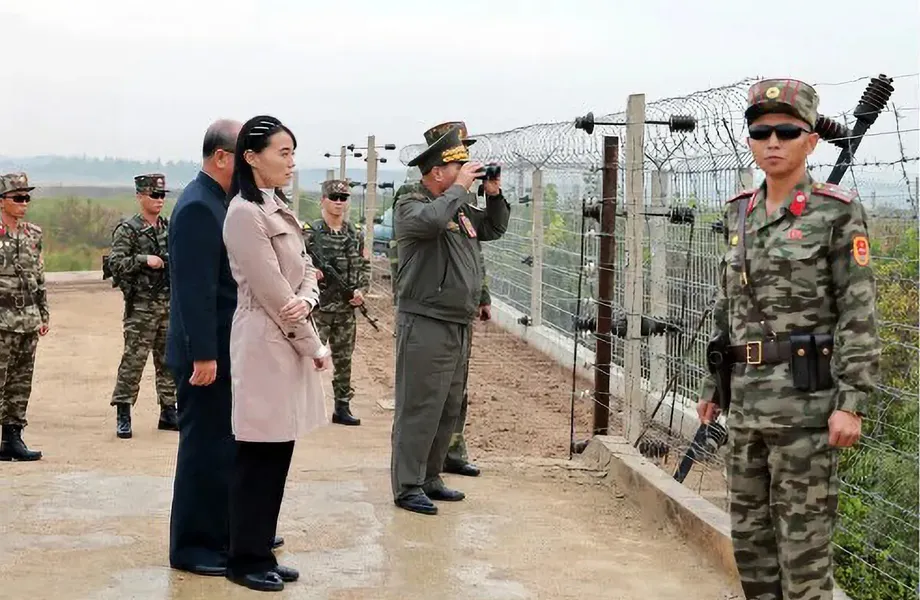
Kim Yo Jong, the sister of North Korean leader Kim Jong Un and director of the Workers' Party general affairs department, accompanied Defense Ministry adviser Pak Jong Chon, party secretary Ri Il Hwan and senior Korean People's Army General Staff commanders to construction sites near the Military Demarcation Line.
The inspection was initially announced on October 21 as having taken place on October 20. Kim corrected that account in a statement about four hours later, saying she had visited several border locations in the early hours of October 21.
Pak urged immediate retaliation against actions that directly threaten North Korean soldiers. Kim said new firepower units had occupied firing positions and repeated her brother's instruction to make the boundary with South Korea permanent. Her later statement moved the loudspeaker proposal from consideration to a plan for operation within the month.
What the officials inspected
North Korea began reinforcing the border in April 2024, adding barbed wire fences, mines and barriers intended to stop tanks near the Military Demarcation Line, or MDL. The line runs through the Demilitarized Zone, or DMZ, the buffer separating the two militaries.
Pak reviewed barrier construction and encouraged soldiers carrying out the work. Images released by North Korea showed officials near long stretches of wire fencing and a high wall, with armed personnel accompanying the delegation. Pak was also shown looking through binoculars.
The visit brought political officials and military commanders together at the construction sites. Pak had been reappointed vice chairman of the Workers' Party Central Military Commission in August. Ri, a party secretary responsible for propaganda, joined Kim and commanders from the military's General Staff.
Pak rejects crossing claims and calls for retaliation
South Korea's military has said it used warning broadcasts and warning shots in response to North Korean troops crossing the MDL. Pak rejected those crossing claims, describing them as an attempt to blame North Korea for worsening tensions.
Pak, speaking as an adviser to the North Korean Defense Ministry during the inspection, defended the location of the work:
Our army knows where our borderline is better than any others, and we are doing what we should do in our territory,
Pak also urged troops to turn the boundary into a fortress and called for firepower deployments capable of making the opposing side afraid. He said the time for exchanging verbal attacks had passed.
His retaliation instruction focused on actions that directly threaten the safety of North Korean personnel, following South Korean warning broadcasts and warning shots. South Korea describes its warnings as a response to crossings; North Korea describes its soldiers as working inside its own territory. Those opposing accounts place troops conducting construction and troops enforcing the line in direct confrontation.
New firing positions, without deployment details
Kim said North Korea's military leadership should make the opposing side aware that new firepower units had taken up firing positions. Her later statement also referred to tactical units occupying new positions along the border.
North Korea did not disclose the weapons involved, the number of personnel, the locations of the deployments or the precise date when the loudspeakers would begin operating. No separate South Korean military response to the inspection announcement was confirmed.
Firepower units are formations equipped to deliver weapons fire. The term alone gives readers little detail about their range or size. Kim's announcement nevertheless added a deployment claim to the construction project: North Korea was describing both stronger physical barriers and forces positioned to support its response to incidents.
Pak's demand for deployments that would intimidate the opposing side served the same purpose. The officials presented protection of construction personnel as a military task, alongside the building of fences and barriers.
Loudspeaker plan advances in two days
Kim's October 19 statement said North Korea was considering reinforcing tactical strike assets near the southern border and resuming loudspeaker broadcasts directed at South Korea. By the evening of October 21, she had announced that psychological warfare loudspeakers would enter operation across the boundary during October.
Military loudspeakers can carry different messages. South Korea's warning broadcasts tell approaching troops to stop or withdraw. The broadcasts Kim proposed are intended for psychological warfare, using messages directed at people on the other side to apply pressure or influence attitudes.
Kim claimed that South Korean troops had used loudspeaker warnings and warning shots in at least two locations on October 21. She also said North Korea was exercising restraint by avoiding matching warning shots, while preparing for possible incidents.
Her statements combined a deadline for broadcasts with warnings about military action. The change from considering a restart on October 19 to announcing operation within the month on October 21 took two days, giving the border confrontation a near term political and military timetable.
The mine explosion behind the confrontation
Three South Korean soldiers were injured in a landmine explosion near the western DMZ on September 21. South Korea attributed the explosion to a mine planted by North Korea south of the Military Demarcation Line. North Korea denied responsibility.
South Korea subsequently demanded a halt to the fortification work. The inspection, encouragement of construction troops and repeated instructions to strengthen the boundary showed that North Korea intended to continue the project.
Mines create dangers for soldiers moving through or working near the DMZ because an explosive device can remain concealed until someone approaches or disturbs it. The September injuries made the dispute over construction a matter of immediate troop safety, as well as control of the boundary.
South Korean Joint Chiefs of Staff Chairman Jin Young Seung held a meeting with operational commanders at a forward unit on October 20. He ordered a firm response to further North Korean provocations, continued operations to strengthen South Korea's position in the DMZ and coordination with the United Nations Command over violations of the armistice agreement.
How the confrontation developed
The latest announcements followed a sequence of construction, injuries, military warnings and public statements. Kim's correction places her visit after the October 20 meeting of South Korean commanders, rather than on the same day.
- April 2024: North Korea began reinforcing the boundary with fences, mines and barriers intended to stop tanks.
- September 21: Three South Korean soldiers were injured in a landmine explosion near the western DMZ. South Korea blamed North Korean mine laying, which Pyongyang denied.
- October 19: Kim Yo Jong said North Korea was considering additional tactical strike assets and a resumption of loudspeaker broadcasts.
- October 20: South Korean Joint Chiefs Chairman Jin Young Seung instructed forward commanders to respond firmly to further provocations.
- Early October 21: Kim said she visited border fortification sites, correcting the initially announced October 20 date.
- Evening of October 21: Kim announced that psychological warfare loudspeakers would operate across the boundary during October.
The sequence shows how quickly the confrontation broadened. Within days, a dispute involving construction and warning shots included public claims of new firing positions and a timetable for broadcasts.
Kim links the barriers to a permanent boundary
Kim presented the fortification project as an instruction from Kim Jong Un, rather than a temporary response to South Korean warnings. She said the leader had ordered no concessions in exercising territorial sovereignty and wanted the boundary with the hostile state made permanent.
Kim Yo Jong, describing the North Korean leader's order during the inspection, said he had issued:
an order to fortify the border with an enemy state to be eternally impregnable,
North Korea's description of South Korea as an enemy state connects the building work to its policy of treating the two Koreas as hostile states. The fences, barriers and firing positions give physical form to that policy.
Kim also called the project a historic mission and described the process of permanently establishing the southern boundary as irreversible. For soldiers carrying out the work, that language reinforces the instruction to keep building despite South Korean demands to stop.
Why the public visit matters
North Korea released photographs of senior political and military officials at sensitive sites near the MDL, a departure from its usual public presentation of the area since adopting its hostile relationship policy. The photographs made the visit visible alongside the threats and deployment announcements.
Kim's presence connected the project directly to the ruling family, while Pak's role linked it to senior military command. Their joint message was that fortification would continue and that threats to the personnel doing the work could bring retaliation.
South Korea's commanders were also ordering firm responses. For troops near the line, the immediate danger lies in the sequence both sides describe: personnel approach or cross a disputed location, warnings follow, and either side decides its soldiers face a threat requiring force.
October's loudspeaker plan is the next announced step. Alongside continued construction and claimed new firing positions, it adds another point of friction to a boundary where the two militaries already give opposing accounts of troop movements and responsibility for injuries.
Key Points
- Kim Yo Jong corrected the inspection date to the early hours of October 21, after an initial announcement placed it on October 20.
- Pak Jong Chon urged immediate retaliation against actions directly threatening North Korean soldiers.
- Kim said new firepower units had occupied firing positions and announced loudspeaker operations during October.
- North Korea has reinforced the boundary with fences, mines and barriers since April 2024.
- Three South Korean soldiers were injured on September 21. South Korea blamed North Korean mine laying; North Korea denied responsibility.
- Both militaries have issued firm response instructions as North Korea continues fortification work.