Sharif repeats water warning during Maldives visit
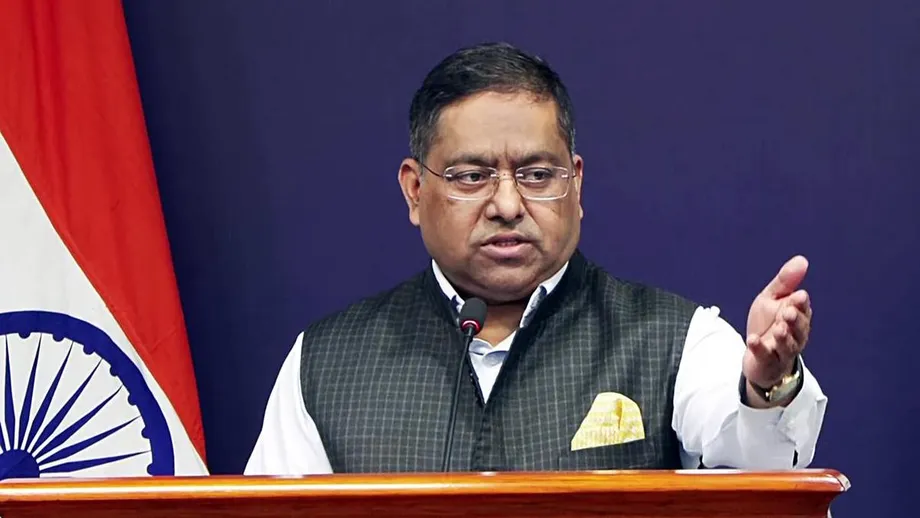
Pakistan's Prime Minister Shehbaz Sharif warned on Wednesday, October 21, 2026, that his country would regard any Indian violation of the Indus Waters Treaty as an act of war, renewing a confrontation over rivers that supply most of Pakistan's crops. His remarks came in Islamabad after talks with Maldivian President Dr Mohamed Muizzu.
Contents
- Sharif repeats water warning during Maldives visit
- What the treaty actually allocates
- Can either country suspend the agreement alone?
- How the confrontation developed
- Why Pakistan is so exposed
- How much water could India hold back?
- Why timing and warning data matter
- What the dam rules require
- Legal channels remain part of the dispute
- Key Points
India announced in April 2025 that it was placing the agreement in abeyance following a militant attack near Pahalgam in Indian administered Kashmir that killed at least 26 people. New Delhi blamed Pakistan, which denied involvement. Islamabad maintains that India cannot suspend the treaty on its own.
Sharif, speaking at a joint press appearance with Muizzu, described water as a red line for Pakistan and repeated a position he said he had presented at international forums, including the United Nations General Assembly the previous month.
Our position is clear. Water is a lifeline for humanity, particularly for lower riparian countries," the prime minister said. "Let it be known to all and sundry that any violation in this regard will be regarded by Pakistan as an act of war.
Pakistan is the lower riparian country in this dispute, meaning it receives river water after it has passed through territory upstream in India. That geography makes the timing of releases, reservoir operations and information about incoming flows central to Pakistan's water security.
New Delhi had not immediately responded to Sharif's comments. The confrontation brings together three different issues: what the treaty legally requires, what India's dams can physically do, and how much Pakistan depends on predictable water supplies.
What the treaty actually allocates
The World Bank brokered the agreement, which was signed in Karachi on September 19, 1960. The United Nations Treaty Series publishes the Indus Waters Treaty and its detailed annexes. Article XII gives it retrospective effect from April 1, 1960.
The treaty divides the six main rivers into two groups. India receives primary use of the eastern rivers, the Ravi, Beas and Sutlej. Pakistan receives the waters of the western rivers, the Indus, Jhelum and Chenab, subject to specified Indian uses.
Article III requires India to let western river waters flow, while allowing domestic use, uses that do not consume the water, specified agricultural use and hydroelectric generation under the annexes. Article III also restricts water storage and construction of storage works, with exceptions set out in Annexures D and E.
David Michel, senior fellow for water security at the Center for Strategic and International Studies, explains in his May 2025 analysis that the western rivers carry about 80 percent of the Indus system's average annual flow. The allocation therefore concerns the larger share of the basin's water, rather than an equal division among six rivers.
Can either country suspend the agreement alone?
Article XII says the treaty's provisions may be modified through a duly ratified treaty between the two governments. It also says the agreement continues in force until terminated through another duly ratified treaty between them. Those clauses are central to Pakistan's objection to India's unilateral announcement.
India described its April 2025 decision as holding the treaty in abeyance, meaning putting its operation on hold. Michel's analysis records New Delhi's stated condition that Pakistan must credibly and irrevocably abandon support for terrorism across the border. Pakistan rejects the underlying accusation.
Sharif, Pakistan's prime minister, said at the Islamabad appearance that treaty obligations and shared resources should be protected from political pressure.
"Pakistan's position is loud and clear, beyond any doubt, that legally binding treaties must be respected, and shared water resources must never be weaponized or used as an instrument of political pressure or blackmailing," he said.
India's April announcement was the first declared suspension by either country. Pakistan's warning now connects the treaty dispute directly to national security, while the agreement itself sets out procedures for resolving disagreements over its interpretation and application.
How the confrontation developed
The latest warning follows a dispute that escalated in April 2025. The main dates show how a response to an attack became a sustained disagreement over water rights and treaty obligations.
- April 1, 1960: The date from which the treaty would take effect retrospectively.
- September 19, 1960: India and Pakistan signed the agreement in Karachi following World Bank mediation.
- April 22, 2025: Militants attacked tourists near Pahalgam, killing at least 26 people. Michel's analysis identifies the Resistance Front as the perpetrator.
- April 2025: India announced that it was placing the treaty in abeyance. Pakistan rejected the decision and denied involvement in the attack.
- September 2026: Sharif said he raised Pakistan's water position at the United Nations General Assembly.
- October 21, 2026: Sharif repeated the act of war warning alongside Muizzu in Islamabad.
Pakistan has also accused India of pursuing reservoir expansion and diversion projects that breach the agreement. Pakistani officials say they have observed unusual fluctuations in river flows in recent months. The latest remarks gave no measurements, named projects or operating records explaining those fluctuations.
Why Pakistan is so exposed
Agriculture accounts for 94 percent of Pakistan's water withdrawals, and the Indus system waters more than 90 percent of its crops, according to Michel's May 2025 analysis. A withdrawal is water taken from a river, reservoir or underground supply for use on farms, in homes or by industry.
The same analysis places agriculture at 22.9 percent of Pakistan's gross domestic product and 37.4 percent of employment. Those figures connect river management directly to farm incomes, jobs and food production. Changes in water availability can reach far beyond the fields receiving irrigation.
Karachi and Lahore also depend on the Indus or on underground water reserves replenished by the river system. Michel estimates that nine in every ten Pakistanis live within the Indus Basin, while more than three quarters of the country's annually available renewable water comes from outside its borders, almost entirely through the Indus.
Pakistan has limited reserves against a prolonged shortage. Its reservoirs in the Indus Basin together store less than 10 percent of annual river flows, Michel writes. That leaves the country heavily dependent on water continuing to arrive when households, farmers and power operators need it.
How much water could India hold back?
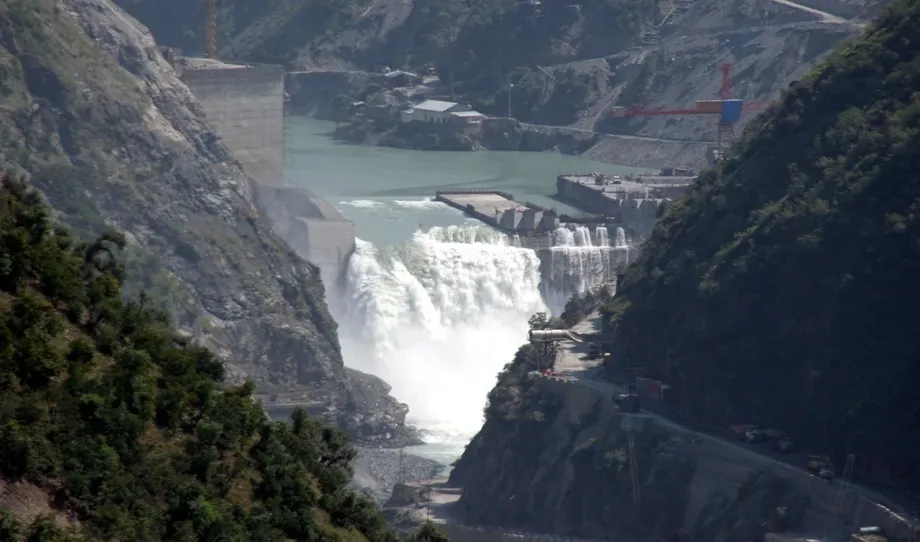
Michel's assessment, published on May 1, 2025, concluded that India lacked the infrastructure to stop Indus flows reaching Pakistan in the near term. Building dams, reservoirs and diversion canals capable of redirecting substantial volumes would take years. Hydropower projects then under development had completion schedules extending to 2032 or beyond.
His analysis gives average annual flows from India into Pakistan through the six rivers as about 182 cubic kilometres, including more than 170 cubic kilometres through the western rivers. It puts India's permitted western river storage at 3.6 million acre feet, or roughly 4.4 cubic kilometres.
The permitted storage figure is equivalent to about 2.4 percent of the 182 cubic kilometres crossing annually. That comparison uses a storage ceiling and a yearly flow total: a reservoir holds water at a particular time, while a river carries new water throughout the year. It helps explain the scale of infrastructure needed to control such a large river system.
Himanshu Thakkar, a regional water resources expert with the South Asia Network on Dams, Rivers and People, described the infrastructure constraint in April 2025.
"The infrastructure India has are mostly run-of-the-river hydropower plants that do not need massive storage," he said.
Such plants generate electricity mainly by passing flowing water through turbines, rather than collecting it in vast reservoirs. The treaty also permits specified storage works under Annexure E, with limits on their capacity, design and operation.
Why timing and warning data matter
Pakistan's more immediate concern can be when water arrives, particularly during dry periods. A delay in releases matters more when natural flows are already low and farmers have little spare water for irrigation.
Hassan F Khan, an assistant professor of Urban Environmental Policy and Environmental Studies at Tufts University, identified this seasonal risk in an April 2025 assessment.
"A more pressing concern is what happens in the dry season - when the flows across the basin are lower, storage matters more, and timing becomes more critical," he wrote.
Information is another point of pressure. The treaty requires exchanges of river and project data used for flood forecasting and water management. Pradeep Kumar Saxena, a former Indian Indus Waters Treaty commissioner, said after the April announcement that India could stop sharing flood data. Shiraz Memon, Pakistan's former additional commissioner for the treaty, said India had previously shared only about 40 percent of the data.
Michel similarly warned that interrupted information exchanges could hamper Pakistan's flood warnings and water management. Reservoir sediment flushing presents another potential risk: releasing accumulated silt and then refilling a reservoir can change downstream flows and carry damaging sediment. His analysis notes that such operations could also affect water users in India.
What the dam rules require
Annexure D sets detailed limits for new plants that use flowing river water. Subject to specified exceptions, pondage, the small working store used to regulate generation, cannot exceed twice the amount required for firm power, meaning dependable electricity output.
The annexure also governs releases. Under its general operating rule, the volume received upstream during seven consecutive days must be delivered downstream within the same period, subject to the annexure's provisions. Daily releases generally must remain between 30 percent and 130 percent of that day's incoming volume.
Different rules apply on the Chenab Main. Below Ramban, the volume received during a 24 hour period must be released within that period. Above Ramban, daily releases must generally be between 50 percent and 130 percent of incoming volume. These numerical limits make the timing of releases part of treaty compliance.
Article VII requires notice and available project information when a country plans engineering works that, in its opinion, would materially affect the other country. Annexure E separately requires India to provide design information for covered storage works at least six months before construction. Pakistan normally has three months to object to the design, reduced to two months for a specified category.
Legal channels remain part of the dispute
Article IX directs questions about interpretation, application or possible breaches first to the Permanent Indus Commission. Certain technical differences can then go to a Neutral Expert. Other disputes can proceed to a Court of Arbitration under the conditions set out in the treaty.
Annexure F makes a Neutral Expert's decision final and binding on matters within that expert's authority. Annexure G makes an arbitration award final and binding for the particular dispute and allows a party to request temporary measures while the court considers its decision.
Sharif's warning was delivered during a broader Pakistan and Maldives diplomatic visit. Muizzu was making the first visit by a Maldivian president in 11 years, as the countries marked 60 years of diplomatic relations established in 1966.
The two governments signed 20 memorandums of understanding and set a goal of raising bilateral trade from $13.9 million to $200 million within two years, about 14.4 times the starting value. The visit also included defence discussions with Field Marshal Asim Munir, Pakistan's chief of defence forces and army chief. The water statement placed Pakistan's confrontation with India alongside that wider regional diplomacy.
Key Points
- Sharif said on October 21, 2026, that Pakistan would regard any Indian treaty violation as an act of war.
- India placed the agreement in abeyance after the April 2025 Pahalgam attack. Pakistan denied involvement and rejected the decision.
- The treaty assigns the western rivers primarily to Pakistan while permitting specified Indian uses and storage.
- Article XII provides for modification and termination through a duly ratified agreement between both governments.
- Michel's May 2025 assessment identified limited Indian storage capacity, with data sharing and seasonal flow timing presenting more immediate risks.
- The Indus system supplies water to more than 90 percent of Pakistan's crops, making predictable flows central to livelihoods and food production.