Support for households comes with a test for growth
Indonesia has prepared about Rp31.8 trillion for assistance and incentives through the end of 2026, combining rice aid, wage subsidies, bank account access and Christmas and New Year transport discounts. The package aims to protect household spending, while some holiday activity and the cost of an aviation tax incentive will extend into 2027.
Contents
- Support for households comes with a test for growth
- What the four measures would do
- Workers could receive Rp900,000 in one payment
- Two date windows govern the aviation incentive
- How the ticket tax saving works
- Why cheaper travel may add limited growth
- Households face costs beyond the fare
- A strong macroeconomic assessment meets household pressure
- Key Points
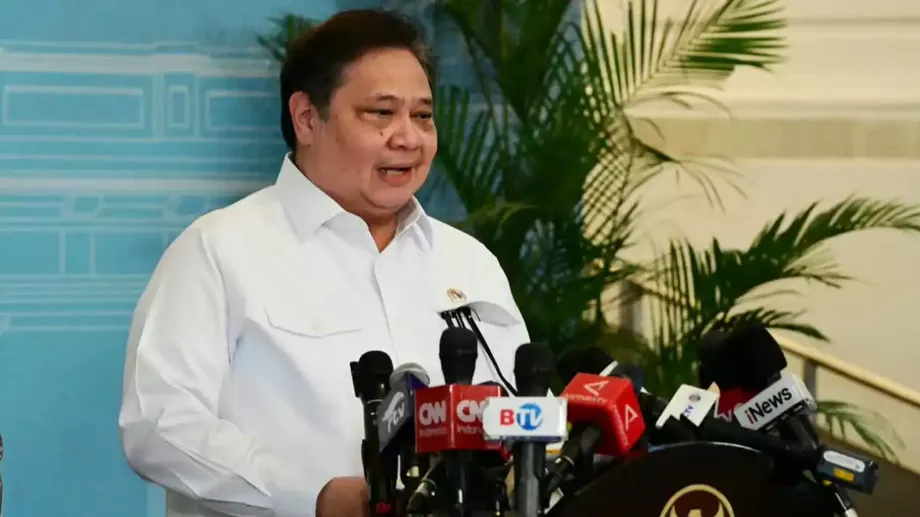
Coordinating Economic Affairs Minister Airlangga Hartarto outlined the measures after a plenary cabinet meeting at the Presidential Palace in Jakarta on Wednesday, October 21, 2026. The plans include 10 kilograms of rice over a three month assistance period and the continuation of wage support for eligible workers.
A wage subsidy plan announced on September 30 provides the clearest indication of how much one part could cost: around 13.3 million workers would receive Rp900,000 each, requiring almost Rp12 trillion. That would represent roughly 38% of the Rp31.8 trillion package, if the plan proceeds at its announced scale.
Airlangga said preparations also covered the holiday incentives. Describing their readiness and the funding available for the package, he said:
All the Christmas and New Year discounts have also been prepared. The funding amounts to around Rp31.8 trillion,
The central economic question is how much spending the measures will generate. Rice and wage assistance can help households meet daily needs. Cheaper travel can support transport operators and tourism businesses, although its contribution to growth depends partly on whether people make purchases they otherwise would have skipped.
What the four measures would do
The government has identified four strands: opening bank accounts for people aged 17, extending rice assistance until the end of the year, continuing Bantuan Subsidi Upah, or BSU, and offering holiday transport discounts. Nataru, the Indonesian abbreviation used for the holiday period, combines Christmas and New Year.
Each measure reaches households in a different way. Rice assistance supplies a staple food directly. BSU adds money to eligible workers' budgets. Transport discounts reduce part of the cost of a journey, while bank accounts provide access to financial services rather than a stated cash payment.
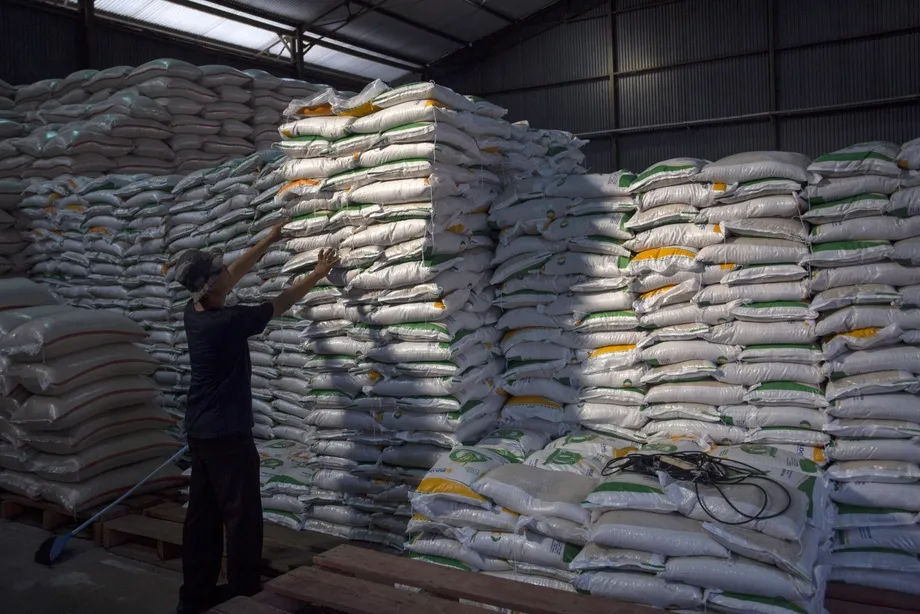
The rice plan specifies 10 kilograms and a duration of three months, but the announcement leaves the delivery frequency unclear. Households still need the distribution schedule and allocation rules to know how much they will receive across the full period.
Airlangga linked the package to maintaining purchasing power, meaning how much a household can buy with the money it has. For a family facing a tight budget, food assistance can leave more cash available for other necessities, while a wage payment can help cover expenses that rice alone cannot meet.
Workers could receive Rp900,000 in one payment
The BSU plan announced after Airlangga met President Prabowo Subianto on September 30 would cover October, November and December 2026. The proposed allocation is Rp300,000 per month, paid together as Rp900,000 for each eligible worker.
Multiplying the target of 13.3 million workers by Rp900,000 gives Rp11.97 trillion, consistent with the estimate of almost Rp12 trillion. Compared with the package total of Rp31.8 trillion, that calculation shows how substantial the wage component could be. The government has yet to publish a complete allocation across all four measures.
The final eligibility rules and disbursement mechanism for BSU 2026 have not been announced. Those decisions will determine which workers receive assistance and how the money reaches them.
The previous program, governed by Manpower Minister Regulation No. 5 of 2025, required Indonesian citizenship, a national identification number and active participation in BPJS Ketenagakerjaan, the employment social security system. It generally covered workers earning no more than Rp3.5 million a month and excluded civil servants, military personnel and police officers. Workers who had not received Family Hope Program assistance before BSU distribution were given priority. Eligibility for 2026 awaits the new rules.
Two date windows govern the aviation incentive
The aviation measure has more detailed timing. Finance Minister Suahasil Nazara signed Finance Minister Regulation No. 77 of 2026 on October 12, providing government payment of value added tax on specified components of scheduled domestic economy flights.
Passengers must satisfy two conditions together: tickets must be purchased between October 20, 2026, and January 10, 2027, and the flight must take place between December 22, 2026, and January 10, 2027. A qualifying purchase date alone is insufficient if the journey falls outside the flight window.
The sequence of announcements and travel deadlines is:
- September 30, 2026: Airlangga announces the proposed BSU payment of Rp900,000 for about 13.3 million workers.
- October 12, 2026: The finance minister signs the aviation tax regulation.
- October 20, 2026: The eligible ticket purchase period begins.
- October 21, 2026: Airlangga outlines the Rp31.8 trillion package after the cabinet meeting.
- December 22, 2026: The eligible flight period begins.
- January 10, 2027: Both the ticket purchase and flight periods end.
For passengers, the practical check is therefore the purchase date and the departure date. The incentive applies to scheduled domestic economy services, with the tax support limited to the base fare and fuel surcharge.
How the ticket tax saving works
The government will cover 100% of the value added tax due on those two fare components. The fuel surcharge is an extra charge associated with an airline's fuel costs. Other charges on a ticket remain outside the stated scope of the tax support.
An example accompanying the regulation uses a base fare of Rp790,000 and a fuel surcharge of Rp121,600. Together, those components total Rp911,600. The tax covered by the government is Rp100,276, equivalent to 11% of that combined amount.
A passenger's final saving depends on the full fare breakdown. The amount payable also reflects charges outside the supported components and any changes in the underlying ticket price.
Muhammad Rizal Taufikurahman, head of the Centre for Macroeconomics and Finance at the Institute for Development of Economics and Finance, said the government should ensure that final ticket prices actually fall. He warned that increases in base fares or additional fees could eat into the benefit passengers receive.
The aviation incentive is to be booked against the 2027 fiscal year, even though qualifying ticket sales begin in October 2026. The calendar therefore separates the start of consumer purchases from the budget year that bears this particular cost.
Why cheaper travel may add limited growth
Rizal expects the transport stimulus to support activity but make a limited contribution to economic growth across 2026. His central test is whether the discount creates additional consumption, meaning purchases beyond what households would have made anyway.
A traveller who had already decided to fly may simply pay less for the same journey. The household gains a saving, while the extra economic activity depends on what happens next, including whether that money is spent elsewhere.
A different traveller might decide that a lower ticket price makes a previously unaffordable trip possible. That journey could bring new spending to transport operators, hotels, restaurants, shops and small businesses at the destination. The size of that additional spending is what matters for the growth calculation.
Rizal also pointed to the short duration of the holiday stimulus. Some spending associated with Christmas and New Year travel will occur in January 2027, placing part of the benefit in the following year's economic figures. The flight window runs until January 10, so the program's activity crosses two calendar years.
Households face costs beyond the fare
Families whose income is largely used for basic needs may have little room to take advantage of travel discounts. A cheaper ticket leaves accommodation, meals, local transport and other expenses to be paid.
Rizal said a broader recovery in purchasing power requires higher real incomes, productive employment and control of living costs. Real income means the buying power of earnings after allowing for changes in prices. A pay increase brings less relief when necessary expenses rise just as quickly.
The package's different components consequently serve different household needs. Rice assistance addresses food consumption directly, and BSU provides cash to eligible workers. Holiday discounts are useful to people able and willing to travel during the qualifying period.
Small businesses stand to benefit if visitors spend more at their destinations. Rizal recommended measuring additional household consumption, sales at micro, small and medium enterprises, and worker earnings. Those measures would show whether public support translates into more business and income.
A strong macroeconomic assessment meets household pressure
Airlangga told President Prabowo that Indonesia's macroeconomic conditions remained relatively strong, citing growth, inflation and other indicators. He also warned that geopolitical uncertainty would continue into the following year, while the government sought to encourage growth from the end of 2026.
Growth and inflation describe different parts of the economy. Growth measures an increase in economic output, while inflation measures how quickly prices rise. A relatively strong national performance can coexist with households needing help to pay for food or other essentials.
The package brings those concerns together: immediate assistance for household budgets and incentives intended to encourage spending during a busy travel season. Its results will depend on who receives support, how quickly payments and rice arrive, and whether advertised fare savings reach passengers.
The next practical milestones are the publication of BSU eligibility and payment arrangements, the rice distribution details, and the start of qualifying flights on December 22. For the government, the later test will be whether the spending produces additional consumption and higher earnings, alongside the immediate relief recipients receive.
Key Points
- Indonesia has prepared about Rp31.8 trillion for assistance and holiday incentives through the end of 2026.
- The measures cover bank account access for people aged 17, rice aid, wage subsidies and transport discounts.
- The proposed BSU program would pay Rp900,000 each to about 13.3 million workers, costing almost Rp12 trillion.
- Final BSU eligibility rules and the rice distribution schedule remain pending.
- The aviation tax incentive requires purchases from October 20, 2026, to January 10, 2027, and flights from December 22 to January 10.
- The government covers tax on the base fare and fuel surcharge for qualifying domestic economy flights, with the cost booked in 2027.
- Rizal recommends judging the stimulus through additional consumption, small business sales and worker income.