Tighter Trading Limits Meet Another Sharp Market Fall
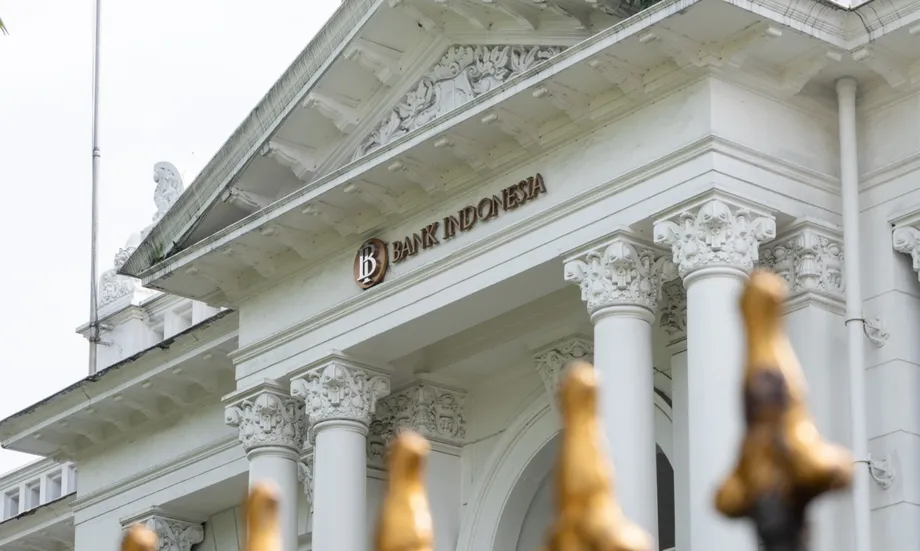
Indonesia's stock exchange cut the permitted daily decline in shares priced above Rp10 to 7% from 15% on October 19, 2026, as the Jakarta Composite Index opened 4.31% lower following its biggest daily fall in 28 years.
Contents
- Tighter Trading Limits Meet Another Sharp Market Fall
- What the New 7% Rule Changes
- Why IDX Wants Investors to Have More Time
- Friday's Rout Carried Into Monday
- Selling Spread Across Hundreds of Shares
- Why MSCI's Classification Matters
- A Slower Decline Can Make Selling Harder
- The Dates Investors Are Watching
- Key Points
The temporary restriction applies to the regular and cash markets through December 31, 2026. It leaves the limits on share price increases unchanged, creating an asymmetric system in which prices have more room to rise than to fall during a trading session.
The Indonesia Stock Exchange, known as IDX or BEI, introduced the change with support from the Financial Services Authority, or OJK. The decision followed a weekend meeting between the regulator and capital market participants, including analysts and economists.
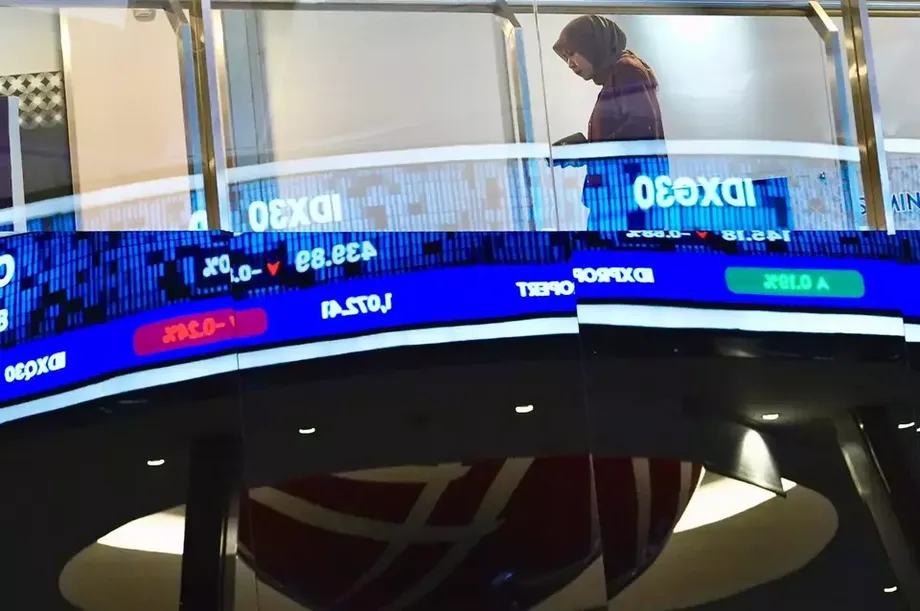
Monday's opening brought the benchmark index to about 4,961.9, a decline of approximately 223 points from Friday's close of 5,185.10. The index returned to levels last seen in October 2020, during the COVID-19 pandemic.
The immediate pressure follows a warning from global index provider MSCI that it could move Indonesia from its emerging market category to standalone status. Such a change could require some investment funds that follow emerging market indexes to sell Indonesian shares.
What the New 7% Rule Changes
IDX formalised the restriction through Board of Directors Decree No. Kep-00157/BEI/10-2026, covering Regulation II-A on trading in equity securities. It replaces the provisions in Decree No. Kep-00136/BEI/09-2026.
Auto rejection is an automatic check on trading orders. An order priced outside the exchange's permitted range is rejected. The lower limit, known as ARB, sets the boundary for price declines, while the upper limit, or ARA, sets the boundary for increases.
For every share price band above Rp10, the lower limit falls by eight percentage points, from 15% to 7%. That reduces the permitted daily downward movement by slightly more than half. The change covers all those price bands, including shares costing more than Rp5,000.
IDX kept the following limits on upward price movements:
- Shares priced from Rp11 through Rp200 retain an upper limit of 35%, alongside the new lower limit of 7%.
- Shares priced above Rp200 through Rp5,000 retain an upper limit of 25%, alongside the new lower limit of 7%.
- Shares priced above Rp5,000 retain an upper limit of 20%, alongside the new lower limit of 7%.
- Shares priced from Rp1 through Rp10 retain upper and lower limits of Rp1.
The lowest price band therefore continues to use a fixed rupiah amount. Every band above it uses the same percentage limit for declines, while retaining different percentage limits for gains.
Why IDX Wants Investors to Have More Time
IDX said the adjustment aims to maintain orderly, fair and efficient trading and manage market volatility. Volatility describes how sharply and quickly prices move.
The exchange, which operates Indonesia's securities market, explained its purpose in a statement:
This adjustment is aimed at giving investors an opportunity to evaluate and digest available information, helping them make better investment decisions based on Indonesia's economic fundamentals,
The exchange's stated goal is to give investors more time to assess news before making decisions about company shares. During a steep selloff, investors may face several pressures at once: falling prices, uncertainty about new information and concern that other investors will sell first.
A narrower permitted decline slows how far an individual share can move downward within a session. Investors can then reassess company earnings, economic conditions and market announcements before the next trading day.
The restriction operates through the prices allowed for individual share orders. Indonesia also used a different mechanism during Friday's turmoil: a temporary halt in market trading.
Friday's Rout Carried Into Monday
The Jakarta Composite Index closed 11.57% lower at 5,185.10 on Friday, October 16. It was the benchmark's largest daily percentage decline in 28 years. An early fall of more than 8% triggered a trading halt lasting 30 minutes before the session resumed.
Monday's opening decline of 4.31% extended that retreat. Applying Monday's opening move to Friday's closing level puts the benchmark roughly 15.4% below its level before Friday's fall. Consecutive percentage declines compound because each new decline starts from an already lower value.
The index was down about 43% for the year around the start of Monday's trading. Its return to the 4,900 range placed it near levels last reached six years earlier.
Large companies were among the stocks weighing on the benchmark, including those trading under the symbols BBCA, BBRI, BYAN and TLKM. Because a market index reflects the combined movement of its constituent shares, declines in large companies can have a substantial effect on its direction.
The index's continued fall at Monday's opening showed the scale of selling pressure confronting the exchange as the narrower price limits took effect.
Selling Spread Across Hundreds of Shares
Opening trading figures showed 602 shares falling, 88 unchanged and 64 rising. Of the 754 shares in that snapshot, about 80% declined, with roughly nine falling shares for every one that advanced.
Trading volume reached 1.17 billion shares, with a value of Rp1.04 trillion across 80,236 transactions. Those figures describe activity near the opening of trading, rather than a completed session.
The breadth of the decline matters for investors assessing the market. Pressure extended across hundreds of shares, even as several large companies made prominent contributions to the index's fall.
For someone holding a portfolio of Indonesian stocks, the opening figures pointed to widespread declines across the market. For someone seeking to sell, the new lower limit also narrowed the range of prices at which an order could be accepted that day.
Why MSCI's Classification Matters
MSCI's warning concerns Indonesia's place in the investment indexes used by global fund managers. The company is considering moving the country from emerging market status to a standalone category amid concerns about market dysfunction, shareholding transparency and market governance.
An emerging market index groups stocks from economies that meet the index provider's requirements for that category. Investment funds often use such indexes as a guide, either copying their holdings or measuring their own performance against them.
Standalone status places a market outside those main emerging market groupings. A fund whose rules require it to follow an emerging market benchmark could consequently have to reduce or sell its Indonesian holdings following a reclassification.
That creates a possible source of selling driven by investment rules. A company could continue reporting the same earnings while a fund changes its holdings because the company's home market has moved to a different index category.
MSCI's concerns also reach beyond daily price movements. Shareholding transparency concerns how readily investors can understand who owns shares. Market governance concerns the rules and practices under which the market operates.
Indonesia's classification remains under consultation. MSCI is seeking market participants' views until April 30, 2027, with a final decision expected by the end of June 2027.
A Slower Decline Can Make Selling Harder
The narrower lower limit gives investors less room to accept falling prices in exchange for completing a sale. When many people want to sell and few want to buy, shares can reach the daily lower boundary while sellers still wait for buyers.
A seller seeking a quicker exit may be willing to accept a lower price, but an order beyond the permitted boundary will be rejected. Completing a trade still requires a buyer willing to transact within the allowed range.
Liquidity is the ease with which an asset can be bought or sold. Investors who expect difficulty selling during stressful conditions may demand a lower purchase price to compensate for that risk. This compensation is sometimes called a liquidity premium.
IDX therefore faces two practical needs: slowing abrupt declines and keeping trading accessible to investors who want to enter or leave the market. Its commitment to review the measure gives it scope to reconsider the limits as conditions develop.
The 7% boundary applies within a trading session. Share prices can decline again on later trading days, so losses can accumulate across several sessions even under a tighter daily limit.
The Dates Investors Are Watching
The temporary trading restriction and MSCI's review follow different schedules. IDX's announced policy period ends in December 2026, several months before MSCI's consultation closes.
- October 16, 2026: The Jakarta Composite Index fell 11.57% to 5,185.10 after an earlier decline triggered a trading halt lasting 30 minutes.
- October 19, 2026: IDX's 7% lower auto rejection limit took effect, and the benchmark opened another 4.31% lower.
- December 31, 2026: The announced period for the temporary IDX restriction ends, subject to review as market conditions develop.
- April 30, 2027: MSCI's consultation on Indonesia's market classification closes.
- End of June 2027: MSCI's final classification decision is expected.
IDX said it would reassess the policy in response to market developments. It has not specified the trading limits that will apply after the announced period ends.
For investors, the immediate change is a narrower daily selling range for shares above Rp10. The longer decision concerns whether Indonesia retains its place in emerging market indexes, with consequences for funds whose investment mandates depend on that classification.
Key Points
- IDX reduced the daily lower auto rejection limit from 15% to 7% for shares priced above Rp10, effective October 19 through December 31, 2026.
- Upper limits remain 35%, 25% or 20%, depending on the share price band. Shares priced from Rp1 through Rp10 retain limits of Rp1 in either direction.
- The Jakarta Composite Index opened 4.31% lower on October 19 after falling 11.57% on October 16.
- Opening figures showed 602 shares declining, 88 unchanged and 64 advancing.
- MSCI is considering standalone status for Indonesia, with consultation closing April 30, 2027, and a final decision expected by the end of June.
- The tighter limit slows permitted daily declines while narrowing the prices available to investors seeking to sell.