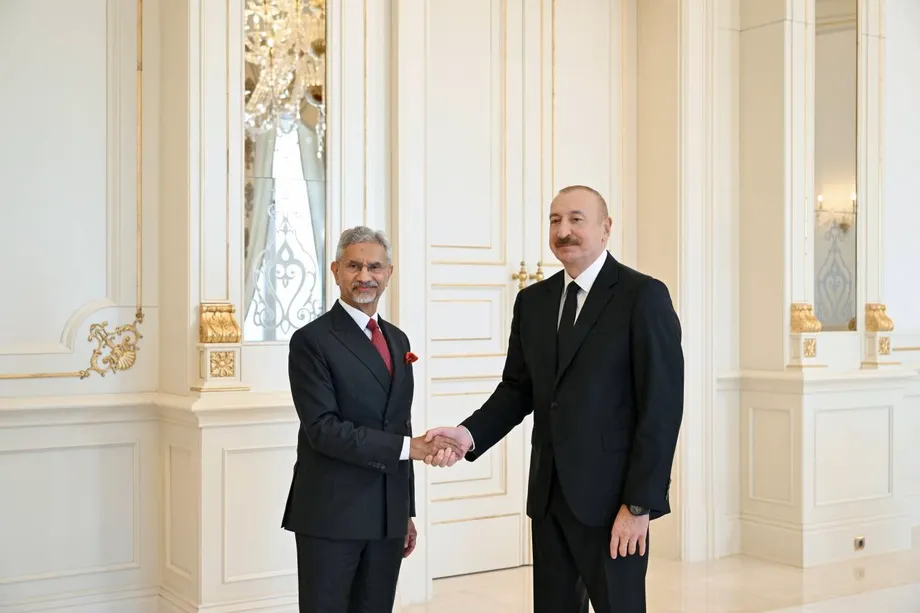
Energy investments and tourism give diplomatic reset a practical focus
India and Azerbaijan moved to rebuild relations on October 23, 2026, with talks in Baku focused on an economic relationship that already includes more than 1,000 Indian companies, about $1.2 billion in Indian energy investment and 166,944 Indian tourist arrivals in 2025.
Contents
- Energy investments and tourism give diplomatic reset a practical focus
- Why relations needed repair
- A sequence of meetings brought the ministers together
- Trade has room to grow beyond oil
- Transport routes connect the business agenda
- Flights, students and films widen the relationship
- Armenia peace efforts featured in the talks
- Evacuation assistance offered a concrete example of cooperation
- What the two governments plan to do next
- Key Points
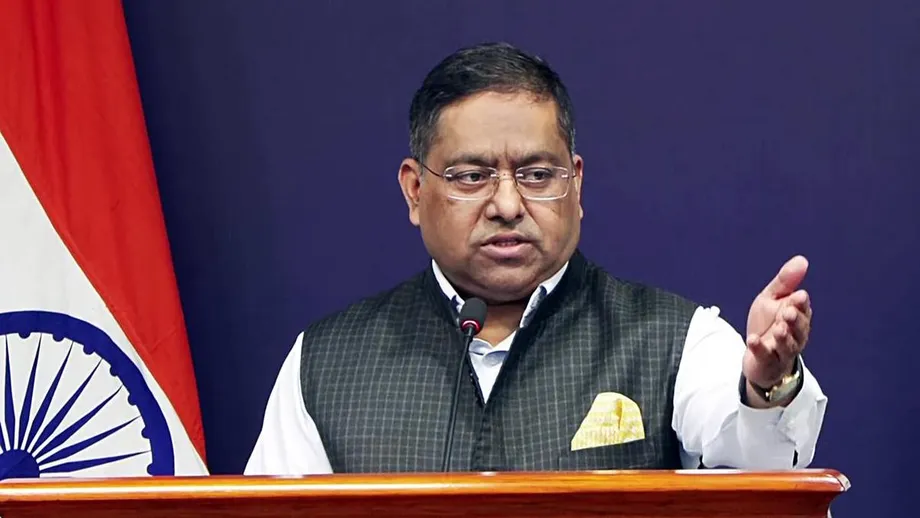
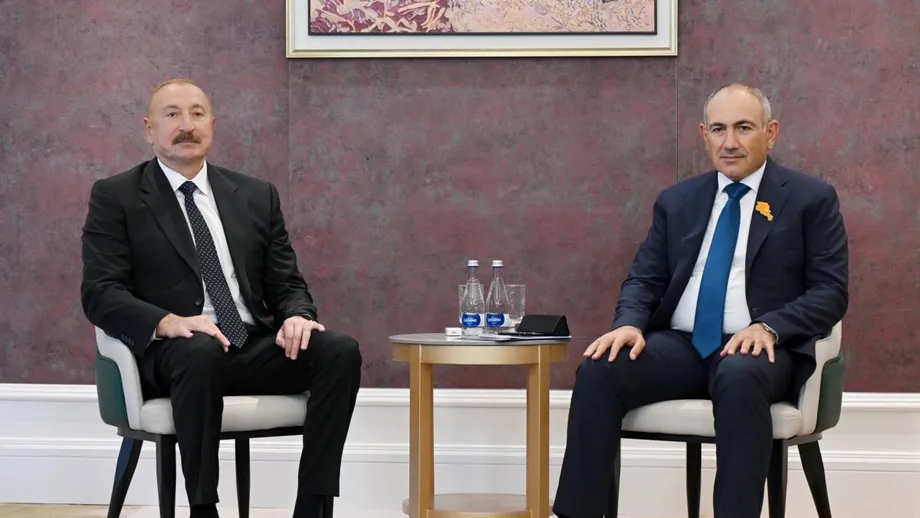
Indian External Affairs Minister Subrahmanyam Jaishankar met President Ilham Aliyev and Foreign Minister Jeyhun Bayramov during his first visit to Azerbaijan. The trip was the first bilateral visit by an Indian foreign minister in eight years, following a period of tension over Azerbaijan's support for Pakistan during its conflict with India in May 2025.
The ministers agreed to deepen political consultations, exchange trade delegations, strengthen energy cooperation and coordinate more closely on the International North-South Transport Corridor. They also discussed increasing direct flights, expanding professional exchanges and developing business links beyond oil.
Jaishankar described the talks as productive and invited Bayramov to visit India. Bayramov acknowledged that the countries had previously held different positions on some issues, while identifying tourism, pharmaceuticals, agriculture and transport as areas where cooperation could grow.
The commercial figures give the reset a concrete foundation. Bilateral trade was $401 million in 2025, according to official Indian data, while Bayramov put trade in 2026 at approximately $600 million. For businesses, students and travellers, the immediate focus is on making existing connections easier to use and opening more opportunities through regular diplomatic contact.
Why relations needed repair
Azerbaijan's close partnership with Pakistan and India's ties with Armenia have complicated relations between Baku and New Delhi. Armenia and Azerbaijan are neighbours in the South Caucasus with a long history of conflict, while India and Pakistan remain strategic rivals.
The four days of fighting between India and Pakistan in May 2025 brought those relationships into sharper focus. Azerbaijan condemned India's military attacks on Pakistan during Operation Sindoor and called for a resolution of the Kashmir issue. India viewed that position with anger.
Diplomatic friction later extended to the Shanghai Cooperation Organisation, or SCO, a regional grouping concerned with security and economic cooperation. India reportedly blocked Azerbaijan's bid to join in September 2025, while Pakistan blocked Armenia's bid. Pakistan established diplomatic relations with Armenia in 2025, adding another change to the region's diplomatic relationships.
Bayramov acknowledged the earlier differences during Jaishankar's visit, describing the countries as having had "different view points on different issues". His emphasis in Baku was on continued dialogue and areas where their interests meet.
Jaishankar also presented cooperation as compatible with independent foreign policies. His discussions with Aliyev covered regional and global developments alongside practical questions about what the two countries could do together. The reset therefore centres on restoring a working relationship while each government maintains its own international partnerships.
A sequence of meetings brought the ministers together
Jaishankar's visit followed several diplomatic contacts during 2026. Foreign Office Consultations, the formal meetings through which diplomatic officials review relations in detail, resumed in Baku in April after a gap of almost four years.
Prime Minister Narendra Modi and Aliyev then met in Bishkek in September. Jaishankar said his trip followed up on that encounter. Further contact came through a regional summit in Baku and the arrival of India's new ambassador.
- April 2026: India and Azerbaijan held their sixth round of Foreign Office Consultations in Baku, discussing trade, technology, tourism, pharmaceuticals, energy and culture.
- September 1, 2026: Modi and Aliyev met on the sidelines of the SCO summit in Bishkek.
- October 15, 2026: Indian Minister of State for External Affairs Kirti Vardhan Singh addressed the seventh summit of the Conference on Interaction and Confidence Building Measures in Asia in Baku.
- October 16, 2026: Indian Ambassador Abhay Kumar presented his credentials to Aliyev and discussed expanding bilateral cooperation.
- October 23, 2026: Jaishankar met Aliyev and Bayramov in Baku.
Aliyev's office said the president valued the visit, undertaken on Modi's instructions. The presidency called for more political contacts and mutual visits, with cooperation extending to technology, culture, humanitarian affairs and international organisations.
Trade has room to grow beyond oil
India exported $226 million in goods to Azerbaijan in 2025 and imported $175 million, bringing total trade to $401 million, according to official Indian data. Those figures gave India a goods trade surplus of $51 million, meaning it sold that much more to Azerbaijan than it bought.
Bayramov said trade had reached approximately $600 million in 2026; the figure was also given as covering the first half of the year. That is about $199 million, or roughly 50%, above the total for all of 2025. Bayramov nevertheless said commerce remained below what the two economies could support.
Energy provides the largest established investment link. ONGC Videsh, the overseas investment arm of India's Oil and Natural Gas Corporation, has invested about $1.2 billion in the Azeri-Chirag-Gunashli fields and the associated Baku-Tbilisi-Ceyhan pipeline. The pipeline carries oil from Azerbaijan through Georgia to Türkiye.
Bayramov said ONGC had increased its stake in a major Azerbaijani oil and gas project. More than 1,000 Indian companies operate in Azerbaijan, giving both governments an existing business community through which to pursue further investment.
Pharmaceuticals, digital services, mining and agriculture were identified as possible areas for expansion. The ministers agreed to exchange trade delegations, allowing companies to explore opportunities directly. Their task is to broaden a relationship in which crude oil already accounts for a substantial share of India's imports from Azerbaijan.
Transport routes connect the business agenda
The International North-South Transport Corridor was a central part of the discussions. The network, described as stretching 7,200 kilometres, is intended to move freight between India, Iran, the Caspian region, Russia and other markets through a combination of ships, railways and roads.
A transport corridor is a connected route rather than a single road or railway. Its usefulness depends on how smoothly cargo can move between different forms of transport and across borders. India and Azerbaijan both have an interest in coordinating their participation.
Jaishankar, India's external affairs minister, said the two governments had agreed to work more closely on the corridor:
We are both invested in the International North-South Transport Corridor; that's very important for us. We agreed today that we will coordinate more closely in that regard.
Azerbaijan's Foreign Ministry said the talks also covered the country's East-West transport links, the Baku-Tbilisi-Kars railway, the Port of Baku and the Alat Free Economic Zone. Together, those facilities formed part of Baku's pitch as a place where businesses can connect to markets in several directions.
The discussion linked India's demand for wider market access with Azerbaijan's ambitions as a transit centre. Energy investment gives the relationship an established commercial base; transport cooperation offers a way to support a broader range of trade.
Flights, students and films widen the relationship
Azerbaijan received 166,944 visitors from India in 2025, making India its fourth largest source of tourists after Russia, Türkiye and Iran. Tourism gives airlines, hotels, restaurants and travel businesses a direct stake in stable relations.
Jaishankar said daily flights were already operating and that both sides should consider how to increase air connections. Bayramov referred to two direct Baku-Delhi flight routes. The ministers discussed additional flights as part of their wider effort to expand travel and business exchanges.
Education and film production provide other links. Bayramov said approximately 500 Indian scholars had enrolled at Azerbaijani higher education institutions during 2026. He also said more than 30 Indian film productions had used Azerbaijani locations in recent years.
Jaishankar proposed resuming and increasing Azerbaijani participation in the Indian Technical and Economic Cooperation programme. Known as ITEC, it provides training and professional exchanges for participants from partner countries. The proposal adds a practical skills component to discussions that also covered education, science and culture.
During his visit, Jaishankar went to Baku's historic Ateshgah fire temple. He described it as "A symbol of the historical and cultural connect between our two peoples." The stop connected the diplomatic visit with a place associated with the countries' longstanding cultural links.
Armenia peace efforts featured in the talks
Jaishankar welcomed the peace agreement reached between Azerbaijan and Armenia in August 2025 and expressed hope that it would bring lasting peace. He said India was following developments in the South Caucasus closely and supported resolving disputes through dialogue and diplomacy.
India's relationship with Armenia makes that position particularly relevant to its engagement with Azerbaijan. Progress towards peace between the two neighbours gives New Delhi and Baku a shared regional objective alongside their different partnerships.
Bayramov briefed Jaishankar on the normalisation process and measures intended to build confidence between Armenia and Azerbaijan. Azerbaijan's Foreign Ministry said the talks also addressed reconstruction in territories returned to Azerbaijani control and the continuing threat from landmines.
Reconstruction and mine clearance give the peace process an immediate human dimension. For communities affected by the conflict, security also concerns whether people can travel safely, rebuild homes and use land without encountering explosives left behind.
Evacuation assistance offered a concrete example of cooperation
Jaishankar thanked Azerbaijan for helping evacuate Indian nationals, particularly students, from Iran during conflict earlier in 2026. The assistance came amid tensions involving the United States, Israel and Iran.
The Indian minister also thanked Azerbaijan for looking after Indian students studying there. His remarks highlighted a form of cooperation with direct consequences for families: helping citizens leave a neighbouring country during a crisis and supporting those living abroad.
Security was discussed more broadly as well. Randhir Jaiswal, spokesperson for India's Ministry of External Affairs, confirmed that terrorism and common threats featured in the meetings. Responding to a question about terrorism across borders, Jaiswal said:
Security issues, terrorism, and the common threats that we face were discussed.
Jaiswal said both governments agreed to cooperate on peace, prosperity, security and shared challenges. Their statements placed those discussions alongside the economic agenda, reflecting an effort to keep security disagreements within an active diplomatic relationship.
What the two governments plan to do next
Jaishankar invited Bayramov to India, while both sides agreed to deepen political consultations, arrange business visits and pursue cooperation in energy and transport. No date was announced for Bayramov's visit or for additional flights and trade delegations.
The ministers also discussed cooperation through the United Nations, the SCO and the Conference on Interaction and Confidence Building Measures in Asia, known as CICA. Jaishankar welcomed Azerbaijan's leadership of CICA, whose recent Baku summit had been attended by Kirti Vardhan Singh.
Aliyev's office described India and Azerbaijan as members of the Global South, a broad term commonly used for developing and emerging economies. It said they shared positions on several international issues affecting those countries.
Jaishankar connected that discussion to the daily costs of conflict. The ministers reviewed developments in the Middle East, Europe and Eurasia, including the Russia-Ukraine war, and considered pressures on food, fuel, fertiliser and finance. Those categories reach from household grocery and energy bills to farmers' costs and governments' borrowing needs.
The practical test of the reset will be whether renewed contact produces the exchanges the ministers outlined: more regular consultations, visits by businesses, closer transport coordination and wider cooperation beyond oil. Existing investment, tourism and student links give both governments specific interests to work on.
Key Points
- Jaishankar met Aliyev and Bayramov in Baku on October 23, 2026, during the first bilateral visit by an Indian foreign minister in eight years.
- The visit followed tensions over Azerbaijan's support for Pakistan during the May 2025 conflict with India.
- More than 1,000 Indian companies operate in Azerbaijan, and ONGC Videsh has invested about $1.2 billion in energy assets.
- Trade totalled $401 million in 2025; Bayramov put the 2026 figure at approximately $600 million.
- The ministers agreed on closer transport coordination, trade delegations and further political consultations, while discussing more flights.
- India welcomed Armenia-Azerbaijan peace efforts and thanked Baku for helping evacuate Indian citizens from Iran.
- Bayramov was invited to India, with a visit date yet to be announced.