Cabinet backs KHR 39.7 trillion national spending plan
Cambodia's Council of Ministers approved a draft budget on October 23, 2026, setting national expenditure at KHR 39,700 billion and forecasting economic growth of 4.8% in 2027. The plan also directs additional money to local administrations for health and education responsibilities, bringing their stated funding package to KHR 7,955 billion when conditional transfers are included.
Contents
- Cabinet backs KHR 39.7 trillion national spending plan
- Why two spending totals appear
- Revenue grows faster than national expenditure
- Local funding expands with health and education transfers
- Growth forecasts point to a faster 2027
- GDP per person is projected to rise by US$179
- Factories, services and farming underpin the outlook
- Security and public services share the policy agenda
- Key Points
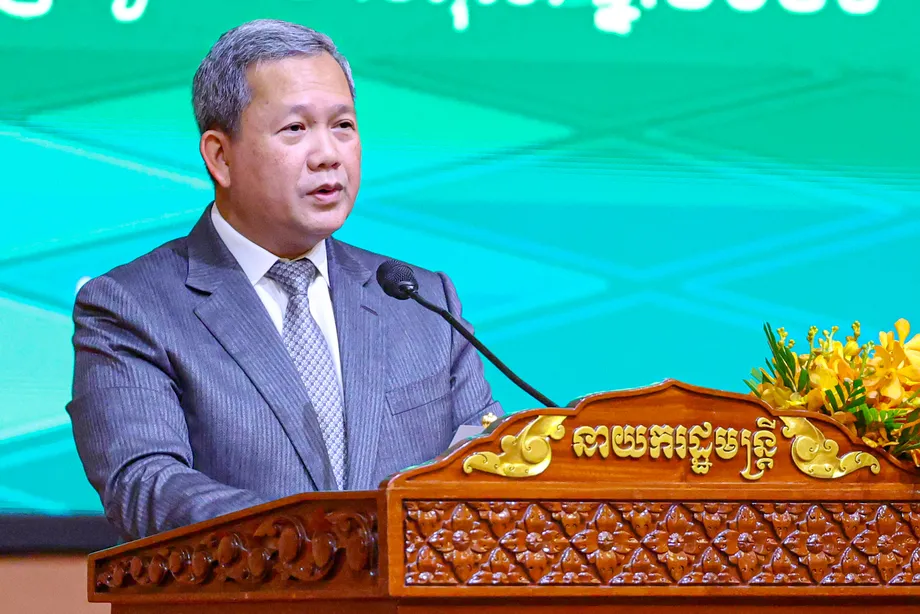
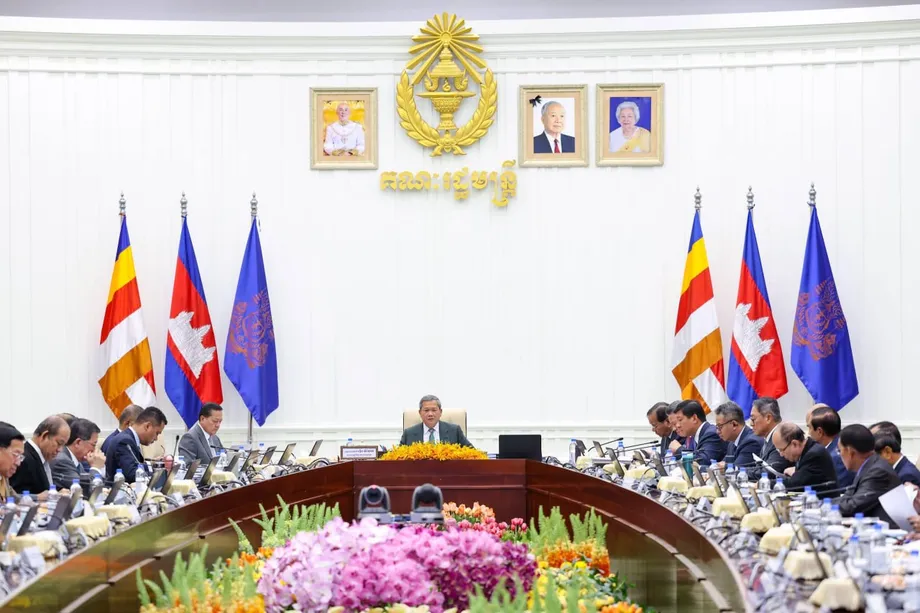
Prime Minister Hun Manet chaired the meeting at the Peace Palace in Phnom Penh. The proposed Law on Financial Management for 2027 contains six chapters and 16 articles, with priorities covering national sovereignty, territorial integrity, continued government operations, people's livelihoods and economic growth.
The government's official budget announcement puts national expenditure at 16.57% of gross domestic product, or GDP, and 3.2% above the amount in the 2026 Financial Management Law. GDP measures the value of goods and services produced across the economy.
National revenue is projected at KHR 32,327 billion, equivalent to 13.49% of GDP and an increase of 6.7% from the 2026 law. Revenue is therefore expected to grow faster than expenditure at the national level, although planned spending remains higher than projected receipts.
Cabinet approval moves the proposal into the legislative process. The National Assembly must adopt the draft, the Senate must review it, and King Norodom Sihamoni must give royal endorsement before it becomes law. The spending figures remain proposals until that process is completed.
Why two spending totals appear
The government's announcement identifies KHR 39,700 billion as national expenditure and lists KHR 5,068 billion separately for subnational administrations. At an exchange rate of KHR 4,084 to the US dollar, the national figure is approximately US$9.72 billion.
A wider spending figure attributed to the Council of Ministers' announcement is KHR 44,768 billion, described as nearly 10% above 2026. That amount equals the arithmetic sum of the KHR 39,700 billion national allocation and KHR 5,068 billion subnational allocation. The government's stated 3.2% increase applies specifically to national expenditure.
The official announcement also describes the KHR 5,068 billion local allocation as 11.9% of total state expenditure. That percentage uses a different apparent base from the KHR 44,768 billion sum: dividing KHR 5,068 billion by KHR 44,768 billion gives about 11.3%. The announcement does not explain the accounting adjustment behind its stated share.
For readers comparing budget headlines, the practical point is to keep the categories attached to the numbers. KHR 39,700 billion is the national spending plan; KHR 5,068 billion is the separately listed local allocation; and KHR 7,955 billion is the local package after specified health and education transfers.
Revenue grows faster than national expenditure
Cambodia expects national revenue of KHR 32,327 billion in 2027, leaving a difference of KHR 7,373 billion against planned national expenditure of KHR 39,700 billion. The two figures equal 13.49% and 16.57% of GDP respectively, a gap of 3.08 percentage points.
A government budget can pay for spending through current revenue and other financing resources. A full assessment of the financing requirement needs the detailed treatment of borrowing, grants, cash balances and transfers between levels of government. The headline revenue and expenditure figures give readers the size of the national spending gap.
Subnational revenue is projected separately at KHR 2,819 billion, equivalent to 1.18% of GDP and a stated 8% of total state revenue. Against the basic local expenditure allocation of KHR 5,068 billion, this leaves an arithmetic difference of KHR 2,249 billion.
The national revenue target rising by 6.7%, compared with expenditure growth of 3.2%, reflects the government's effort to preserve room in public finances while maintaining services and responding to uncertainty. Both percentages compare plans in successive budget laws, rather than actual money collected or spent.
Local funding expands with health and education transfers
Local administrations would receive KHR 7,955 billion once conditional transfers for health and education responsibilities are included, according to the government. It puts this expanded package at 18.7% of state expenditure and 3.32% of GDP.
The increase from the basic KHR 5,068 billion allocation is KHR 2,887 billion, or about 57%. These transfers attach money to particular public service responsibilities, rather than providing an unrestricted amount that local authorities can spend on any purpose.
Health funding covers responsibilities transferred to the capital and provincial administrations through their health departments. Education funding covers municipal, district and khan education offices, alongside the management of early childhood education, primary education and education outside the formal school system.
The government says the conditional funding is to be transferred immediately after the financial management law is approved. For residents, this makes the local budget relevant to the administration of schools and health services as well as to the routine work of local authorities.
Growth forecasts point to a faster 2027
Cambodia's government forecasts economic growth of approximately 4.0% in 2026, accelerating to 4.8% in 2027. The increase is 0.8 percentage points, meaning that economic output is expected to expand at a faster pace next year.
The Asian Development Bank's September 2026 forecasts project growth of 3.9% in 2026 and 4.7% in 2027. Both forecasts therefore show the same improvement of 0.8 percentage points between the two years, with the bank's estimates 0.1 percentage point below the government's in each year.
The bank also forecasts inflation of 4.7% in 2026 and 2.8% in 2027, a decline of 1.9 percentage points. Inflation measures how quickly prices rise. A lower rate means prices increase more slowly, giving household budgets some relief from the pace of rising costs.
Growth and inflation matter in different ways. Growth describes expanding production and economic activity, while inflation affects how much people can buy with their money. Together, the forecasts describe a 2027 economy producing more while experiencing slower price increases.
GDP per person is projected to rise by US$179
GDP per capita is expected to increase from approximately US$3,098 in 2026 to US$3,277 in 2027. That is a rise of US$179, or about 5.8%, calculated from the government's figures.
GDP per capita divides the value of the economy's output by the population. It provides a broad measure of economic output per person, while a household's living standard depends more directly on its earnings, prices and access to public services.
The dollar figure can also move differently from the economic growth rate because the measures use different calculations. GDP per capita in current US dollars reflects prices, population and currency conversion, while economic growth tracks changes in production after allowing for price changes.
For Cambodian households, the budget's stated livelihood objective therefore connects several separate parts of the plan: stronger economic activity, continued public services and the government's capacity to respond when conditions worsen.
Factories, services and farming underpin the outlook
Industry is one of three main supports for the government's growth forecast. The official announcement names garments, manufacturing outside garments, food and beverage production, and tobacco manufacturing. Footwear and travel goods exports also feature among the expected drivers.
Services are expected to benefit from hospitality and food services, wholesale and retail trade, transport and storage, information technology and telecommunications. Tourism connects several of these activities through spending on accommodation, meals, shopping and travel.
Agriculture provides the third main support, with crop production, livestock farming and fisheries identified in the government's outlook. The forecast therefore relies on activity across factories, consumer and business services, and rural production.
The government's sector list explains where it expects growth to come from, but its announcement provides no individual growth rates or spending allocations for those industries. The 4.8% projection is an estimate for the economy as a whole.
Security and public services share the policy agenda
The draft budget places protecting national sovereignty and territorial integrity alongside keeping state institutions operating and maintaining social and economic stability. It also supports six priority policy programs and five key measures, which the announcement identifies without listing their individual funding amounts.
The cabinet considered the budget together with an assessment of economic conditions during the first nine months of 2026 and revisions to the Medium Term Fiscal Framework. That framework is a planning tool connecting revenue, expenditure and financing decisions across several years.
Ministers also considered the draft law settling the 2025 state budget, which accounts for that year's budget execution, and a draft law approving the second protocol amending the ASEAN Trade in Goods Agreement. The meeting therefore covered past spending, current economic conditions, future budget plans and regional trade rules.
The main dates and next steps are:
- 2025: The budget year covered by the state budget settlement bill considered at the meeting.
- September 2026: The Asian Development Bank forecast Cambodian growth of 3.9% in 2026 and 4.7% in 2027.
- October 23, 2026: Hun Manet chaired the cabinet meeting approving the 2027 draft budget.
- Next legislative steps: National Assembly adoption, Senate review and royal endorsement.
- After approval of the financial management law: The government says conditional health and education funding will be transferred to local administrations.
No parliamentary timetable was given. The next decisions will determine when the draft becomes law and when the associated local service transfers can begin.
Key Points
- Cabinet approved the 2027 draft budget on October 23, 2026.
- National expenditure is planned at KHR 39,700 billion, up 3.2% from the 2026 budget law.
- National revenue is projected at KHR 32,327 billion, up 6.7%.
- Local funding reaches KHR 7,955 billion when conditional health and education transfers are included.
- The government forecasts 4.8% economic growth in 2027; the Asian Development Bank forecasts 4.7%.
- GDP per capita is projected to rise from US$3,098 to US$3,277.
- National Assembly adoption, Senate review and royal endorsement are still required.