A national plan for businesses employing nearly 3 million people
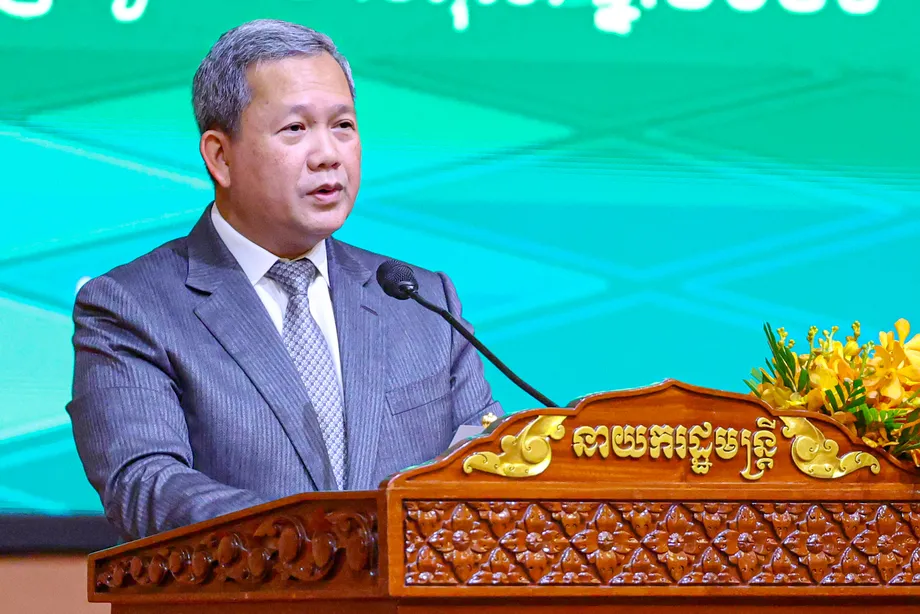
Cambodia launched its National Strategy for Micro, Small and Medium Enterprise Development 2026–2030 on October 22, 2026, setting out plans to improve business productivity, access to finance, technical skills and connections to markets. Prime Minister Hun Manet presided over the ceremony at Sokha Phnom Penh Hotel in the capital.
Contents
- A national plan for businesses employing nearly 3 million people
- What the census reveals about the sector
- Productivity and standards move to the centre
- A proposed unit to simplify business procedures
- Training support already reaches thousands
- How the strategy connects to other national plans
- The timetable runs beyond the 2029 milestone
- What implementation means for owners and workers
- Key Points
The strategy brings together support for a sector that employs approximately 2.98 million people, including more than 1.84 million women, according to figures cited by the government. Its launch comes as Cambodia prepares to leave the United Nations category of least developed countries at the end of 2029, placing business competitiveness alongside a major national development milestone.
For business owners, the priorities concern everyday needs: obtaining registration and licences, finding suitable finance, training workers, using technology and producing goods that meet buyers' standards. The government has proposed an SME coordination unit to help with administrative procedures and incentives, while existing entrepreneurship and training institutions will remain part of the support network.
Hun Manet, Cambodia's prime minister, described the sector's economic role in a statement published by the government news agency Agence Kampuchea Presse in its official launch account:
Indeed, micro, small and medium-sized enterprises, or MSMEs, are the backbone of the national economy and key partners of the Royal Government in creating jobs, generating household income, promoting domestic production and strengthening economic resilience,
MSME is a collective term for businesses ranging from very small operations to medium enterprises. By grouping them within one strategy, the government aims to connect policies and support mechanisms more closely to what those businesses need to operate and grow.
What the census reveals about the sector
The 2022 Cambodia Economic Census counted approximately 753,670 business establishments and enterprises, including 60,503 small and medium enterprises, according to the government statement. The census was conducted by the National Institute of Statistics under the Ministry of Planning.
The employment figures show why the strategy matters beyond business owners. More than 1.84 million women out of approximately 2.98 million workers means women represent roughly 62% of MSME employment. Changes in business income, working practices and access to training therefore reach a workforce in which women form the majority.
Hun Manet's launch remarks also cited MSMEs as contributing about 63% of gross domestic product and more than 70% of employment outside agriculture. Gross domestic product, or GDP, measures the value of goods and services produced within a country.
The government statement describes MSME employment as more than 60% of the total workforce, while the launch remarks put the share above 70% when agriculture is excluded. The two percentages use different workforce totals. Together, they describe the sector's broad role in employment and its particularly large presence in work outside farming.
Productivity and standards move to the centre
Hun Manet identified productivity, quality, standards, technology adoption and access to supply chains with greater added value as challenges for the next stage of business development. The strategy also seeks better access to finance and technical skills.
Productivity means producing more value from the resources a business uses, such as workers' time, equipment and materials. A firm might improve it by reducing wasted materials, organising production more effectively or using technology to complete tasks more efficiently. Quality concerns how well a product performs; standards set requirements that a buyer or market expects it to meet.
Supply chains connect businesses that provide materials, make products and deliver them to customers. Moving into activities with greater added value means doing work that contributes more to a product's usefulness or selling price. For Cambodian enterprises, the government's stated goal is to build the capabilities needed to reach those buyers and markets.
A proposed unit to simplify business procedures
The government has proposed creating an SME coordination unit to help with registration, licensing and business incentives. These procedures affect how enterprises enter the formal economy and obtain permission to carry out particular activities.
Registration records a business with the relevant authorities. A licence authorises an activity subject to specific rules. Incentives are forms of support intended to encourage eligible businesses to invest or develop. Bringing coordination to these areas could give owners a more connected route through government procedures, depending on how the unit is organised.
By September 2026, more than 44,000 registered enterprises and handicraft businesses provided nearly 500,000 jobs, according to figures presented around the launch. That administrative count covers registered enterprises and handicraft operations, while the 2022 census counted a much broader set of economic establishments.
No start date was given for the proposed coordination unit, and the launch announcements did not set out its application procedures, eligibility rules or a budget for the full strategy. Business owners will need those operational details to know when and how they can seek assistance.
Training support already reaches thousands
The Skills Development Fund had provided US$15.27 million in support for MSME training projects involving 76,000 trainees through late September 2026, Hun Manet said. Those figures give a concrete measure of the training support already in place as the new strategy begins.
The prime minister also named the Techo Startup Center, the Entrepreneurship Development Fund and Khmer Enterprise as institutions supporting entrepreneurship and the adoption of digital technology. The new strategy aims to connect such mechanisms more closely with the practical needs of enterprises.
Skills, finance and technology are linked in the government's agenda. Equipment requires people who can operate it, while producing to a buyer's specifications requires workers who understand the process. Finance can help a business invest, and technical knowledge helps it decide how to use that investment.
Hun Manet said the value of support mechanisms depends on turning them into practical action and results that business owners can see and accept. That puts implementation, including access to services and useful training, at the centre of the government's stated test for success.
How the strategy connects to other national plans
The MSME strategy sits alongside Cambodia's Pentagonal Strategy Phase I, particularly its third priority area concerning private sector development and employment. That area includes improving the business environment, encouraging investment and strengthening domestic enterprises.
Two other strategies address businesses at different stages. The National Strategy for Informal Economy Development 2023–2028 seeks to widen access to support for people working outside formal arrangements, including very small businesses and people working for themselves. The startup strategy for 2026–2030, launched recently, focuses on innovation, technology and new business models, including opportunities for young entrepreneurs.
The MSME plan is intended to connect these policies. A small existing enterprise may need help with registration or production standards, while a new technology business may need a different kind of support. Coordination matters because owners can face several of those needs as their businesses develop.
Hun Manet credited previous administrations led by former Prime Minister Hun Sen, now president of the Senate, with establishing peace, stability, infrastructure, legal frameworks and a favourable business environment. He presented the new strategy as another step towards Cambodia's development vision for 2050.
The timetable runs beyond the 2029 milestone
Cambodia's planned graduation from least developed country status at the end of 2029 falls within the strategy's 2026–2030 period. The category is a United Nations development classification. The government has linked preparations for graduation with the need for enterprises to become more productive, use better technology and reach more valuable markets.
The dates place the MSME strategy within a wider sequence of business policies and support measures:
- 2022: The economic census counted approximately 753,670 business establishments and enterprises.
- 2023–2028: The informal economy strategy provides a framework for extending support to informal workers and businesses.
- Late September 2026: Skills Development Fund support reached US$15.27 million for projects involving 76,000 trainees.
- October 22, 2026: Hun Manet launched the national MSME strategy in Phnom Penh.
- End of 2029: Cambodia is preparing to graduate from least developed country status.
- 2030: The MSME strategy and the startup strategy reach the end of their stated periods.
The overlapping dates mean registration support, training and improvements in production will be pursued during the same years as preparations for graduation. The strategy's scope extends into 2030, giving the programme a planning period that continues beyond that milestone.
What implementation means for owners and workers
The Ministry of Industry, Science, Technology and Innovation and the Ministry of Economy and Finance helped prepare the strategy, alongside other public institutions, private sector participants, development partners and business associations. Hun Manet thanked those involved for contributing to a plan intended to be practical and workable.
For owners, the government's commitments translate into several concrete areas to watch: whether registration becomes easier, whether training matches production needs, whether finance becomes more accessible and whether businesses can meet the requirements of more demanding buyers. Workers have a direct stake because the sector supports nearly 3 million jobs.
The launch brings those aims under a common national framework. The next stage is to turn the proposed coordination arrangements and existing support programmes into services that enterprises can use, matching the prime minister's call for visible results.
Key Points
- Cambodia launched its MSME development strategy for 2026–2030 on October 22, 2026, in Phnom Penh.
- Government figures put MSME employment at approximately 2.98 million people, including more than 1.84 million women.
- The priorities include productivity, quality, technology, finance, skills and access to markets.
- A proposed SME coordination unit would help with registration, licensing and incentives.
- The Skills Development Fund had supported training projects involving 76,000 trainees with US$15.27 million through late September 2026.
- The strategy spans Cambodia's planned graduation from least developed country status at the end of 2029.