Welfare pledge meets renewed pressure on public finances
President Prabowo Subianto has opened the door to another round of large budget savings, while Finance Minister Suahasil Nazara says the purpose is to preserve spending that improves public welfare. Their remarks on October 21, 2026, came as Indonesia faced a sharp stock market decline and the possibility of losing its emerging market classification with global index provider MSCI.
Contents
- Welfare pledge meets renewed pressure on public finances
- What Prabowo and Suahasil said
- Efficiency means keeping results while reviewing costs
- Large public programs are part of the spending equation
- A growth target within a borrowing limit
- Why MSCI has become part of the debate
- Market losses put enforcement under scrutiny
- The dates connecting spending and market decisions
- Key Points
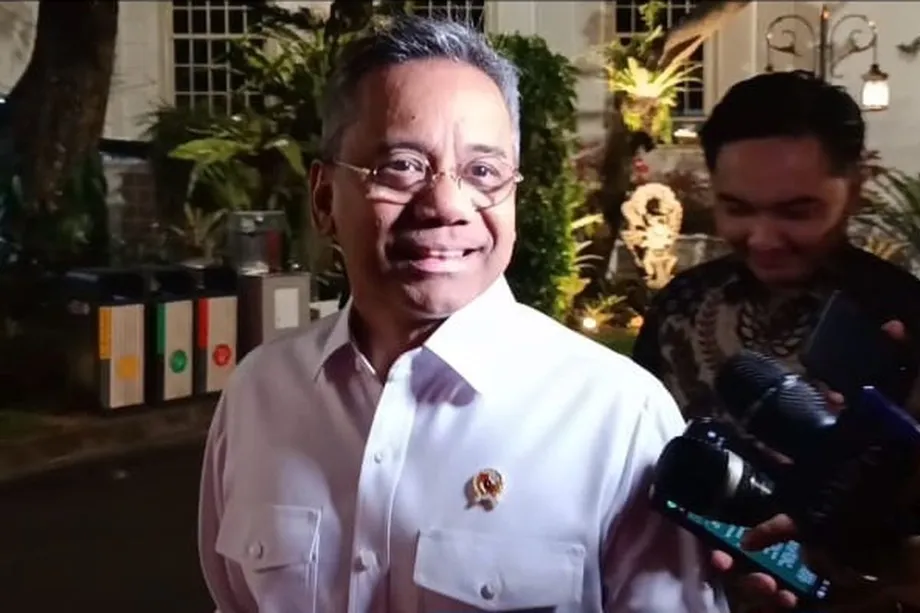
Speaking after a plenary cabinet session at the Presidential Palace in Jakarta, Suahasil said the government would keep reviewing the state budget, known as the APBN, to find savings and finance necessary public spending. Two days earlier, he had promised that continuing efficiency reviews through the end of 2026 would not disrupt priority programs.
The president's latest remarks follow an earlier savings drive under Presidential Instruction No. 1 of 2025, which set a target of about Rp306.69 trillion across ministries, government agencies and spending involving regional governments. The government says savings during its first year exceeded Rp300 trillion.
No amount, list of affected programs or implementation timetable was announced for a further round. Prabowo presented additional savings as an option if needed, while Suahasil described efficiency as an ongoing responsibility in managing an already approved budget.
The immediate stakes extend from public services to investor confidence. The government wants economic growth of 6% in 2027 while holding the budget deficit at 2.4% of gross domestic product. At the same time, financial regulators face demands to address opaque share ownership and suspected coordinated trading, concerns behind MSCI's proposed reclassification of Indonesia.
What Prabowo and Suahasil said
Prabowo raised further savings at the end of his cabinet address. The president said the government was prepared to tighten spending again if circumstances required it.
Ladies and gentlemen, if necessary, we will enact massive savings. We will tighten our frugality even further,
Suahasil, explaining the welfare purpose of the budget review that evening, said the government continually sought efficiency in the APBN. He described the reason for doing so:
So that we can fund the necessary expenditures for the welfare of the community. That's the intent,
Prabowo also framed his administration's work as unfinished. Comparing its five years in office to a football match, he said it had not yet reached halftime, which would come after two and a half years. The cabinet session followed the second anniversary of his inauguration alongside Vice President Gibran Rakabuming Raka on October 20, 2024.
His appeal combined patience with a willingness to make sacrifices. For ministries and agencies, however, the practical spending choices will depend on decisions about which activities can cost less while still delivering the promised services.
Efficiency means keeping results while reviewing costs
Suahasil gave a more detailed explanation of the government's approach after a meeting at the presidential complex on October 19. Budget allocations had already been set, he said, but officials would continue checking whether each activity needed as much money as originally planned.
He described the task as improving management so that programs meet their targets with more efficient implementation. In simple terms, the government's stated aim is to deliver the planned service while reducing avoidable costs.
Suahasil cited the Free Nutritious Meals program, known by its Indonesian initials MBG, as an example. He said its management had undergone major changes under new leadership at the National Nutrition Agency, or BGN. His explanation focused on how the program was run and whether it achieved its intended output.
For a meals program, output means the service delivered to recipients. A budget review therefore involves both money and delivery: how much is spent, how the spending is managed and whether people receive the meals intended for them. Suahasil's assurance was that the government's priority programs would continue during the review.
Large public programs are part of the spending equation
The scale of Indonesia's priority programs helps explain why Suahasil has tied savings to public welfare. Government figures put the reach of Free Nutritious Meals at 56.99 million beneficiaries by August 31, 2026.
Free Health Checks reached 70.3 million people in 2025 and 99.1 million by September 2026. The later figure was 28.8 million higher, an increase of about 41%, even though the 2026 reporting period covered only nine months. The figures describe program reach across those periods, with no combined total of distinct recipients given.
The government has also allocated support for renovating 10,000 community health centres, known as puskesmas, and for building and equipping regional public hospitals. Education priorities include Sekolah Rakyat, Sekolah Unggul Garuda, school and Islamic school renovation, and digital learning.
These commitments put service delivery at the centre of the budget debate. Families experience public spending through meals, health checks, classrooms and functioning clinics. The government's promise to protect priority programs means that any savings exercise must be judged alongside what those services actually deliver.
A growth target within a borrowing limit
For 2027, the government is aiming for economic growth of 6% and a budget deficit equal to 2.4% of gross domestic product, or GDP. GDP measures the value of goods and services produced in the economy. A budget deficit occurs when government spending exceeds revenue, leaving a gap that must be financed.
A deficit of 2.4% of GDP means that the planned gap between spending and revenue would equal Rp2.40 for every Rp100 of annual economic output. Suahasil has described the APBN as a means of supporting growth, maintaining fiscal stability and improving welfare.
The savings drive sits within those competing demands. Spending on health, education and nutrition supports the government's development priorities, while limiting the deficit requires control over how much the state spends beyond what it collects.
The earlier instruction's Rp306.69 trillion target provides a benchmark for the size of the administration's ambitions. The government's statement that first year savings exceeded Rp300 trillion gives a broad result, but the new proposal has yet to attach a specific financial target to the next stage.
Why MSCI has become part of the debate
MSCI's proposed move would shift Indonesia from its Emerging Markets category to Standalone status, outside its broad emerging and frontier market benchmarks. Indonesia retains its emerging market classification during the consultation.
Index providers build baskets of shares that investors use to measure performance or guide investments. Funds designed to follow an emerging market index may have to sell a country's shares if those shares leave the benchmark. That makes classification relevant to the demand for Indonesian stocks.
The concerns behind the consultation centre on ownership transparency, shares held by a small number of owners, and suspected coordinated trading. Investors need to know who controls a company and how many shares are genuinely available to buy and sell. When ownership is concentrated, relatively few shares may circulate freely.
Prabowo described MSCI's pressure in defiant terms during the cabinet session. Addressing the index provider directly, the president said:
I simply say to MSCI, the Indonesian nation fears no one and will not be intimidated!
The financial response is being handled through market supervision. Suahasil referred questions about the capital market to the Financial Services Authority, known as OJK, while saying the Finance Ministry supported its oversight of trading and market integrity.
Market losses put enforcement under scrutiny
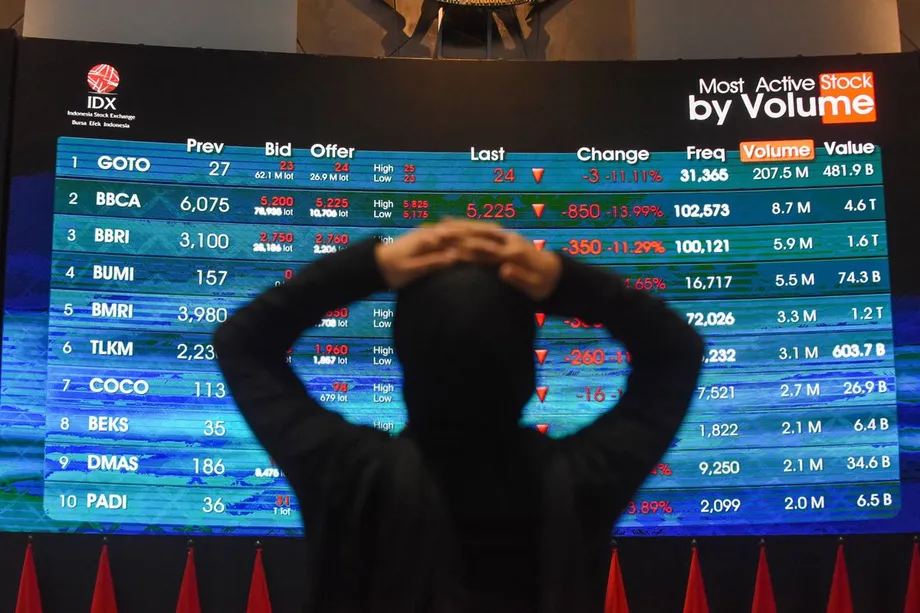
The Indonesia Composite Index, commonly called the IHSG, fell 11.6% on October 16. An estimate accompanying the latest account of the president's remarks put the loss in market capitalisation at about $85 billion, or Rp1,528 trillion; other published estimates put the loss at about $60 billion and $65 billion.
Market capitalisation is the combined value of shares, calculated using their prices and the number issued. Falling prices reduce that value and affect the worth of investors' holdings. On October 19, the IHSG fell another 3.64% to close at 4,996.00, its lowest level in six years.
Regulators had already announced enforcement action. OJK's market enforcement measures included Rp2.1 trillion in administrative fines involving three listed companies on October 16. It had also identified indications of possible criminal capital market violations in 31 of 61 stocks on its list of companies with highly concentrated ownership, slightly more than half.
The exchange separately introduced a 7% daily decline limit on October 19 for shares priced above Rp10, replacing the previous 15% limit. The temporary rule runs through December 31, 2026. It restricts how far individual share prices may fall during a session while leaving their upward limits unchanged.
Suahasil said the Finance Ministry backed OJK's work on trading oversight and market integrity. The division of responsibilities leaves the ministry focused on public finances while OJK oversees the conduct and functioning of the capital market.
The dates connecting spending and market decisions
The budget review and market consultation now run on different schedules. Efficiency reviews are due to continue through the end of 2026, while MSCI's decision process extends into 2027. The MSCI consultation announcement set April 30, 2027, as the feedback deadline and June 30, 2027, as the latest date for a decision.
- January 2025: Presidential Instruction No. 1 set an efficiency target of about Rp306.69 trillion.
- October 15, 2026: MSCI announced its proposed reclassification of Indonesia.
- October 16: The IHSG fell 11.6%, and OJK announced administrative fines involving three listed companies.
- October 19: The IHSG closed at 4,996.00, tighter share trading limits began, and Suahasil said priority programs would be protected.
- October 21: Prabowo raised the possibility of further large savings at the cabinet session.
- December 31: The temporary trading restriction is scheduled to end, alongside the period covered by continuing budget reviews.
- April 30, 2027: MSCI's consultation feedback deadline.
- June 30, 2027: The latest scheduled date for MSCI's decision.
Public demands add urgency to those administrative deadlines. Student demonstrations across Indonesia on October 20 called for cheaper essentials, more jobs and more affordable education and healthcare, alongside stronger action against forest fires.
Those demands give the welfare pledge a concrete test. Households want services they can use and costs they can afford. Investors want transparent ownership and credible trading oversight. The government's next decisions must address both pressures while turning the president's conditional savings proposal into specific budget choices.
Key Points
- Prabowo said on October 21 that Indonesia could undertake further large budget savings if needed.
- Suahasil said efficiency reviews would continue through 2026 while protecting priority programs.
- The earlier savings instruction targeted about Rp306.69 trillion; the government says first year savings exceeded Rp300 trillion.
- The government targets 6% economic growth and a deficit of 2.4% of GDP in 2027.
- MSCI is consulting on moving Indonesia from Emerging Markets to Standalone status because of concerns about ownership transparency and trading.
- MSCI feedback is due by April 30, 2027, with a decision scheduled by June 30.