Nearly Four in Ten Listed Companies Remain Below the Threshold
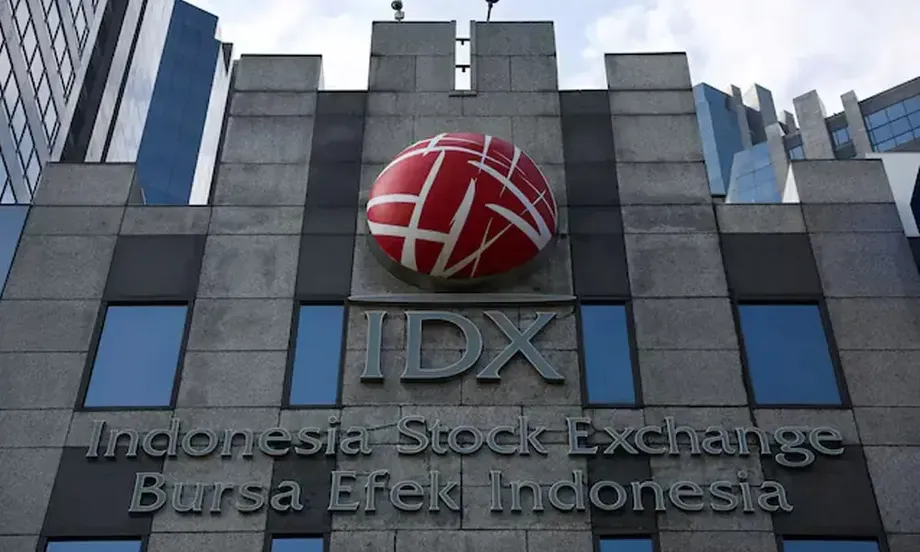
Indonesia Stock Exchange data show that 358 of its 918 listed companies had public shareholdings below the new 15% minimum as of September 30, 2026, leaving nearly four in ten companies still working toward the requirement during its transition period.
Contents
- Nearly Four in Ten Listed Companies Remain Below the Threshold
- What Changed on March 31?
- Which Companies Face the Earliest Deadlines?
- What the Earlier Counts Show
- How IDX Is Helping Companies Adjust
- New Listings Face Different Percentage Requirements
- Compliance Goes Beyond Reaching 15%
- Ownership Transparency and the MSCI Consultation
- Enforcement Continues as Company Profits Grow
- Key Points
The other 560 companies, about 61% of the total, had reached the threshold. Average free float across listed companies stood at 22.99%, according to the exchange, known as BEI in Indonesia and IDX internationally. Free float means shares that qualify as available for public trading under exchange rules, rather than shares held by controllers or other excluded owners.
The figures show why an average can hide a large compliance task. Although the exchange's average free float was 7.99 percentage points above the minimum, 39% of companies remained below it. Each company must meet its own requirement, according to the deadline that applies to its size and ownership structure.
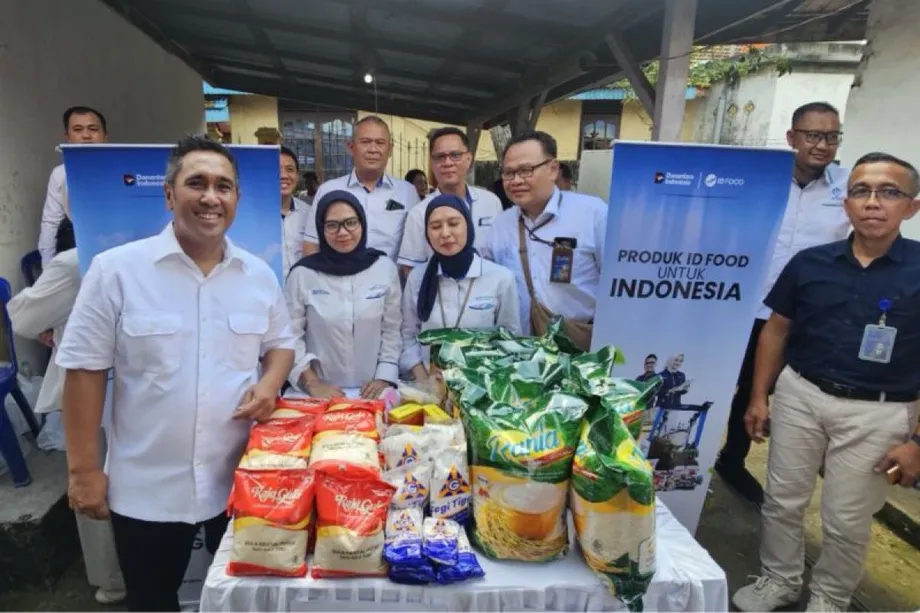
IDX development director Iding Pardi said the exchange was helping companies through briefings, transition reminders, direct discussions and a dedicated help desk. A monitoring task force involving the exchange, Indonesia Central Securities Depository, known as KSEI, and market associations is also tracking progress.
The effort comes alongside closer scrutiny of share ownership, an MSCI consultation concerning Indonesia's market classification and regulatory sanctions involving trading and share allocations. For companies, the immediate task is to identify which holdings qualify as public shares and how to reach the required level before their transition period ends.
What Changed on March 31?
IDX issued changes to Regulation No. I-A and an accompanying circular on March 31, 2026. The rules took effect that day, raising the ongoing minimum free float from 7.5% to 15%, while giving existing listed companies time to adjust.
The change doubles the percentage requirement. In a simplified example, a company with one billion listed shares would need 150 million qualifying public shares to meet the new percentage threshold, compared with 75 million under the previous minimum.
Public availability depends on ownership as well as the number of shares. Under the revised definition, qualifying shares must generally belong to shareholders who each hold less than 5% of total listed shares. Holdings belonging to controllers, their affiliates, directors or commissioners are excluded, as are shares held by the company itself.
Shares must also be held electronically, listed on the exchange and free of transfer restrictions. The circular addresses holdings subject to lockups, seizure or blocking orders, and certain venture capital or private equity portfolio holdings. Companies therefore need to review who owns their shares and whether those shares can qualify.
IDX also allows companies to seek recognition of certain public investor holdings below 10% as free float. That gives some companies a route to review the classification of existing shareholders, alongside possible changes to their ownership structure.
Which Companies Face the Earliest Deadlines?
Market capitalisation, the total market value of a company's shares, determines the main transition groups. IDX uses company values as of March 31, 2026, with Rp5 trillion as the dividing line.
Companies worth at least Rp5 trillion that had free float below 12.5% must reach 12.5% by March 31, 2027, then 15% by March 31, 2028. Larger companies already at 12.5% but below 15% must reach 15% by March 31, 2027.
Companies valued below Rp5 trillion have until March 31, 2029, to reach 15%. For shareholders assessing the September figures, the relevant question is therefore both how far a company is below the minimum and how much time it has left.
- March 31, 2026: Revised Regulation No. I-A and its accompanying circular took effect.
- May 31, 2026: IDX recorded 327 companies below the 15% threshold.
- September 30, 2026: IDX recorded 358 companies below the threshold and 560 meeting it.
- March 31, 2027: Larger companies face either a 12.5% interim target or the full 15% target, depending on their starting position.
- March 31, 2028: Larger companies that started below 12.5% must reach 15%.
- March 31, 2029: Companies valued below Rp5 trillion must reach 15%.
The September count does not identify how many of the 358 companies belong to each deadline group. That breakdown is needed to judge how much of the remaining work falls due in 2027 rather than later.
What the Earlier Counts Show
IDX recorded 327 companies, or 35.82% of listed companies, below the minimum at the end of May 2026. By September 30, the number had risen by 31 to 358, while the share below the threshold had increased to about 39%.
Earlier March figures contain a discrepancy. IDX listing director Saidu Solihin cited 323 companies below the threshold on March 31 when discussing the May update; another exchange tally for March 31 put the number at 328. The March tally of 328 included 247 companies valued below Rp5 trillion, roughly three quarters of that group.
The concentration among smaller companies helps explain the importance of the 2029 deadline. Many companies needing to adjust have been given a longer transition period than the larger businesses facing targets in 2027 and 2028.
Saidu said the exchange would update its figures after receiving monthly share ownership registration reports for June 30, which companies were required to submit by July 10, 2026. Those reports give the exchange a recurring record of ownership against which to monitor compliance.
How IDX Is Helping Companies Adjust
IDX has combined reminders about the revised Regulation No. I-A with direct contact and regular briefings for companies still below the threshold. Its help desk gives listed companies a channel to discuss questions about the transition and their ownership records.
The Free Float Monitoring Task Force brings together IDX, KSEI, the Indonesian Listed Companies Association, known as AEI, and the Indonesian Securities Companies Association, known as APEI. Its membership connects the exchange and securities depository with the companies and market participants involved in making ownership changes.
Saidu Solihin, IDX's listing director, described the exchange's role as continuing to support companies in meeting the requirement. He said:
Bursa terus mendukung upaya pemenuhan free float perusahaan tercatat.
IDX is also arranging contact between listed companies and prospective investors through roadshows, business meetings and Public Expose Live presentations. Earlier plans scheduled roadshows for domestic and overseas investors from August 2026 and Public Expose Live for September.
Iding said these meetings were intended to widen company exposure and support measurable progress toward the public ownership requirement. For a company seeking a broader shareholder base, explaining its business to prospective investors is a practical part of that process.
New Listings Face Different Percentage Requirements
Companies preparing an initial public offering, or IPO, face a separate set of entry thresholds. An IPO is the first sale of a company's shares to public investors before exchange trading begins.
Under the revised framework, companies with a market capitalisation below Rp5 trillion must have an initial free float of at least 25%. The requirement is 20% for companies valued from Rp5 trillion to Rp50 trillion, and 15% for those valued above Rp50 trillion.
Only shares offered in the IPO count toward that initial threshold. Existing minority shareholders who bought before the IPO can still count toward ongoing free float obligations if they qualify, but companies must size the public offering itself to satisfy the entry requirement.
Applicants must also meet minimum share counts: 300 million free float shares for the Main Board and 150 million for the Development Board. IDX may set a different minimum number for IPOs raising at least Rp30 trillion.
The rules therefore require a company to consider both the proportion of ownership offered to the public and the number of qualifying shares. A small percentage of a very large company and a larger percentage of a smaller company can produce different ownership structures, even when both satisfy their respective entry rules.
Compliance Goes Beyond Reaching 15%
Ongoing requirements generally include at least 50 million free float shares representing at least 15% of listed shares, together with at least 300 shareholders holding a single investor identification number, or SID. The SID identifies an investor in Indonesia's capital market records.
Main Board companies face additional requirements: free float market value above Rp200 billion and at least 750 shareholders with SIDs. Companies must therefore monitor the percentage, share count, value and spread of qualifying ownership.
Newly listed companies must maintain their initial listing free float requirements during their first year. The ongoing free float requirements apply after that first year.
Controllers also face restrictions lasting at least 12 months from listing, or another period set by IDX. A direct controller holding more than 50% may transfer shares during that period while remaining above 50%; a controller holding 50% or less cannot transfer shares during the lockup. The obligations also extend to incoming controllers when a change of control after listing is disclosed in the IPO prospectus.
Ownership Transparency and the MSCI Consultation
Indonesia's ownership reforms are taking place as MSCI consults on a proposal to change the country's classification from an emerging market to a standalone market. IDX said the consultation had not produced a final decision.
MSCI classifications help determine how markets are grouped in investment benchmarks. Funds that track those benchmarks use the groupings when allocating investments, making the treatment of Indonesia relevant to companies seeking international shareholders.
Iding said the Financial Services Authority, known as OJK, and market self regulatory organisations were improving disclosure, ownership data quality and investor access to information. Measures include publishing ownership data for stakes above 1% and providing more detailed information about shareholders.
IDX and KSEI have also placed some issuers in a high shareholding concentration category, known as HSC. Concentrated ownership means a large proportion of shares sits with a limited group of holders. Better ownership records help investors assess how much stock is held by that group and how much is available more broadly.
The free float programme and the transparency measures address connected parts of the market: the quantity of shares available to public investors and the visibility of the people or organisations holding them.
Enforcement Continues as Company Profits Grow
OJK imposed sanctions totalling Rp2.1 trillion on parties connected with trading violations involving PT Dian Swastatika Sentosa Tbk, or DSSA, and share allocations involving PT Barito Renewables Energy Tbk, or BREN, and PT Petrindo Jaya Kreasi Tbk, or CUAN.
The total comprised Rp1.5 trillion in administrative fines related to DSSA trading during 2024 to 2026, Rp500 billion related to BREN allocations and Rp100 billion related to CUAN allocations. These enforcement actions sit alongside the exchange's work on ownership disclosure and compliance support.
Listed companies were also reporting higher earnings. IDX said their combined net profit rose 16.25% in the first half of 2026 compared with the same period in 2025. Companies in the LQ45 index recorded profit growth of 18.49%, while 74% of listed companies reported a profit.
The energy sector recorded the highest net profit growth, at 78.28%. Those business results give investors another part of the picture as companies seek public shareholders: earnings performance accompanies the ownership, disclosure and trading information needed to assess an investment.
For the 358 companies below 15% in September, the next task is concrete. They must establish which holdings qualify, determine the gap against their applicable requirements and complete the necessary adjustments by their respective deadlines. Investors can track that progress through ownership disclosures and subsequent exchange updates.
Key Points
- IDX recorded 358 of 918 listed companies below 15% free float on September 30, 2026; 560 companies met the threshold.
- Average free float was 22.99%, while about 39% of companies remained below the minimum.
- The ongoing percentage requirement doubled from 7.5% to 15% on March 31, 2026, with transition periods for existing companies.
- Larger companies face targets in March 2027 and March 2028; companies valued below Rp5 trillion have until March 2029.
- IPO thresholds range from 15% to 25%, with additional share count and ownership requirements.
- IDX is providing company assistance while authorities expand ownership disclosure and monitor concentrated holdings.
- MSCI's proposed classification change remained under consultation, with no final decision announced by IDX.