What Changes on 1 January 2027?
PT Asuransi Jasa Indonesia, known as Jasindo, is set to become the single general insurer inside Indonesia's state insurance group on 1 January 2027, taking over PT BRI Asuransi Indonesia (BRINS) and PT Asuransi Jasaraharja Putera (JRP). The date follows a conditional merger agreement signed on 25 November 2026 and a merger summary published two days later. Jasindo is the receiving company. BRINS and JRP are the companies merging into it. The agreement was signed by the three insurers, PT Bank Rakyat Indonesia (BRI), Indonesia Financial Group (IFG) and Jasa Raharja.
Contents
- What Changes on 1 January 2027?
- A State Insurance Sector Cut Down to Size
- Who Owns the New Jasindo?
- What Happens to Employees?
- Why Jasindo Is the Receiving Company
- The Credit and Guarantee Side Moves Too
- Regulators, Creditors and Shareholders Still Hold Keys
- What the Merger Is Meant to Fix
- What Is Not Yet Settled
- Timeline: From Letters to a New Insurer
- Key Points
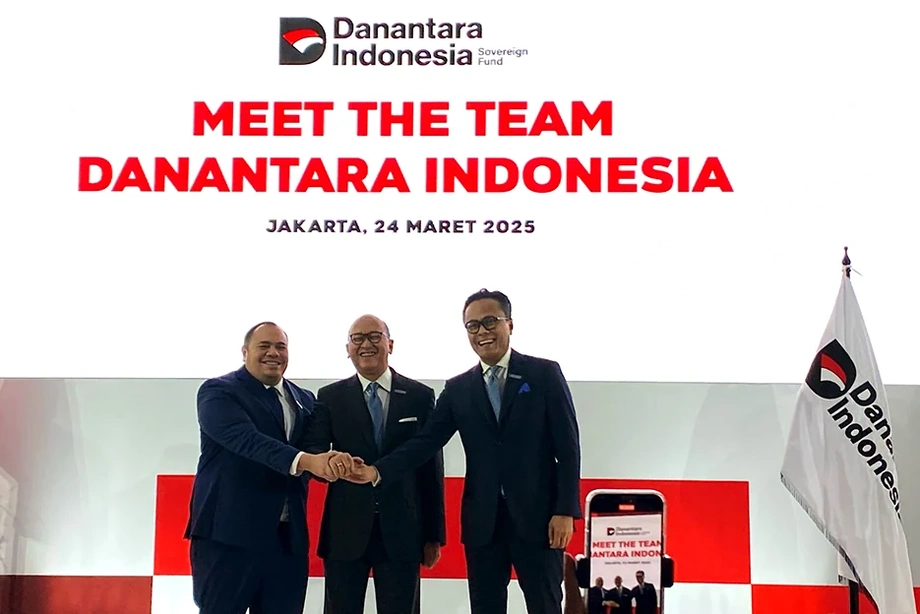
Danantara wants to cut the 16 insurers in the IFG ecosystem to three: one general insurer, one life insurer and one credit insurer. Dony Oskaria, chief operating officer of Badan Pengelola Investasi Daya Anagata Nusantara (Danantara), the state investment body, described the target at a meeting with parliament's Commission VI on 26 November 2026.
We are merging 16 insurance companies into three. Later we will have only one general insurance company, the second is life insurance, and the third is credit insurance.
Dony has also cited 15 as the number of insurers in the pool. Jasindo will take over the entire insurance and guarantee portfolios of BRINS and JRP, keep its conventional general insurance licence and continue the business of both companies. All fixed assets owned by BRINS and JRP will transfer to Jasindo by law on the effective date. Offices, distribution channels, information technology systems, reinsurance programmes and support functions are also due to be integrated.
A State Insurance Sector Cut Down to Size
Danantara is reshaping the holdings under its control, and insurance is one piece of a much larger corporate overhaul. Dony said in February 2026 that the number of subsidiaries and sub-subsidiaries of state enterprises, known in Indonesia as BUMN, will fall from 1,043 to about 300 in 2026. He also said more than 350 mergers and acquisitions across state enterprises are planned over the next one to two years, with the total number of state enterprises falling from 888 to fewer than 200.
The 1,043 count covers companies below the main state enterprises, while the 888 count covers the state enterprises themselves. The evaluation of business lines was targeted for completion by October 2025, with companies grouped by industry. Danantara Asset Management (DAM) appointed IFG to lead consolidation of insurers in its ecosystem through a letter dated 19 September 2025, repeated its instruction on 2 March 2026 and asked for faster completion of subsidiary restructuring in a letter dated 30 September 2026.
Who Owns the New Jasindo?
BRI owns 90% of BRINS, with the remaining 10% held by the Yayasan Kesejahteraan Pekerja Bank Rakyat Indonesia. The state owns 99.99% of Jasindo through Series A Dwiwarna shares, and IFG holds 0.01%. Jasa Raharja owns 93.8% of JRP; Allianz Life Indonesia holds 1.5%, Pata Karsa Utama 2.2% and Servico Delta Investama 2.5%.
After the merger, IFG Group is set to hold 56.72% of Jasindo in aggregate: 34.44% directly and 22.28% through Jasa Raharja. BRI will hold 38.96% through a share conversion. IFG corporate secretary Denny S. Adji said the entry of BRI does not change who controls Jasindo.
The entry of BRI as a shareholder of Jasindo with 38.96% ownership through a share conversion mechanism does not change the majority position of IFG Group in Jasindo. With this composition, control of Jasindo remains within the IFG ecosystem.
Public appraisal firm KJPP Suwendho Rinaldy dan Rekan gave a fairness opinion dated 20 November 2026, an independent assessment of whether the deal terms are fair. It covered the insurance industry, operations, business prospects, historical financial performance, financial projections and share conversion ratios. The appraiser concluded the merger was fair. BRI also said the transaction carries no conflict of interest under POJK No. 42/POJK.04/2020, a regulation on conflicts of interest for public companies, even though the companies are affiliated because the state ultimately controls them.
What Happens to Employees?
Employees of BRINS and JRP who are still employed when the merger takes effect and who agree to continue working will become Jasindo employees, with their years of service recognised. The merger summary says the transfer does not create an obligation to pay severance, long service awards or compensation for rights, unless other laws, work agreements, company rules or collective labour agreements require it.
Jasindo will keep existing terms and conditions in place until it harmonises them. The company has committed to treat all employees fairly, equally and without discrimination, and to harmonise work requirements and human resources policies gradually. Employees who decline to continue with Jasindo will be covered by labour law and the applicable company or collective agreements.
Denny said IFG is applying a no one left behind principle and will respect the competence, capability and contribution of each employee.
The employee transfer process and organisational adjustments will be carried out in stages and in a planned way, while taking into account the rights and interests of employees, the needs of the organisation and the applicable labour rules.
BRINS and JRP have prepared measures to keep policyholder service, claim settlement, operations and Jasindo's financial stability from being disrupted during the transition. Policyholders were notified when the merger summary was published on 27 November 2026.
Why Jasindo Is the Receiving Company
Jasindo was chosen as the surviving entity for two reasons set out in the merger summary. The three companies do the same general insurance business, and running that business through separate entities created scope to combine operations and strengthen capital. Jasindo also runs a government health insurance programme, and its status as a state enterprise meets the legal requirements for the operator. Keeping that business inside a state enterprise is meant to reduce the risk that a change in legal status or corporate structure interrupts service to participants.
Jasindo was designated as the receiving company so that the government programme it runs in health insurance continues without interruption.
A combined Jasindo is expected to have stronger capital, greater underwriting capacity and retention, a wider service network and better governance. Underwriting capacity is the ability to accept risk. Retention is the share of that risk the insurer keeps rather than passing to reinsurers. A larger balance sheet allows the combined company to write bigger policies and keep more risk on its own books.
BRI's presence as a shareholder is meant to add a banking distribution network and bring insurance products to more households and businesses. IFG says the group will still control Jasindo, while BRI's stake creates room for cooperation between banking and insurance.
The Credit and Guarantee Side Moves Too
IFG has begun moving guarantee business out of its insurance companies. Jamkrindo, the state credit guarantee company, has received the transfer of guarantee portfolios from non-guarantee, insurance entities within IFG. Sigit Tjahjo Prabowo, Jamkrindo's director of operations and networks, confirmed the transfer at a media gathering in Karanganyar, Central Java, on 27 November 2026.
Jamkrindo received the transfer of guarantee portfolios from non-guarantee companies, insurance companies, within IFG.
A company statement on 27 October 2026 had described the transfer as one option under review, subject to business feasibility, operational readiness, risk management and governance. The step supports a plan to streamline conventional and sharia guarantee clusters into a more integrated industry structure.
Jamkrindo guaranteed Rp 271.20 trillion of credit and covered 2.97 million micro, small and medium enterprises and cooperatives as of September 2026, with pretax profit of Rp 1.1 trillion in the same period. Its business includes guarantees for Kredit Usaha Rakyat, a government program that backs loans for small businesses, as well as general credit, bank guarantees, construction and procurement credit, and surety bonds, which guarantee contract performance.
The government also plans to combine Jamkrindo, Jasindo and Askrindo into a new holding company for credit insurance and guarantees. No company has been named as the parent of that holding. The general insurance merger and the credit and guarantee consolidation are separate tracks, although Jasindo appears in both discussions.
Regulators, Creditors and Shareholders Still Hold Keys
OJK must approve the merger before it can take effect. The Financial Services Authority supervises all three insurers. Ogi Prastomiyono, the OJK executive head for insurance, guarantee and pension fund supervision, said on 30 June 2025 that the regulator was still discussing the programme with IFG.
We are still talking with IFG. We have to talk with IFG about how the programme works.
Creditors had until 11 December 2026 to file objections. OJK approval was expected on 23 December 2026, and a general meeting of shareholders, known as RUPS, was set for 28 December 2026. The merger is projected to take effect on 1 January 2027, with the result announced on 15 January 2027.
Jasindo will issue new shares to the merging companies, a step meant to strengthen its capital structure. It will be carried out after OJK and shareholder approval, through a shareholders meeting or outside one. The conditional agreement also depends on conditions that must be met before completion and approvals from regulators and related parties.
What the Merger Is Meant to Fix
Three general insurers with overlapping businesses are coming together because the merger summary says running similar activities through several separate entities created an opportunity to combine them, create business synergies and strengthen capital. The new entity is meant to be sizeable, feasible and sustainable, with stronger business and capital capacity, higher competitiveness and better protection for the public.
A larger pool of policies spreads risk more widely, which is why scale matters in insurance. A bigger capital base also helps an insurer absorb shocks and meet regulatory capital requirements. The combined company will inherit BRINS and JRP portfolios, which adds premium income and claims liabilities at the same time. How well those portfolios fit together will shape the benefit.
Danantara's wider restructuring aims to simplify a state corporate sector that grew into hundreds of subsidiaries. For the insurance arm, the goal is three companies with clear business segments: general, life and credit. The general insurance step is the first to reach a signed agreement and a published merger plan. Consolidation of life insurers is expected to follow.
What Is Not Yet Settled
BRI's disclosure did not set out the detailed ownership structure of Jasindo after the merger or the exact share transfer mechanism. The parent of the planned credit insurance and guarantee holding has not been named. OJK approval and the shareholder meeting remain ahead, and the merger could still be affected by conditions that must be met before completion.
Jasindo has said employee transfer and organisational changes will be gradual, without giving a timetable for harmonisation. Policyholders face a change of counterparty but not, on the current plan, a change in cover. Employees face a change of employer but, for those who stay, recognition of service and no severance payment triggered by the transfer.
Whether the combined insurer delivers the stronger capital and governance promised depends on how the portfolios, systems and staff are brought together after 1 January 2027. The credit and guarantee holding adds a second integration task, and its parent company is still to be decided.
Timeline: From Letters to a New Insurer
The deal moved through a series of letters, approvals and corporate steps.
- 20 May 2025: Dony Oskaria says more than 350 mergers and acquisitions are planned across state enterprises and the business review should finish by October 2025.
- 30 June 2025: OJK says it is still discussing the insurance consolidation with IFG.
- 19 September 2025: Danantara Asset Management appoints IFG to lead consolidation of insurers in its ecosystem.
- 2 March 2026: The instruction is reaffirmed.
- 30 September 2026: DAM asks for faster restructuring of subsidiaries in 2026.
- 20 November 2026: KJPP Suwendho Rinaldy dan Rekan issues a fairness opinion on the merger.
- 25 November 2026: BRINS, Jasindo, JRP, BRI, IFG and Jasa Raharja sign the conditional merger agreement.
- 27 November 2026: The merger summary is published and policyholders are notified. Creditors can object until 11 December.
- 23 December 2026: OJK approval expected.
- 28 December 2026: Shareholders meeting scheduled.
- 1 January 2027: Merger effective date.
- 15 January 2027: Merger result to be announced.
Key Points
- Jasindo will absorb BRINS and Jasaraharja Putera on 1 January 2027 under a conditional agreement signed on 25 November 2026.
- The merger is the first step in cutting 16 state insurers in the IFG ecosystem to three: general, life and credit.
- IFG Group will hold 56.72% of Jasindo after the merger, and BRI will hold 38.96% through share conversion.
- Jasindo will take over all insurance and guarantee portfolios and keep its general insurance licence.
- BRINS and JRP employees who continue will keep recognised service, and the transfer is not meant to trigger severance.
- OJK approval is expected on 23 December 2026 and a shareholders meeting is set for 28 December 2026.
- Jamkrindo has taken over guarantee portfolios from IFG insurance companies and guaranteed Rp 271.20 trillion of credit as of September 2026.
- Plans for a credit insurance and guarantee holding with Jamkrindo, Jasindo and Askrindo have not named a parent company.