What the tariff proposal says
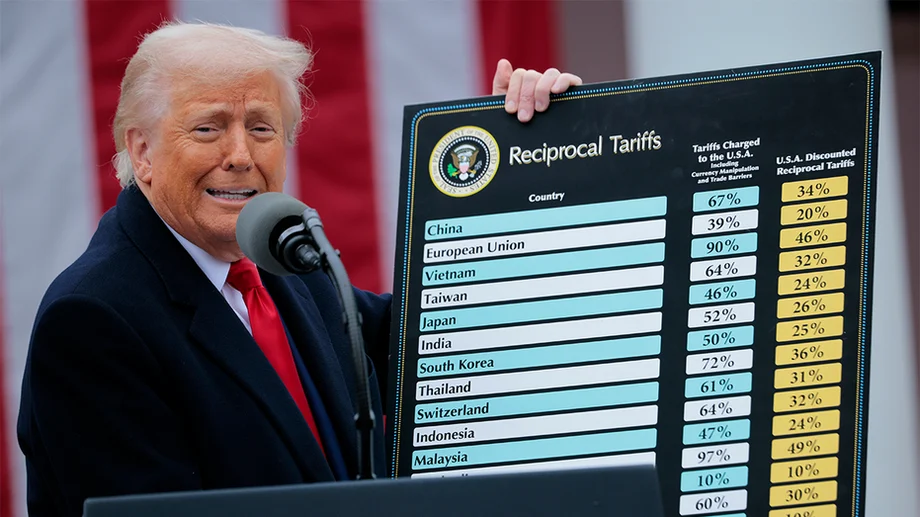
President Donald Trump's administration proposed an additional tariff of up to 18 percent on Indonesian imports on Nov. 25, 2026, after an investigation lasting eight months into what Washington calls structural excess manufacturing capacity. The action covers 14 economies and puts Indonesia in the same proposed band as Cambodia, Malaysia, Thailand and Bangladesh. Mexico and Norway were left out for now while their trade practice investigations continue.
Contents
- What the tariff proposal says
- How the case reached Jakarta
- Dates that shape the next move
- Jakarta sees an opening and asks for fairness
- Which Indonesian exporters face the most risk
- Why China sits behind the tariff numbers
- Regional rivals race for better terms
- What changes for factories, shoppers and officials
- Key Points
The proposed ceilings differ sharply by partner. Vietnam faces up to 35 percent unless it reaches a trade agreement, when the cap could fall to 20 percent. India faces up to 25 percent, potentially 17 percent under a qualifying agreement. India and Washington agreed a framework in February setting 18 percent, but no agreement has been signed. China faces up to 20 percent, and Singapore up to 20 percent, with Singapore's rate potentially falling to 10 percent. Japan, South Korea, Taiwan, the European Union and Switzerland are proposed at 15 percent, including existing most favored nation duties.
These numbers are ceilings, not bills already being collected. A tariff is a tax on imports paid at the border by the importer; the cost can then be shared with the foreign supplier or passed to customers. The final charge on a shipment depends on the product code, country of origin, existing duties and exemption lists. No final effective date has been announced.
Jamieson Greer, the US Trade Representative, said the proposal was meant to counter industrial tactics that Washington says hurt American factories. He described the target as:
industrial strategies built on targeting manufacturing, wage and labour suppression, financial and other support, non-market economy inputs, and other market-distorting practices.
Greer said the rates reflected trade deals already reached or still being negotiated. He argued that many agreements had already addressed parts of the overcapacity problem, while the proposal kept pressure on practices that, in Washington's view, lower wages and flood markets with goods that American producers cannot match on price. The wider inquiry covered excess production in batteries, cement, chemicals and processed food. India's case named pharmaceuticals, medical devices, steel, solar products and information and communications technology.
How the case reached Jakarta
The official Trump 2.0 tariff tracker lists Indonesia among the economies covered by Section 301 excess capacity investigations threatened on Mar. 11, 2026, and cites 91 Fed. Reg. 12886, published Mar. 17, 2026. It also records an Indonesia reciprocal trade agreement released Feb. 19, 2026, during the period when reciprocal tariffs were in effect.
Section 301 of the Trade Act of 1974 allows the United States to respond to trade practices it judges unreasonable or discriminatory. It is different from the International Emergency Economic Powers Act, known as IEEPA, which presidents have used for emergency tariffs. The Supreme Court's February 20, 2026 decision in Learning Resources, Inc. v. Trump and Trump v. V.O.S. Selections struck down the challenged IEEPA tariffs. April 2025 is also used for that emergency tariff fight in the discussion about China, while February 20, 2026 is the date tied to the named cases in this Section 301 action.
The earlier investigations began on Mar. 11, 2026 and initially covered 16 economies. Nearly 140 witnesses gave testimony and 1,070 comments were filed before the latest proposed responses. The new consultation asks businesses and governments to respond to the proposed duties themselves, not to reopen the basic finding.
That legal distinction matters for Jakarta because the new rates use a different authority from the tariffs struck down by the court. Existing Section 301 duties, Section 232 national security duties and most favored nation rates can all affect the final amount. Some proposals are expressed as net figures, meaning Washington subtracts certain existing duties before setting a ceiling.
Dates that shape the next move
Washington has moved the dispute from investigation into a comment and hearing process. The calendar also matters for China, whose truce with the United States is due to end after the Indonesia focused hearings begin.
- Feb. 19, 2026: An Indonesia reciprocal trade agreement is released.
- Mar. 11, 2026: Section 301 excess capacity investigations are threatened, covering 16 economies at the start.
- Nov. 25, 2026: USTR announces findings for 14 economies and sets out proposed rates by country.
- Jan. 5, 2027: Written comments, requests to testify and testimony summaries are due.
- Jan. 10, 2027: The trade truce between the United States and China is scheduled to end.
- Jan. 25, 2027: Hearings on the proposed actions are scheduled to begin and may continue as needed.
The proposed tariffs were described as taking effect after the hearing schedule in the initial announcement, but the later legal notice says USTR has not published final duties or an effective date. Some expectations place final action in February or March, while others allow action as early as January. Jakarta and other exporters should treat January as the point when arguments are heard, not as a guaranteed start date for collection.
Jakarta sees an opening and asks for fairness
Indonesia's response mixed optimism with caution. Haryo Limanseto, spokesperson for the Coordinating Ministry for Economic Affairs, said the 18 percent ceiling was lower than the rates facing several competitors and could help factories in textiles, footwear, metal products and renewable energy components. He said Indonesian firms could gain market share and attract supply chains seeking lower tariff exposure.
Haryo said the tariff gap was a chance for domestic manufacturers. He explained the view this way:
The significant tariff gap compared with competing countries provides a comparative advantage, as well as a strategic opportunity for the national manufacturing industry, particularly in textiles and textile products, footwear, metal products, and renewable energy components, to expand market share and attract global supply chain relocation to Indonesia,
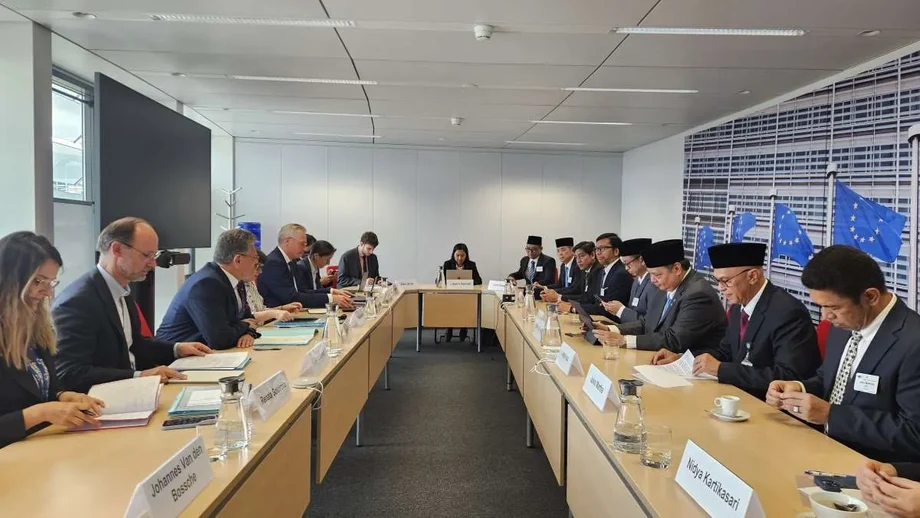
The ministry's focus is the public comment process. Officials plan to work with companies and industry associations to press for product exemptions and to keep bilateral trade fair and mutually beneficial. Indonesia ran a 14.26 billion dollar trade surplus with the United States in the first nine months of 2026, and Washington has consistently been its largest surplus market.
Vahd Nabyl A Mulachela, Foreign Ministry spokesman, said Jakarta would keep talking with Washington within the comprehensive strategic partnership that President Joko Widodo and President Joe Biden announced in 2023, the highest tier of Indonesian ties. He said Washington had not made a final decision and described Indonesia's approach:
We will prioritize our national interests. We will push for a fair trade and investment relationship, one that is balanced and mutually beneficial. It should align with the principles of a rules-based multilateral trading system.
The tone followed a dinner between Trump and Southeast Asian leaders in Manila less than two weeks earlier, where Trump touted major trade deals including one with Indonesia. Jakarta's challenge now is to turn that relationship into favorable treatment product by product, while keeping its export machine running.
Which Indonesian exporters face the most risk
Textiles and garments are the clearest pressure point. USTR's Indonesia document says 48.6 percent of Indonesia's textile and garment exports in 2023 went to the United States. That dependence means a change in US buying costs can quickly affect factory orders, production planning and employment in labor intensive plants.
Footwear, metal products and renewable energy components are also in the government's list of sectors that could either lose ground or win market share, depending on final exemptions. The proposal includes exemptions for some raw materials, certain iron products, semiconductors and goods already covered by Section 232 tariffs, which are duties imposed on national security grounds.
A 10 percent tariff from a separate forced labor investigation is already in effect for Indonesia. The new excess capacity duty is not simply added on top of that tax; when both rules cover the same product, the higher rate applies. For exporters, the practical job is to check tariff codes against exemption lists before quoting prices for 2027.
Companies can absorb part of a tariff, ask buyers to share the cost or lower the factory price to keep orders. Large buyers with many suppliers can switch sources if Indonesian prices rise. Smaller suppliers have less room to maneuver, so contract terms and market diversification matter as much as the headline rate.
Why China sits behind the tariff numbers
Washington's concern about Indonesia is tied partly to Chinese inputs and investment. The US Trade Representative's report on the action said Jakarta's reliance on non-market economies creates lost opportunities for American firms to manufacture or expand capacity for upstream goods. Mainland China and Hong Kong have consistently been among the top sources of foreign direct investment into Indonesia.
China faces its own proposed additional tariff of up to 20 percent, in line with the trade truce reached by Trump and Chinese President Xi Jinping on Oct. 30, 2025 under the Kuala Lumpur Joint Arrangement. Greer said exemptions were proposed for about 30 billion dollars of Chinese goods, while some listed goods face up to 10 percent and others are exempt. Those duties would sit above tariffs from Trump's first term generally ranging from 7.5 percent to 25 percent. During the earlier fight, retaliatory tariffs reached three digit levels. Trump has threatened to push the rate to 40 percent if the truce ends on Jan. 10, 2027; some product categories could reach 45 percent once other duties are counted.
Beijing rejected the excess capacity accusation without threatening retaliation. Guo Jiakun, spokesman for China's Foreign Ministry, said:
A tariff war or a trade war serves no party's interests,
China has also extended a suspension of restrictions on rare earth exports to the United States, and Xiamen Airlines, a China Southern Airlines subsidiary, agreed to buy 50 Boeing 737 MAX 8 aircraft. Chen Bo, senior researcher at the East Asian Institute at the National University of Singapore, said both governments wanted a deal and did not want another trade war.
For Jakarta, those signals matter because Chinese materials and investment in Indonesian factories are part of what Washington is examining. If US companies see more room to supply upstream goods, Indonesian manufacturers may gain investment; if Washington tightens rules on Chinese inputs, some export chains could face more paperwork and higher costs.
Regional rivals race for better terms
Governments around Asia reacted in different ways. China, Japan, Singapore, Malaysia and the European Union objected to the findings. Japan's top government spokesman Minoru Kihara rejected the excess capacity allegation, and European Commission spokesman Olof Gill said the EU regretted the lack of joint action with Washington. Vietnam said it was working with Washington on a trade deal. Deputy Prime Minister and Commerce Minister Suphajee Suthumpun said Thailand's proposed cap of up to 18 percent was in line with expectations and would keep negotiating. These responses did not change the published proposal.
Singapore's Ministry of Energy, Trade and Industry said the city state was being judged as a protected market when its economy is built on trade. The ministry said:
Singapore disagrees with the United States Trade Representative's findings and we are very disappointed with the proposed actions against Singapore.
Singapore faces a proposed 20 percent rate that could fall to 10 percent under an agreement or responsive negotiations. Singapore goods already face a 12.5 percent tariff from the forced labor investigation since July 24, 2026. The ministry said the US trade surplus with Singapore reflects an open economy and a global business hub; USTR cited a surplus of 27 billion dollars in 2024 rising to 33 billion in 2025, figures Singapore disputes using separate US government data. Singapore's total trade in 2025 was more than three times its gross domestic product. Electronics, biomedical sciences and advanced manufacturing are the sectors most exposed, and the ministry urged affected businesses to register concerns during the consultation.
Vietnam is the most sensitive large Asian economy in the proposed round. BMI, a Fitch Solutions company, estimated that Vietnam could lose about 0.4 percent of gross domestic product for every percentage point increase in the effective US tariff on its goods. Vietnam is a major supplier of footwear and apparel bound for the United States. Its imports to the United States rose 105.6 percent in the first nine months of 2026 compared with the same period in 2024, while Thailand's rose 131.1 percent and China's fell 33.3 percent.
Vietnam issued a five year plan on Nov. 21 to manage trade surpluses, prevent excess capacity and combat illegal transshipment and origin fraud. Thailand is preparing a legal review of its agreement before signing. Malaysia is seeking to cap its combined Section 301 tariffs at 19 percent, rejected allegations that its manufacturing capacity distorts markets, and said it would review imports from third countries. Taiwan said it expected to keep its 15 percent rate, citing agreements signed in January and February covering semiconductors and other technology products that make up more than 70 percent of Taiwanese exports to the United States.
The findings cited financial repression in Vietnam, Indonesia and Singapore, market access barriers in Thailand, preferential financing in Malaysia and incentives to attract foreign manufacturers in Cambodia. Financial repression means policies that channel cheap credit to favored industries. The European Union had prepared retaliation on 21 billion euros of American goods in March over metals tariffs.
Brazil was targeted in a separate action, with proposals for a 10 percent tariff on finished aircraft and additional duties on sugar beyond quotas. Brazil's presidential office called the measures unacceptable and did not rule out retaliation. The aircraft duty would affect Embraer, Brazil's largest aircraft maker.
What changes for factories, shoppers and officials
For an Indonesian garment factory, the first change would be a price conversation with a US buyer. If the tariff raises the landed cost by 18 percent, the buyer may ask for a discount, accept a higher shelf price or move some orders to a supplier with a lower duty. USTR has left room for tariffs to rise to 25 percent for Cambodia, Indonesia, Malaysia and Thailand if trade commitments and consultations are judged inadequate.
BMI expects another wave of export front loading in early 2027 as buyers ship goods before any duties begin, followed by weaker orders once inventories are worked down. Lavanya Venkateswaran, senior ASEAN economist at OCBC, said the proposals could slow export growth in 2027 just as semiconductor export growth returns to a more normal pace. That pattern can make early 2027 sales look strong and later months softer.
American consumers could also feel the effect. US companies that import clothing, shoes, metals or renewable energy parts face higher costs, and some of those costs can reach shoppers. Affordability was a major complaint among voters in this month's midterm elections, in which Democrats defeated Trump's Republican Party in both chambers of Congress. The Federal Reserve's preferred inflation measure reached a three year high in October.
What is still undecided is the final tariff text, the exemption list and the collection date. Washington has not said how every product code will be treated, and it has made no determination yet for Mexico or Norway. Before final action, Indonesian exporters can still argue that their goods should be excluded or taxed at a lower rate.
Key Points
- The USTR proposed an additional tariff of up to 18 percent on Indonesian imports under Section 301.
- Indonesia shares the 18 percent group with Cambodia, Malaysia, Thailand and Bangladesh, while rivals such as Vietnam face higher possible ceilings.
- The proposal is not final; comments are due Jan. 5, 2027 and hearings begin Jan. 25, 2027.
- Jakarta sees chances for textiles, footwear, metals and renewable energy components, but is pushing hard for product exemptions.
- China's trade truce, forced labor duties and exemption lists will shape the real cost for many supply chains.